RV Fleet Maintenance and Turnaround Between Rentals
In RV rental, the vehicle that is not ready is the vehicle that is not earning. A motorhome that comes back at 10 a.m. full of gray water and someone else's breakfast crumbs is not rentable at noon because the listing says so. It is rentable when the tanks are dumped, the interior is reset, and the systems check is signed off. Miss a step and the cost shows up two ways: a breakdown callout 300 miles from your yard, or a one-star review that opens with the word "dirty."
This guide covers the two rhythms that keep an RV fleet on the road: the ongoing maintenance schedule (chassis, generator, and habitation systems, each on its own clock) and the turnaround reset that happens between every pair of rentals. Both sit inside the bigger operating picture in the complete guide to running an RV rental business, and if any of the vocabulary here is new, the RV rental glossary has it covered.
Turnaround Is a Capacity Problem, Not a Cleaning Problem
Most new operators treat the between-rental reset as housekeeping. It is actually fleet capacity in disguise. A Class C that needs five hours between a 10 a.m. return and the next departure can physically run back-to-back bookings only if the calendar respects that window. Compress it and you hand the next guest a vehicle with a half-full waste tank; pad it too generously and a six-vehicle fleet quietly behaves like a five-vehicle fleet all summer.
Put a number on it. If your average rental is seven nights and your average reset is five hours, turnaround eats roughly 3% of your fleet's available time. If resets are sloppy and stretch to a full day (waiting on a propane refill, hunting for the missing levelling blocks) that number triples. Across a season, the difference between a five-hour reset and a next-day reset on a six-vehicle fleet is dozens of rentable nights. Nothing else in this guide pays back faster than making the reset a timed, repeatable process.
The Service Schedule: Three Systems, Three Clocks
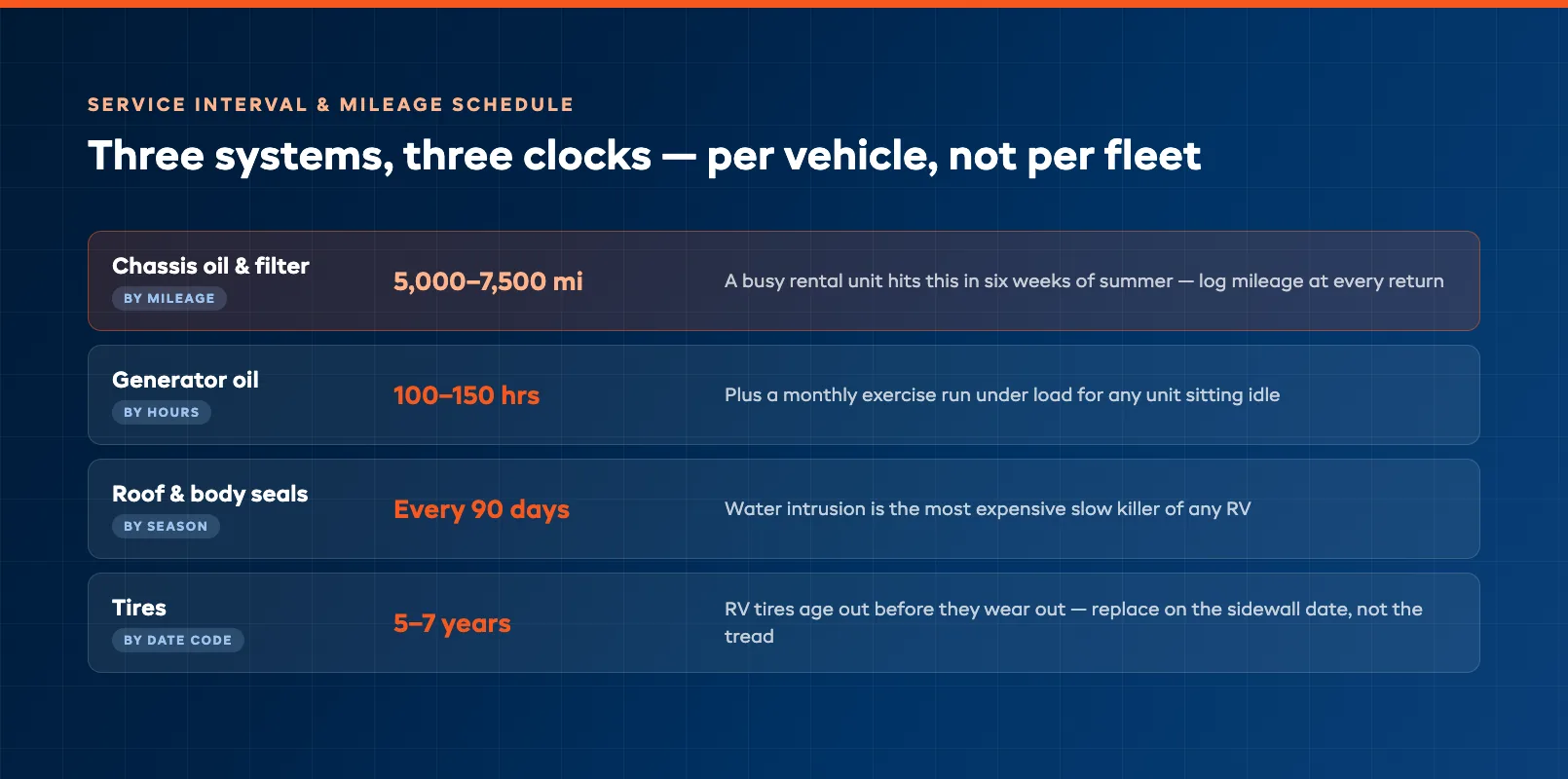
An RV is a truck, a power station, and a small apartment sharing one chassis, and each part ages on a different clock. Chassis components wear by mileage. The generator wears by engine hours. The habitation side (water systems, seals, appliances) wears by season and by use. A single "service the RV" line on a calendar misses two of the three.
A workable baseline for a rental fleet:
- Chassis (by mileage). Oil and filter every 5,000–7,500 miles on a gas Class C, which a busy rental unit can hit in six weeks of summer. Brakes, belts, and coolant on the manufacturer's schedule, pulled forward because rental miles are hard miles. Tires checked for date codes as well as tread: RV tires usually age out before they wear out, and a seven-year-old tire at highway speed under 14,000 pounds is a risk you do not rent out.
- Generator (by hours). Oil changes every 100–150 hours, and a monthly exercise run under load for any unit sitting idle. Generators fail from neglect far more often than from use, and a dead generator turns a paid-for trip into a refund negotiation.
- Habitation (by season). Roof and body seals inspected every 90 days — water intrusion is the single most expensive slow killer of any RV. Water heater, furnace, and fridge serviced annually. Propane system leak-tested on the same cycle. Slide-out mechanisms lubricated and awning fabric checked each spring.
Write the intervals down per vehicle, not per fleet. A 2019 Class A and a 2024 campervan do not share a schedule, and "we do everything in spring" is how mid-season breakdowns happen.
The Turnaround Reset: Same Steps, Same Order, Every Time
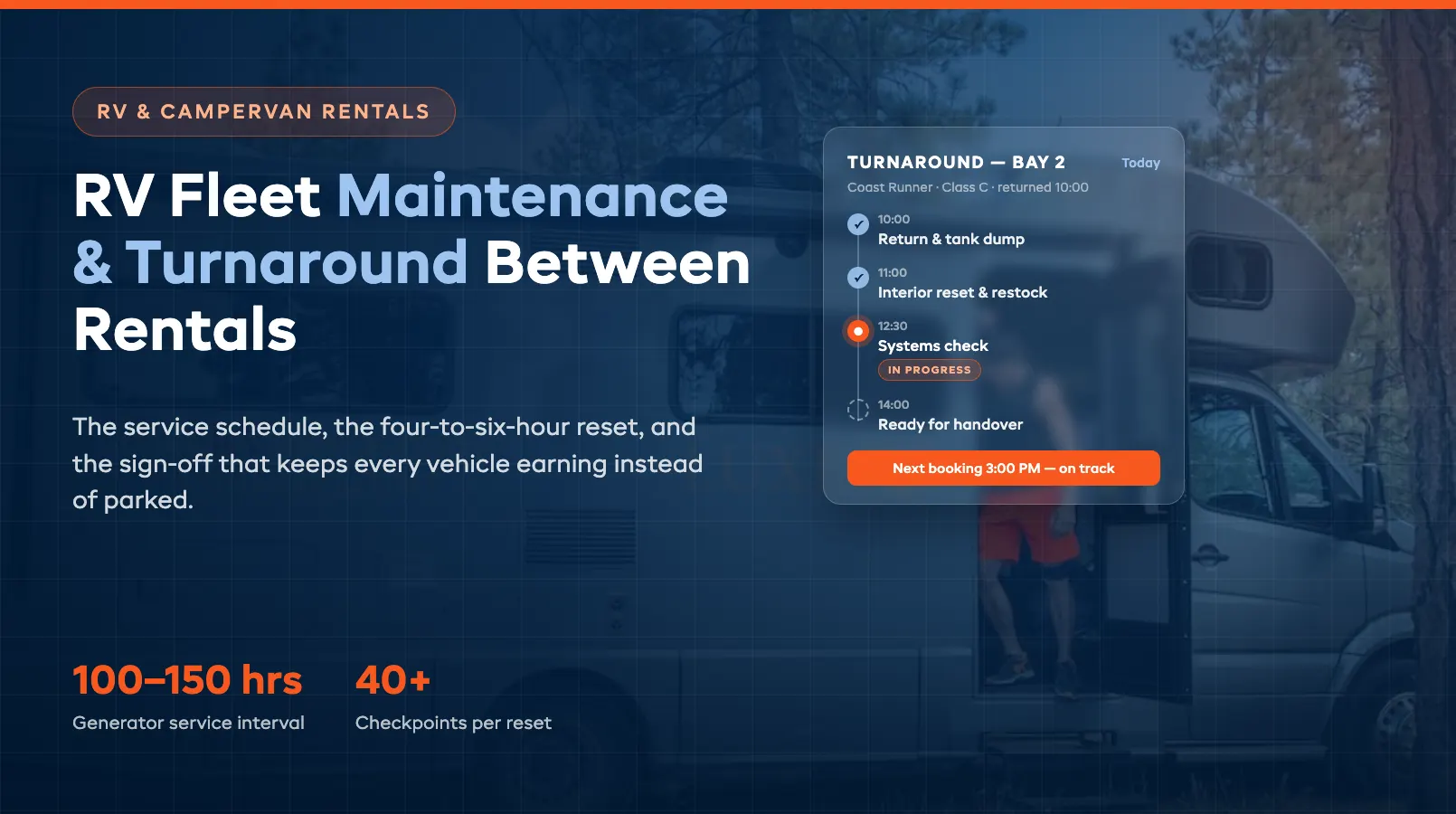
The reset between rentals should run like a pit stop — a fixed sequence a trained staffer can execute without decisions. A realistic sequence for a Class C, budgeted at four to six hours:
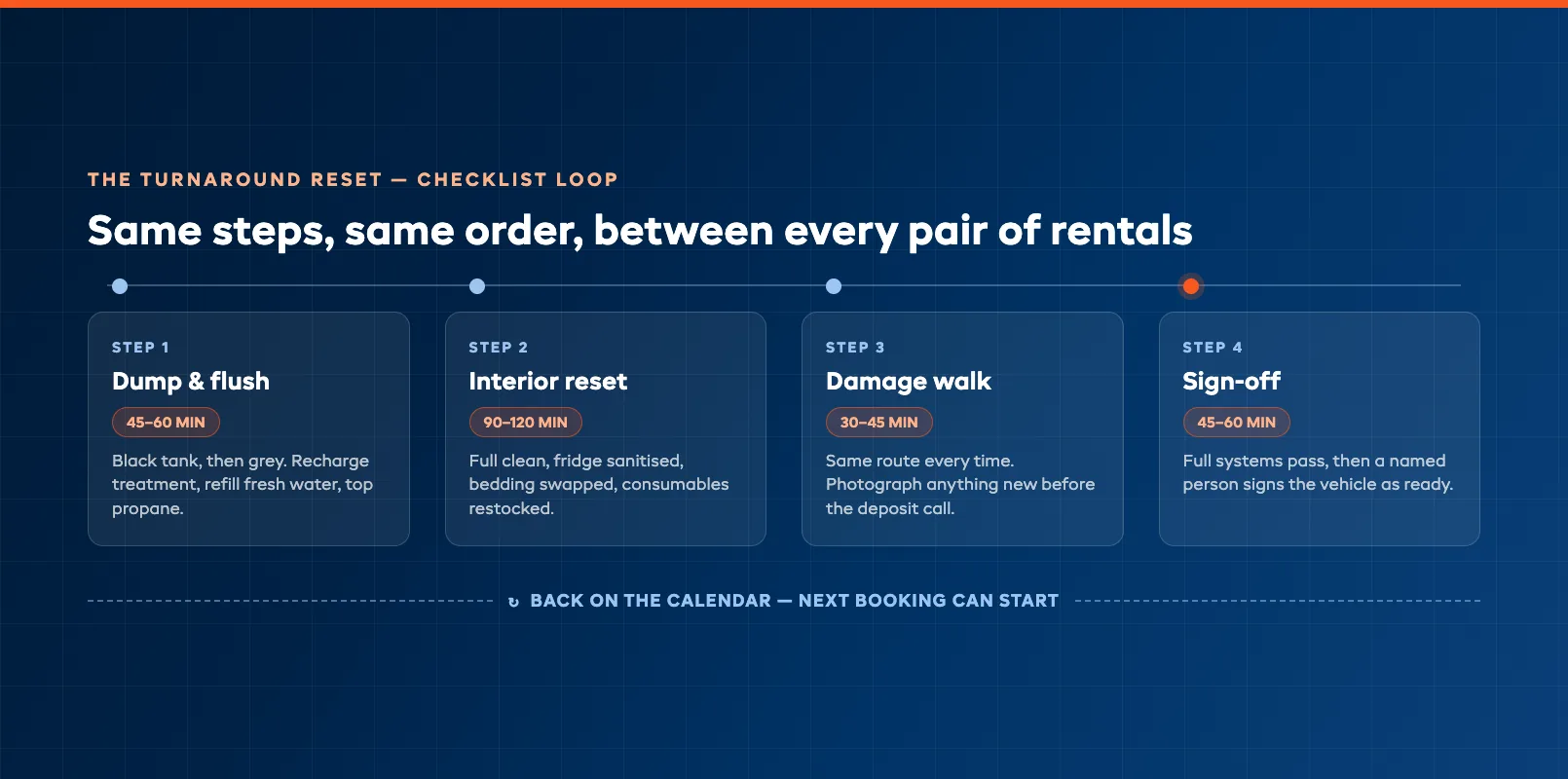
- Dump and flush (45–60 min). Black tank first, then gray — gray water rinses the hose. Flush the black tank properly, recharge with treatment, refill fresh water, top propane if below half.
- Interior reset (90–120 min). Full clean, not a wipe-down: fridge emptied and sanitised, bedding swapped, floors, bathroom, and every cabinet checked for what the last guests left behind. Restock the consumables kit: toilet chemicals, levelling blocks, drinking-water hose, fresh linen.
- Exterior and damage walk (30–45 min). Walk the same route every time: roof line, awning, both sides, rear, underneath. Photograph anything new and compare against the departure photos before the deposit decision gets made: the process the handover and deposit workflow in your booking system depends on, and the comparison routine itself is laid out in the handover and return inspection guide.
- Systems check and sign-off (45–60 min). The checkpoint grid below, ending with a named person signing the vehicle as ready. No signature, no handover.
The order matters. Dumping before cleaning means the bathroom gets cleaned once, not twice. The damage walk before the systems check means a cracked marker light gets billed to the right guest instead of discovered by the next one, and how that photo evidence becomes a fair, documented charge is covered in RV rental agreements, insurance, and damage protection.
Systems Inspection: The Checkpoints That Catch Problems at the Yard
The difference between a checkpoint list and "give it a once-over" is where the failure gets discovered, at your yard, or at a campground two states away with your phone ringing. The reset sign-off should cover, at minimum:
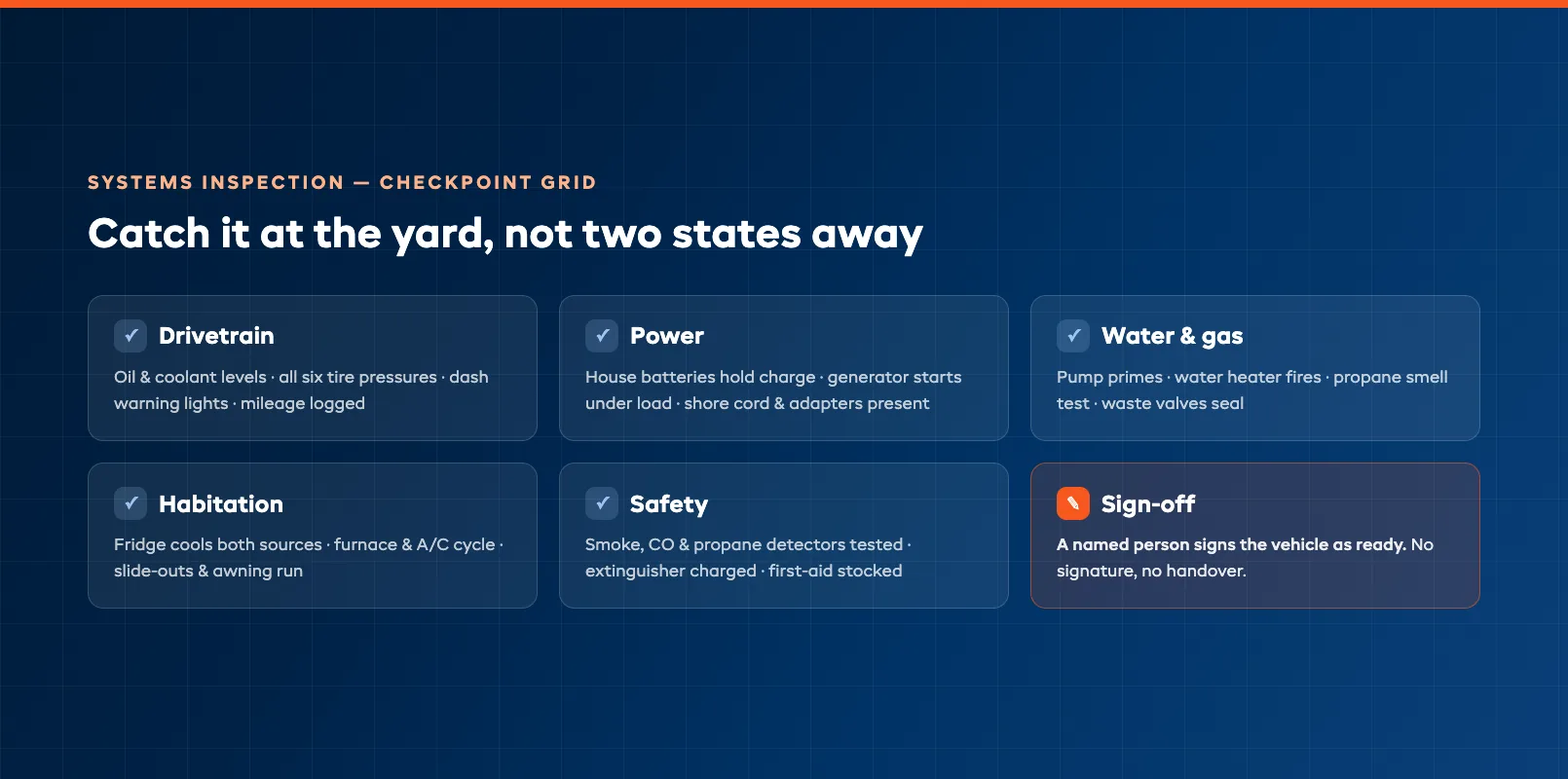
- Drivetrain: oil and coolant levels, tire pressures on all six (including the inners on a dually), dash warning lights, mileage logged against the service intervals above.
- Power: house batteries holding charge, generator starts and takes load, shore power cord and adapters present and undamaged, 12V and 110V outlets live.
- Water and gas: water pump primes, water heater fires, no smell of propane at the regulator or appliances, waste valves seal properly.
- Habitation: fridge cooling on both power sources, furnace and A/C cycle, slide-outs extend and retract, awning deploys and stows.
- Safety: smoke, CO, and propane detectors tested, fire extinguisher charged, first-aid kit stocked, breakaway cable and hitch gear present on towables.
Log the mileage and generator hours at every return. Those two numbers are what turn your service intervals from intentions into triggers.
Tracking It: Service Blocks That Defend the Calendar
A maintenance schedule that lives in a notebook loses to the booking calendar every time. Someone books the vehicle, the service slips a week, then a month, then the generator dies mid-rental. The fix is structural: maintenance goes on the same calendar bookings do, as a block that reservations cannot overlap.
That means every return automatically carries its reset window, every vehicle approaching a service trigger gets a hold placed on it, and the winterized half of the fleet is marked unavailable for the off-season once instead of being defended against enquiries all winter. This is a core requirement to shop for in RV rental booking software — a system where a service block pushes back against bookings exactly the way a reservation does. Operators running EquipDash set the reset window per vehicle class once, and the calendar enforces it on every booking after that.
Whatever system you use, the rule is the same: if the calendar does not know about maintenance, maintenance loses.
Winterization, Storage, and the Off-Season
For most operators the season ends before the work does. A vehicle stored wet freezes; a vehicle stored dirty comes out of storage with mold and mice. The off-season plan, per vehicle:
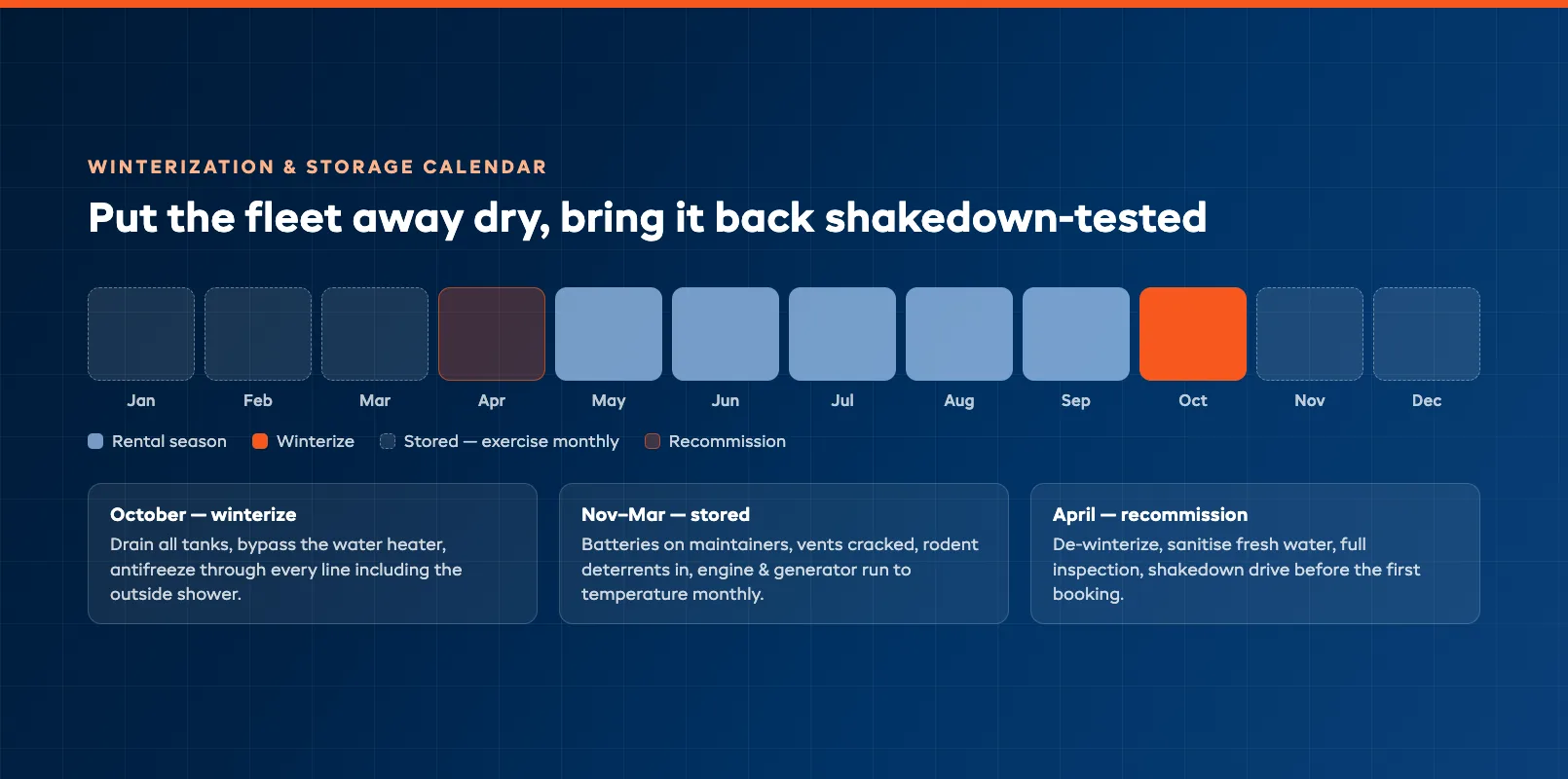
- Winterize the water system: drain fresh, gray, and black tanks, bypass the water heater, and run non-toxic antifreeze through every line, including the outside shower everyone forgets.
- Protect the batteries: disconnect house batteries or put them on a maintainer; a flat lithium or AGM bank in spring is a $600 avoidable bill.
- Seal and cover: final roof-seal inspection, cabin cleaned and dried, vents cracked for airflow, rodent deterrents placed, cover fitted if stored outdoors.
- Exercise monthly: start the engine and generator, run them to temperature, move the vehicle a few feet so the tires do not flat-spot.
Then run the sequence in reverse as a spring recommissioning: de-winterize, sanitise the fresh-water system, full systems inspection, and a short shakedown drive before the first booking of the season. The vehicles-and-operations side of the pillar guide covers how the storage months fit the wider business calendar.
Putting It Together
Maintenance and turnaround are the unglamorous half of RV rental, and they are also the half that decides whether the glamorous half works. Three clocks (mileage, hours, seasons) tracked per vehicle. One reset sequence, timed and signed off, between every pair of rentals. A calendar that treats service blocks like bookings so nothing slips. And an off-season plan that puts vehicles away wet-free and brings them back shakedown-tested. Get those four habits in place and the fleet stays where it belongs: on the road, earning. For the full toolkit built for RV and campervan rental operators, start there.
FAQ
How long should an RV turnaround between rentals take?
Budget four to six hours for a Class C motorhome: roughly an hour for tank dumping and refills, up to two hours for a full interior reset, 45 minutes for the exterior damage walk, and about an hour for the systems check and sign-off. Campervans run faster, large Class As slower. If your resets routinely take a full day, the process, not the vehicle, is usually the problem.
How often does a rental RV need an oil change?
Every 5,000–7,500 miles on most gas chassis, which a busy rental unit can reach in six to eight weeks of peak season. Track mileage at every return rather than by calendar date. The generator has its own engine and needs its own oil changes, every 100–150 running hours.
What should be inspected at every RV return?
Five groups: drivetrain (fluids, tire pressures, warning lights, mileage logged), power (house batteries, generator under load, shore cord), water and gas (pump, water heater, propane smell test, waste valves), habitation (fridge, furnace, A/C, slide-outs, awning), and safety (smoke, CO, and propane detectors, fire extinguisher). The inspection ends with a named person signing the vehicle as ready to rent.
Why do RV tires need replacing before the tread wears out?
RV tires age out before they wear out. Long periods parked, heavy loads, and sun exposure degrade the casing from the inside, so most manufacturers recommend replacement at five to seven years regardless of tread depth. Check the date code moulded into the sidewall — a blowout at highway speed under a 14,000-pound vehicle is the single failure most worth paying to avoid.
Do I really need to winterize rental RVs?
In any climate that freezes, yes, every vehicle, every year. Water left in the lines expands as it freezes and splits pipes, fittings, and the water heater, and the damage often stays hidden until the spring de-winterize turns the pump on. The full job (drain, bypass, antifreeze through every line) takes under two hours per vehicle and prevents repair bills that start around $1,000.
How do I stop bookings landing on a vehicle that is due for service?
Put maintenance on the booking calendar itself. Every return should carry an automatic reset window the next booking cannot start inside, and any vehicle approaching a mileage or hours trigger should get a service block that behaves exactly like a reservation. If your maintenance plan lives in a notebook while bookings live on a calendar, the calendar wins and the service slips.
in one place