Profitable Rental Business Ideas 2026
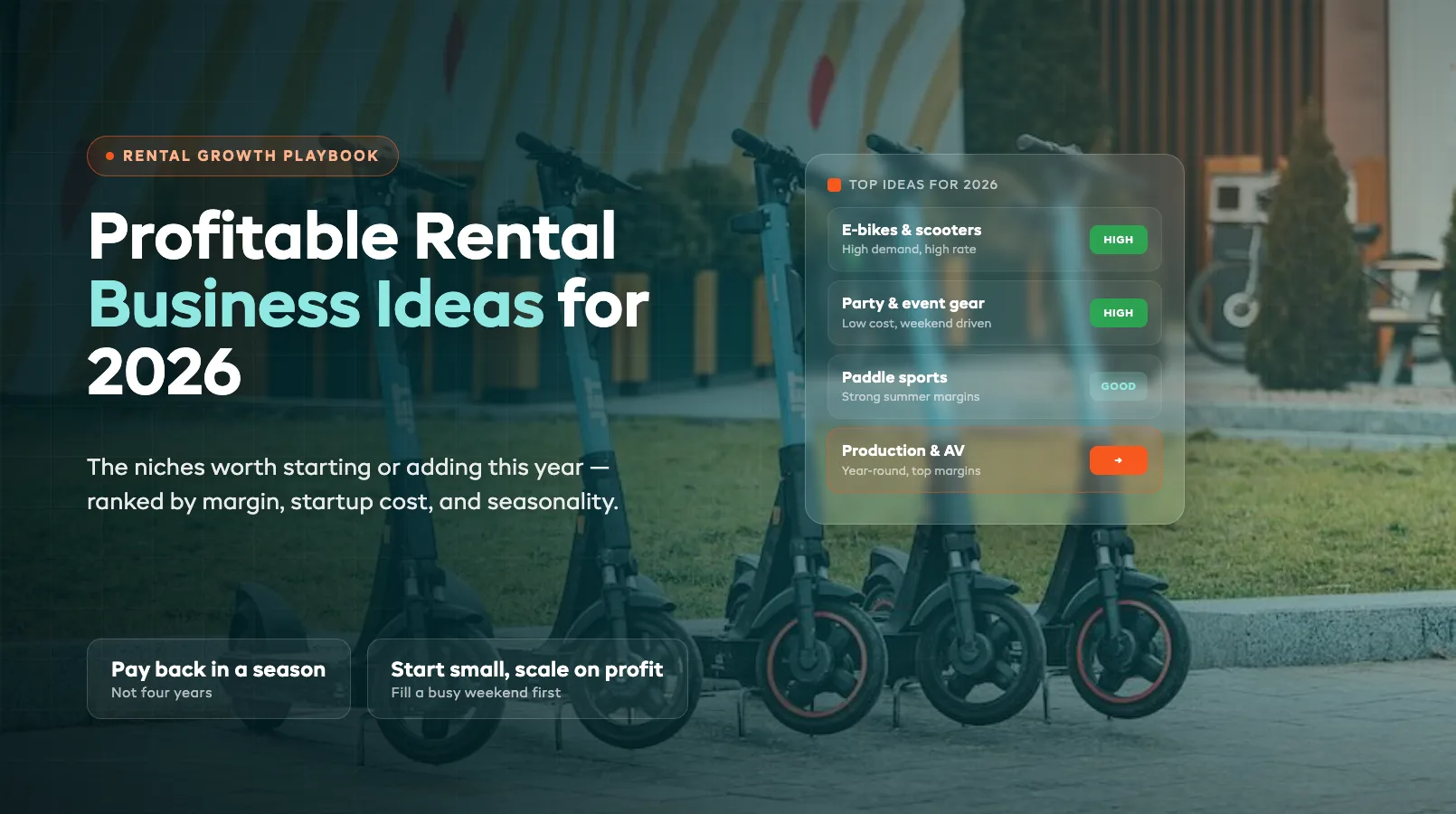
Renting beats selling on one simple point: you get paid for the same item again and again. Buy a paddleboard once, rent it two hundred times, and it earns many times its price before it wears out. That is the whole appeal, and in 2026, with more people choosing access over ownership, the demand for good rental gear keeps climbing.
The catch is that not every rental idea is worth your money. Some niches sound exciting but sit idle half the year. Others rent constantly but on margins too thin to matter. This guide ranks the ideas that actually pay in 2026 (by margin, startup cost, and seasonality) and shows how the right system turns a good idea into a profitable one. If you are starting from zero, pair it with our guide to starting an equipment rental business.
What Makes a Rental Niche Profitable
Three numbers decide whether a rental idea earns or just ties up cash.
- Utilization. How many days a month is each item actually out earning? A kayak that rents 15 days a month makes real money. The same kayak renting three days a month is a boat anchor on your balance sheet.
- Payback speed. Divide the purchase price by the profit per rental. An item that pays for itself in one or two seasons and keeps earning after that is a winner. One that takes four years to break even is a slow bleed.
- Repeat demand. The best niches are ones people rent over and over: every summer, every party, every job. You want gear customers already search for, not a category you have to explain from scratch.
Get those three right and almost any niche works. Get them wrong and even a trendy one loses money. The rest of this guide scores each idea against them.
The Most Profitable Rental Ideas for 2026
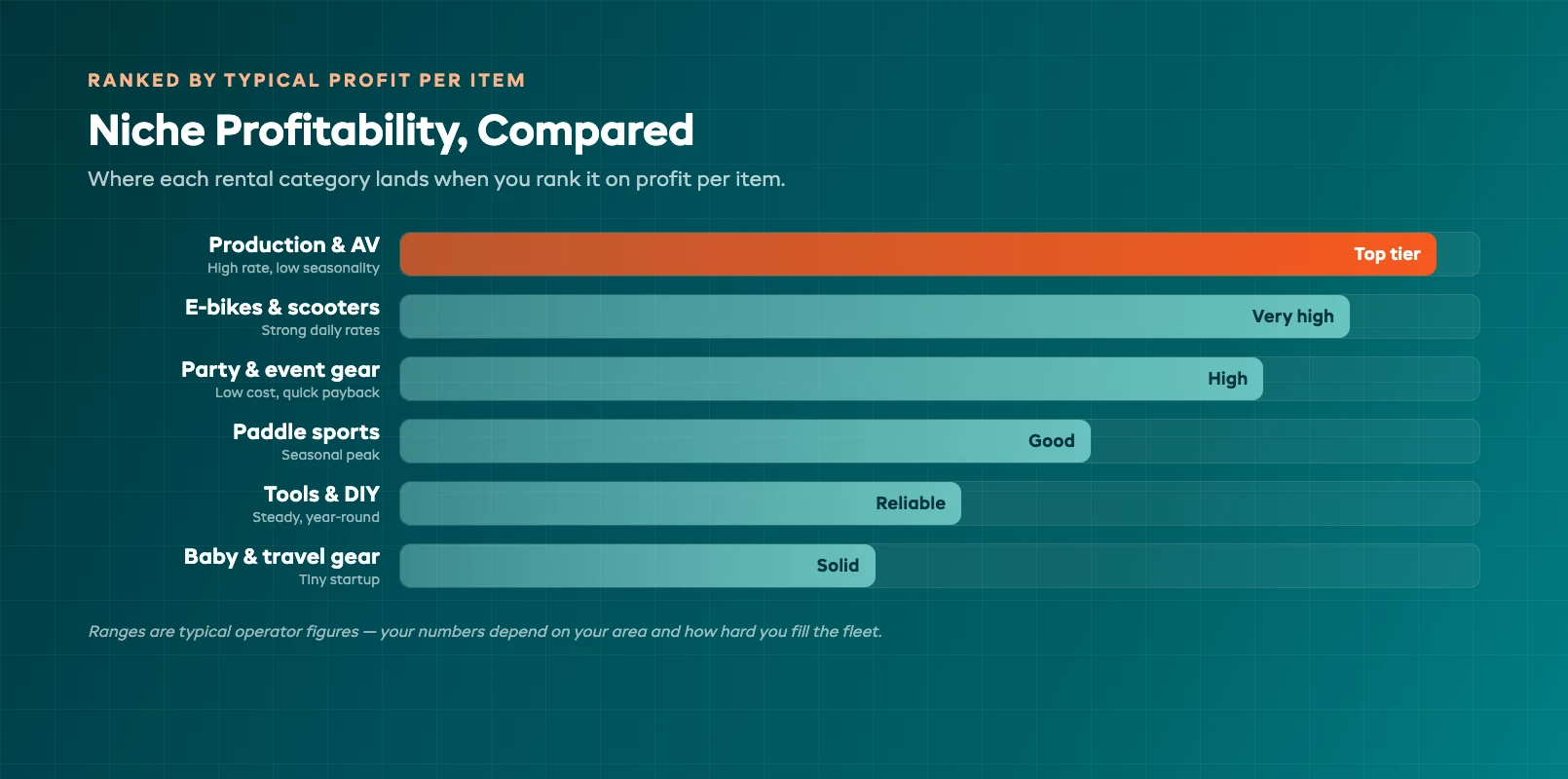
Here are the niches with the best mix of demand, margin, and staying power this year. Figures are typical operator ranges — your own numbers depend on your area and how hard you fill the fleet.
- E-bikes and e-scooters: High margin, high demand. Startup runs $15,000–$30,000 for a fleet worth advertising, but strong daily rates and tourist demand mean each unit can pay back in a season or two. Busy spring through autumn; slower in winter unless you are in a warm market.
- Party and event gear: Tents, tables, chairs, bounce houses, and lighting. Low per-item cost, brilliant margins, and weekend-driven demand that runs most of the year. A $400 bounce house can gross its price back in a handful of weekends. One of the most beginner-friendly niches going.
- Paddle sports: Kayaks, canoes, and paddleboards. Moderate startup ($8,000–$20,000), healthy summer margins, and easy add-on revenue from paddles, leashes, and lessons. Firmly seasonal, so plan the peak and manage the off-season.
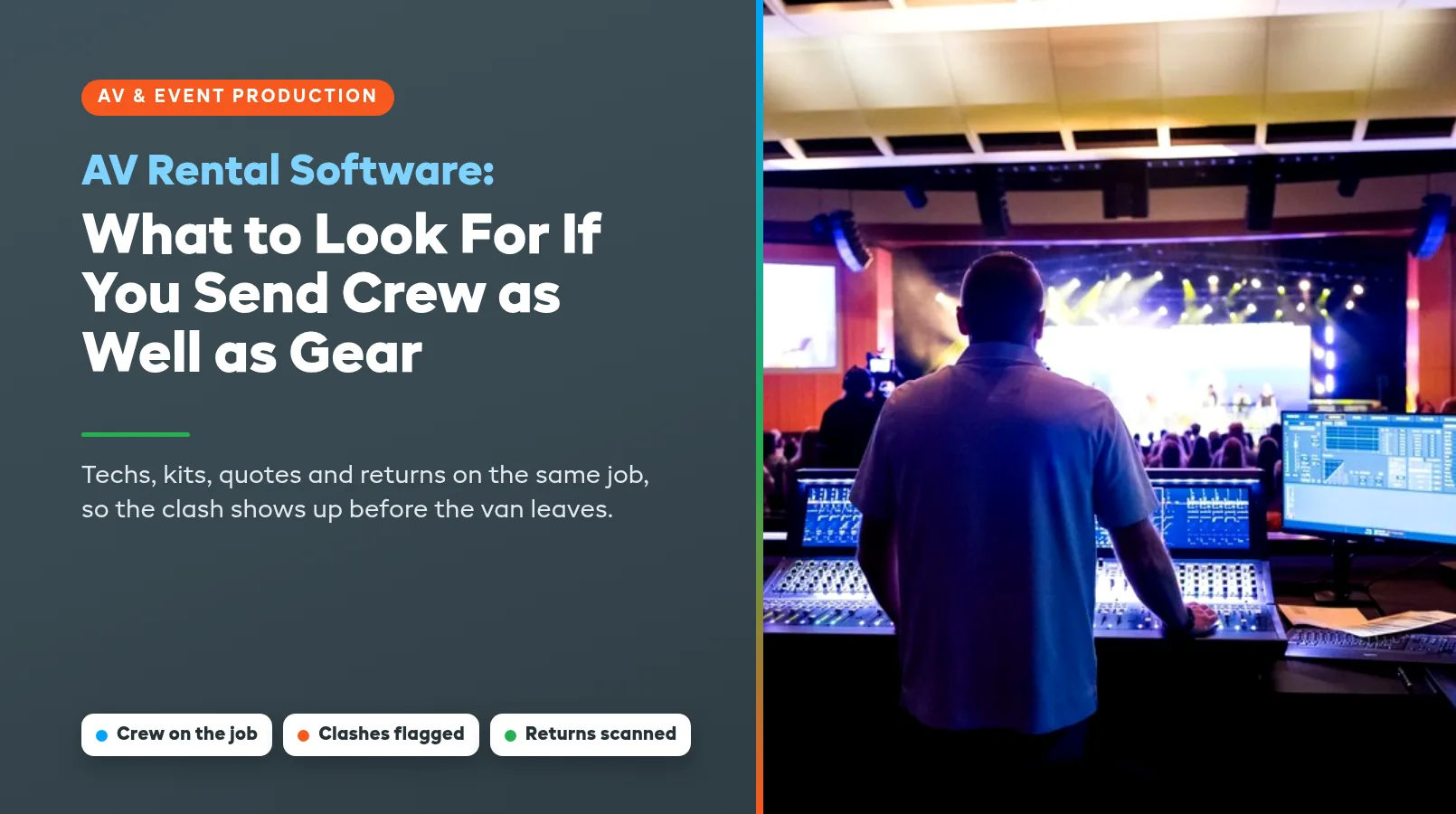
- Production and AV gear: Cameras, lenses, lighting, and audio. High-value items, high daily rates, and low seasonality because shoots happen year-round. Needs know-how and secure storage, but the margins are among the best in rental.
- Tools and DIY equipment: Drills, sanders, tile saws, pressure washers. Steady year-round demand from homeowners and tradespeople, modest per-item cost, and reliable repeat business. Unglamorous, but it pays the bills every month.
- Baby and travel gear: Strollers, cribs, and car seats for visiting families. Very low startup, year-round demand in tourist areas, and almost no competition in most towns. A small fleet you can run from a garage.
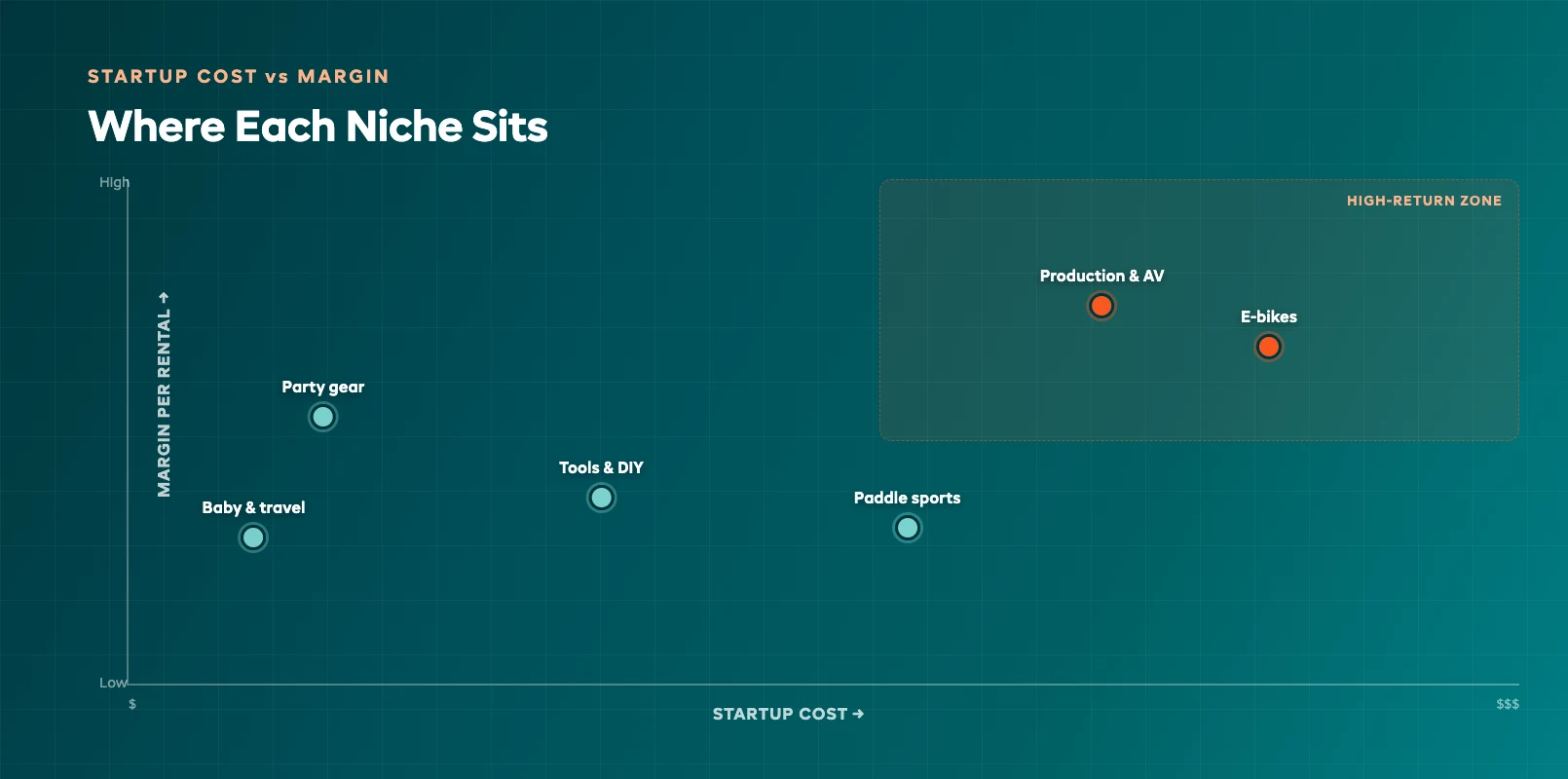
Notice the pattern: the low-startup niches (party gear, baby gear, tools) let you test the water for a few thousand dollars, while the higher-startup ones (e-bikes, paddle sports) pay bigger per rental but ask for more up front. There is no wrong end of that scale — only the one that fits your budget and your market.
Seasonal vs Year-Round Ideas
Seasonality is not a dealbreaker; it is a planning problem. Some of the most profitable niches on this list are firmly seasonal, and that is fine as long as you know it going in and price for it.
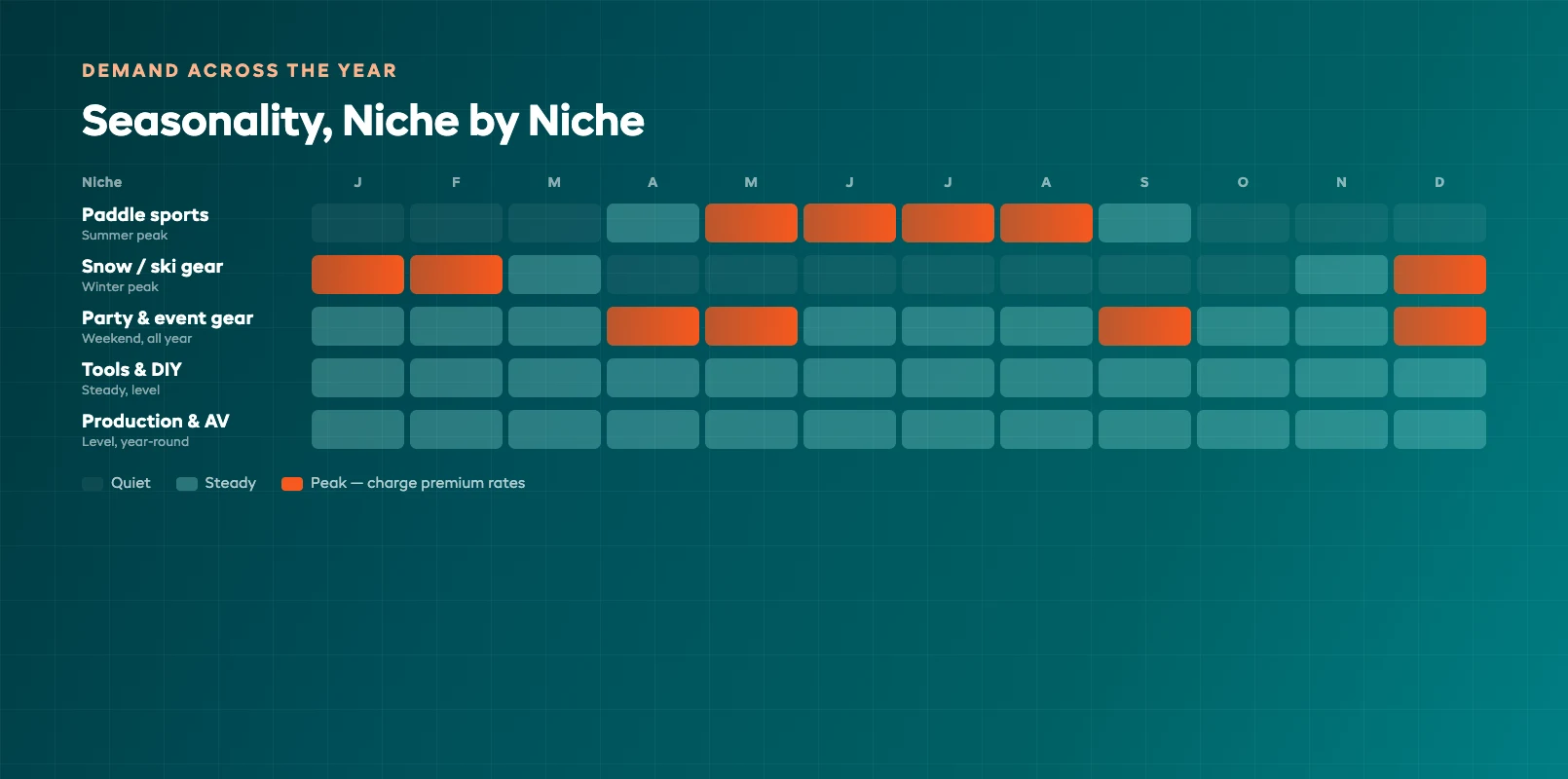
Seasonal niches (paddle sports, camping gear, snow gear) make most of their money in a tight window. That concentration is actually an advantage: you charge peak rates when demand is high and rest the fleet when it is quiet. The trick is preparing properly before the rush so you sell out your best gear instead of scrambling.
Year-round niches (tools, party gear, AV, baby gear) spread revenue evenly and keep cash flowing every month. They rarely spike as hard as a summer paddle season, but they never go dark either.
The smartest operators pair the two. Kayaks in summer, ski gear in winter. Party tents most of the year, camping gear in the peak. A counter-season pairing keeps one fleet or the other earning in every month, and your fixed costs (rent, software, insurance) get carried across the whole calendar instead of a few frantic weeks.
How Software Makes These Ideas Viable
Every niche above lives or dies on one thing: how many days a month your gear is actually out earning. That is where a real booking system stops being optional.
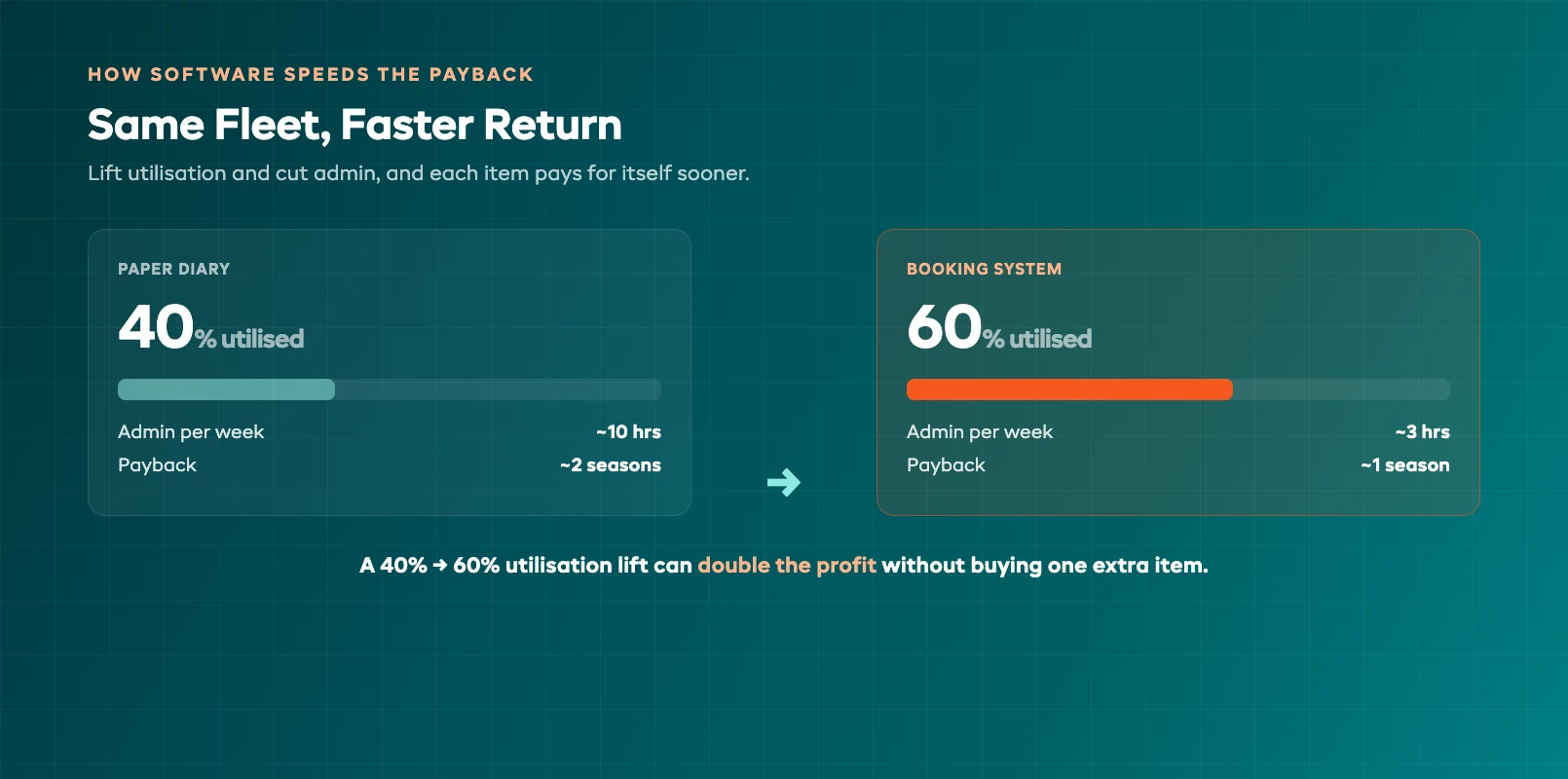
A booking system lifts profit three ways. It takes bookings online while you sleep, so you capture the customer who checks their phone at 10pm instead of losing them to voicemail — the same thinking behind getting more rental bookings. It prevents double-bookings and shows live availability, so a busy weekend runs clean instead of turning into refunds and bad reviews. And it automates the admin (reminders, deposits, confirmations) so you spend your time on the floor, not chasing paperwork, which matters even more when you are cutting admin work in a small shop.
That utilization lift is what changes a niche from marginal to profitable. A fleet that rents 40% of the time on a paper diary might rent 60% once customers can book online any hour, and that jump often doubles the profit without buying a single extra item.
The software itself is a rounding error against that gain. EquipDash runs from $23 a month for Starter on an annual plan, $55 for Growth, and $119 for Pro — less than the profit on a handful of extra rentals. Priced right from the start, using a clear rental pricing strategy and a little local SEO, even a small fleet earns its keep.
Putting It Together
The most profitable rental idea for 2026 is not a secret category. It is the one with real demand near you, a startup cost you can afford to fill, and a payback inside a season or two. E-bikes, party gear, paddle sports, AV, tools, and baby gear all clear that bar for the right operator.
Pick one with demand you can see, start with the smallest fleet that fills a busy weekend, run it on a system that keeps the gear earning, and reinvest the profit into more units. Add a counter-season niche once the first one proves itself. That is how a good idea becomes a business that pays you back every month of the year.
FAQ
What is the most profitable rental business to start in 2026?
There is no single winner, profitability depends on your area, but the standouts in 2026 are e-bikes and e-scooters, party and event gear, and production or AV equipment. All three combine strong repeat demand with margins that let each item pay for itself in one to two seasons. The right pick is the one with real demand near you and a startup cost you can afford to fill.
How much does it cost to start a rental business?
It ranges widely. A small party or baby-gear fleet can start for a few thousand dollars, while paddle sports or e-bikes usually need ten to thirty thousand for a fleet worth advertising. Start with the smallest fleet that can still fill a busy weekend, prove the demand, then reinvest the profit into more units rather than borrowing for a big fleet on day one.
Which rental niches make money year-round?
Tools and DIY equipment, party and event gear, baby and travel gear, and production or AV equipment all rent steadily across the calendar. They are driven by projects, events, and travel rather than the weather, so cash flow stays even. Seasonal niches like paddle sports or camping can still be very profitable, but you plan around the peak and manage the quiet months.
How do I calculate the margin on a rental item?
Take the daily rate, subtract the per-rental costs (cleaning, wear, payment fees, and a share of overhead) and what is left is your margin per rental. Then divide the item's purchase price by that margin to see how many rentals it takes to pay for itself. Anything that pays back inside one to two seasons and keeps earning after that is a strong performer.
Can I add a rental niche to an existing shop?
Yes, and it is often the fastest way to grow. You already have the counter, the customers, and the booking system, so a complementary niche (paddleboards next to bikes, tables next to a party tent line) adds revenue without doubling your overhead. Add one category at a time so you can measure whether it earns before you expand it.
What software do I need to run a rental business?
You need a booking and inventory system that shows live availability, takes online bookings and deposits, prevents double-bookings, and tracks each item's history. EquipDash covers this on annual plans from $23 a month for Starter, $55 for Growth, and $119 for Pro, so a new niche can take online bookings from day one instead of running on a paper diary.
in one place