AI Equipment Rental Use Cases: 8 Ways Operators Are Using AI Today
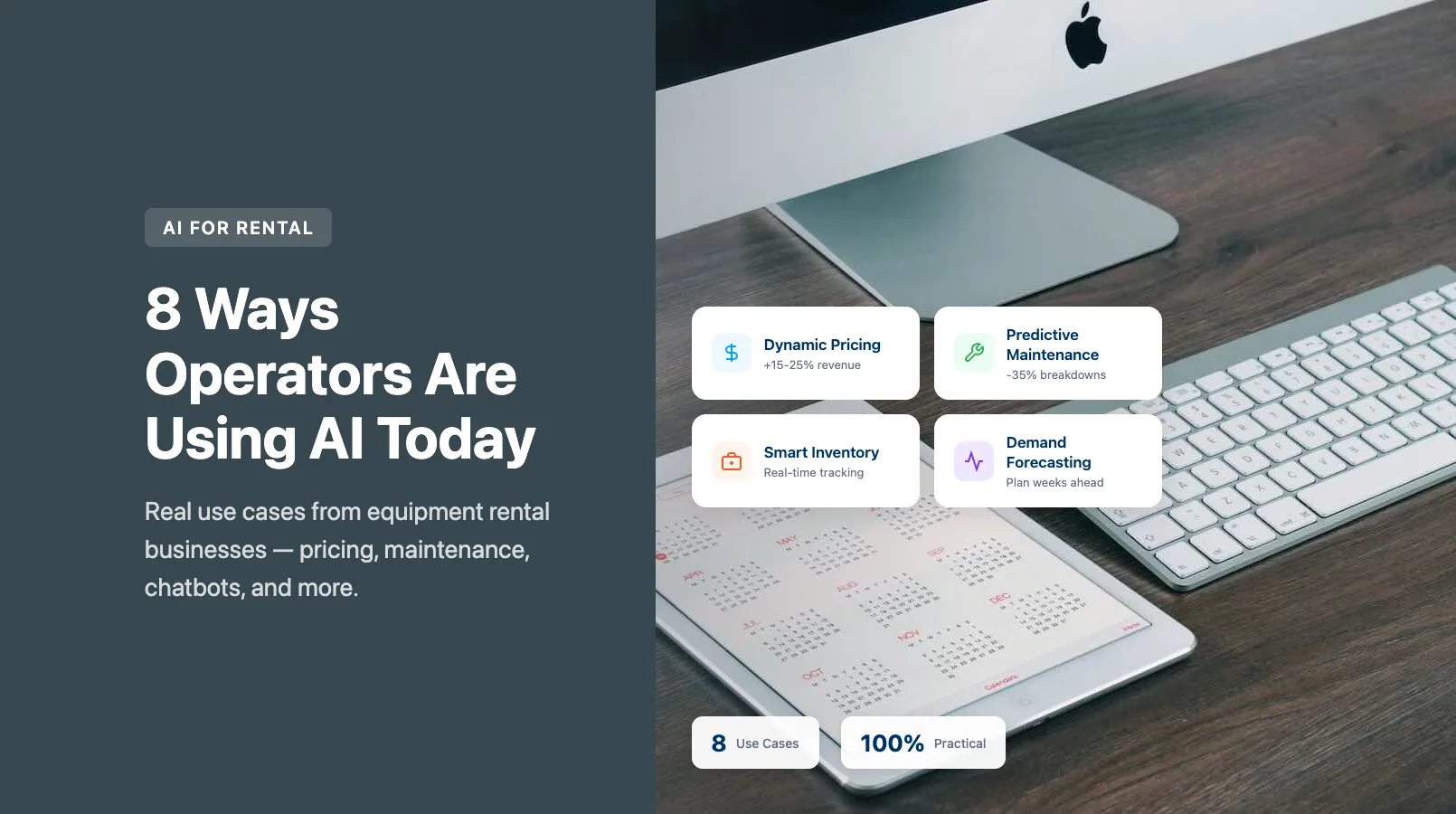
AI in equipment rental isn't a future trend. It's happening now -- in bike shops, kayak outfitters, ski rental operations, and heavy equipment yards. Not as some massive tech overhaul. As practical tools that solve specific problems.
The operators getting results aren't the ones who "adopted AI." They're the ones who picked one or two pain points and let AI handle them. Pricing that adjusts itself. Maintenance alerts before something breaks. A chatbot that answers the same 15 questions your staff fields every day.
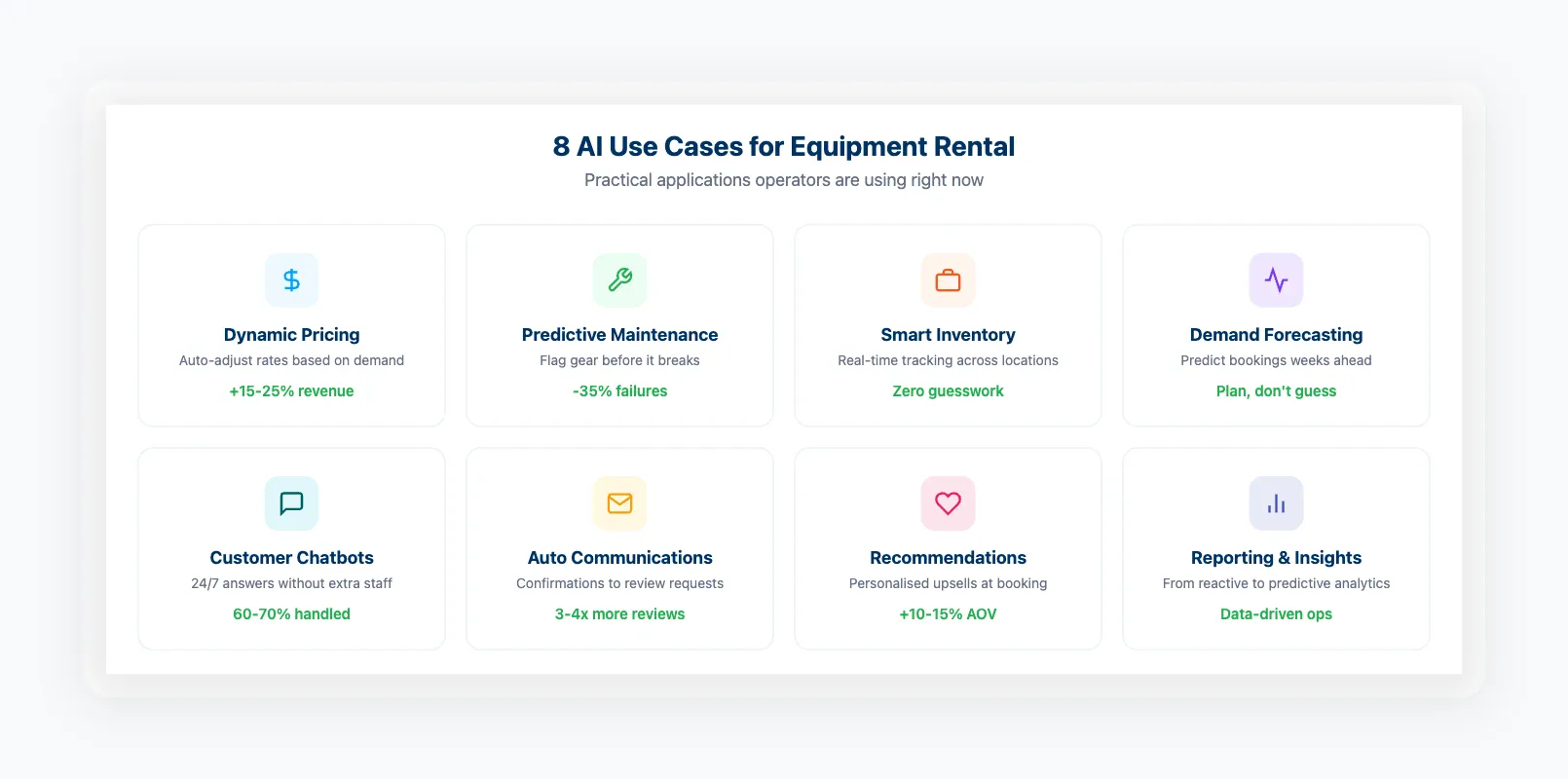
This post covers eight use cases where AI is delivering measurable results for rental businesses right now. Each one links to a deeper dive if you want the full playbook. For the complete picture, start with our AI for Equipment Rental Business guide.
1. Dynamic Pricing That Responds to Demand
Static pricing leaves money on the table. A $45/day mountain bike rate doesn't account for Saturday demand, holiday weekends, or the shoulder season when you'd take $30 just to keep gear moving.
AI-powered dynamic pricing adjusts rates based on real-time demand, booking velocity, weather forecasts, and historical patterns. Prices go up when inventory gets tight. They drop when utilization is low.
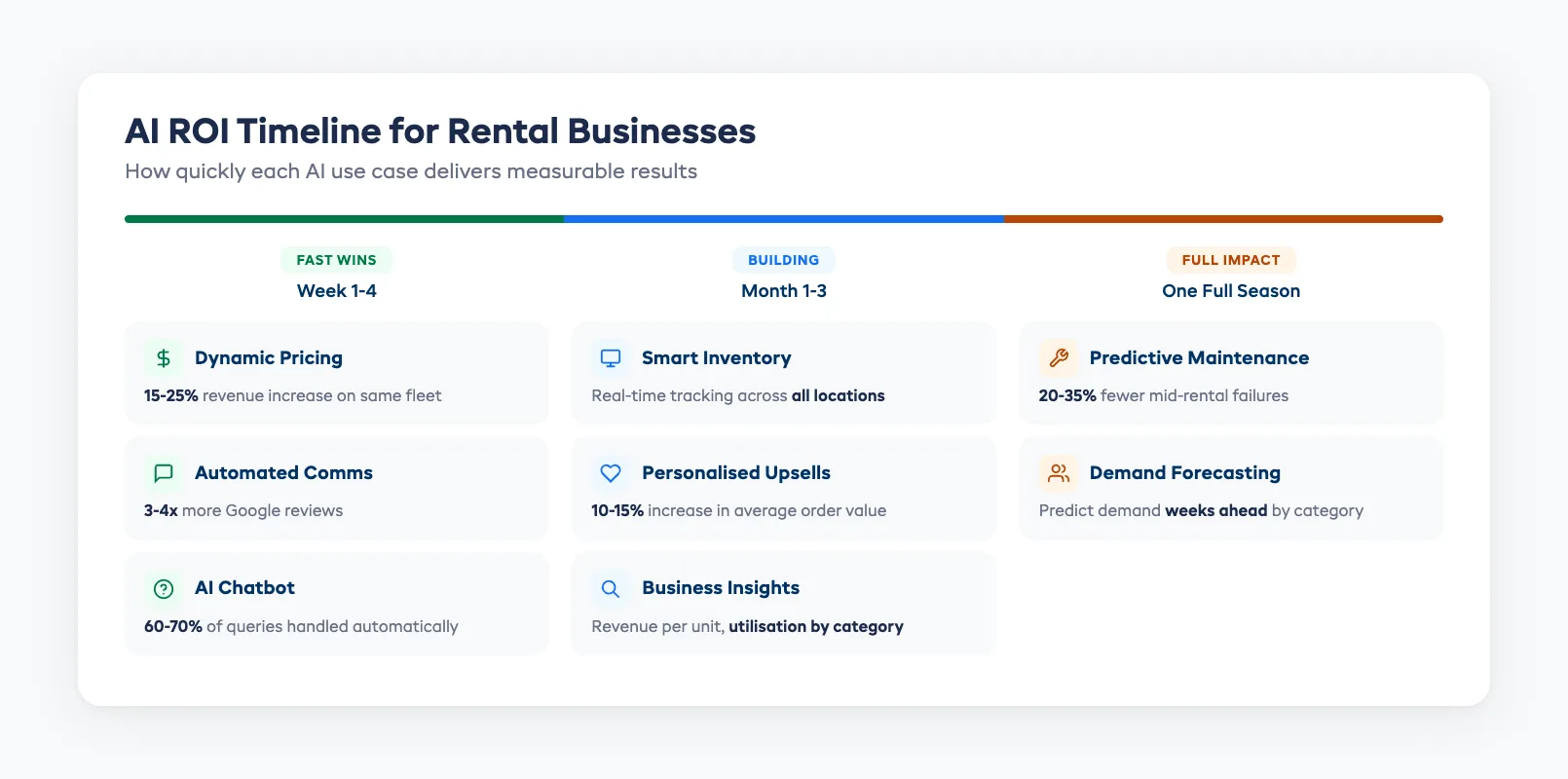
The result: 15-25% revenue increase on the same fleet, without adding a single unit. Ski rental shops see the biggest swings -- a powder day can justify rates 30-40% above baseline.
You set the rules. Minimum price floors, maximum ceilings, competitor guardrails. The AI handles the math in between.
Full breakdown: AI Dynamic Pricing for Equipment Rental
2. Predictive Maintenance That Prevents Breakdowns
Every rental operator knows the feeling: a customer brings back a kayak with a cracked hull, or a bike chain snaps mid-ride. The repair cost isn't the worst part. It's the lost rental days, the refund, and the review.
AI tracks usage patterns, rental frequency, condition reports, and maintenance history to predict when equipment needs service -- before it fails. A paddleboard that's done 47 rentals gets flagged for inspection. A bike with 800km since its last tune-up triggers a work order.
Operators using predictive maintenance report 20-35% fewer mid-rental failures and 15-20% longer equipment lifespans. The system pays for itself within a season.
Full breakdown: Predictive Maintenance for Rental Equipment
3. Smart Inventory Management
Knowing what you have sounds simple. It isn't.
Between multiple locations, gear in transit, items out for repair, and seasonal stock rotations, most rental shops operate on educated guesses. AI inventory management tracks every unit in real time and tells you what's actually available -- not what the spreadsheet says.
Better yet, it flags imbalances. Too many stand-up paddleboards at Location A while Location B keeps turning customers away? The system recommends transfers before you lose bookings.
AI also handles reorder timing. Instead of bulk-buying before the season and hoping you guessed right, the system analyzes booking trends and recommends purchase quantities per category.
Full breakdown: AI Inventory Management for Rental Business
4. Demand Forecasting for Seasonal Planning
"How busy will we be in three weeks?" Every rental operator asks this question. Most answer it with gut feeling and last year's calendar.
AI demand forecasting combines historical booking data, weather patterns, local events, school holidays, and even search trends to predict demand weeks or months ahead. The output isn't a vague "busy" or "quiet" -- it's specific unit counts by category and day.
That precision changes how you staff, how much gear you prep, and where you spend marketing dollars. A kayak outfitter who knows August 15th will be 40% busier than August 8th can pre-position inventory and schedule extra staff for that specific week.
Full breakdown: AI Demand Forecasting for Rental Companies
5. Customer Chatbots That Handle the Repetitive Stuff
Your staff answers the same questions hundreds of times per season. "What sizes do you have?" "Can I extend my rental?" "What's your cancellation policy?" "Are you open on Sunday?"
An AI chatbot handles these instantly -- on your website, via text, or through your booking widget. It checks real-time availability, quotes prices, explains policies, and even starts the booking process. All without a human touching it.
The win isn't replacing your team. It's freeing them from repetitive inquiries so they can focus on the customers standing in front of them. Most rental chatbots handle 60-70% of inbound questions without escalation.
After-hours coverage is the real game-changer. A customer browsing at 9pm gets answers instead of a "we'll get back to you" form. That's a booking you would have lost.
Full breakdown: AI Chatbot for Rental Business
6. Automated Communications From Booking to Review
The gap between "booking confirmed" and "thanks for renting with us" is where most shops go silent. No pre-arrival instructions. No day-of reminders. No review requests.
AI automates the entire communication chain: booking confirmations with parking instructions and what to bring, pre-arrival reminders, post-rental thank-you messages, review requests timed for maximum response, and re-engagement emails weeks later.
Shops that automate this chain see 3-4x more Google reviews and 15-25% higher repeat booking rates. Not because the messages are special -- because they actually go out.
The AI personalises each message based on equipment type, customer history, and timing. A kayak renter gets water safety tips. A returning customer gets "welcome back" instead of "here's what to expect."
Full breakdown: AI Automated Communications for Rental Shops
7. Personalised Recommendations and Upsells
A family booking two bikes probably needs helmets and a trail map. A group renting kayaks for a half-day might want to add a cooler bag or extend to a full day. Most shops rely on front-desk staff to suggest add-ons. AI does it at the point of booking.
Recommendation engines analyze past bookings, popular combinations, and customer profiles to suggest relevant upgrades and add-ons. The suggestions appear during the booking flow -- not as a pushy pop-up, but as a natural "customers also added" prompt.
Average order values typically increase 10-15% with AI-powered recommendations. The customer gets a better experience because they didn't forget the helmet. You get more revenue without the hard sell.
8. Reporting and Business Insights
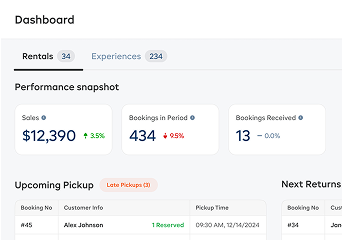
Most rental operators know their total revenue. Fewer know their revenue per unit, utilization rate by equipment category, or which day of the week drives the most profit.
AI-powered reporting goes beyond basic dashboards. It identifies patterns you wouldn't spot manually: which equipment categories are underperforming relative to their maintenance cost, which pricing tiers convert best, where repeat customers drop off, and which marketing channels actually drive bookings.
The shift is from reactive reporting ("here's what happened last month") to predictive insights ("here's what's likely to happen next month and what you should do about it"). Dash AI surfaces these insights automatically, so you don't need to build reports or query databases.
Where to Start
You don't need all eight on day one. Most operators start with one or two:
- If you're leaving revenue on the table: Start with dynamic pricing.
- If gear keeps breaking at the worst time: Start with predictive maintenance.
- If your phone never stops ringing with the same questions: Start with a chatbot.
- If you're guessing at seasonal staffing: Start with demand forecasting.
Pick the pain point that costs you the most time or money. Solve that first. Then layer in the rest.
Dash AI bundles all eight capabilities into one platform, so you're not stitching together separate tools. But even if you start with one, you'll see the impact within a season.
FAQ
Do I need technical skills to use AI in my rental business?
No. Modern AI tools for rental businesses are designed for operators, not developers. You set preferences and rules through a dashboard -- no coding, no data science degree. If you can use a booking calendar, you can use AI pricing or a chatbot.
How much does AI cost for a small rental shop?
Most AI-powered rental platforms bundle these capabilities into their subscription. You're not buying separate AI tools. A platform like Dash includes dynamic pricing, chatbot, automated comms, and reporting in the same monthly plan you'd pay for booking software alone.
Which AI use case has the fastest ROI?
Dynamic pricing and automated communications typically show results within the first month. Pricing adjustments generate immediate revenue lift. Automated comms drive reviews and repeat bookings quickly. Predictive maintenance takes a season to show its full impact.
Can AI replace my front-desk staff?
No, and it shouldn't. AI handles repetitive, predictable tasks -- answering FAQs, adjusting prices, sending reminders. Your staff handles the human stuff: greeting customers, fitting equipment, solving unusual problems. AI frees your team to do what they're best at.
What data does AI need to work effectively?
Your existing booking history is the starting point. The more data the system has -- past bookings, pricing, customer profiles, equipment usage -- the better its predictions. Most operators have enough data after one season to see meaningful results.
Is AI just for big rental operations?
Not at all. Small shops often see the biggest relative impact because they have fewer staff to absorb repetitive work. A solo operator who automates chatbot responses and booking comms effectively gains an extra employee's worth of output.
What if the AI makes a bad pricing or maintenance decision?
You set the guardrails. Price floors and ceilings prevent extreme swings. Maintenance alerts are recommendations, not automatic actions -- your team reviews and approves. The AI suggests; you decide.
in one place