Pre-Season Ski Shop Prep: Locking In Winter Bookings Before the First Snow
By the EquipDash Team
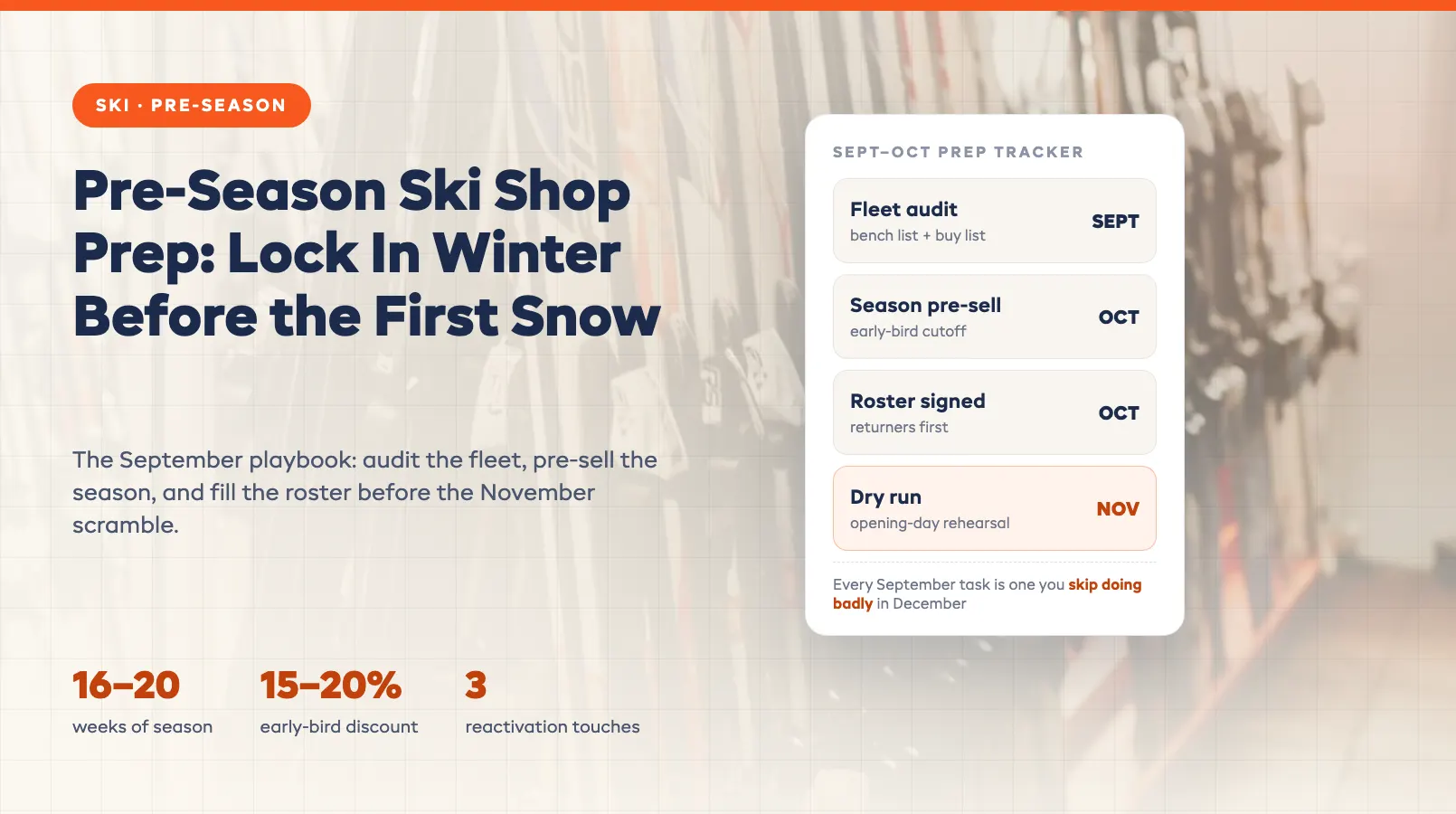
The shops that have their best Decembers do the work in September. By the time the first storm hits, the winners already know exactly what is in their fleet, have a chunk of the season pre-sold at early-bird rates, have last winter's customers warmed back up, and have most of the roster signed. The shops that wait for snow to get serious spend November buying gear at full price, hiring whoever is left, and opening with a booking calendar that starts at zero.
This guide covers the September-October window specifically: the fall fleet audit, early-bird season bookings, customer reactivation, the staffing pipeline, and a dry run before opening day. It assumes the wider operation is already built - if it is not, start with the complete guide to running a ski rental business and come back. And this is the fall companion to two other posts in this series: end-of-season ski retirement covers the spring shutdown that feeds this audit, and this post is deliberately narrower than a general peak-season checklist because a ski shop's prep window has its own calendar.
Why the winter season is won in September
A ski shop's revenue year is compressed into roughly 16-20 weeks, and the three or four weeks around the holidays can carry a third of it. There is no slow ramp to fix problems in - opening weekend arrives at full volume. That is why the prep window matters so much: every task you finish in September is a task you are not doing badly, under pressure, in December.
Work backward from your projected opening day. Most North American shops open between mid-November and mid-December, which puts the fleet audit and buy orders in September, hiring and early-bird sales in September-October, tuning and shop setup in October-November, and training in the final two weeks. Miss the September tasks and everything downstream slips with them: suppliers run out of popular sizes, the good seasonal hires take other jobs, and your pre-sell window closes before you ever open it.
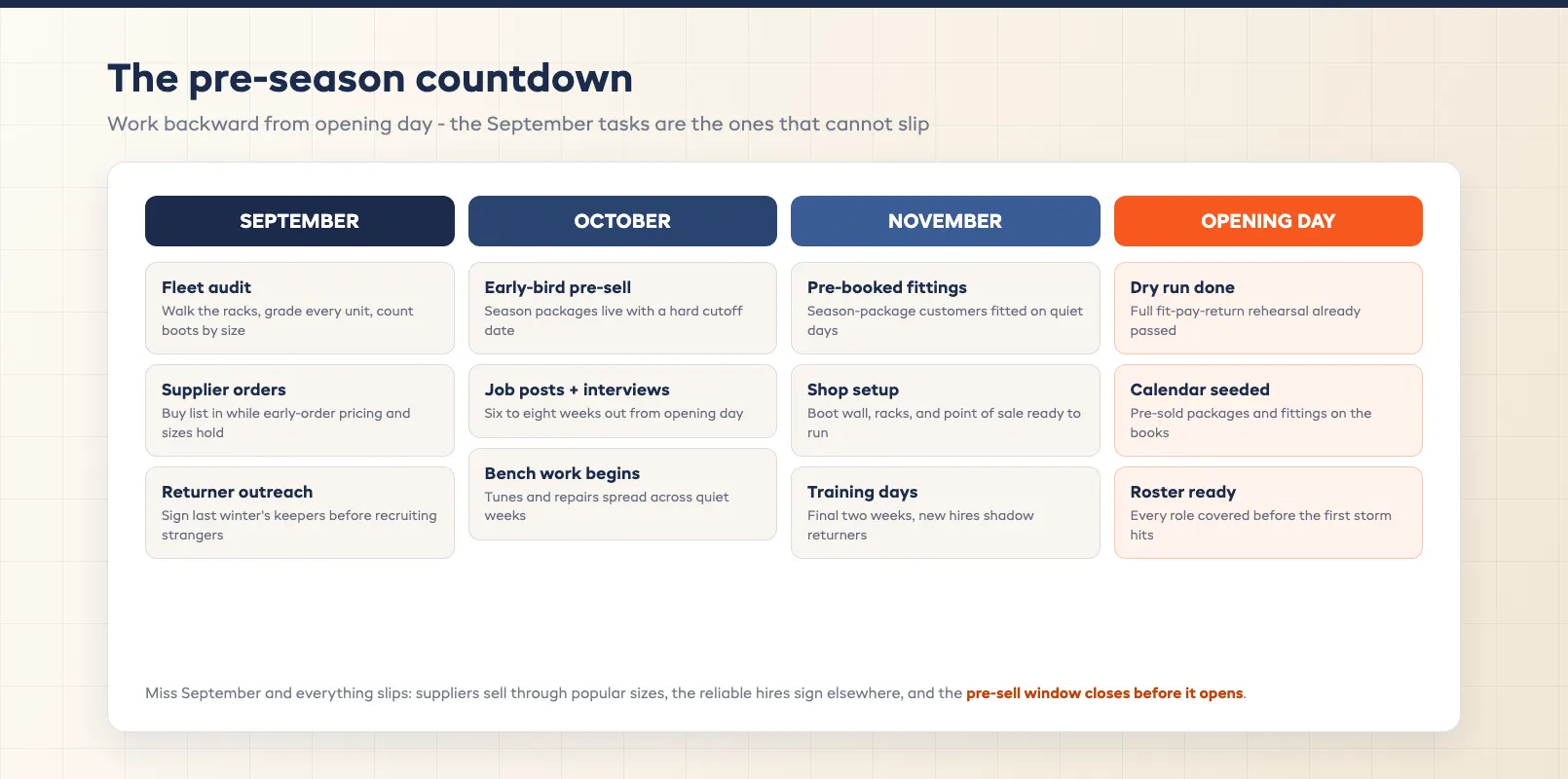
Put the timeline on the wall, assign an owner to each block, and review it weekly. The point is not the poster - it is that "we should get to that" becomes "that is due in week three of September."
The fall fleet audit: know what you have before you buy
Your buy list should come out of an audit, not out of memory. If you ran a proper spring shutdown, you already have the raw material: the retirement decisions and condition notes from your end-of-season retirement process tell you which units came out of the fleet and which went into storage flagged for work. September is when you cash those notes in.
Pull every unit out of storage and walk the racks with three questions: is it still rentable, what work does it need before it can go out, and where are the gaps by size and category. Log the answers against each unit, not on a loose sheet - a pre-season inventory audit checklist keeps the walk consistent so two staffers grading the same ski reach the same call. Count boots by size while you are at it. Boot-size gaps are the ones that quietly cost bookings, because a customer who cannot get a 27.5 walks out entirely, and nobody logs it as a lost sale.
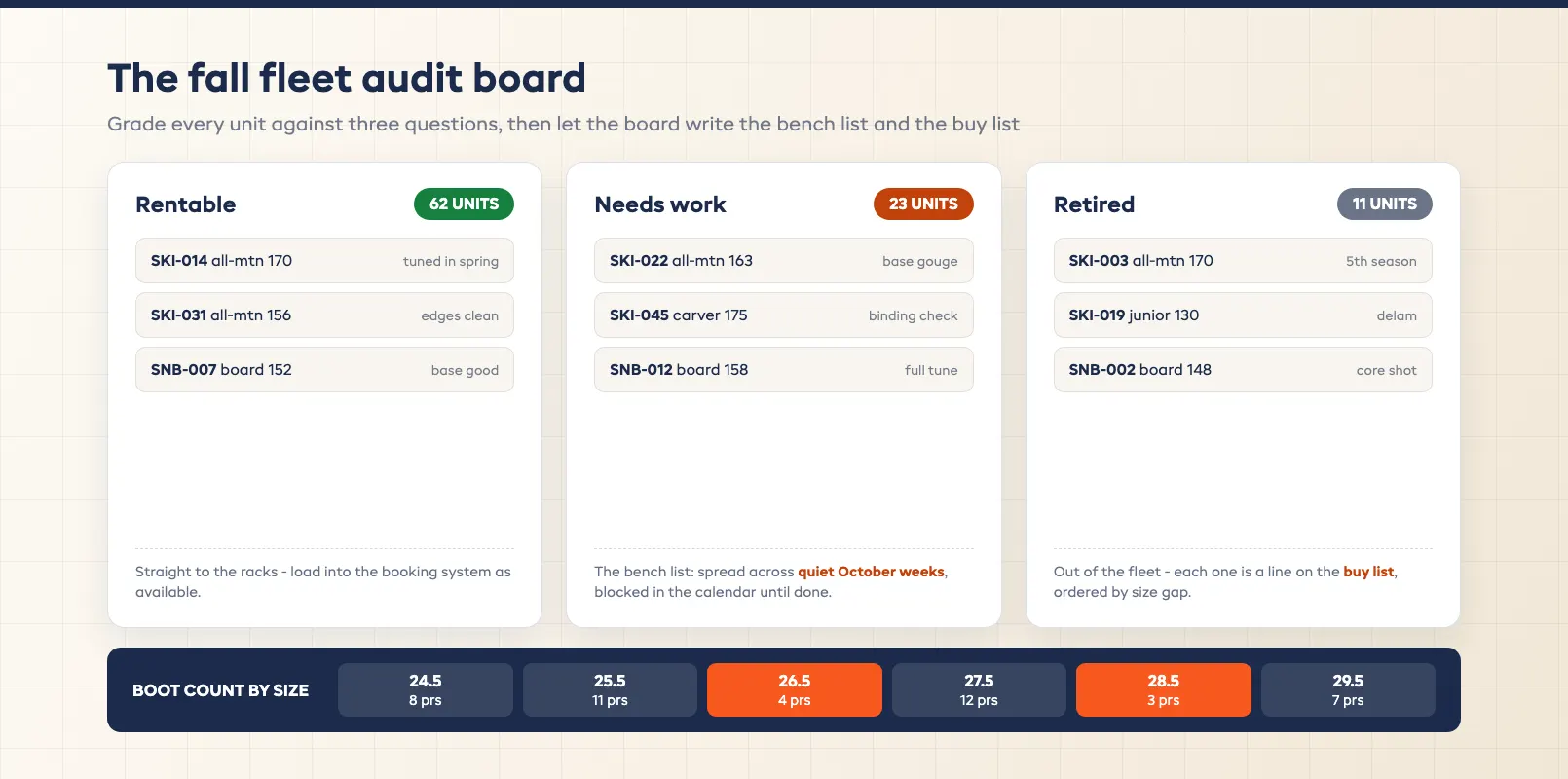
The audit produces two lists. The bench list - everything that needs a tune, a base repair, a binding check, or a strap replacement - goes to the workshop now, spread across quiet October weeks instead of stacked into the week before opening. Your tune and wax workflow covers how to run that bench without it becoming a bottleneck. The buy list goes to suppliers in September, when early-order pricing and size availability are both still on your side. Order by the size gaps the audit exposed, not by what looks thin on the rack.
Lock in early-bird season bookings
Most ski shops treat bookings as something that starts when snow falls. That leaves the pre-sell window - September and October, when skiers are buying passes and planning trips - completely unmonetized. Season rentals are the product to sell into it: a family outfitting two growing kids for the winter books a season package in October if you make it easy, and that money lands in your account before you have paid a single seasonal wage.
The mechanics are simple. Put season rental packages on your booking site with a genuine early-bird discount - 15-20% off for bookings before a hard cutoff date is typical - and let the price step up as the season approaches. The discount costs you margin you would happily trade for certainty: every pre-sold package is guaranteed revenue, a known fitting appointment you can schedule on a quiet November day, and one less walk-in fighting for counter time in December. Where to pitch the packages, and how the tiers should ladder, is covered in the ski rental pricing strategy guide.
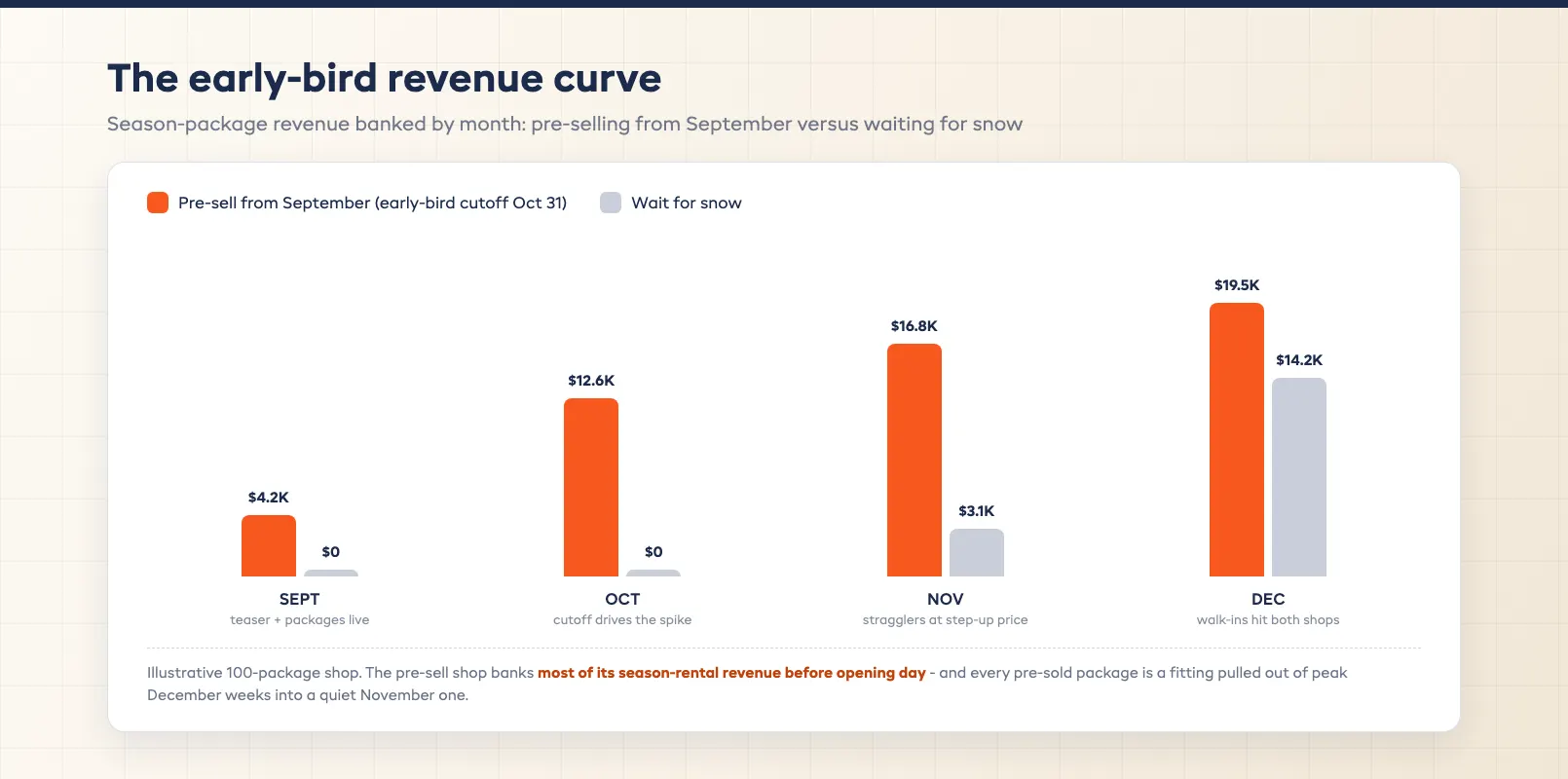
Two rules make pre-sell work. First, the cutoff has to be real - if the early-bird price quietly extends into December, next year nobody books early. Second, take the fitting appointment at the time of booking, not "sometime before the season." Pre-booked fittings in November are what turn the pre-sell into an operational win instead of just a cash-flow one; they pull hours of work out of your busiest weeks.
Reactivate last winter's customers
The cheapest booking you will get this winter is from someone who rented from you last winter. They know the shop, their sizes are already in your system, and they are going to ski somewhere this season - the only question is whether anyone reminds them you exist before a competitor does.
Run a short reactivation sequence in early fall. First touch in September: a season teaser with the early-bird offer, sent to everyone who rented in the last two seasons. Second touch in October: a deadline reminder as the early-bird cutoff approaches. Third touch in November: an opening-date announcement with a booking link. Returning customers with kids are the highest-value segment - a size-up nudge ("the boots you rented were a 22.5 - this year they will probably need a 23.5, here is a season package") converts remarkably well, because you are solving the exact problem the parent was about to start thinking about.
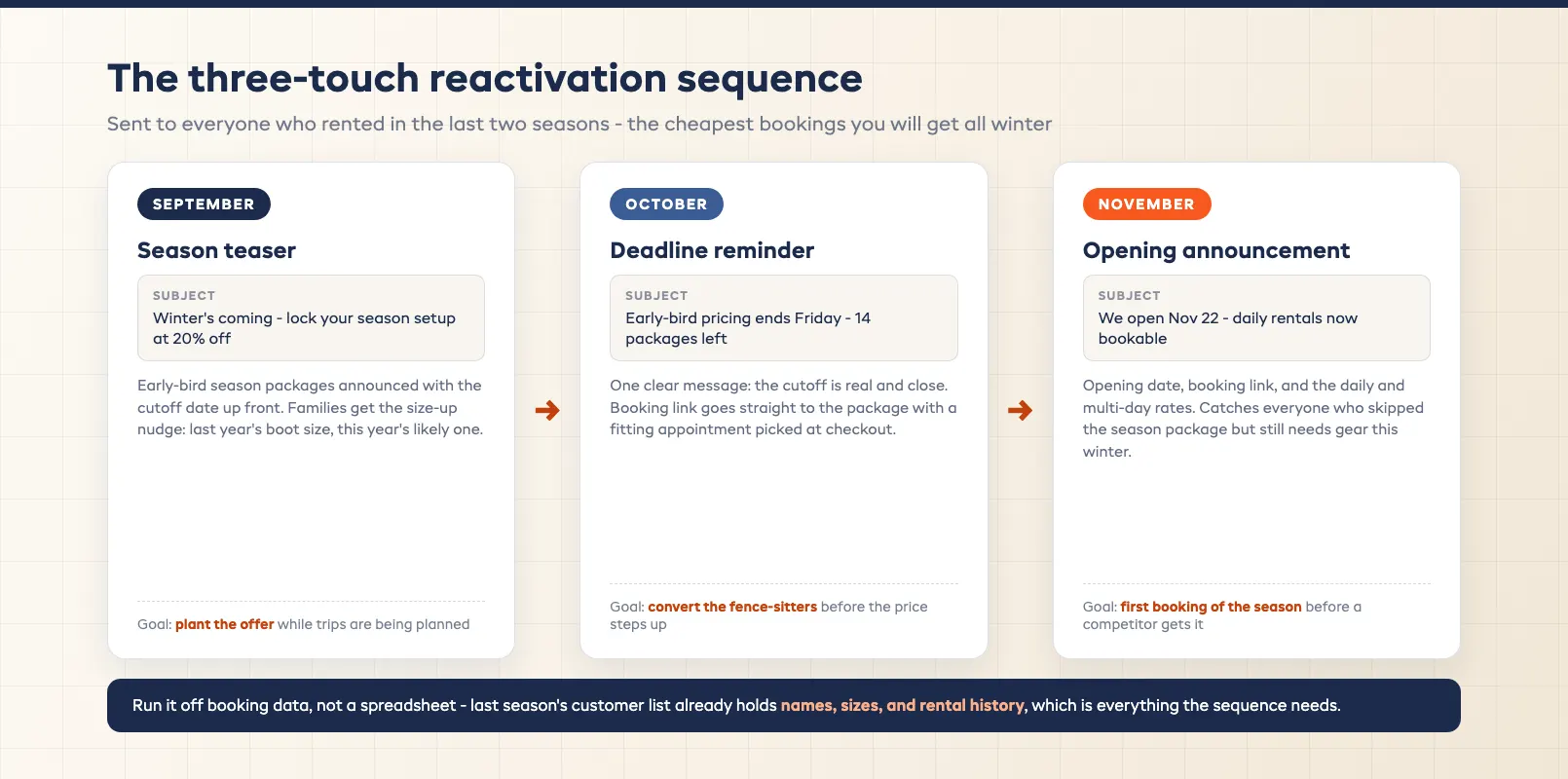
None of this needs to be manual. A pre-season customer reactivation agent can pull last season's customer list, segment it, and draft the outreach so the whole sequence runs off your booking data instead of a spreadsheet somebody has to remember to open.
Build the staffing pipeline now
Hiring is its own discipline and there is a full guide to hiring seasonal ski rental staff, so here is only the pre-season timing: returning-staff outreach happens in September, job posts go up six to eight weeks before opening, interviews run a month out, and training days sit in the final two weeks. The mistake to avoid is treating hiring as a November task. By November the reliable people - the ones who commit early and plan their winter around the job - are already signed somewhere, and you are choosing from whoever is left.
September outreach to last winter's crew does double duty. It tells you your real hiring gap before you spend anything on recruiting, and an early yes from two returning staffers changes your whole training plan, because they can carry the floor while new hires shadow.
Get the booking site ready before the snow flies
Your pre-sell push sends people to your booking site in October, so the site has to be ready in October - not on opening day. Check three things. Season packages and early-bird pricing are live and bookable, with the fitting appointment captured at checkout. Your winter inventory is loaded so availability reflects the fleet the audit just confirmed, and units that are on the bench list are blocked until the work is done. And your daily and multi-day winter rates are published, even though those bookings mostly come later - trip planners comparing shops in October judge you on what they can see.
If you are evaluating whether your current setup can handle that, the ski and snowboard rental software hub covers what purpose-built booking and fleet tools look like for a winter shop.
A dry run before opening day
The last week of prep is a rehearsal, not a scramble. Run a full opening-day simulation with the staff you have hired: a fake family of four walks in, gets fitted, signs the paperwork, pays, and walks out - then the gear comes back and gets checked in. The run-through surfaces every broken piece of the operation while it is still free to fix: the printer that is out of waiver paper, the new hire who has never processed a damage deposit, the boot wall arranged in an order only the owner understands.
Script it with the ski shop opening-day checklist so nothing rides on memory, and have new staff skim the ski rental glossary beforehand so DIN settings and edge tunes are not brand-new vocabulary on their first live shift. Then set the opening date, tell your reactivation list, and let the September work pay for itself.
FAQ
When should a ski shop start pre-season prep?
Work backward from opening day. For a mid-November to mid-December opening, the fleet audit and supplier orders belong in September, early-bird sales and hiring run through September and October, bench work and shop setup fill October and early November, and training lands in the final two weeks. The September tasks are the ones that cannot slip: suppliers sell through popular sizes, and the best seasonal hires commit to whoever offers first.
How big should an early-bird discount on season rentals be?
Most shops land at 15-20% off the in-season package price for bookings made before a hard fall cutoff. The margin you give up buys guaranteed revenue before the season starts, a fitting appointment you can schedule into a quiet November day, and one less December walk-in. The discount only keeps working if the deadline is real - extend it quietly and next year customers wait you out.
What should a fall fleet audit actually check?
Three things per unit: is it rentable, what bench work does it need before it can go out, and how the counts break down by size and category. Log the answers against each unit so the audit produces two concrete lists - a bench list of tunes and repairs to spread across quiet October weeks, and a buy list ordered by the size gaps the audit exposed. Count boots by size specifically; boot gaps lose whole bookings without ever showing up in a report.
Why pre-sell season rentals instead of waiting for snow?
Because the demand already exists in the fall - skiers buy passes and plan trips in September and October - and season rentals are the product that matches it. Every pre-sold package is cash in the bank before you have paid a seasonal wage, plus a fitting you can pull out of your peak weeks by scheduling it in November. Waiting for snow means your entire season's revenue has to fit through a December-to-March window that is already your operational crunch.
How do I bring last season's customers back?
A three-touch fall sequence: a September season teaser with the early-bird offer to everyone who rented in the last two seasons, an October reminder as the cutoff approaches, and a November opening announcement with a booking link. Families are the highest-value segment - a size-up nudge that says their child's boots will likely be a half size bigger this winter converts well because it answers a question the parent was about to ask.
in one place