RV Rental Pricing: Nightly Rates, Mileage, and Seasonal Demand
Most RV rental pricing problems trace back to one mistake: copying a competitor's nightly rate without knowing what a night actually costs you. The rate looks fine in April, then a July of back-to-back bookings somehow ends with thin margins and a tired fleet. This guide builds RV pricing from the ground up — the cost floor per night, mileage allowances that protect you from 4,000-kilometre round trips, seasonal rate moves, and the minimum-stay and discount rules that fill the calendar without giving peak weeks away.
It's part of the complete guide to running an RV rental business; if you're still deciding what to put in the fleet, start there and come back.
Start With the Cost of a Rented Night
Before you look at a single competitor, work out what one rented night costs you. Take each unit and add up the annual bill: finance or depreciation, insurance, storage, registration, servicing, and cleaning supplies. Divide by the nights you realistically expect to rent, for most operators that's 90–150 nights a year, not 365.
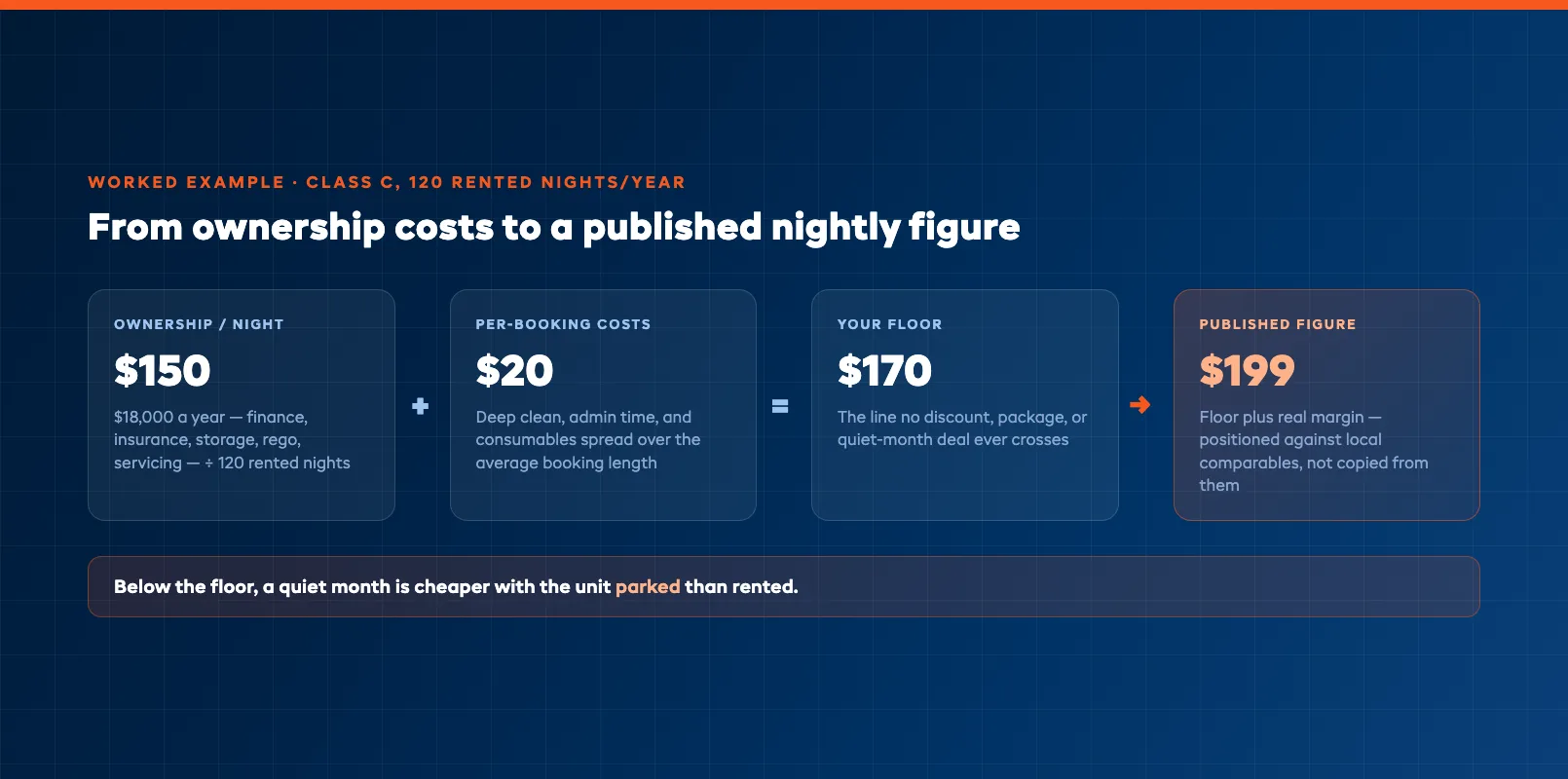
A worked example: a Class C that costs $18,000 a year to own, insure, store, and maintain, rented 120 nights, carries a base cost of $150 per night before you've paid for a minute of your own time. Add the per-booking costs (a deep clean at $60–$100, admin time, consumables) spread over an average booking length, and the true floor is closer to $170. Price at $165 a night because a listing down the road says $165, and you're paying customers to take the vehicle.
The floor isn't the rate. It's the line you never cross, and every discount you offer later gets checked against it. Operators who know their floor negotiate calmly; operators who don't discover their margin at tax time.
Nightly Rates by Vehicle Class
With the floor set, position each class against local comparables. Typical spreads in most markets: campervans and Class B vans at $120–$220 a night, Class C motorhomes at $175–$300, Class A coaches at $275–$450+, and towables well below all three because the renter supplies the tow vehicle. Newer units with solar, inverters, and proper beds rent at the top of the band; a tired interior drags a unit to the bottom faster than its age does.
Two positioning rules earn their keep. First, keep a visible gap between classes. If the Class C is only $20 more than the van, you'll rent nothing but Class Cs and the vans will sit. Second, publish the whole number the renter pays. A $159 headline that becomes $214 after cleaning, kitchen kit, and bedding fees converts worse than an honest $199 with fewer line items, and it starts the relationship with a flinch. Fold the mandatory extras into the rate and keep genuine options (child seats, generators, one-way drop) as add-ons.
Mileage: The Allowance That Protects Your Fleet
Nightly rates price time. Mileage pricing protects the machine, because a week to a campground 90 minutes away and a week covering 3,500 kilometres put completely different wear on the same vehicle.
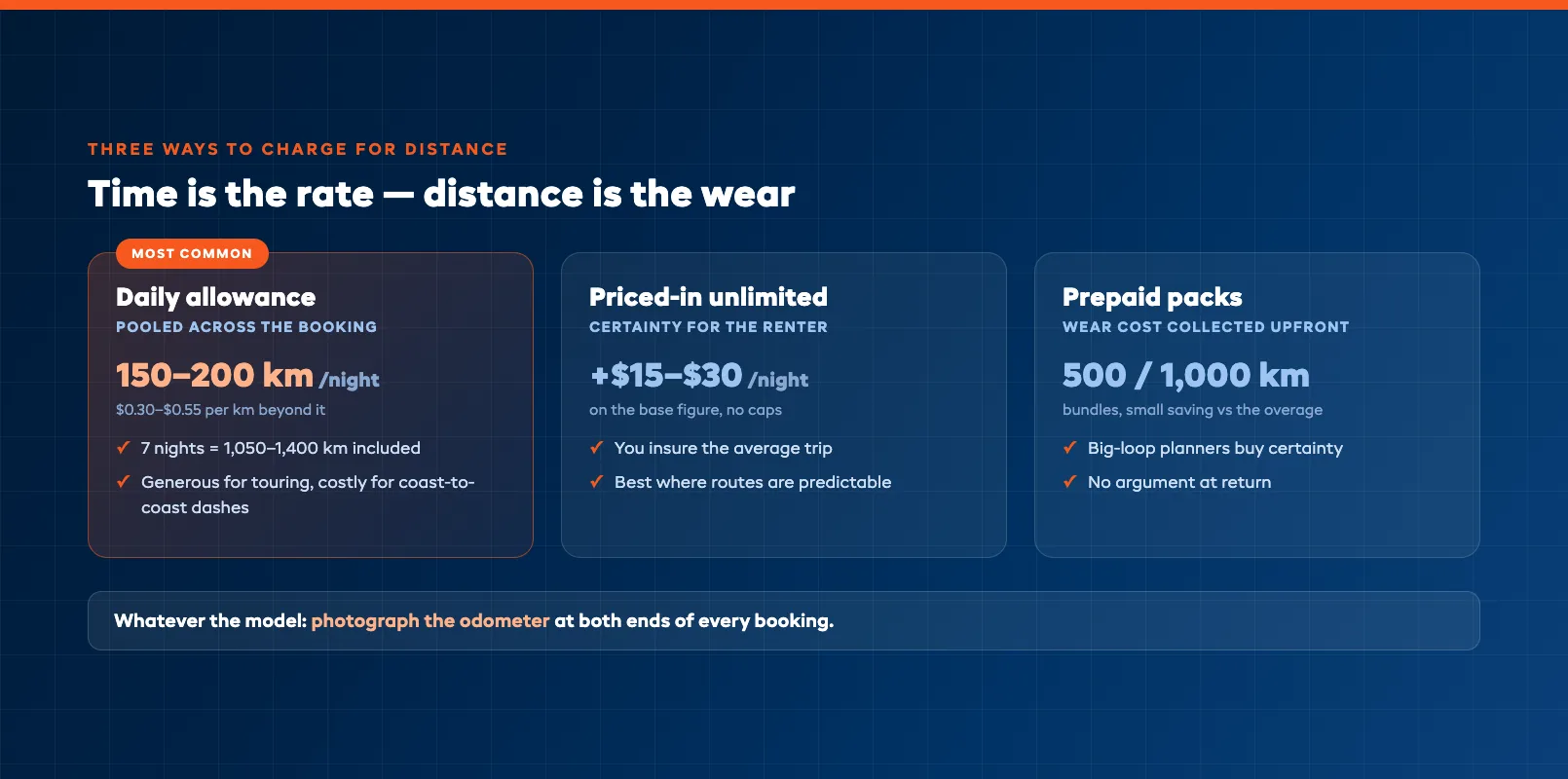
Three structures cover nearly every operation:
- Daily allowance plus overage. The standard: 150–200 kilometres (or 100 miles) per night, pooled across the booking, with a per-kilometre charge of $0.30–$0.55 beyond it. A 7-night trip carries 1,050–1,400 km free: generous for regional touring, costly for coast-to-coast dashes, which is exactly the point.
- Priced-in unlimited. Add roughly $15–$30 a night to the rate and advertise unlimited kilometres. Renters love the certainty; you're insuring the average, so the long-haul renter is subsidised by the short-haul one. Works best where trips cluster around predictable routes.
- Prepaid packs. Sell 500 or 1,000-kilometre bundles at a small discount to the overage rate. Renters planning big loops buy certainty; you collect the wear cost upfront instead of arguing about it at return.
Whichever you choose, record the odometer at both ends of every booking as part of the walkthrough — the handover and return inspection process is where the numbers get captured with photos attached, which is what makes an overage charge stick without a dispute. And meter the engine honestly: high-mileage bookings pull services forward, a cost that shows up in the maintenance and turnaround schedule whether you priced for it or not.
Move Rates With the Season
An RV calendar has three or four genuinely different markets a year, and one rate can't serve them all. Flat pricing undercharges the school-holiday peak (the eight to twelve weeks that fund the business) and overprices the shoulder, where a lower rate would keep the fleet moving.
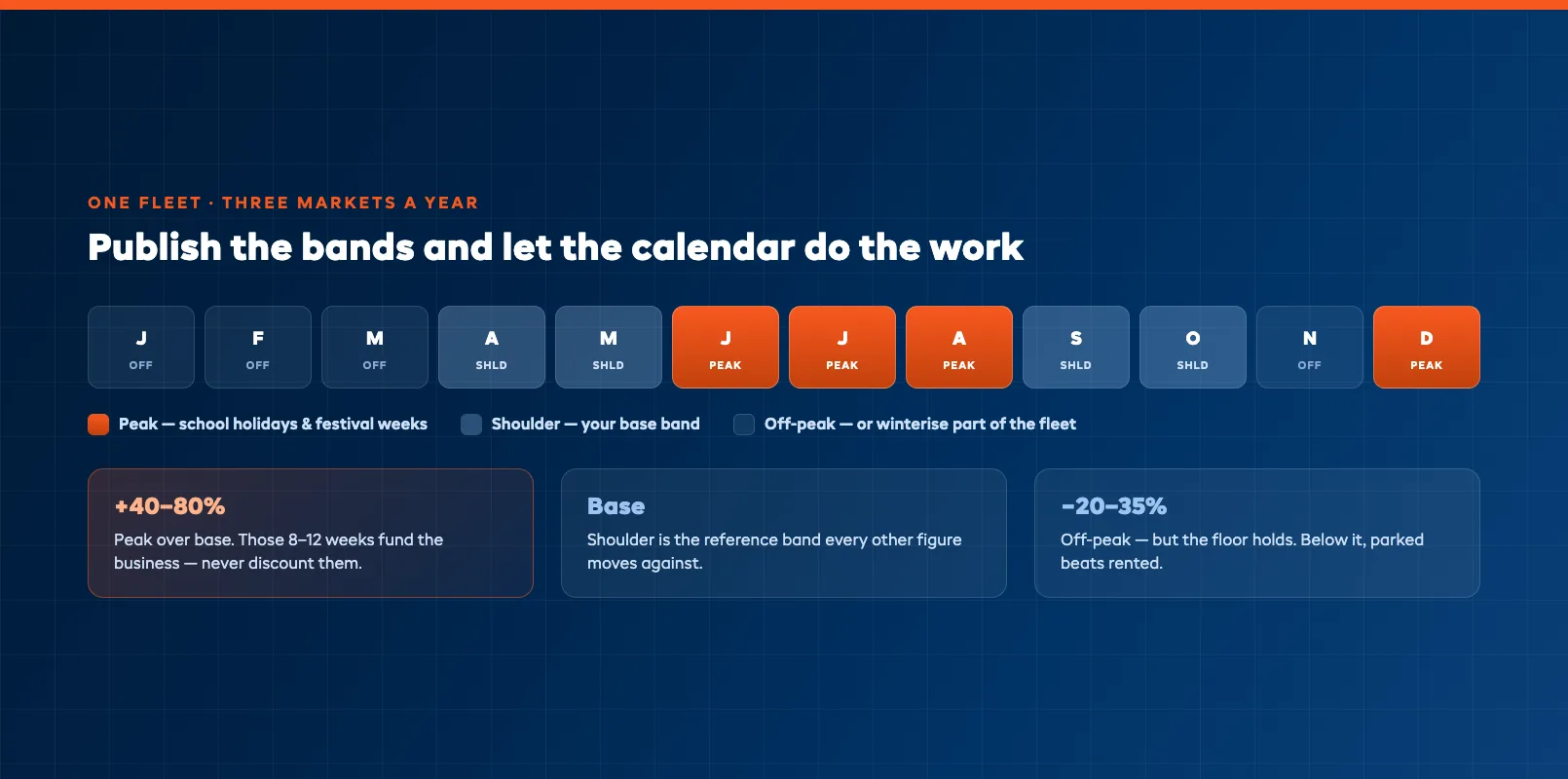
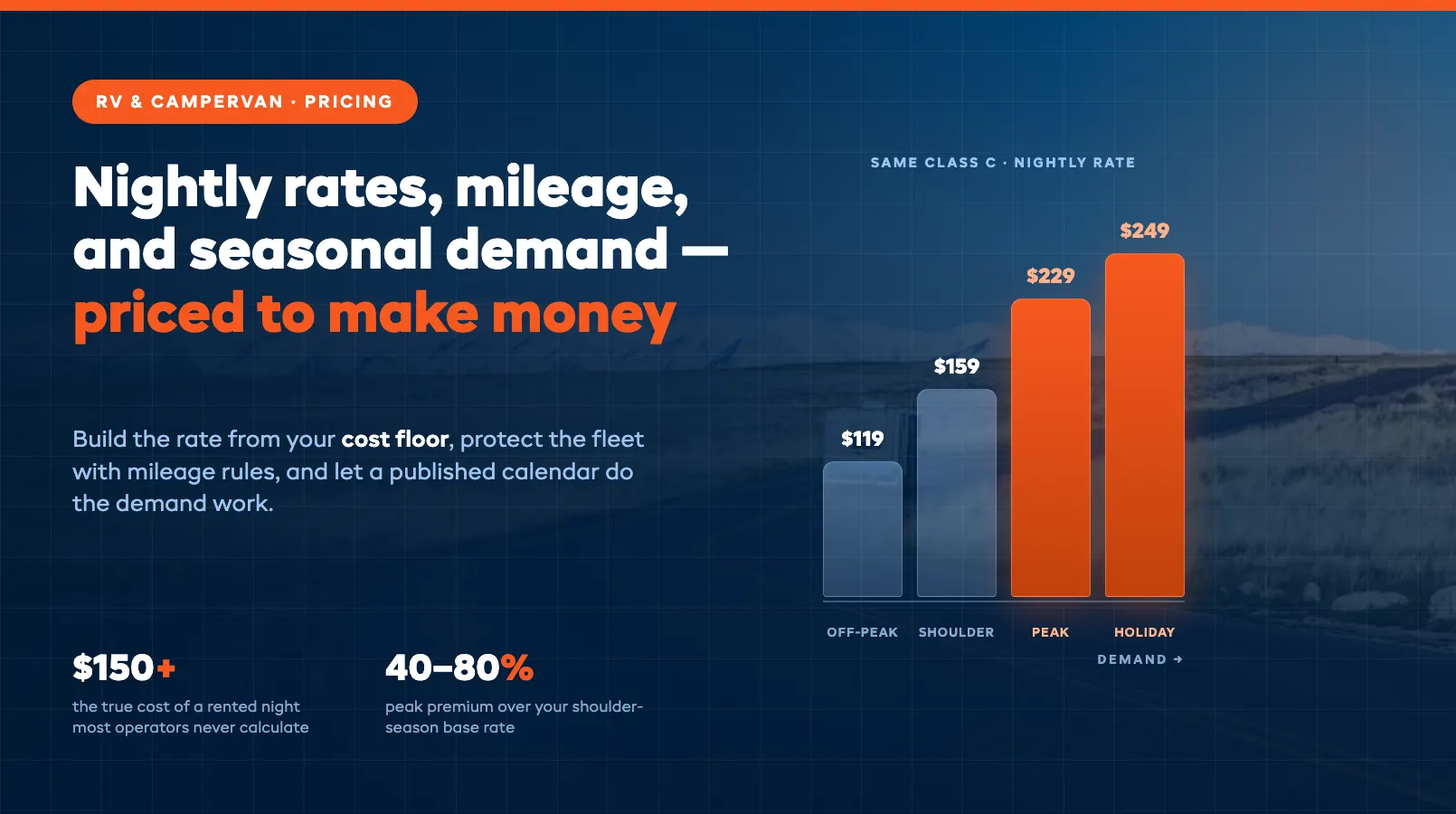
The working pattern: set the shoulder rate as your base. Price peak (summer holidays, Easter, long weekends, local festival weeks) at 40–80% above base, and don't apologize for it; peak demand books out regardless, and every discounted peak night is margin you never get back. Price off-peak at 20–35% below base, but hold the floor from step one: below the floor, a quiet month is cheaper with the unit parked than rented. Some operators winterise part of the fleet instead and skip off-peak losses entirely — the storage decision from the pillar guide.
Publish the calendar in advance and let it be visible at booking. Renters accept that January and July cost different amounts; what they don't accept is a quote that changes between visits with no explanation. If you adjust within a band (nudging a rate up as a holiday week fills) move in small published steps, and never reprice a booking that's already confirmed.
Minimum Stays and Length Discounts
The last layer isn't the rate. It's the rules that shape which bookings you accept. An RV changeover costs the same whether the booking was 2 nights or 14: a multi-hour clean, tank service, and inspection. Short bookings in peak season are how a calendar ends up full and unprofitable.
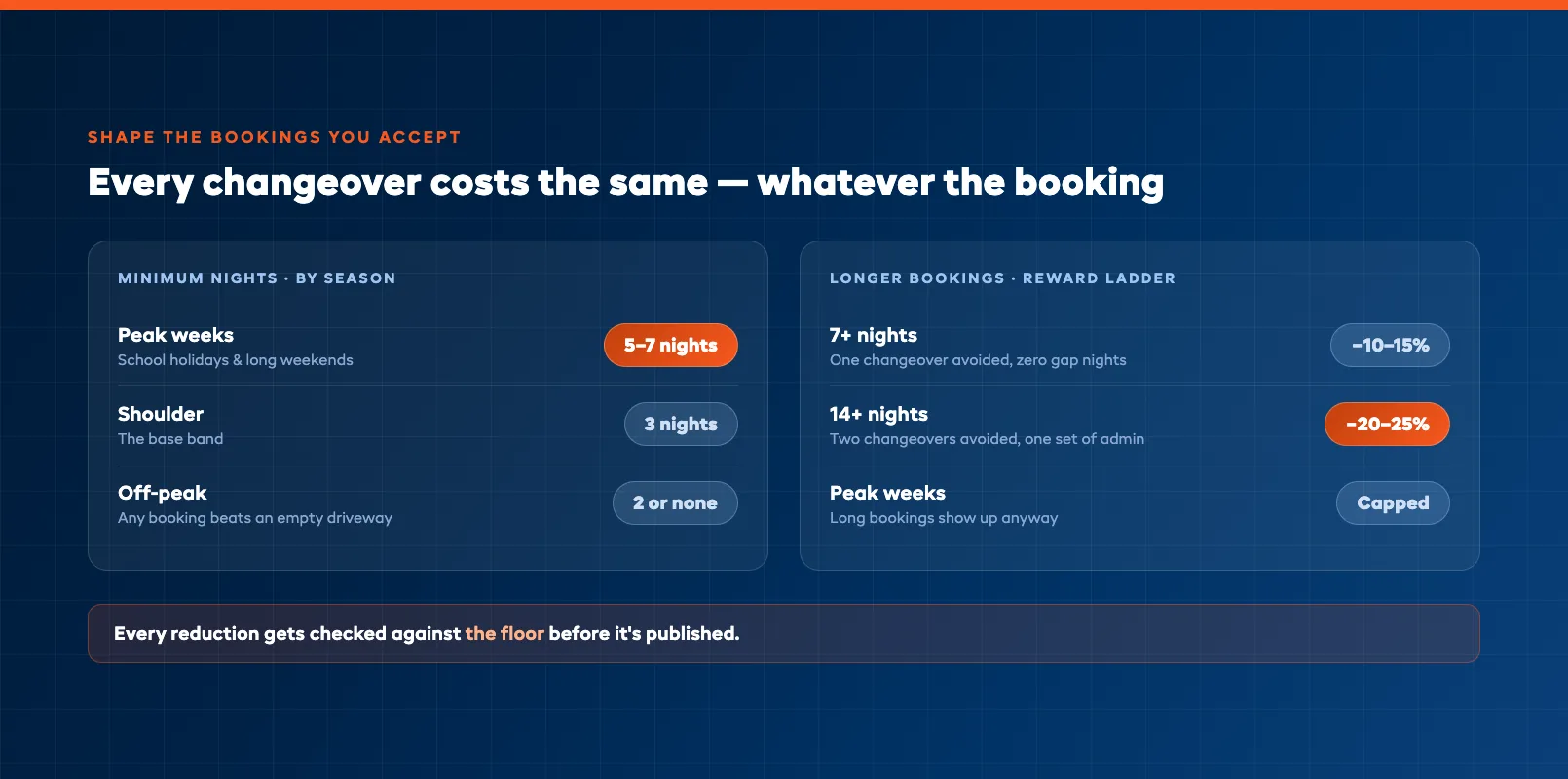
Set minimum nights by season: 5–7 in peak, 3 in shoulder, 2, or none, in off-peak when any booking beats an empty driveway. Then reward length going the other way: a 10–15% reduction on the nightly rate for 7+ nights and 20–25% for 14+ is standard, because a three-week booking means two changeovers avoided, zero gap nights, and one set of admin. Check the discounted rate against your floor before publishing it, and cap discounts in peak — long bookings are welcome in July, but they don't need a sweetener to show up.
Round out the rule set with the money items that sit beside the rate: the security deposit and insurance excess belong in the rental agreement, not buried in a pricing page, and your cancellation terms decide how boldly you can price peak weeks in advance.
Put the Pricing Into the Booking Flow
A pricing model only earns money if it's applied automatically. Seasonal bands, mileage plans, minimum stays, and length discounts held in a spreadsheet get misquoted the first busy Saturday: a staff member quotes the shoulder rate for a peak week, and the error is locked in politely forever.
Modern RV rental booking software holds the whole model: rate calendars by unit class, minimum-night rules by date range, automatic length discounts, mileage plans on the booking, and deposits collected at confirmation. EquipDash does this for RV fleets alongside the calendar and inspection workflow, which means the quote a renter sees at midnight is the same one your policy would have produced, with no one on the phone.
Putting It Together
Price from the floor up, not the competitor down: know the cost of a rented night, band your classes with visible gaps, pick a mileage structure that matches how far your renters actually drive, and let a published seasonal calendar do the demand work. Then shape the bookings you accept with seasonal minimums and length discounts that respect the floor. Review the whole model once a year against realized costs (insurance and parts have a habit of moving) and check the RV rental glossary or the RV & campervan hub for the operational terms behind it. The operators who win on pricing aren't the cheapest; they're the ones who know exactly which bookings make money.
FAQ
How much should I charge per night for an RV rental?
Work out your cost per rented night first: annual ownership costs (finance, insurance, storage, servicing) divided by realistic rented nights, plus per-booking cleaning and admin. Then position against local comparables, typically $120–$220 for campervans, $175–$300 for Class C, $275–$450+ for Class A. Never publish a rate below your cost floor.
Should RV rentals include unlimited mileage?
Only if you price it in. Unlimited works when you add roughly $15–$30 a night to cover average wear, and it suits markets with predictable trip lengths. If your renters range from weekend campers to cross-country tourers, a daily allowance of 150–200 km with a $0.30–$0.55 per-kilometre overage is fairer to you and to short-haul renters.
How much more should peak season RV rates be?
Peak weeks (school holidays, Easter, festival periods) commonly run 40–80% above your shoulder-season base rate. Peak demand books out regardless of small differences, and those weeks fund the quiet months. Discounting peak is the most expensive mistake in RV pricing.
What minimum stay should I set for RV rentals?
Match it to the season: 5–7 nights in peak, around 3 in shoulder, and 2 or none in off-peak. Every changeover costs the same multi-hour clean and inspection whatever the booking length, so short peak bookings burn your best weeks on turnaround labor.
Should I offer discounts for longer RV bookings?
Yes. 10–15% off the nightly rate for 7+ nights and 20–25% for 14+ is standard. A long booking eliminates changeovers, gap nights, and repeat admin, so it's worth genuinely more per night to you. Check every discounted rate against your cost floor, and cap discounts during peak weeks.
Should cleaning and kitchen kit be separate fees or in the rate?
Fold mandatory items into the nightly rate. A rate that grows 25% at checkout converts worse and breeds distrust; renters compare headline numbers. Keep only genuine options (generators, child seats, one-way drop-offs) as paid add-ons, and disclose them before the payment step.
in one place