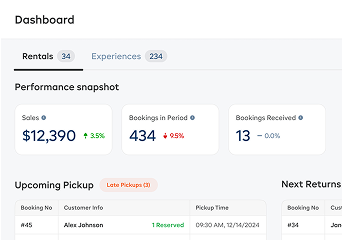
Surf Camp Operations: Multi-Day Packages, Accommodation, Meals
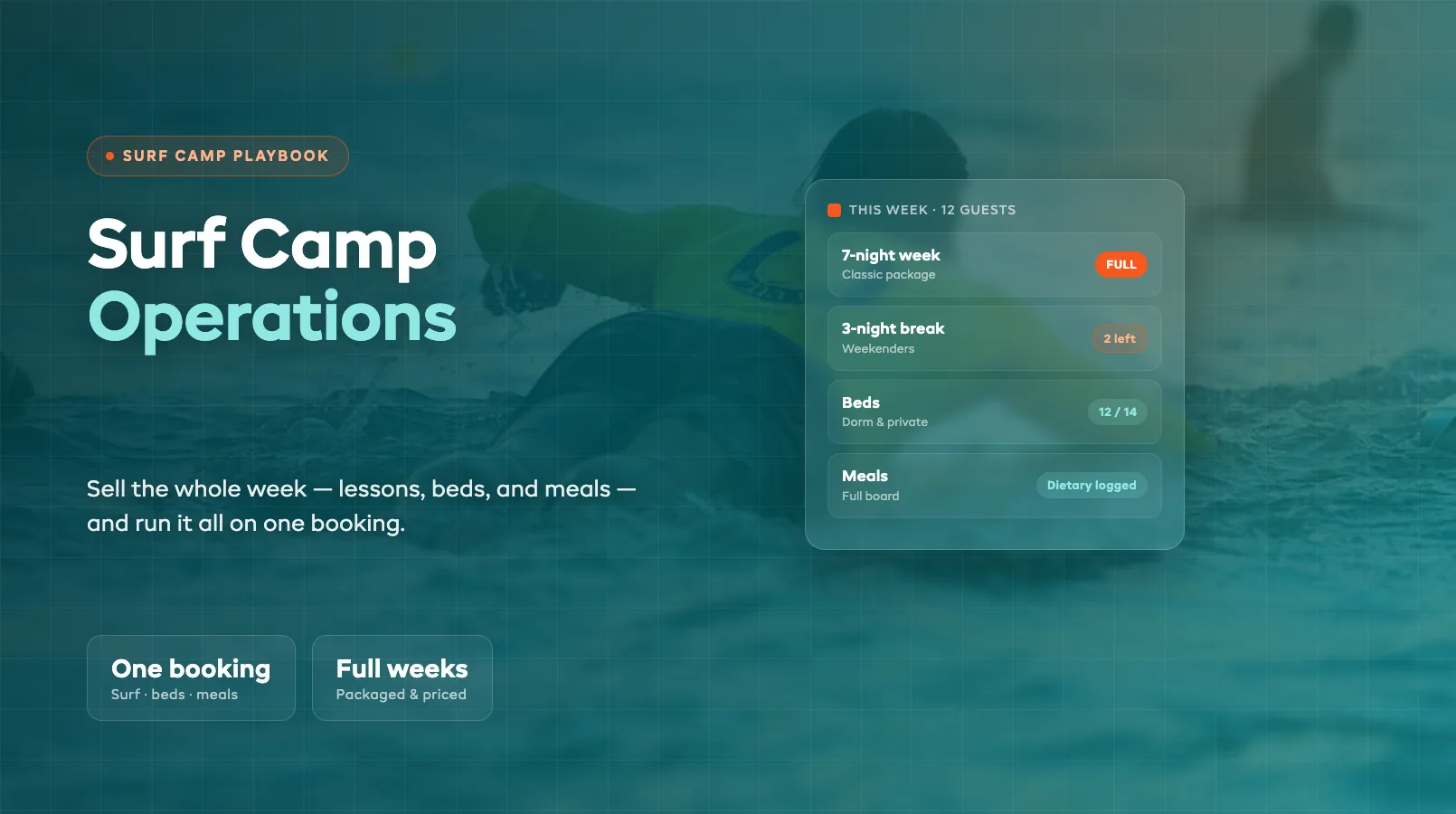
A surf camp is a different animal to a surf school. A school sells a two-hour lesson and the customer goes home. A camp sells a week: waves, a bed, food, and the whole rhythm of the days in between. That means you are running a small hospitality business bolted onto a surf operation, and the two halves have to move together. When they don't, a guest arrives to a bed that was sold twice, a vegan finds nothing but fish on the table, or a group turns up for a session that was never on the board.
Getting camp operations right comes down to a handful of things: packaging the week so it sells, handling accommodation without clashes, feeding people around the surf, and pricing it so a bed held for months actually pays. This guide walks through each. If you are still deciding whether to run a camp at all, start with the full playbook on how to run a surf school and board rental business.
Sell the week, not the pieces
The single biggest shift from a surf school is that you stop selling lessons and start selling packages. A guest should be able to buy one thing (a number of nights, a number of surfs, and their meals) at one price. Piecing a booking together from a bed here, three lessons there, and food worked out on arrival is how mistakes creep in and how guests end up confused about what they paid for.
Most camps build a small ladder of package tiers so there is something for different budgets and trip lengths:
- A short break (3 nights): for weekenders and guests with less time. Two or three sessions, bed, and meals.
- The classic week (7 nights): the backbone. Daily surfs, full board, and enough time for a beginner to actually progress.
- A premium tier: the same week with a private room, extra coaching, or video analysis for guests who will pay more.
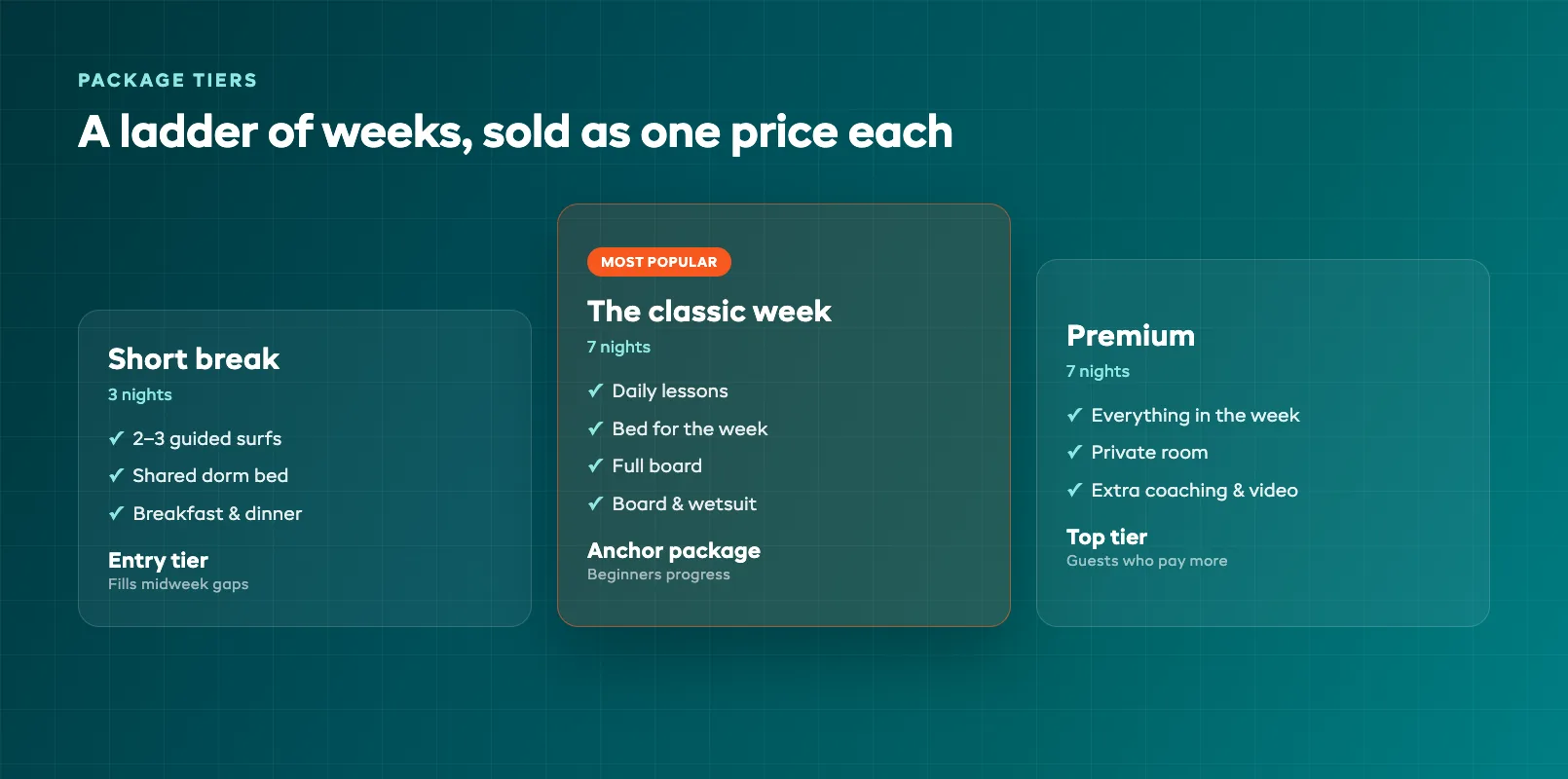
Selling in tiers does two things. It gives guests a clear choice instead of an open-ended menu, and it lets you fill midweek gaps with the shorter breaks while the seven-night guests anchor the calendar. Software built for group, private, and multi-day camp bookings lets you publish these as fixed packages so a guest picks a week and pays once.
Give the days a rhythm
A camp lives or dies on its daily rhythm. Guests are on holiday, but the day still has to be organized around the tides and the surf, and everyone needs to know where to be. A loose, improvised day feels chaotic; a clear rhythm feels like a well-run camp even when the surf is flat.
A typical camp day runs on a repeating shape: breakfast, a morning session while the wind is clean, lunch and downtime through the middle of the day, an afternoon session or theory when conditions allow, then dinner and the evening. The exact times shift with the tide each day, but the pattern stays the same so guests always know roughly what is coming.
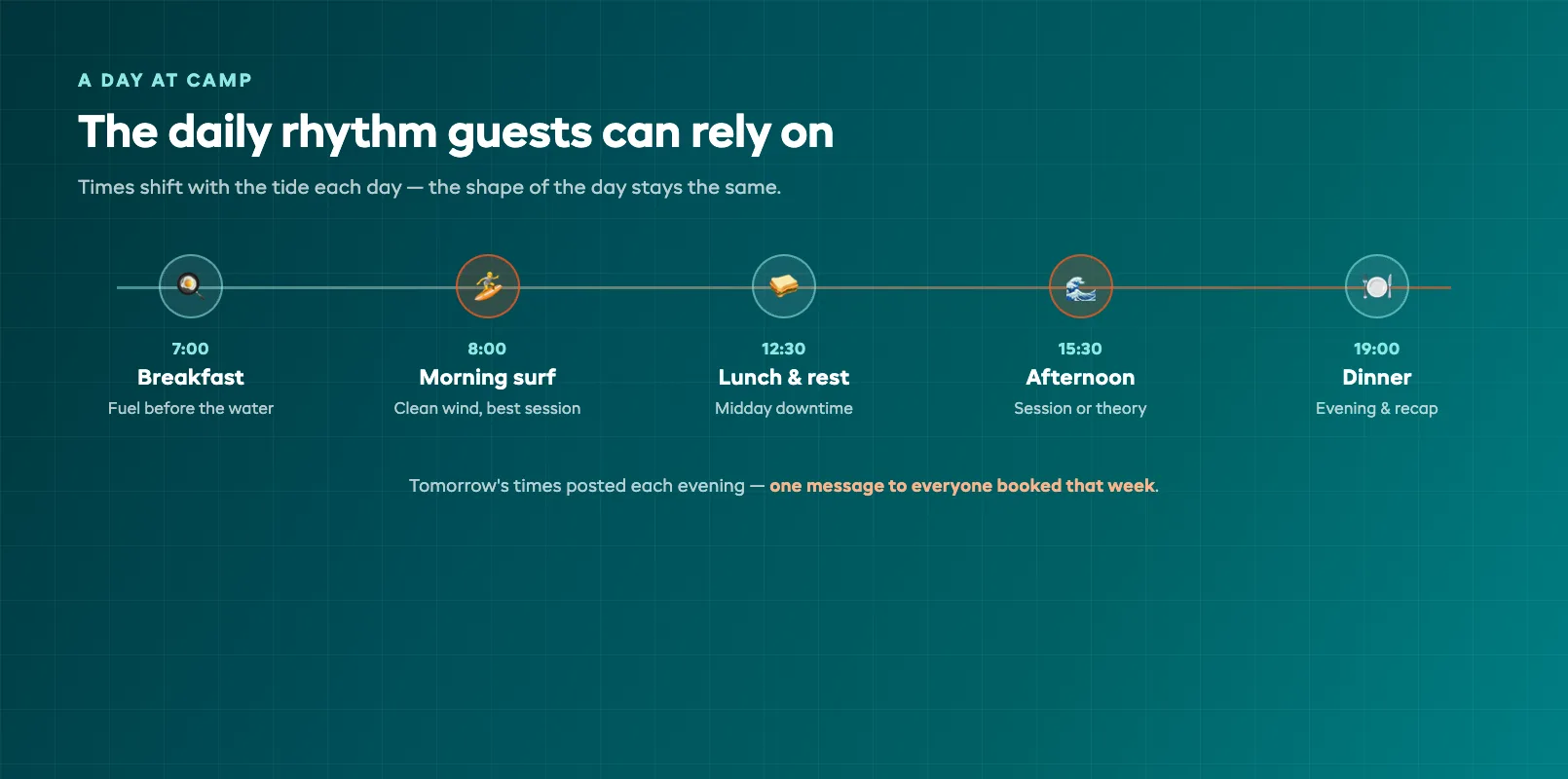
Publish the next day's times each evening: a board at the camp, a message to guests, or both. When the surf schedule and the guest list live in the same place, sending "tomorrow's session is 7am, meet at the van" to everyone booked that week takes seconds. The surf itself moves with the weather, so a reschedule-first weather policy and a clear way to tell guests when a session shifts keeps the rhythm intact on the days the ocean does not cooperate.
Accommodation: the part surf people underestimate
If you come from teaching surf, accommodation is the side that will bite you. A bed is not like a lesson slot. It is held for a whole week, it can only be sold once for each night, and a mix-up means a guest standing in reception with nowhere to sleep. The most common cause is running two systems: bookings in one place, a room plan in a spreadsheet somewhere else. The two drift apart, and eventually a bed gets sold twice.
The fix is to treat every bed as bookable inventory on the same system as the surf. Each bed, dorm space, or private room is tracked against dates, and selling a package for a given week automatically holds the bed for those nights so it cannot be sold again.
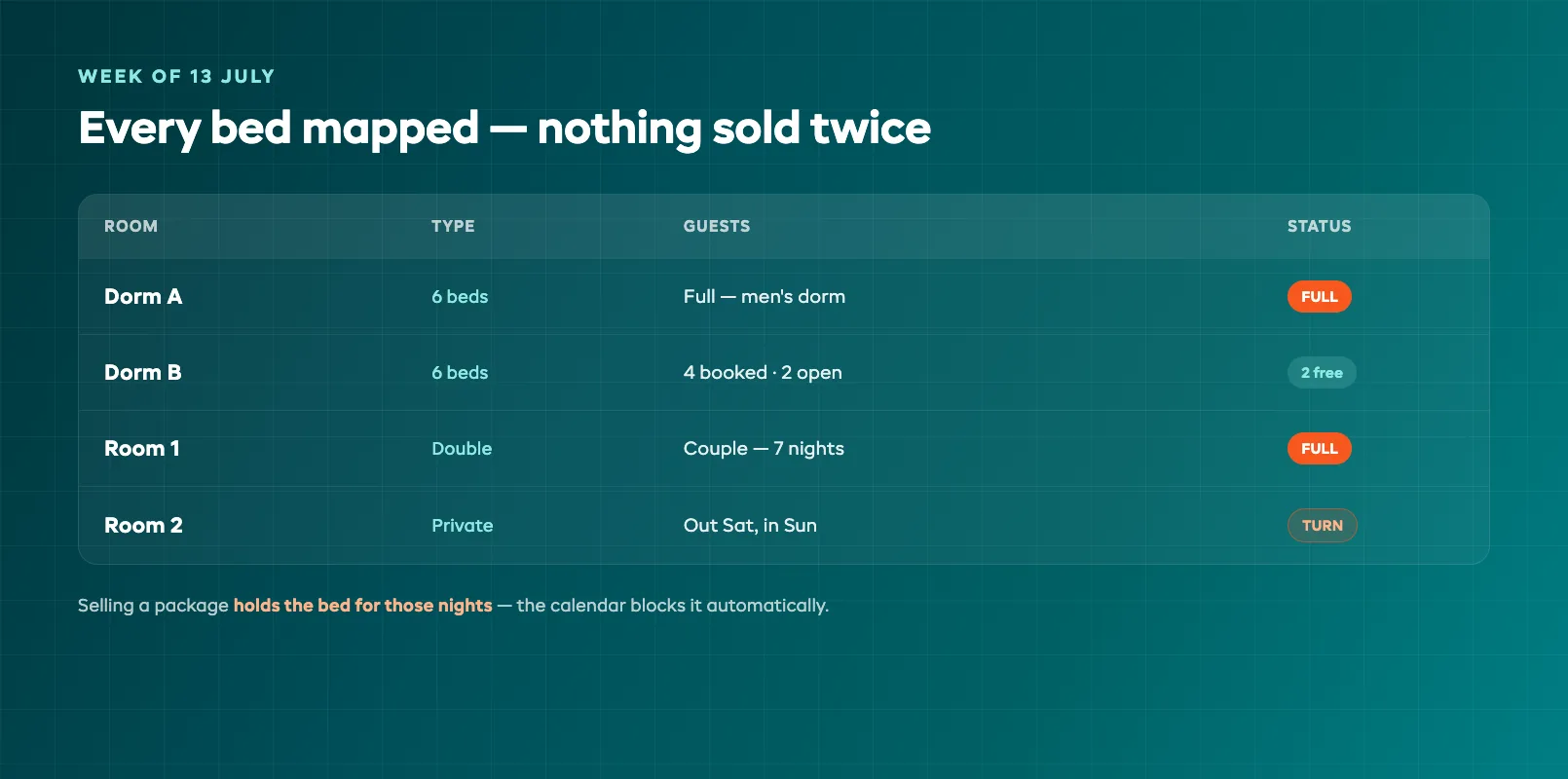
You also need a clear allocation for the week ahead, who is in which room, which beds are same-sex dorms, which couples need a double, and which rooms need a turnaround between one guest leaving and the next arriving. Hold that map in one place your whole team can see. When check-in day comes, the person on reception should be able to see the full week's beds at a glance rather than piecing it together from emails.
Feed people around the surf
Meals are where a camp earns its reputation. Guests come off the water hungry, and food that lands at the right time, and actually suits them, is what turns a good week into a repeat booking. Most full-board camps include breakfast and dinner and often a packed lunch, because a set rhythm is far easier to run than cooking to order for a house full of guests.
The operational trick is capturing dietary requirements at booking, not at the table. Vegetarian, vegan, gluten-free, allergies. These have to travel from the booking form all the way through to whoever is cooking, before the shopping is done. A guest with a nut allergy who first mentions it at dinner on day one is a problem you created at the booking stage by not asking.
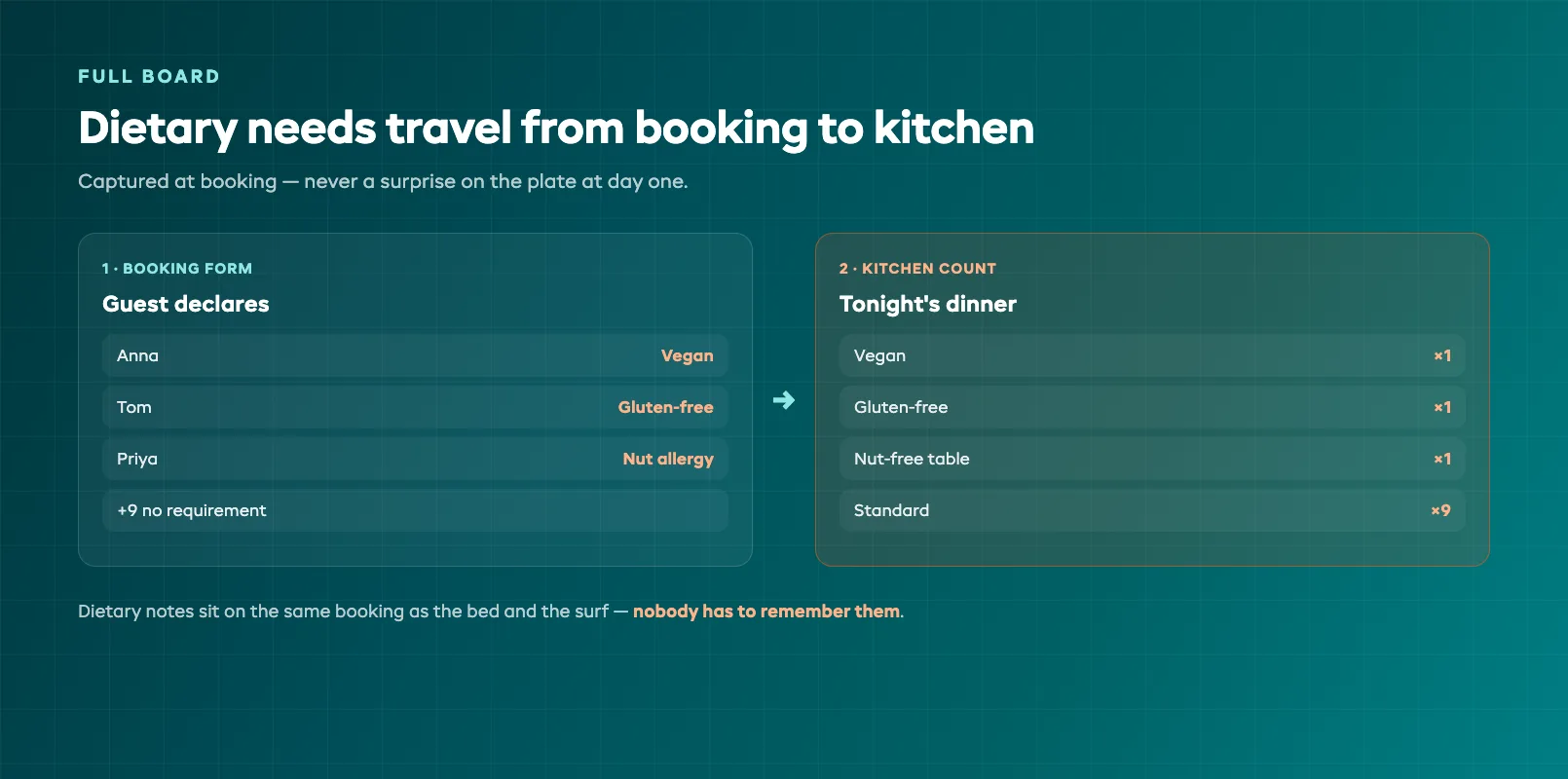
Plan the week's meals around the session times so food is ready when guests come in, not an hour after. Build a repeatable menu you can shop and cook at volume, flag the dietary counts for each night, and the kitchen runs calmly instead of scrambling. When the dietary notes sit on the same booking as the bed and the surf package, nobody has to remember them. They are simply there.
Price the package and protect the bed
A camp package has to cover far more than lesson time. It carries the bed, the meals, the staff, and the wear on your gear across a whole week. Price the tiers as complete bundles and make the value obvious: guests are comparing your week to a flight-plus-hotel-plus-lessons they would otherwise arrange themselves, and the convenience is worth a premium. For the fuller picture on rates, our guide on surf lesson pricing covers how packages and seasonal rates fit together.
The part specific to camps is the deposit and the cancellation window. A bed sold in January for a July week is inventory you cannot resell if the guest pulls out at the last minute. Take a deposit of 20 to 30 percent at booking, set the balance due a fixed number of days before arrival, and state a clear cancellation policy at the point of sale. That protects a room you have held for months and stops a late drop-out leaving you with an empty bed and no income for it.
Gear matters here too. Camp guests are on your boards and wetsuits all week, so build the board and wetsuit fleet and its upkeep into the package cost rather than treating it as an afterthought.
Run the whole camp on one system
Everything above points to the same conclusion: a camp only runs smoothly when the surf side and the hospitality side share one source of truth. The lesson schedule, the beds, the meal plan, the dietary notes, the waivers, the deposits, and the balances all belong on the same booking. The moment they split across a booking tool, a spreadsheet, and someone's inbox, things fall between the two: a bed double-sold, a dietary note lost, a balance never chased.
Put a week's guest on a single booking and the whole picture is there: which package they bought, which bed they are in, what they eat, whether they have signed the ocean-safety waiver, and what they still owe. Your reception, your instructors, and your kitchen all read from the same page. If you want to see how this connects to the rest of a surf operation, the surf equipment rental hub and the surf glossary cover the surrounding pieces.
Putting it together
A surf camp is a hospitality business with waves attached, and the operators who run good ones treat both halves with equal care. Package the week so it sells in clear tiers. Give the days a rhythm guests can rely on. Track every bed so nothing is double-sold, and carry every dietary requirement from the booking form to the kitchen. Price the package to cover the whole week and protect the bed with a real deposit and cancellation window. Do all of that on one system, and a full camp feels calm instead of frantic, which is exactly what brings guests back next season.
FAQ
What is a surf camp package?
A surf camp package bundles a set number of lessons or guided surfs with accommodation and usually meals, sold as one price for a fixed number of nights. Instead of a guest booking a bed, then lessons, then working out food, they buy a week and you handle the rest. Most camps sell three, five, or seven-night packages in tiers.
How do I stop double-booking beds at a surf camp?
Track every bed against dates on one system so a bed can only be sold once for a given night. The mistake that causes clashes is running lessons in a booking system and rooms in a spreadsheet, the two drift apart. When accommodation lives on the same booking as the surf package, the calendar blocks a bed the moment it is sold.
Should surf camp meals be included in the price?
Most full-board surf camps include breakfast and dinner and often a packed lunch, because guests are out surfing and a set rhythm is easier to run than a la carte. Including meals also lifts the package price and the perceived value. If you do include them, capture dietary requirements at booking so the kitchen is never surprised on day one.
How much deposit should a surf camp take?
A deposit of 20 to 30 percent at booking is common, with the balance due a set number of days before arrival. A week-long bed is held for months, so the deposit has to be large enough that a late cancellation does not leave you with an empty room. Set a clear cancellation window and state it plainly at the point of booking.
How many staff does a surf camp need?
It depends on size, but a small camp typically needs instructors for the water, someone running accommodation and check-in, and kitchen cover for meals. The same person often wears more than one hat off-season. The key is that surf, beds, and food each have clear ownership so nothing is assumed and dropped.
What is the best length for a surf camp package?
Seven nights is the classic surf camp week and gives beginners enough time to actually stand up and progress, but many camps also sell shorter three or five-night breaks to catch guests with less time. Offering a small tier of lengths lets you fill midweek gaps and sell to both holidaymakers and long-weekend visitors.
in one place