Surfboard and Wetsuit Rental Management: Fleet, Sizing, Turnaround
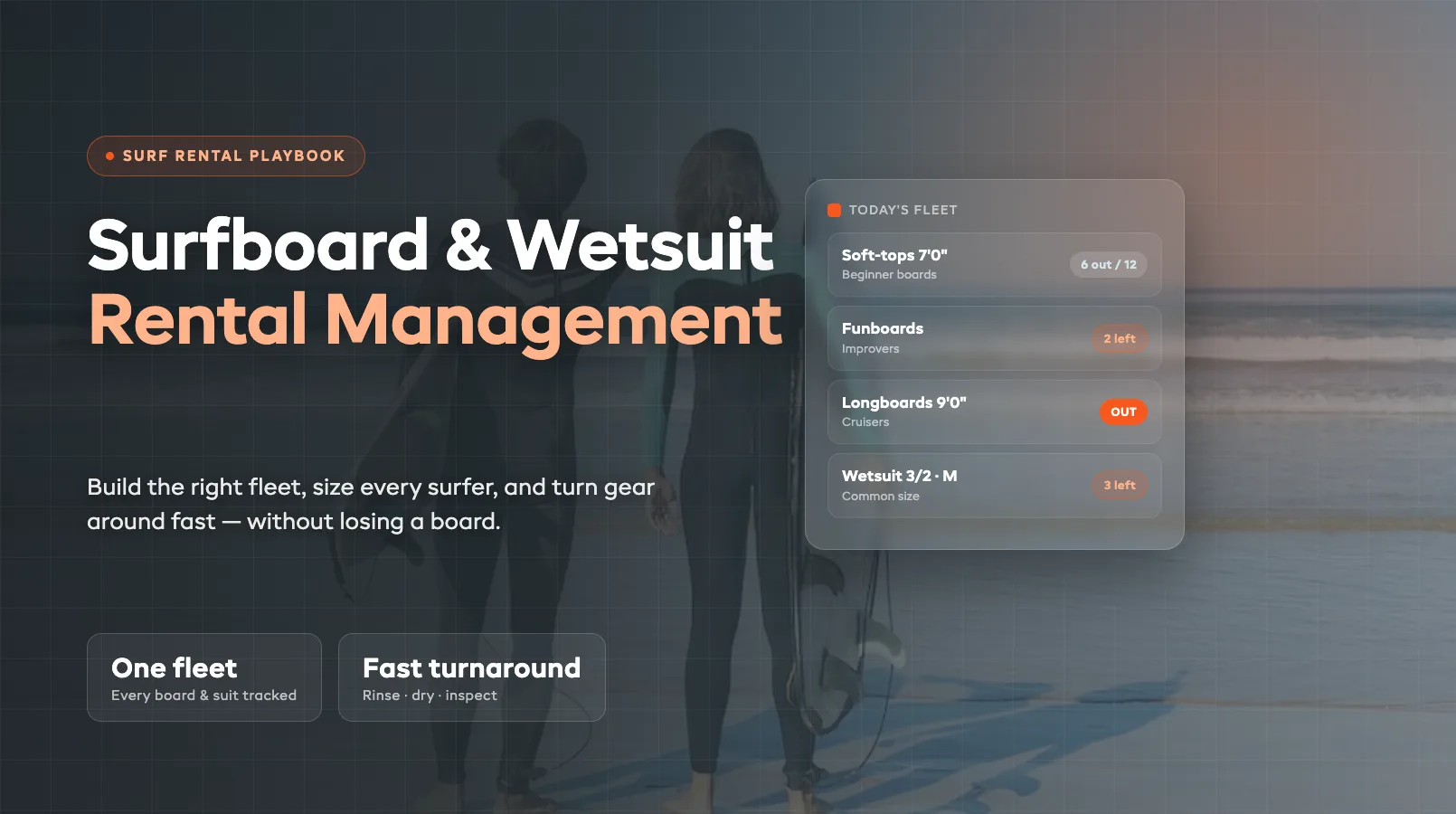
Rental gear is the quiet engine of a surf business. Lessons get the attention, but the boards and wetsuits going out the door every hour are what wear out, go missing, and quietly cost you money when they are not managed well. A cracked rail nobody logged, a wetsuit still soaked from the last customer, a beginner sent out on a board they can't catch a wave on: each of those is a small leak, and they add up across a season.
Managing a rental fleet well comes down to four things: building a board mix that covers every surfer who walks in, sizing each customer to the right gear, keeping wetsuits clean and in stock, and turning everything around fast between rentals without losing track of damage. Get those right and the fleet runs itself. For the full picture of running the operation around it, start with our guide on how to run a surf school and board rental business.
Build a board fleet that covers every surfer
The single biggest mistake new rental shops make is buying the boards they want to ride instead of the boards their customers need. Your rental demand is beginners. Beginners want stability and float, which means soft-tops and funboards, not performance shortboards.
A workable starter fleet leans heavily on the forgiving end:
- Soft-tops (7'0" to 9'0"): the backbone of the fleet. Stable, safe, and cheap to repair. Most of your rentals go out on these.
- Funboards and mini-mals (7'0" to 8'0"): for improvers who have stood up and want to progress.
- Longboards (9'0"+): for cruisers and the growing longboard crowd.
- Shortboards and fish: a small number for experienced surfers who forgot their own or are traveling light.
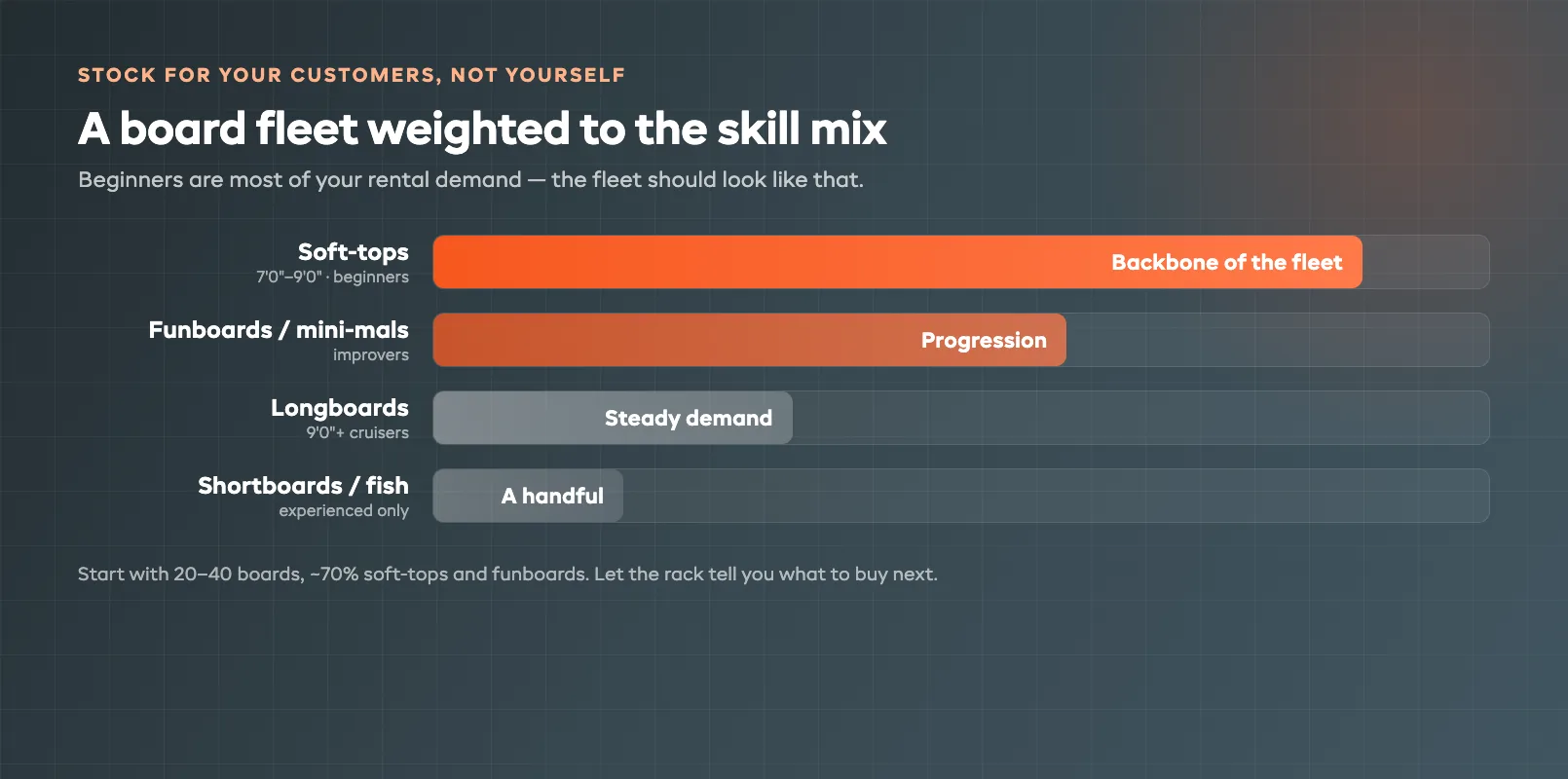
You do not need every shape on day one. Twenty to forty boards is a normal starting fleet, weighted maybe seventy percent toward soft-tops and funboards. Watch which sizes book out first in your opening season, then buy more of those. The rack tells you what to stock far better than a catalog does.
Size the customer to the right board
A board that fits gets ridden. A board that doesn't gets dragged back after twenty minutes of frustration, and often gets dinged in the process because the surfer is out of their depth. Sizing is where good rental staff earn their keep.
The number that matters is volume, measured in liters. Volume is float, and float is how easily a surfer catches waves. A beginner needs far more volume than an experienced surfer of the same weight, sometimes double. So the two questions your staff should ask every customer are simple: how much do you weigh, and how long have you been surfing?
From there the rule of thumb is straightforward. Heavier surfer or newer surfer means a longer, thicker, higher-volume board. Lighter or more experienced means they can drop down in size. Keep a quick sizing chart at the counter so any staff member can match weight and ability to a board without guessing. It protects the customer's session and your gear at the same time.
Stock wetsuits by water temperature and size
Wetsuits are half your rental fleet and they get treated as an afterthought until you run out of mediums on a Saturday. Two things decide what you stock: your water temperature and your size spread.
Thickness follows the water. A 3/2mm suit handles temperate water, a 4/3mm or 5/4mm is needed for cold water, and a spring suit or rash vest covers warm conditions. Stock the thickness your break actually demands, not a bit of everything.
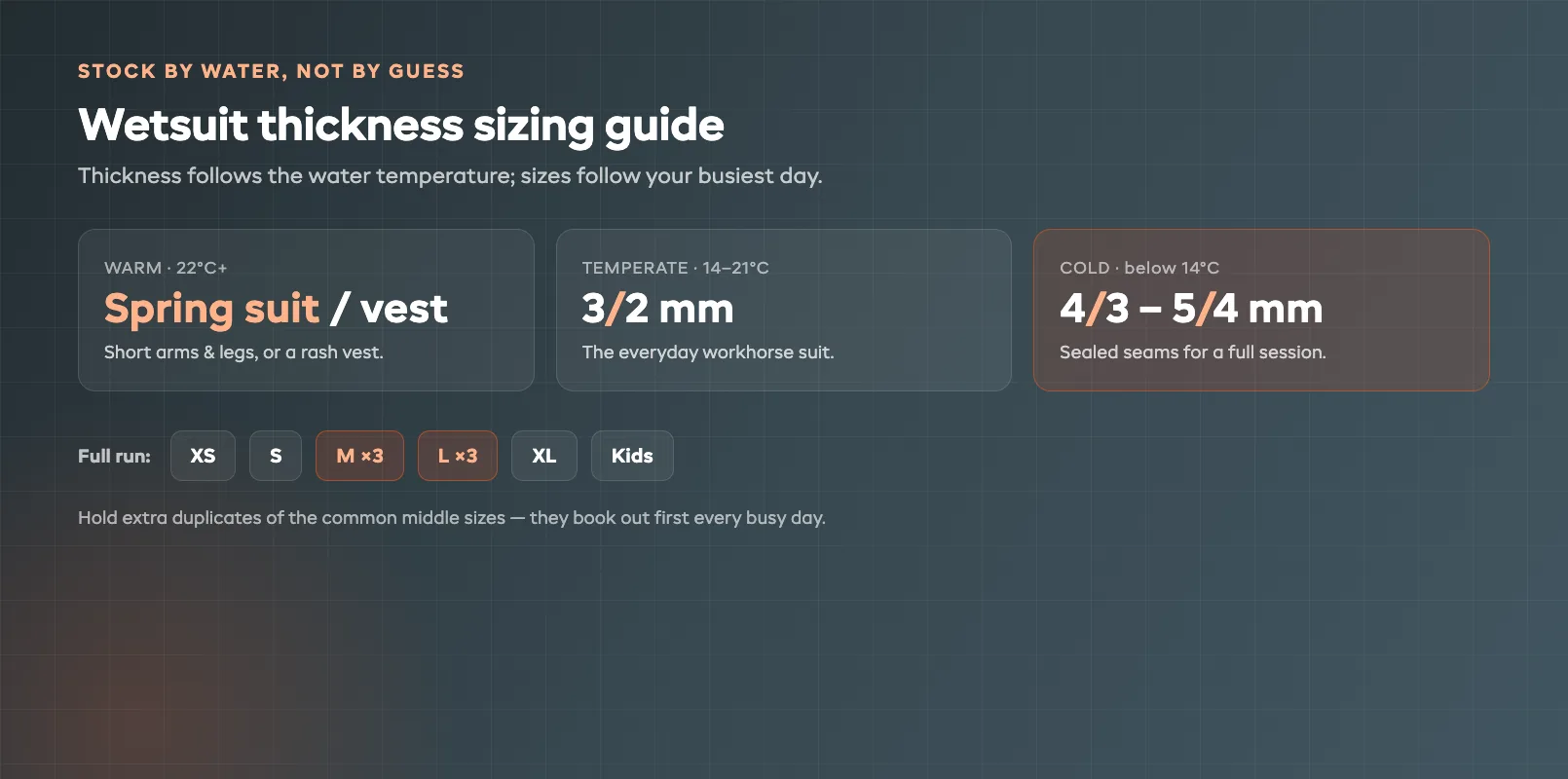
Sizing is where shops get caught short. Carry a full run from extra-small to extra-large, plus kids' sizes if you rent to families, and hold extra duplicates of the common middle sizes. Those go first every busy day. A customer who can't get a suit that fits doesn't rent a board either, so a thin wetsuit range quietly caps your board rentals too. Track suit counts by size the same way you track boards, so you can see a shortage coming before the weekend hits.
Turn gear around fast between rentals
Turnaround is what separates a shop that feels sharp from one that feels tired. The next customer should never get a wet, sandy suit or a board with a ding nobody noticed. That only happens if every return runs through the same short routine.
A clean return process has three steps: rinse, dry, inspect. Rinse the board and wetsuit in fresh water to get the salt and sand off. Dry the suit enough that the next surfer isn't pulling on a cold wet one — a spin dryer and a rail of hangers pays for itself fast. Then inspect both before they go back on the rack.
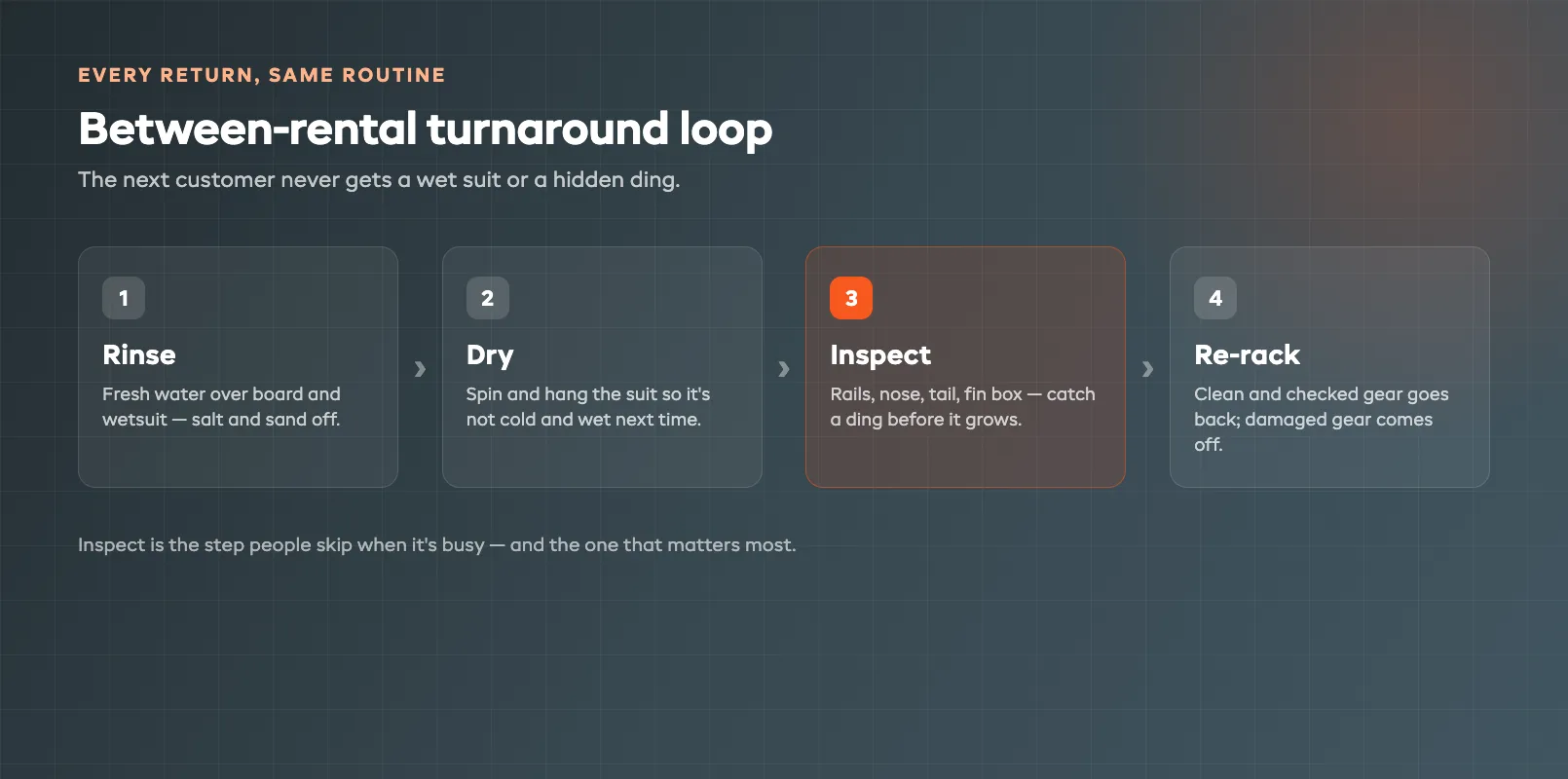
The inspection is the step people skip when it's busy, and it's the one that matters most. Thirty seconds checking rails, nose, tail, and fin box catches a small ding before it becomes a soaked, delaminated board a week later. When a board comes back damaged, it comes off the rack then and there, not after the next customer has already paddled out on it.
Track dings, damage, and repairs
Every rental board gets dinged eventually. The shops that stay profitable are the ones that log it. The shops that bleed money are the ones relying on memory and a shoebox of receipts.
At return, grade the damage against the specific board. A simple three-tier scale works: minor (a pressure ding or small rail nick, keep renting), moderate (a repairable ding, off the rack until fixed), and major (a snapped board or serious delamination, retire or write off). Record which board it was, what happened, and what it cost.
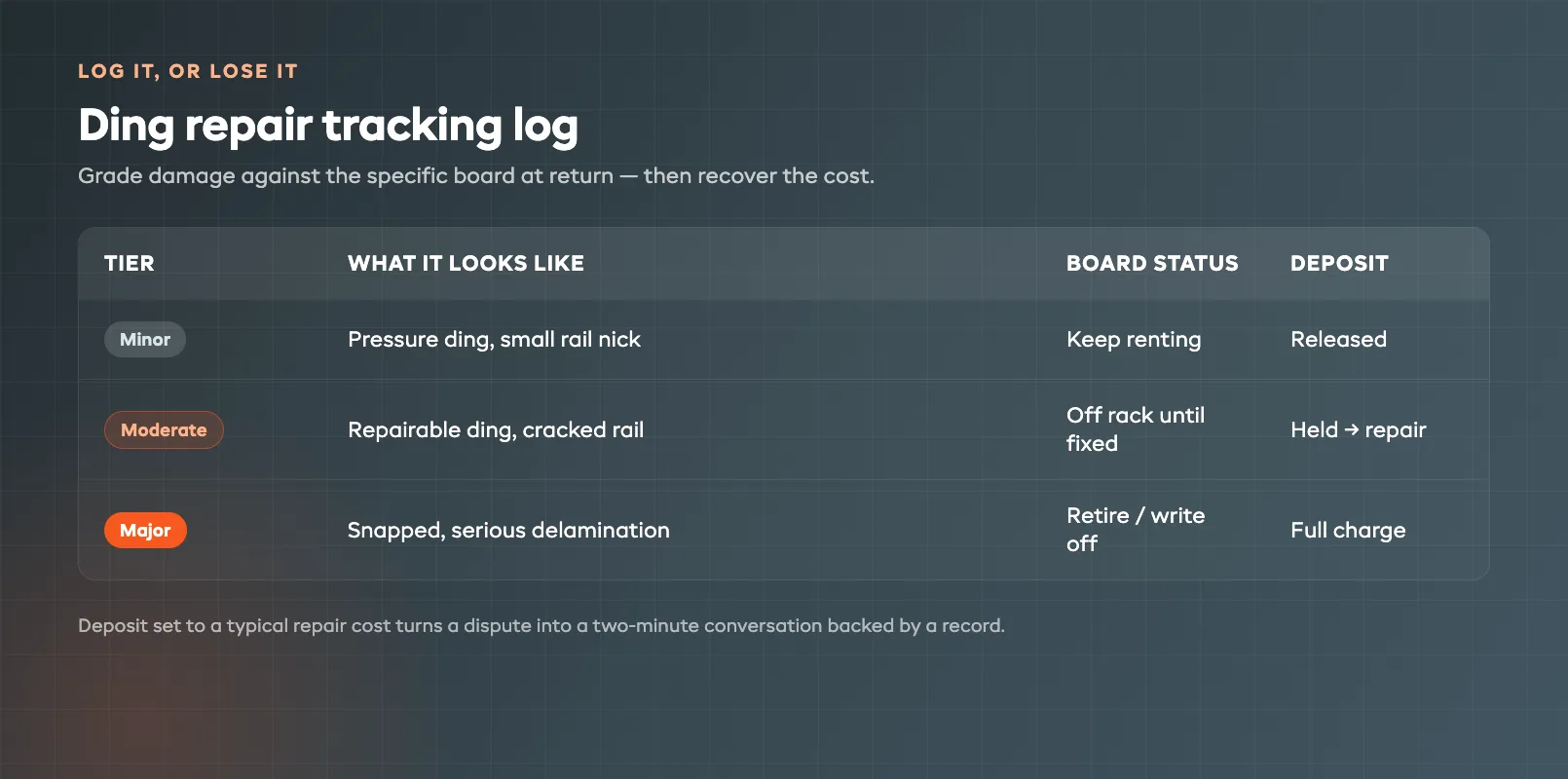
This is also where deposits do their job. Hold a deposit that matches the realistic repair cost of a typical ding — taken at booking, released when the board comes back clean. When the board's condition and its deposit rule live on the same booking, recovering a repair cost is a two-minute conversation backed by a record, not an argument. Tie the whole thing to a return checklist so nothing gets waved through on a busy afternoon. Our surfboard inspection checklist and wetsuit cleaning and care checklist give staff a fixed routine to work from.
Rental terms, deposits, and pricing
Keep the commercial side simple so it holds up when the shop is full. Price by clear blocks (a couple of hours, a full day, a multi-day rate that rewards longer hires) and bundle a board and wetsuit together, since most beginners need both. Set deposits against real repair costs rather than a round number that feels fair, and take them at the time of booking so the gear is never out the door uncovered.
A booking system that also enforces your weather policy saves a lot of grief. When conditions blow out, a water-sports weather alert agent can flag affected rentals so you offer a reschedule instead of eating a refund. For deeper detail on taking bookings across lessons, rentals, and camps, see our guide on surf lesson booking software.
Put the whole fleet on one system
The through-line in all of this is a single source of truth. Every board and every wetsuit should exist as a tracked item, with its size, its bookings, its current condition, and its deposit rule attached. When a customer books, the system holds that specific unit. When it comes back, the return updates its condition. When it's damaged, it drops out of rotation automatically until it's fixed.
Do that and the fleet stops being a pile of gear you manage from memory and becomes an asset that tells you what it's doing. You can see utilization by size, spot the boards that earn and the ones that only cost, and never double-book a suit again. The rental engine runs quietly in the background, which is exactly where a well-run one belongs. To connect it to the rest of your operation, the water-sports hub and the surf glossary are good next stops.
FAQ
How many surfboards do I need to start a rental fleet?
Most small shops start with 20 to 40 boards and weight the mix heavily toward soft-tops and funboards, because beginners drive rental demand. Watch which sizes book out first in your first season and buy more of those, rather than adding exotic shapes that sit on the rack.
How do I match a customer to the right board size?
Match the board's volume in liters to the surfer's weight and ability. A beginner needs far more volume than an experienced surfer of the same weight, so a heavier or newer surfer goes onto a longer, thicker, higher-volume board. Getting this right means they catch waves and put less strain on your gear.
What wetsuit thicknesses should a rental shop stock?
Stock the thickness your water temperature demands: a 3/2mm for temperate water, a 4/3mm or 5/4mm for cold water, and a spring suit or rash vest for warm water. Carry a full run of sizes with extra duplicates of the common middle sizes, because those book out first on a busy day.
How do you turn rental surf gear around quickly between customers?
Rinse the board and wetsuit in fresh water, dry the suit enough that the next customer is not putting on a cold wet one, and inspect both for damage before they go back on the rack. A fixed return routine keeps turnaround fast and stops a hidden ding reaching the next surfer.
How do I stop losing money on damaged rental boards?
Inspect every board at return, log the damage against that specific board, and hold a deposit that matches the repair cost of a typical ding. When the condition and the deposit rule live on the booking, you can recover repair costs fairly and keep the board out of rotation until it is fixed.
Should I charge a deposit on surfboard rentals?
Yes. A deposit or a card held on file covers the cost of a repairable ding and gives customers a reason to handle the gear carefully. Set the deposit against the realistic repair cost of the board, take it at booking, and release it once the board comes back clean.
in one place