
EquipDash hands the busywork — bookings, waivers, deposit holds, weather reschedules — to Dash AI. So you can focus on getting riders out on the trail instead of behind a screen.





 Dashboard

 POS
POS
 Calendar
 Scan a barcode
 Bookings
 Rentals
 Experiences
 Customers
 Staff
Staff
 Waivers & Forms
| # | Lead rider | Ride / Machine | Status | Departs | Price |
|---|---|---|---|---|---|
| BK-2389 | Sarah M. | Guided trail · 6 riders + gear | Confirmed | 24 May 9:00am | $580.00 |
| BK-2388 | Jake R. | Sport quad · self-drive rental | On trail | 24 May 8:30am | $310.00 |
| BK-2387 | Patel family | 4-seat UTV · guided | Confirmed | 25 May 10:00am | $1,420.00 |
| BK-2386 | Marco L. | 2-seat UTV · rental | Returned | 23 May 9:00am | $480.00 |
Dashboard
POS
Calendar
Scan a barcode
Bookings
Rentals
Experiences
Customers
Staff
Waivers & Forms
| Machine / Add-on | Unit # | Qty | Status | |
|---|---|---|---|---|
🏍️ |
Sport quad — Rider 1 | RA-ATV-14 | ×1 | Confirmed |
🪖 |
Helmet + goggles ×2 | ADD-GEAR | ×2 | Confirmed |
Dashboard
POS
Calendar
Scan a barcode
Bookings
Rentals
Experiences
Customers
Staff
Waivers & Forms
| Item | Unit # | Qty | Status | |
|---|---|---|---|---|
🏍️ |
Sport quad — Rider 1
Fender scratch · front left · ~4 in
|
RA-ATV-14 | ×1 | Inspection |
🪖 |
Helmet + goggles ×2 | ADD-GEAR | ×2 | Returned · OK |
More bookings online. Every machine tracked. Every rider contacted automatically. The stuff your last system promised and never quite delivered.
Most riders book direct on your website — if the widget feels like your operation. Embed a branded widget that looks like your trail company, not generic tourism software. Real-time availability, guided-ride + machine-rental pricing, deposit holds, gear add-ons. Mobile-ready and fast, even on the busiest Saturday of the season.
On the trail. Back at base. In service. Overdue. Mark check-in, mark return — from any device. Auto-text the riders running late so you stop chasing them.
A signed waiver and driver-license details captured on every booking before arrival. Riders sign on their phone. Damage photos save automatically. Exports are insurance-ready, not a PDF mess.
Confirmations. Arrival reminders. Overdue chasers. Waiver follow-ups. Weather reschedule offers. Post-ride review requests. All sent automatically — no scripts, no 11pm copy-paste from a spreadsheet. Pulls rider phone right from the booking.
Ask Dash anything in plain English — get the answer in seconds. Or deploy pre-built bots that run in the background while you're out on the trail or at the base.
Three workflows other rental software doesn't have. Plus all the standard tools you'd expect — done well.
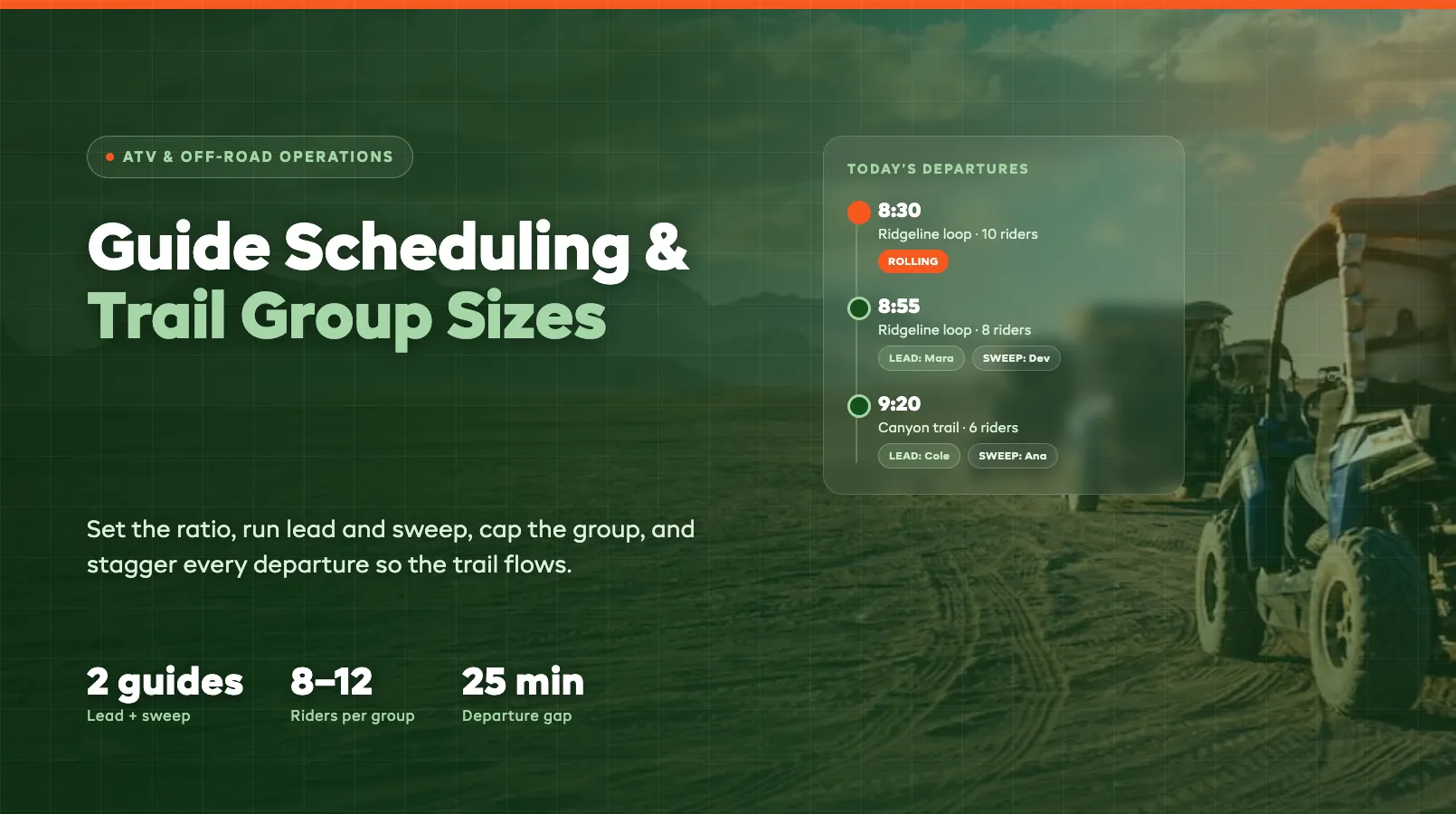
Six riders arrive at 8:55 for a 9am ride. EquipDash assigns each a machine, pulls the right helmet size, sets the guide, and runs the safety briefing on a tablet. Nobody leaves the staging area until every rider has signed the briefing off — then the whole group is on the trail on time.
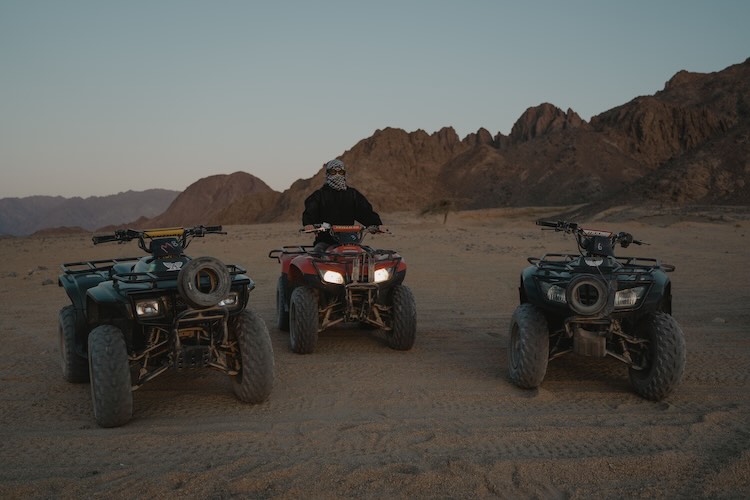
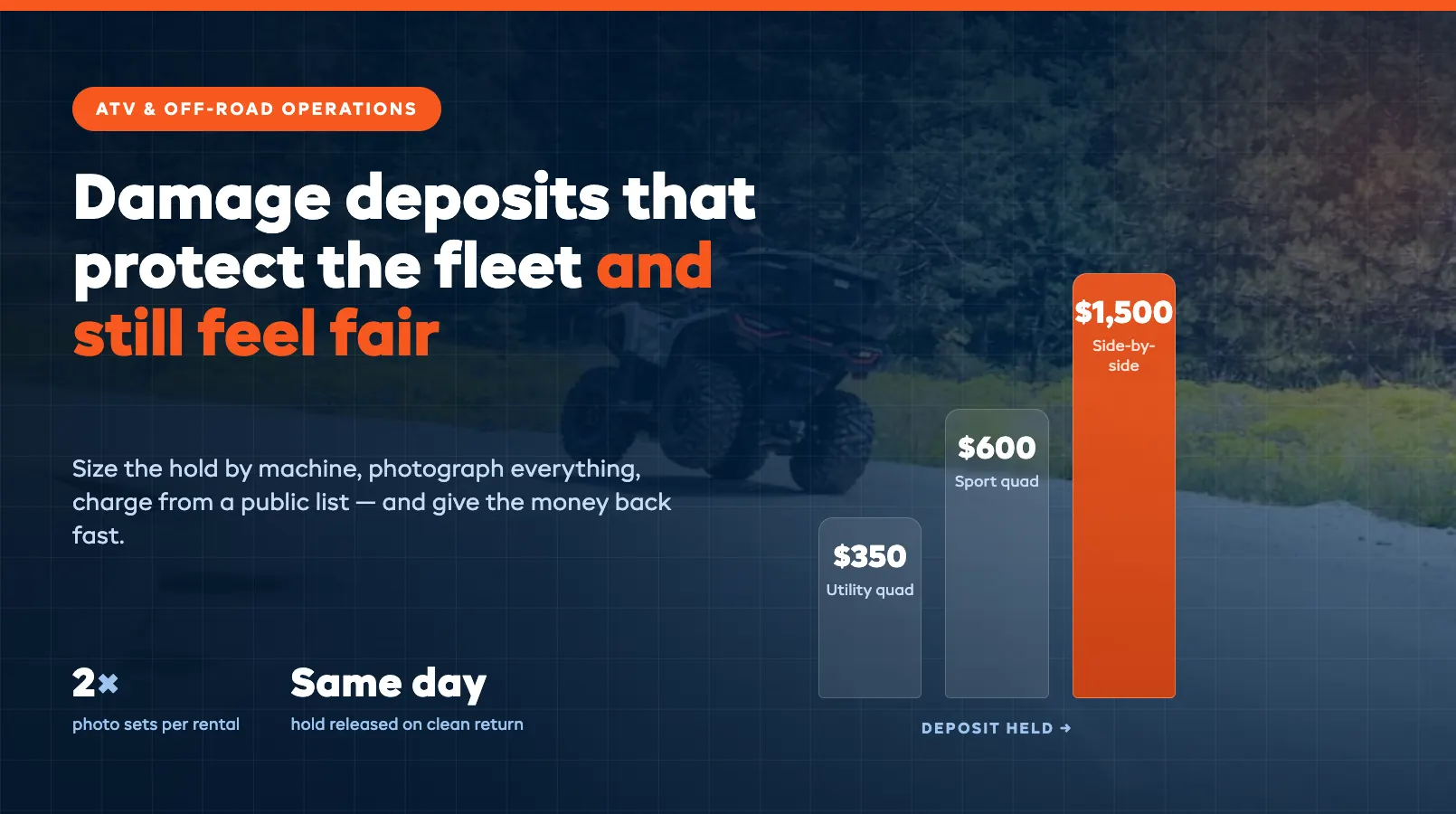
Machines get scratched on rocks and bent in the mud — damage is part of the job. EquipDash pre-authorizes a security hold on the rider's card when they book through Stripe, releases it automatically if the return inspection is clean, or applies it to a documented repair if not. No card-on-file billing, no manual chase.
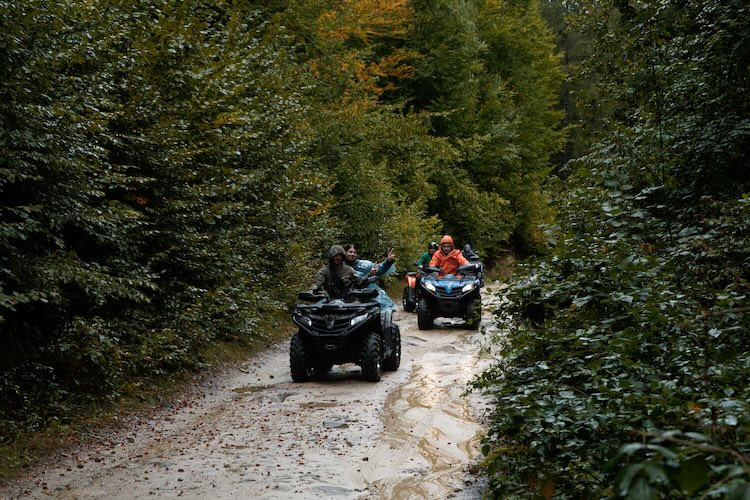
Thursday 4pm the wash floods or a fire closure drops. Dash AI scans tomorrow's 18 rides, texts each rider the closure notice plus a one-tap “reschedule to Sunday” link, and rebooks them automatically. You wake up to a clean Friday calendar, not 18 voicemails from riders already halfway to the trailhead.

The 3 features above are unique to ATV and off-road ops. Everything below is table stakes — and we don't charge extra for any of it.
Every sport quad, utility quad, two-seat and four-seat UTV tracked by unit number and bay. Live updates as machines depart and return — no more “sorry, the UTV is double-booked” mid-Saturday.
Every machine gets a full service history across seasons. Engine hours per unit, oil changes, drive-belt swaps, last inspection. Free ATV service checklists. Searchable by unit, rider or date.
Build rosters for the Saturdays that matter. Pair with the peak-day alert bot to forecast 16 hours ahead.
Riders book, pay a deposit, sign the waiver and submit their driver-license details before they arrive. Counter time cut in half. Pre-booked riders check in 3x faster than walk-ups.
Handle a family of six on two UTVs, a stag party of eight across quads and a side-by-side, or a multi-machine corporate day — all in one flow. One waiver per rider (guardian-signed for minors), one invoice, one consolidated deposit hold.
Ring up walk-up riders in seconds. Tap-to-pay on iPad or phone, customer lookup for repeats, gear and add-ons in the same flow — no separate till to reconcile.
Signed on phone before they arrive. Driver license captured at booking. Guardian-signed for minors. Every waiver archived and searchable, insurance-ready exports.
Each trailhead, staging area or ride base has its own fleet, guides and reporting. Owner-level dashboard rolls them up. Guides can be assigned to multiple sites. Popular pattern: a main desert base plus a seasonal mountain loop and a satellite trailhead.
DESTINATIONS
Browse our directory of ATV and off-road operators across 12+ trail destinations. Find operators near your trip or use the directory as a benchmark for your own operation.
AI FRONT DESK
Riders ask about experience levels, licensing and what's included before booking. AI Front Desk answers on the phone and in the chat from your own safety info, recommends the right ride, and takes the booking, filling more departures without tying up your phone.
AI assistant — may make mistakes. Confirm details with Red Rock ATV Co.
AI AGENT TEMPLATES
Pre-built AI agent templates for ATV and off-road operators. Guide briefings, weather and trail reschedules, engine-hour maintenance, no-show recovery, damage report drafting, dormant rider reactivation, deposit release, waiver and license chasing, and review requests. Build any of them in Dash Bots in seconds with a plain-English prompt.
BLOG
 Guides
 Guides
 Guides
 Guides
 Guides
 Guides
ATV & OFF-ROAD GLOSSARY
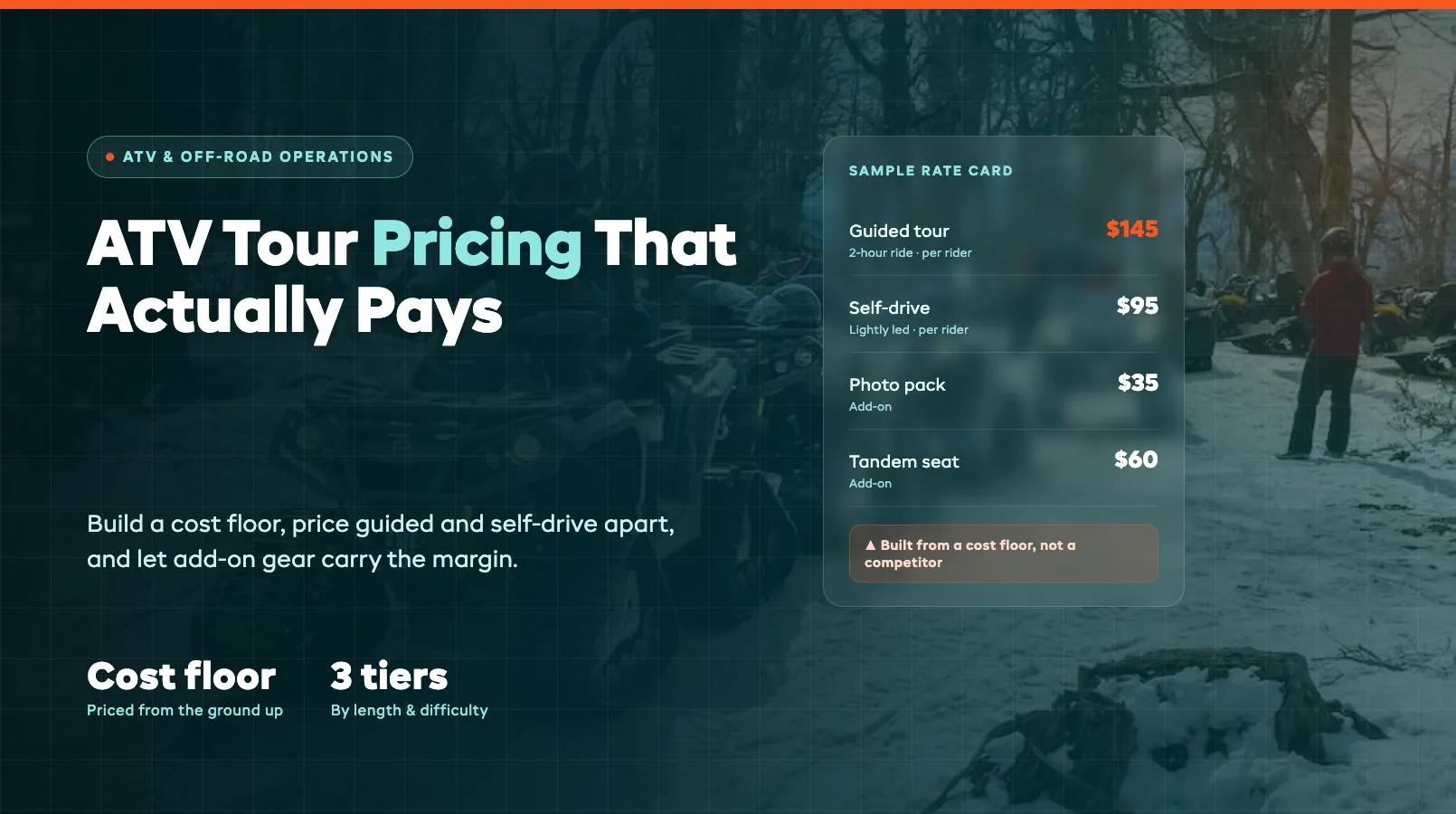
Quick reference answers to the terms that come up when researching ATV tour software, machine fleet management, weather and trail operations, rider safety and off-road logistics. Want the full lexicon? Open the ATV & off-road glossary below.
ATV tour software is a platform that manages every part of a guided ATV / off-road operation — online bookings, machine fleet, deposit holds, rider waivers, license and age capture, pre-ride safety briefings, payments, damage reports and customer comms — in one place. Modern systems like EquipDash replace the spreadsheet-and-clipboard setup most operators grew up on and add AI bots that handle the repetitive admin (weather reschedules, overdue chasers, review requests, waiver chasing) automatically.
A guided ride puts a rider on a machine behind your guide on a set trail — you control the route, the pace and the group size, and the rider signs a waiver, shows a valid license, and puts up a deposit. A machine rental hands the ATV or UTV to the rider to explore an open OHV area alone; you set the return time and rely on the deposit hold for damage. This page covers both — EquipDash runs guided rides and self-drive rentals through the same booking flow.
An ATV (all-terrain vehicle, or quad) is a straddle-seat, handlebar-steered machine for one rider — some are set up 2-up for a passenger. A UTV (utility task vehicle, also called a side-by-side or SxS) has bucket or bench seats, a steering wheel, seatbelts and a roll cage, seating two to six. UTVs suit families and less-experienced riders; sport quads suit confident solo riders. EquipDash tracks each machine type separately so availability, rate and deposit are right per unit.
A damage deposit (or security deposit) is a pre-authorization hold placed on the rider’s card at the time of booking — typically $500 for a single-rider quad up to $2,500 for a four-seat UTV. The hold sits on the card without being charged; if the post-ride inspection is clean, it’s released automatically (Stripe voids the auth and the hold drops off the rider’s statement in 2-7 days). If damage is documented — a scratched fender, a bent A-arm, a torn seat — a rate-card-priced repair charge is applied against the hold and the balance is released. This is the standard approach across off-road operators — far cleaner than billing a "card on file" after the fact.
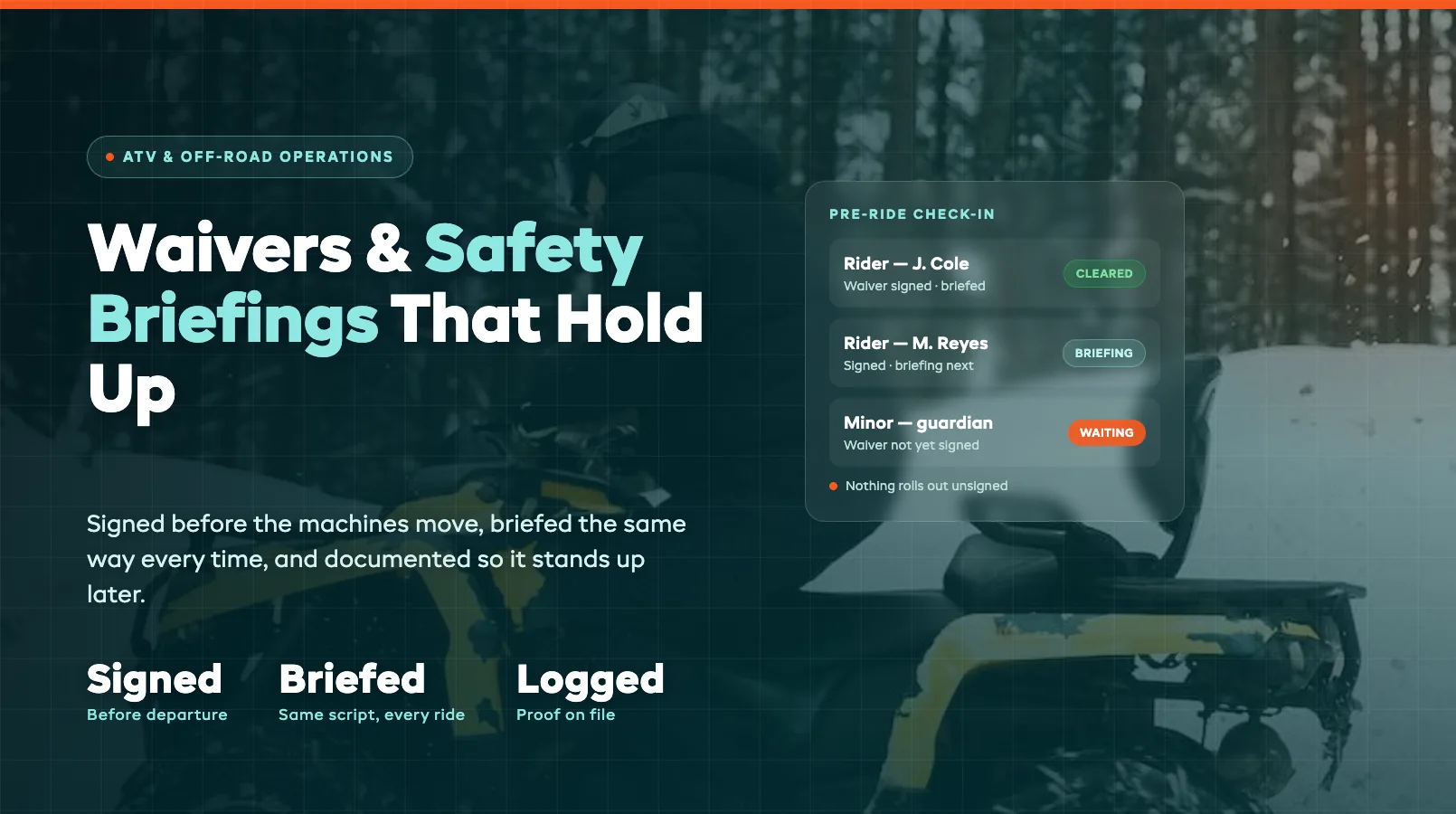
A pre-ride safety briefing is the structured walkthrough a guide gives every rider before the group rolls out. Typical items: DOT helmet fit and chin-strap check, the tether kill switch, throttle and brake demo, low-range and 4x4 selection, seatbelt / harness on UTVs, sidehill and line-choice basics, and the sweep-rider and hand-signal plan. In EquipDash this lives as a per-machine checklist on a tablet — the booking cannot move to "on trail" status until every item is signed off. The completed briefing attaches to the booking record for insurance and audit.
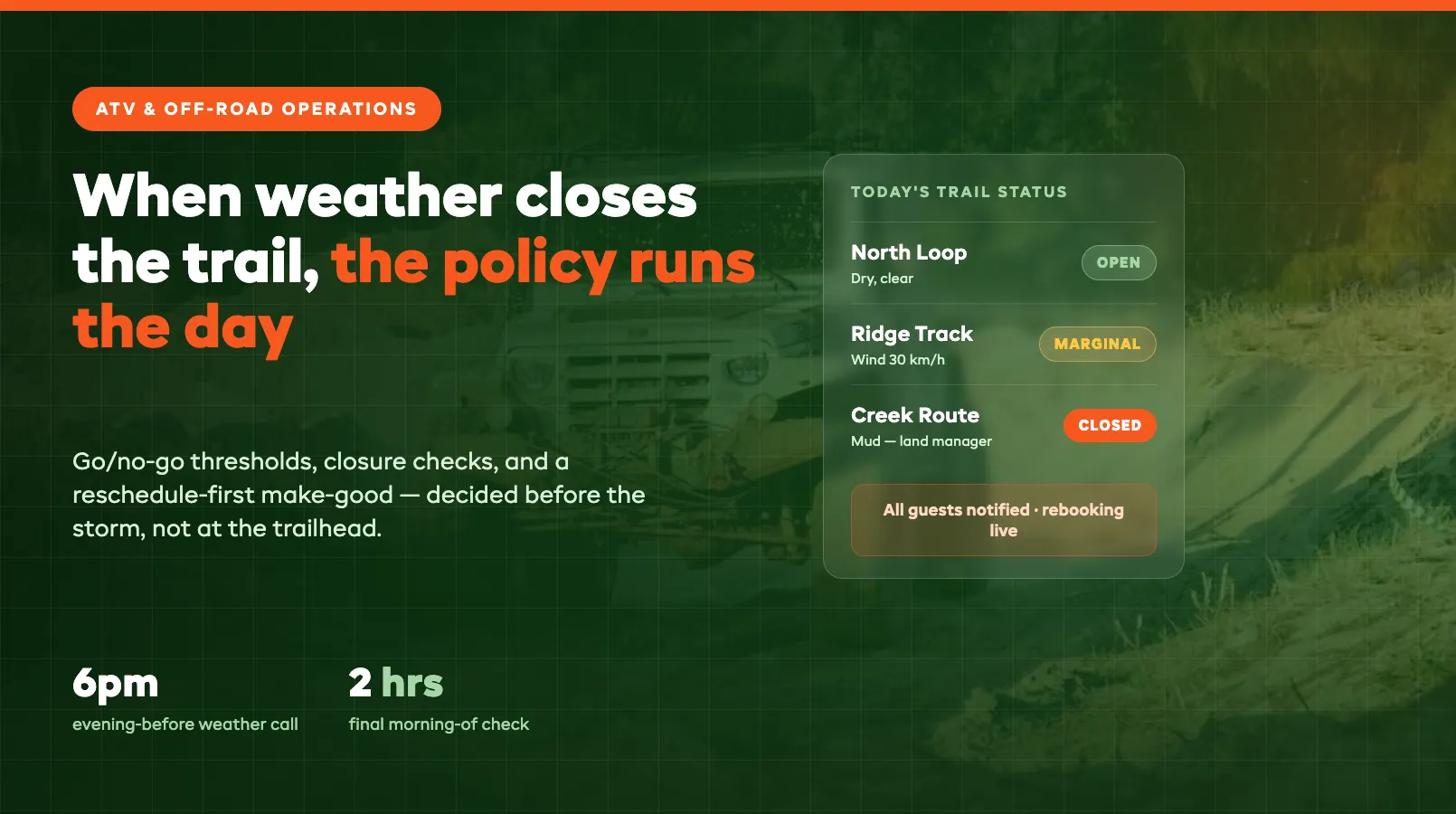
Best practice is to set explicit thresholds (heavy rain, flooded washes, deep mud, high fire danger, or an official trail / OHV-area closure), watch the forecast and closure notices the evening before each ride, and proactively text every booked rider the night before — not the morning of — with a one-tap reschedule offer to the next open slot. EquipDash automates this with the Weather / Trail Reschedule bot: the forecast or closure hits your threshold, every booked rider gets a personalized text, deposit holds roll forward to the new slot, and refunds inside policy are self-serve. Decide evening-before, not morning-of: riders are often already driving up by sunrise.
A single-base operation works from one trailhead or staging area — one machine fleet, one guide roster, one set of departure slots. A multi-base operation runs machines out of multiple physical sites (a desert base plus a mountain base, a main lot plus a seasonal ramp) with separate fleets, capacity and guides at each site. Multi-base operators need software that tracks machines and bookings per site — closing one base for a fire or a washed-out trail shouldn’t black out the others. EquipDash handles both single and multi-base with no extra add-on.
Fuel handling on off-road machines follows two common patterns: (1) "return-full" — the rider tops up before rolling back and shows the receipt; (2) "fuel included" — the rider prepays a fixed fuel charge at booking and the operator refuels at return. EquipDash supports both: the fuel charge is sold as a line-item add-on at booking, and fuel used at return can be captured in the post-ride inspection. No more awkward "and how much did you burn?" conversation at the staging area.
Damage charge defense is the operational habit of capturing enough evidence at departure and return that any disputed charge — a Stripe chargeback for a $200 cracked fender, an insurer query on a $900 bent A-arm — is winnable. The five-step record: pre-ride photo of the machine, signed waiver and license details, post-ride inspection photo with the damage flagged, rate-card line item applied to the deposit hold, and the rider notified by text with the photo and rate-card reference. EquipDash automates all of this — the Damage Report Drafter bot assembles the report from the return scan, so you just review and send.
Fleet utilization is the percentage of your machine-hours that are actually booked over a period. A 12-machine operation running 8 hours a day for 30 days has 2,880 machine-hours of supply; if you booked 1,440 of those, your utilization is 50%. Healthy operators in peak season run 55–75% on their machines. EquipDash reports utilization per machine type (sport quad, utility quad, two-seat UTV, four-seat UTV) and per base so you know which machines to add to the fleet, which to retire at end of season, and which base is over- or under-supplied.
Most off-road operators send four touchpoints by SMS: arrival reminder with departure time and staging location (the night before), waiver and license chase (12 hours before, if unsigned), overdue follow-up (15-30 min past return time, with extension offer), and review request (1 hour after the machines roll back). Each one is a small touch but stacked together they cut no-shows, recover late-return revenue, and lift your Google rating. EquipDash ships these as pre-built Dash Bots — no scripts to write, no SMS provider to wire up.
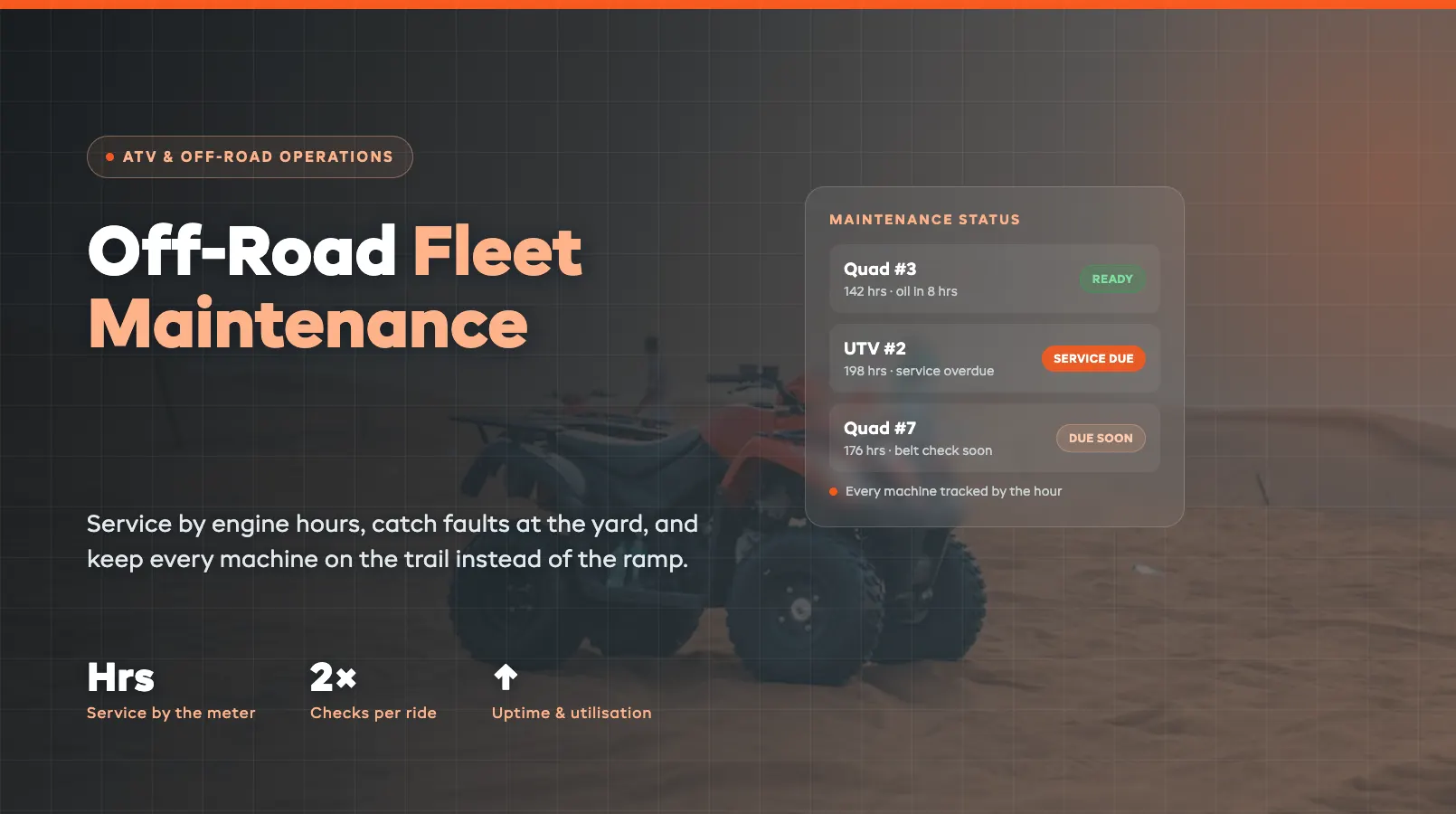
Yes. Rental ATVs and UTVs run on hour-meter schedules — oil change at 25 hours, valve check, drive-belt inspection on CVT machines, major service intervals. Missing an interval shortens engine life and voids warranty. EquipDash tracks engine hours per machine and the Machine Service-Due bot auto-creates a service ticket the night before any unit hits its interval, so the machine goes into the shop instead of leaving the base with overdue maintenance. Hour-meter readings are entered manually at return; we don’t pull live telemetry from the machine.
GLOSSARY
60+ ATV and off-road terms every owner, guide and base lead should know — from pre-ride safety briefings and Stripe deposit holds to DOT helmets, roll cages, trail closures and the ride-ops terminology that makes busy summer Saturdays predictable.
FREQUENTLY ASKED QUESTIONS
Real questions from ATV and off-road operators evaluating EquipDash. If yours isn't here, get in touch.
Contact UsPlans start at $29/month. 21-day free trial, no card. There is a 1–2% platform fee you can pass to the rider at checkout — so unlike FareHarbor or Peek Pro pulling 1–6% off your top line, your margin stays yours.
Start your free 21-day trial and explore every feature, including Dash AI and Dash Bots. No credit card, no commitment.
