Weather and Sea Conditions: Cancellation Policy for Dive Operators
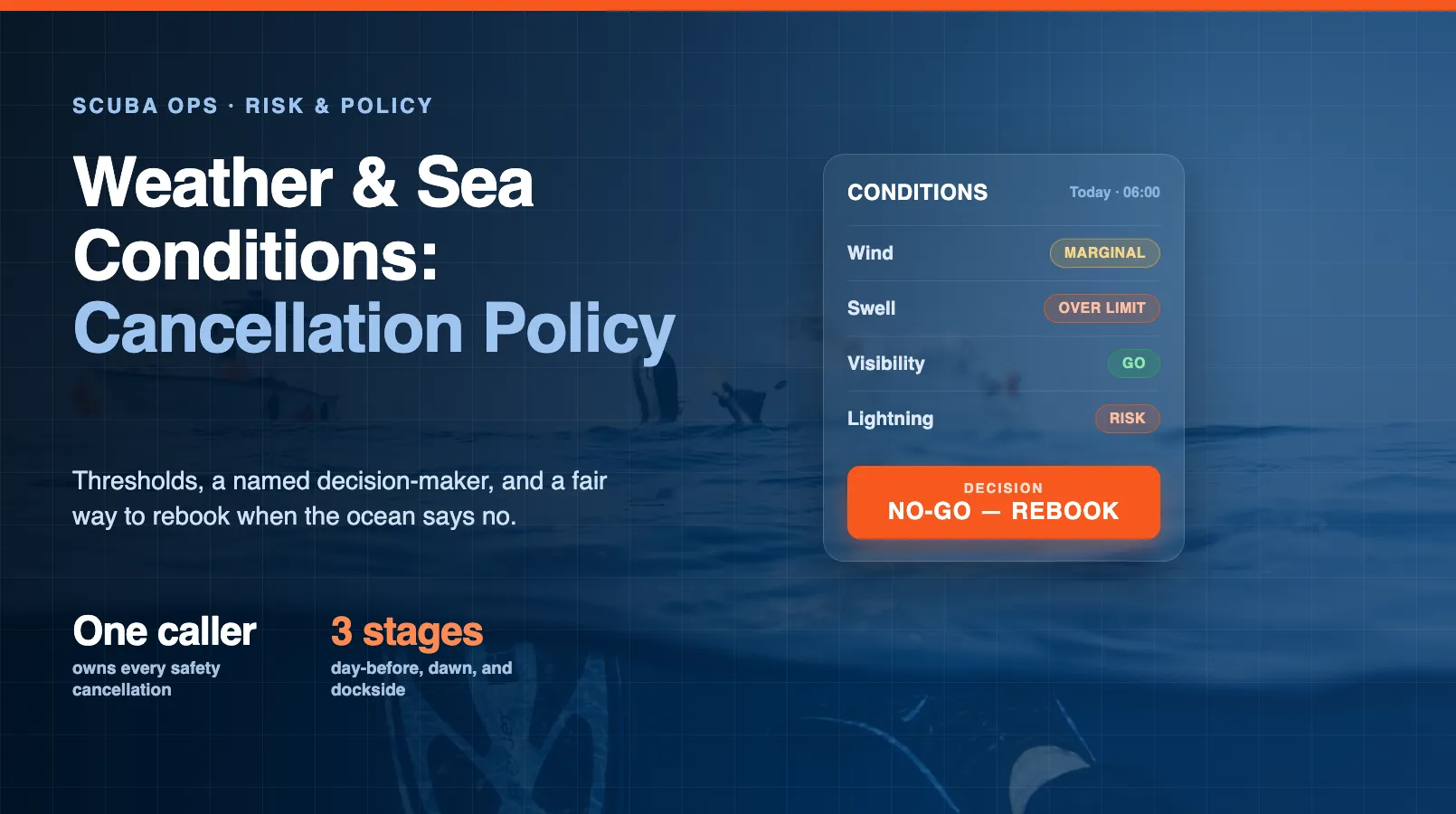
Weather is the one part of a dive operation you cannot manage, only plan around. A front moves through overnight, the swell builds, and the trip you sold three weeks ago is suddenly a bad idea. Handle that badly and you have angry divers on the dock, a refund fight, and a review that says you took their money and canceled at the last second. Handle it well and the same divers rebook, tell their friends you put safety first, and come back next season.
The difference is a written policy. Not a paragraph of legal cover buried in the terms, but a clear set of thresholds, a named decision-maker, a timeline, and a fair set of options for the divers whose day just got blown out. This guide walks through how to build one that protects your divers, your staff, and your books.
Decide what actually cancels a dive
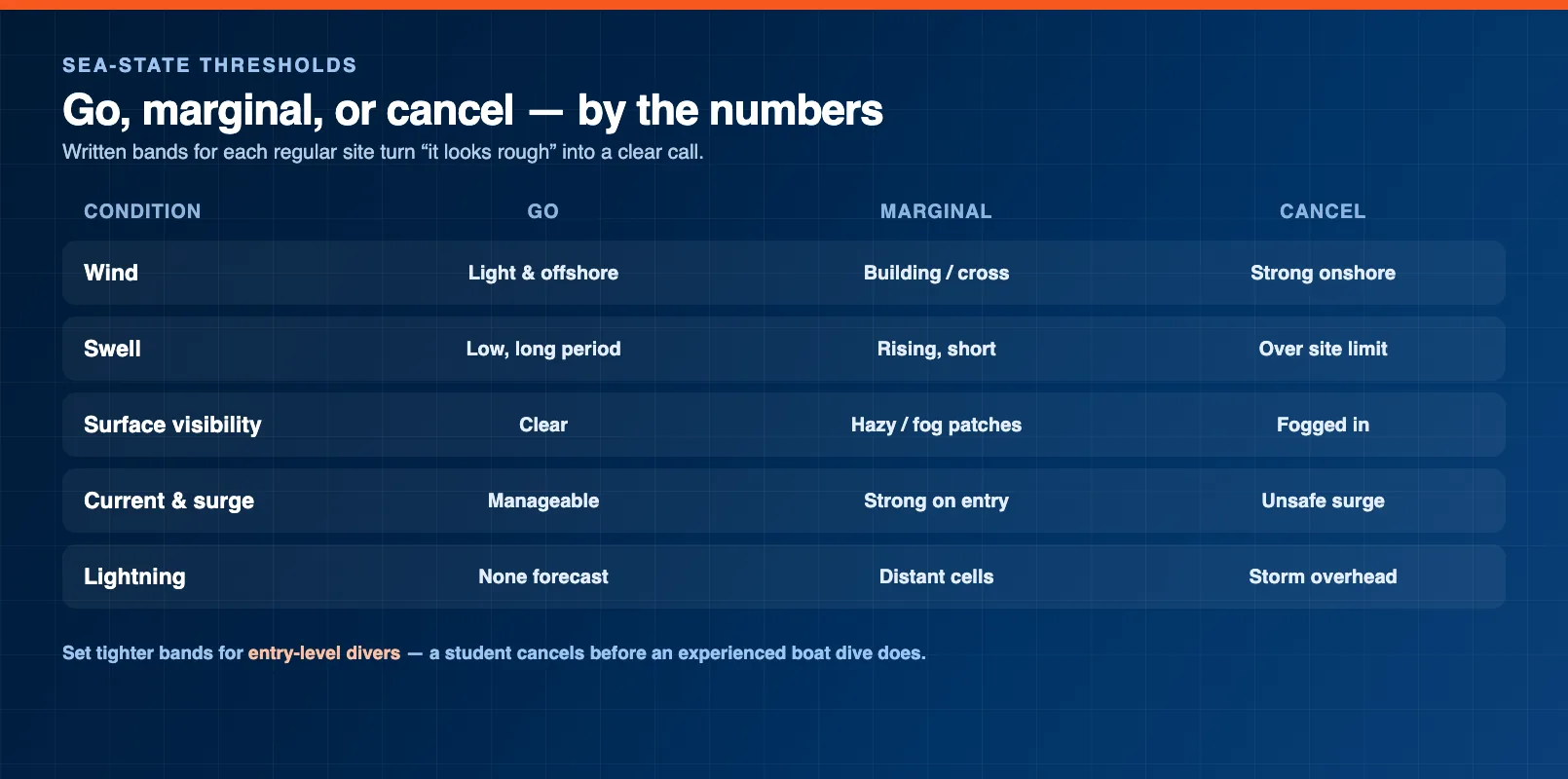
The first job is to turn "the weather looks bad" into numbers. Every regular site you dive should have its own written limits, because a sheltered bay and an exposed offshore reef fail in completely different conditions. Write down the wind speed and direction, the swell height and period, the surface visibility, the current or surge, and the lightning rule that turn each site from a go to a cancel.
Then split those limits by diver level. An entry-level open-water course cancels earlier than an experienced boat dive on the same day, because the same chop that an advanced group shrugs off will put a nervous student off diving for good. A policy that treats every trip the same either cancels dives that could safely run or sends the wrong divers into conditions they cannot handle. Certification level is part of the call, which is why the certification checks you run at check-in feed straight into the weather decision.
Put one person in charge of the call
A weather cancellation is a safety decision, and safety decisions need a single owner. Name that person in the policy — normally the captain or the dive manager — and give them the authority to cancel without asking permission and without being argued out of it. When five staff each have an opinion and a customer is pushing to go, the call gets slow, inconsistent, and pressured, which is exactly how unsafe dives happen.
Back the decision-maker every time. If the captain says the crossing is unsafe, the business refunds or reschedules cleanly and does not reopen the debate to save a booking. Divers respect an operator who holds the line on a marginal day far more than one who caves and then has a frightening dive. The named-owner rule also protects your staff: they are making a call the whole business stands behind, not sticking their neck out alone.
Set the decision timeline
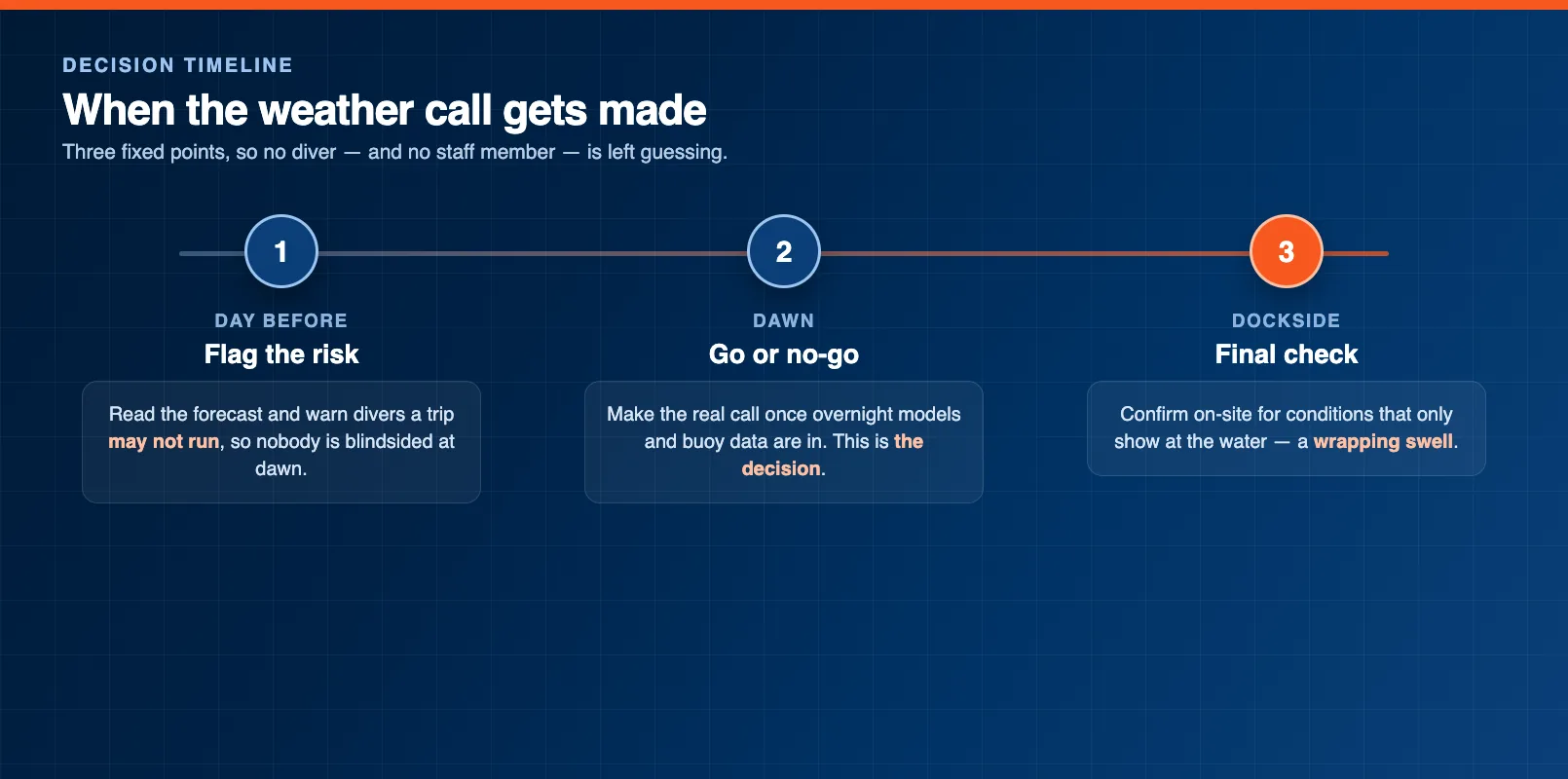
Half the pain in weather cancellations comes from timing. Cancel too early and you kill trips that would have run once the front cleared; cancel too late and divers have already driven two hours to a dock for nothing. The fix is a staged timeline that everyone — staff and divers — knows in advance.
Flag the risk the day before from the forecast, so a diver watching the same weather app is not blindsided. Make the real go or no-go call at dawn once the overnight models and buoy data are in. Then keep a final dockside check for the conditions that only reveal themselves at the site — the swell that looked fine on paper but is wrapping around the point. Each stage has a clear action, so nobody spends the night guessing.
Offer a reschedule, credit, or refund ladder
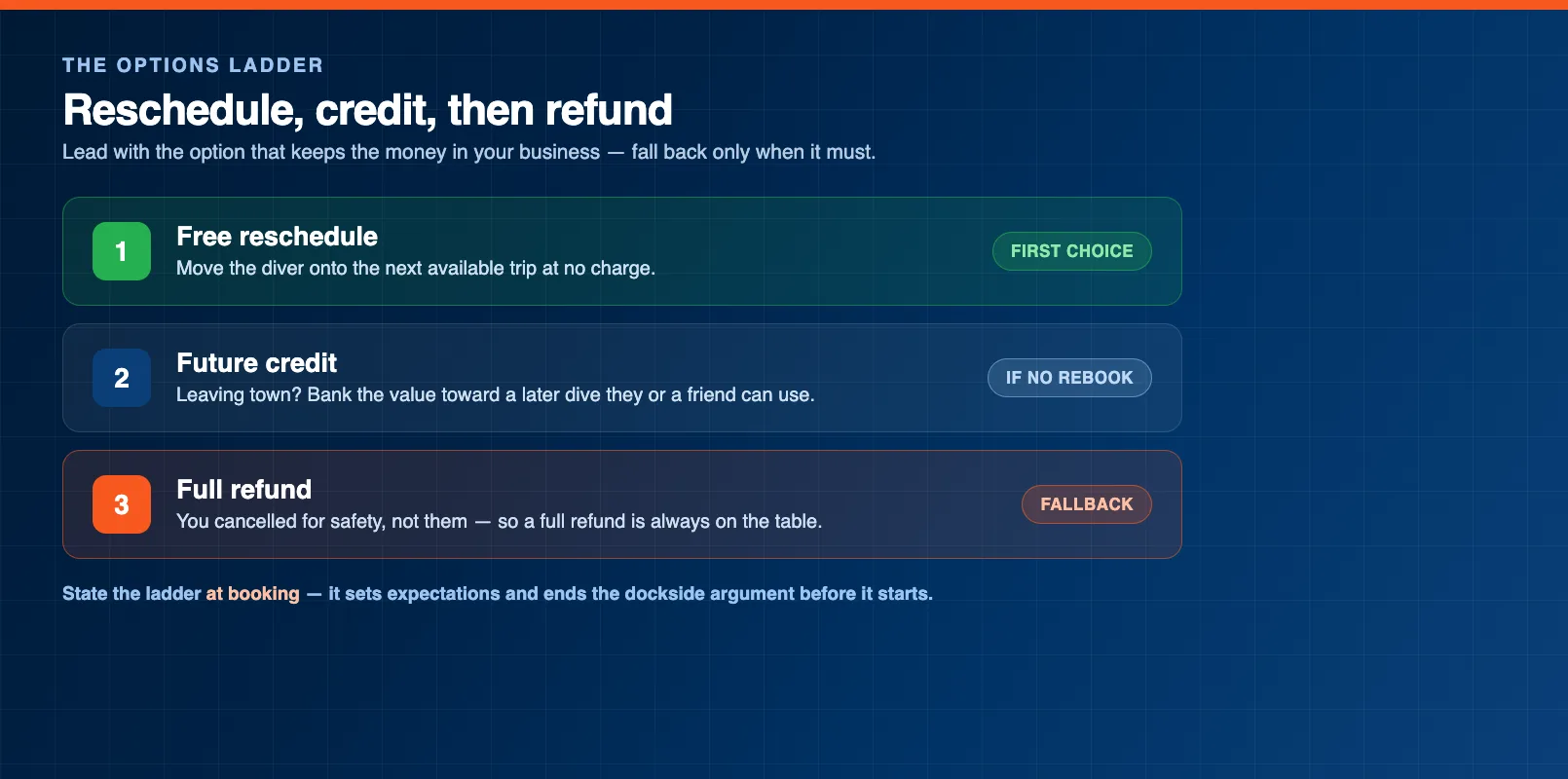
Because the cancellation is your call for safety, not the diver's no-show, the divers deserve a clear and fair set of options — and they deserve to know them before they book, not after you cancel. The cleanest structure is a ladder: lead with the option that keeps the money in your business and only fall back when the diver genuinely cannot use it.
Start with a free reschedule to the next available trip. If the diver is leaving town, offer a credit toward a future dive that they or a friend can use. If neither works, a full refund should always be on the table, because you canceled, not them. Stating this ladder at the time of booking — the same place you present your waivers and medical forms — sets expectations early and stops the dockside argument before it starts. It also quietly steers most divers toward a rebooking, which is far better for your cash flow than a wave of refunds.
Communicate the cancellation fast and clearly
A cancellation handled well is mostly about speed and tone. The moment the call is made, tell the affected divers — do not let them find out by driving to a locked shop. The message needs three things: the reason in plain language, the options from your ladder, and the next available date. A diver who gets "today's trip is canceled for safety, here is how to rebook, and the next open boat is Thursday" feels looked after. A diver who gets silence feels robbed.
Keep the tone matter-of-fact and on the diver's side. You are not apologizing for the ocean; you are protecting them from it. Reference the policy they agreed to at booking so the decision reads as consistent, not arbitrary. This is where good booking software earns its keep — a cancellation should trigger the notification, the rebooking link, and the refund or credit in one action rather than a scramble of manual texts. It is the same joined-up flow that keeps bookings moving through your dive shop system on a normal day.
Plan the policy around your season
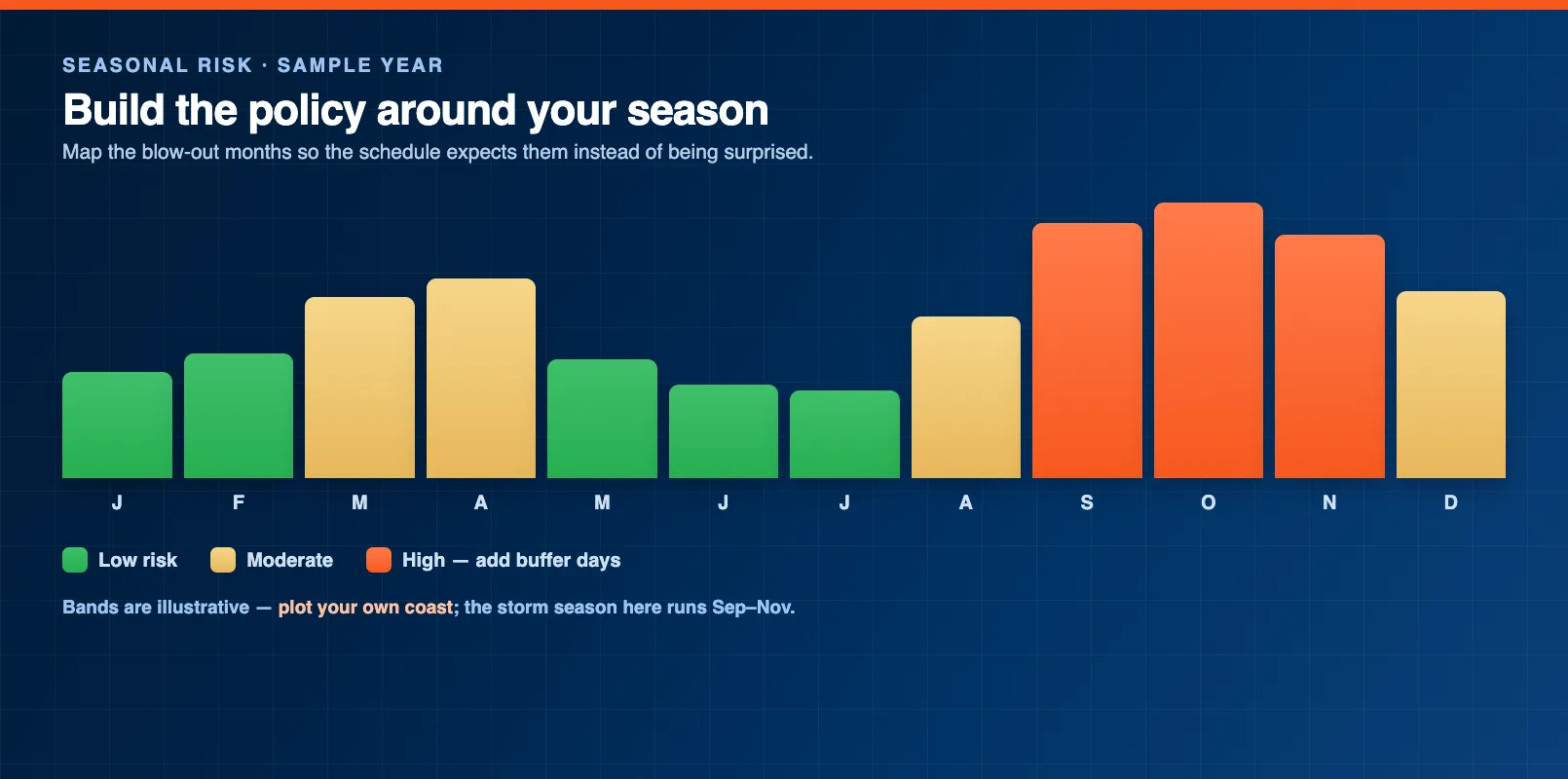
A weather policy should not be surprised by weather. Every dive location has a rhythm — a windy season, a swell season, an afternoon-storm pattern — and your schedule and your policy should both expect it. Map the risky months so you can build in buffer days, avoid over-promising on exposed sites in the wrong season, and set diver expectations before they book a trip in your blowiest week.
That planning also shapes how you sell. Multi-day trips and packages should state upfront how many dives are guaranteed and what happens when weather cuts the count, so a lost day becomes a planned substitution rather than an end-of-trip dispute. The more your calendar and pricing already account for cancellable days — the way a well-built dive course pricing structure builds in make-up sessions — the less any single blown-out day hurts.
Let the system handle the busywork
Once the policy is written, the goal is to make following it almost automatic. When your thresholds, schedule, and diver records live in one place, a cancellation stops being a frantic afternoon of phone calls. The trip status flips, every booked diver gets the notification and the rebooking options, and the credits or refunds process against the right bookings without you cross-checking a spreadsheet.
That is the real payoff of a clear policy backed by good tools: a blown-out day costs you a departure, not a day of admin and a stack of upset divers. Weather will always cancel dives — the operators who come out ahead are the ones whose divers rebook and return because the cancellation was handled cleanly. It is one more piece of the wider scuba diving operation that ties gear, courses, trips, and policies together, and it works best when the gear turnaround and tank tracking and the trip capacity and scheduling all run off the same calendar. For the terms behind the policy, the scuba diving glossary and the scuba operator hub fill in the rest.
FAQ
When should a dive operator cancel for weather?
Cancel when the sea state, wind, swell, visibility, or lightning risk crosses the thresholds you have set in writing for the site and the divers booked. The exact numbers vary by location and vessel, but a shore dive into heavy surge, an open crossing in a building swell, or any electrical storm are common hard cancels. The call should follow your written policy, not the mood of the morning, so it is consistent and defensible.
Who decides whether a dive is canceled?
One named person — usually the captain or the dive manager — should own the decision, using the written thresholds and the latest forecast and on-site observation. Spreading the call across staff or letting customers argue it leads to inconsistent, pressured decisions. When the person with the authority says the conditions are unsafe, the business backs them, refunds or reschedules cleanly, and does not second-guess a safety call to save a booking.
Should you refund divers when you cancel for weather?
Offer a ladder rather than a single answer. Most operators lead with a free reschedule to the next available trip, then a credit toward a future dive, then a full refund if the diver cannot rebook. Because the cancellation is your call for safety, not the diver's no-show, a refund should always be available. Stating this ladder at the time of booking sets expectations and stops the dockside argument before it starts.
What weather thresholds cancel a dive?
The common triggers are wind speed and direction, swell height and period, surface visibility, current and surge, and lightning. Each site has its own limits — a sheltered bay tolerates wind a boat crossing to an offshore reef never would. Write your own go, marginal, and cancel bands for each regular site and each diver level, so an entry-level course cancels earlier than an experienced boat dive on the same day.
How far ahead should you make the weather call?
Make it in stages. Flag the risk the day before from the forecast so divers are not blindsided, confirm or cancel at dawn once the overnight models and buoy data are in, and keep a final dockside check for conditions that only show at the site. Calling too early cancels dives that would have run; calling too late leaves divers driving to a dock for nothing. A staged timeline balances the two.
How do you handle weather cancellations for multi-day trips?
Build flexibility into the itinerary and the policy. Where a site is blown out, move to a sheltered alternative or reorder the days so the exposed dives fall on the calmest window. For liveaboards and packages, state upfront how many dives are guaranteed and what happens if weather cuts the count, so a lost day becomes a planned substitution or a partial credit rather than a dispute at the end of the trip.
in one place