Fit to Send: Condition and Refurbishment in Furniture Hire

Fit to Send: Condition and Refurbishment in Furniture Hire
A planner walks the venue an hour before doors and finds a ring stain on the cocktail table and a torn seam on the chesterfield that anchors the lounge. Neither was there when the pieces left the shop in March. In furniture hire, condition is the product, and the shops that keep clients are the ones that never send a piece out that isn't fit to send.
A tent rental or a bike rental can survive a scuffed frame. A furniture client is renting the look. A wedding planner chose your velvet sofas from photos, a stager picked your oak dining set to sell a house, and a brand team expects the bar stools in their launch photos to match the mood board. One tired piece in the wrong spot costs you the repeat booking.
This guide covers how to grade condition, check every return, decide whether to refurbish or retire, and plan refurbishment so it doesn't eat your availability in peak season.
Grade condition with words everyone uses the same way
Most condition problems start with vague language. One driver writes "a bit worn," the warehouse lead reads "fine," and the piece goes out to a black-tie gala. Fix the vocabulary first.
A four-grade scale works for most shops:
- A, Showroom. No visible marks from three feet away. Goes to premium events, photo shoots, and staging in listed homes.
- B, Event ready. Minor wear only visible up close. Fine for most weddings and corporate events.
- C, Needs work. Visible marks, loose joints, fabric pilling, or finish wear. Not bookable until refurbished.
- D, Retire review. Structural damage, stains that won't lift, or repeated repairs. Goes to the retire-or-refurbish decision.
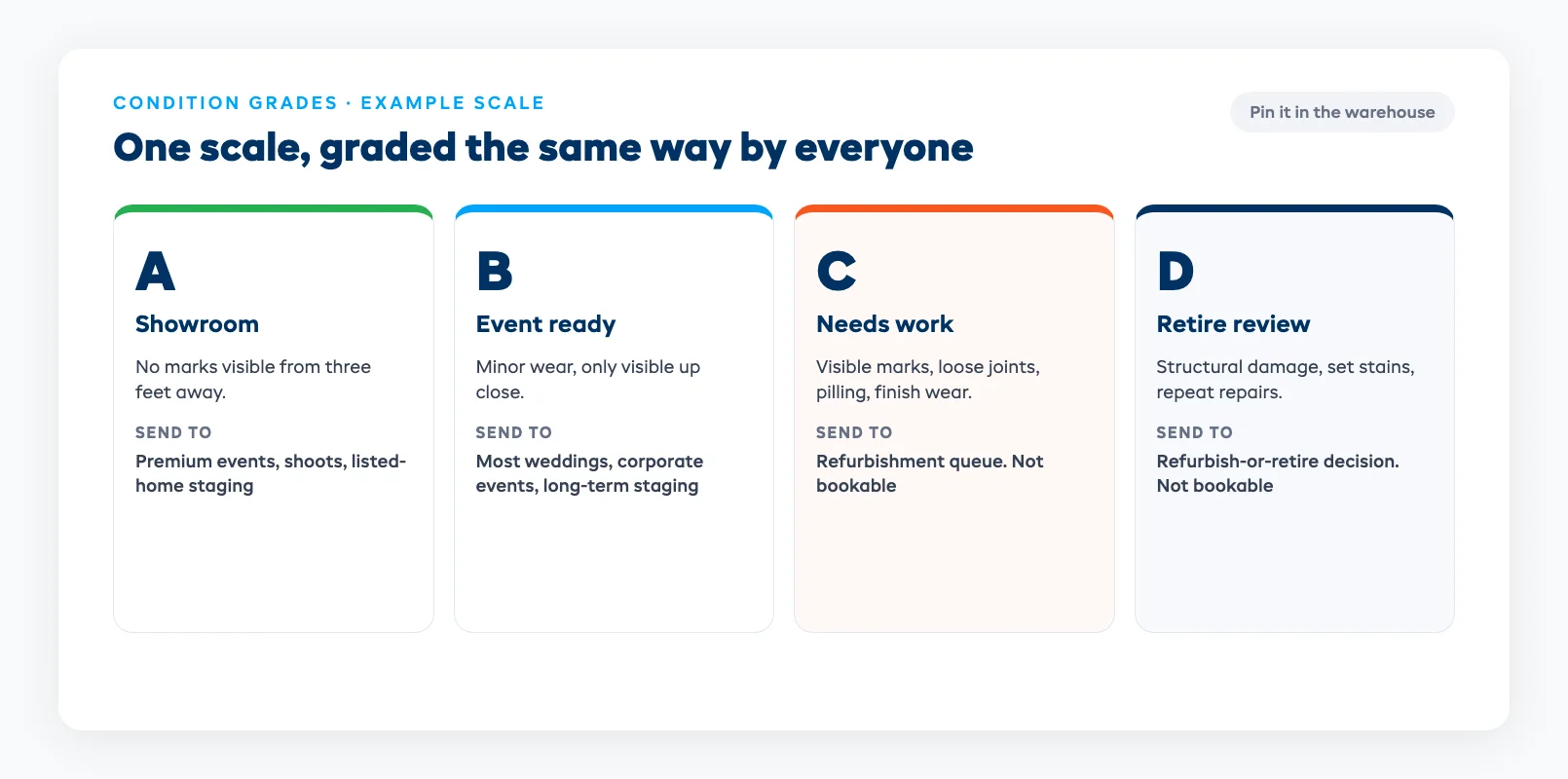
Write two or three plain examples for each grade, with photos, and pin them in the warehouse. "Ring mark smaller than a coin on a tabletop: B. Ring mark you can see from the doorway: C." The aim is that two different staff members grade the same chair the same way.
Then tie grades to bookings. A grade A booking should only ever pull grade A stock. A long-term staging contract in an empty rental can usually take grade B. Nothing graded C or D should be bookable at all.
Check every piece on the way back in
The return check is where you protect the next client. It's also where you find damage while you can still charge for it.
Count first. Event returns come back in bulk. Count chairs, stools, and linens against the delivery list on the dock, before anything goes into the warehouse. One missing bar stool found a week later is a write-off. Found on the dock, it's a phone call to the client.
Photograph against the outbound photos. If you photographed key pieces when they went out, compare them on return. This is the only evidence that stands up when a client says the mark was already there. For high-value pieces such as sofas, statement chairs, and dining tables, take outbound and return photos every time.
Grade, then route. Every piece gets a grade before it goes back on the shelf. A and B go back to stock. C goes to the refurbishment queue with a note on what's wrong. D goes to the retire review. Anything that needs cleaning, even a quick wipe-down, is not bookable until that's done.
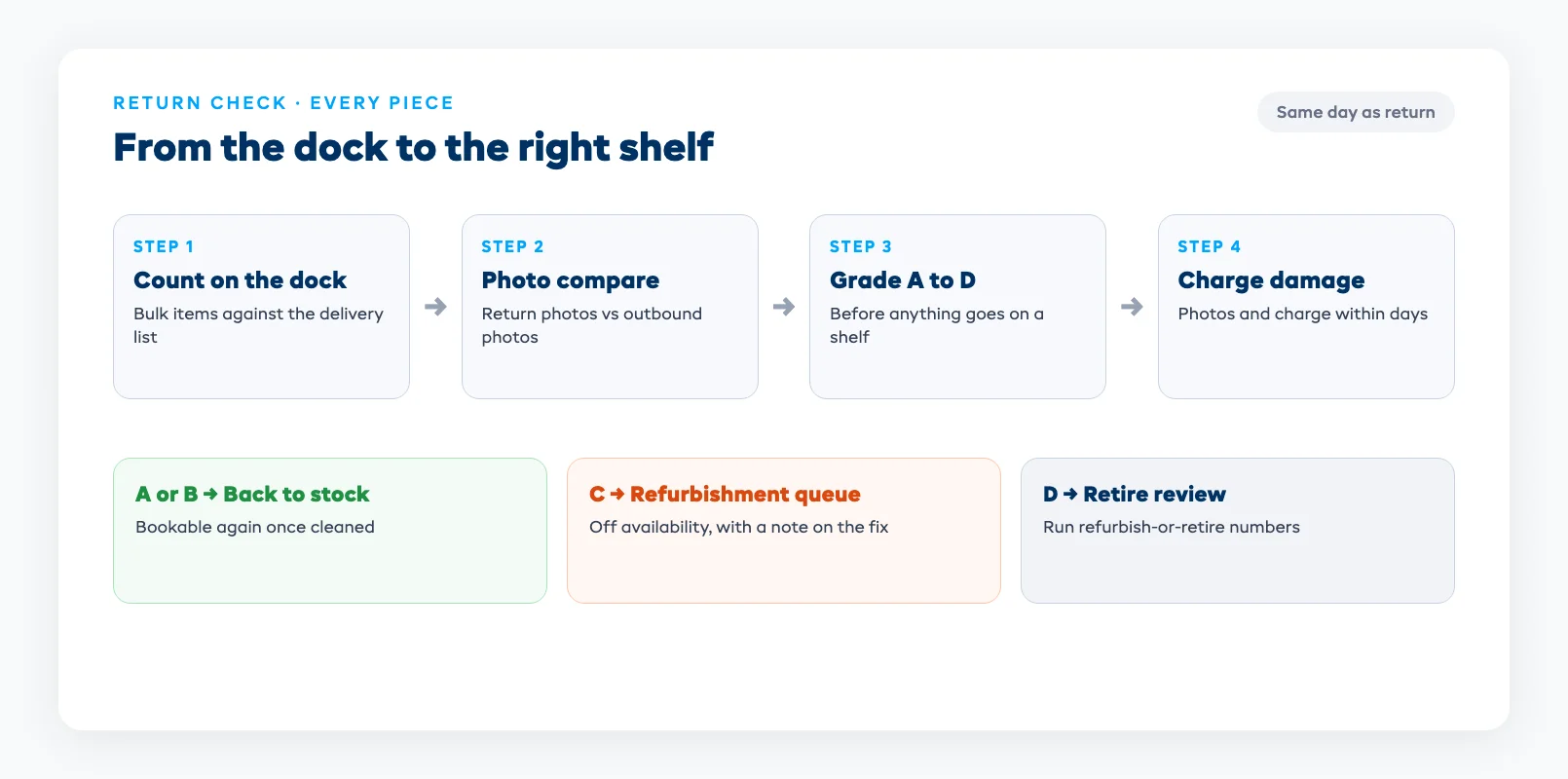
Charge damage the same week. If the photos show new damage, send the client the photos and the charge within a few days, while the event is fresh. Waiting a month turns a clear charge into a dispute. Deposits sized by piece value give you room to recover the cost without chasing an invoice.
Refurbish or retire: run the numbers
Refurbishment feels like the thrifty option, but it isn't always. Reupholstering a sofa that rents twice a year can cost more than the sofa will earn before it needs doing again.
For every piece that hits grade C or D, look at three numbers:
- Refurbishment cost. The quote from your upholsterer, polisher, or repair shop, plus the days it will be off the floor.
- Expected rental income until the next refurbishment. Use last year's bookings for that piece, not hopes.
- Replacement cost. What a new piece of similar quality costs today, delivered.
If refurbishment costs less than about half of replacement and the piece earns that back in a season, refurbish it. If the refurbishment cost is close to replacement, or the piece has been refurbished twice in two years, replace it. If it barely rents at all, retire it even if it's in decent shape and use the space for something that books.
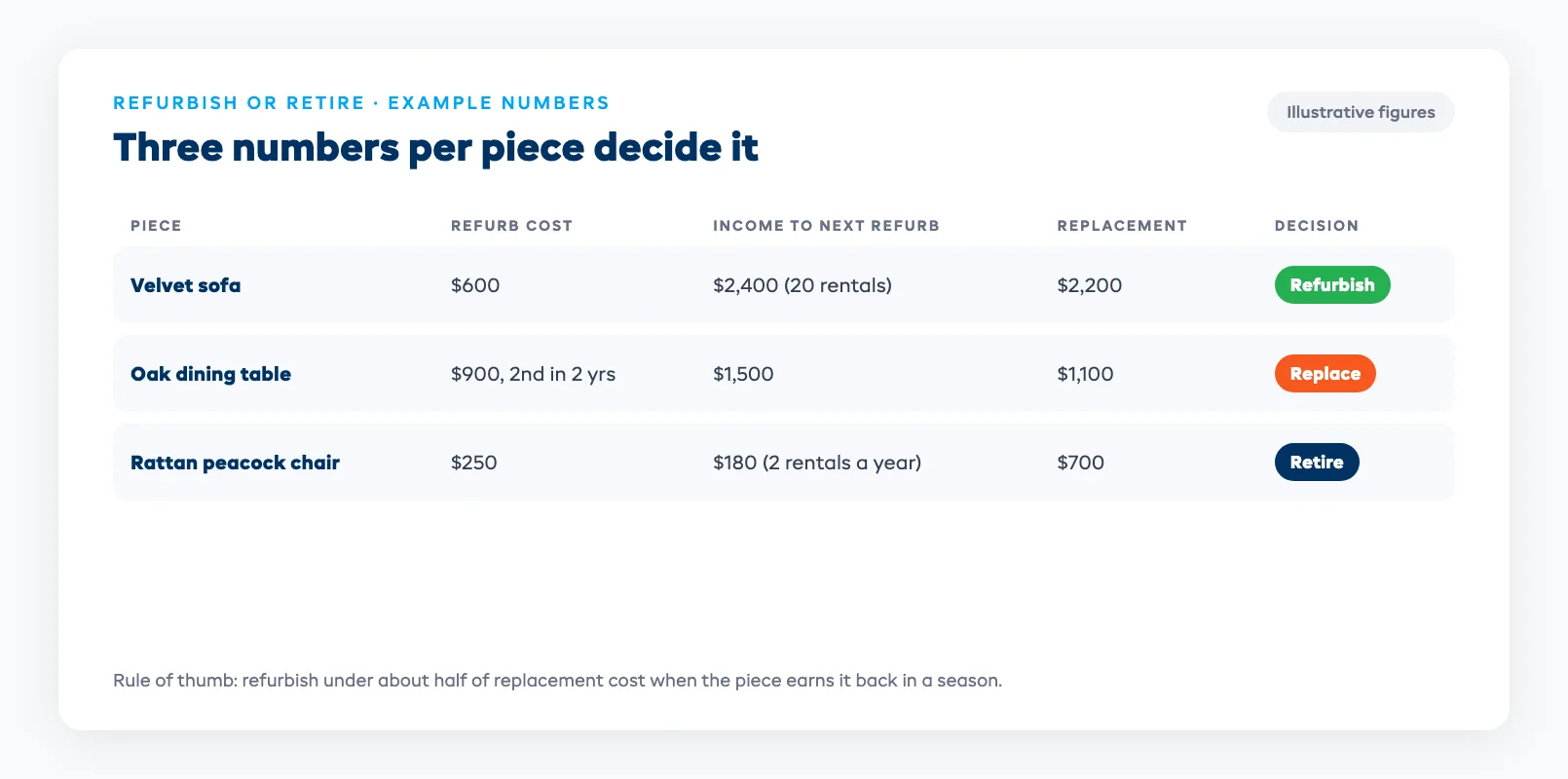
Price refurbishment into the rate. If a velvet sofa needs a $600 reupholster every 20 rentals, every rental carries $30 of refurbishment cost before cleaning, transport, or margin. If your rate doesn't cover that, the sofa is losing money slowly and nobody notices until it needs doing.
Sell retired pieces honestly. Pieces that are worn but sound can go to an ex-hire sale with the condition stated plainly. Clients and staff often buy them. Anything unsafe, such as a cracked chair frame, gets broken down, not sold.
Plan refurbishment like a booking
The most common refurbishment mistake is sending pieces out for work in October and discovering in November that half the occasional chairs are at the upholsterer during the busiest party weeks of the year.
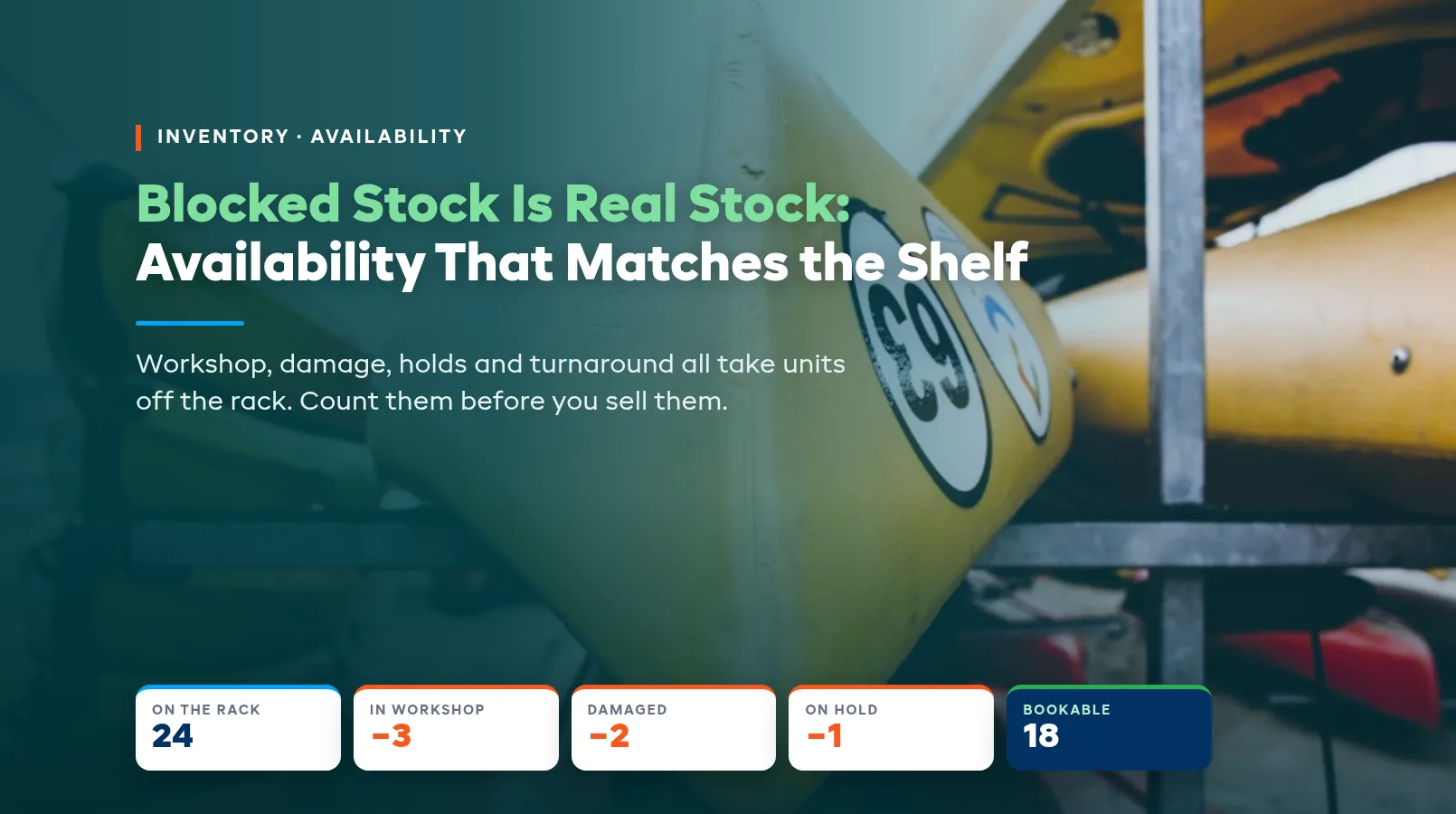
Block the time, not just the piece. When a piece goes to refurbishment, it should come off availability with an expected return date, the same way a booking does. Then the sales team sees 36 chairs available, not 48, and doesn't promise a gala 48 matching chairs.
Schedule big jobs in the quiet months. Reupholstery, refinishing, and set-wide work belong in your slow season. For most event furniture hire that's January and February, and sometimes midsummer. Book the upholsterer ahead, because they get busy in the same windows you do.
Batch matching sets. If you refurbish four of twelve matching chairs, the four new ones won't match the eight old ones. Plan set-wide work together, or keep refreshed and unrefreshed pieces as separate stock so you never mix them in one booking.
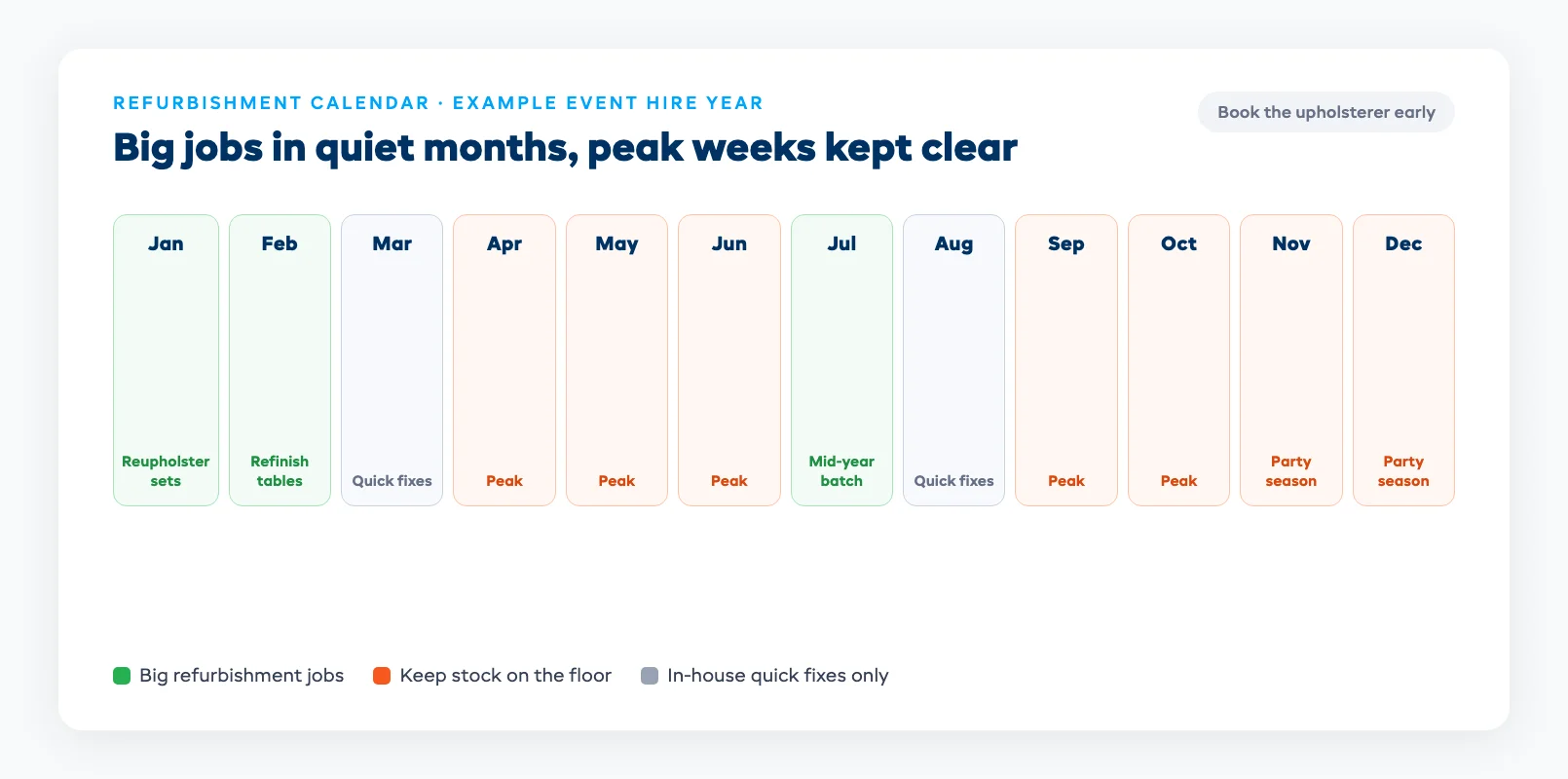
Keep quick fixes in-house. Spot cleaning, touch-up markers, tightened legs, and new felt pads should happen within a day of return, by your own team. Only the jobs that take a specialist go out.
Keep the record attached to the piece
Every rule above depends on a record that stays with each piece: its grade, its photos, what was fixed and when, what it cost, and how often it rents. Spreadsheets lose this fast, especially when one person keeps the refurbishment log and another keeps the booking calendar.
In EquipDash furniture rental software, each piece carries its own record with photos out and back, condition notes, and maintenance history. When a return check flags a piece for refurbishment, it drops off availability until it's marked fit again, so a chair at the upholsterer can't be booked by mistake. Damage can be charged from the rental, and deposits can be set by piece value. Dash AI can pull a list of pieces graded C or worse with their repair spend and bookings this year, which is most of what you need for a refurbish-or-retire review.
If you run event hire and long-term staging from the same stock, the furniture rental software guide covers how to keep both on one calendar. The operations features page shows the maintenance and checklist tools, and you can compare EquipDash plans for a shop your size.
FAQ
How should a furniture hire business grade the condition of its pieces?
Use a short scale that everyone applies the same way, such as A for showroom, B for event ready, C for needs work, and D for retire review. Write plain examples with photos for each grade and keep them in the warehouse. Tie grades to bookings, so premium events only get grade A stock and nothing graded C or D can be booked.
What should we check when hired furniture comes back?
Count bulk items against the delivery list on the dock, compare high-value pieces with their outbound photos, grade every piece, and route it to stock, refurbishment, or a retire review. Anything that needs cleaning stays off availability until it's done. Send any damage charge with photos within a few days.
When is it worth refurbishing a hire sofa or chair instead of replacing it?
Refurbish when the job costs less than about half of replacement and the piece will earn that back in a season of bookings. Replace when the refurbishment cost is close to replacement or the piece has been refurbished twice in two years. Retire pieces that rarely rent, even if they're in decent shape.
When should furniture hire companies schedule reupholstery and refinishing?
Book big jobs into your quiet months, which for most event furniture hire are January and February. Book the upholsterer early, block each piece off availability with an expected return date, and refurbish matching sets together so refreshed and older pieces never end up in the same booking.
How do we stop refurbishment from causing double bookings?
Treat refurbishment like a booking. When a piece goes out for work, take it off availability with an expected return date, so sales sees the real count. Rental software that blocks availability from the return check onward stops staff from promising pieces that are still at the repair shop.
Should refurbishment costs be built into furniture hire rates?
Yes. Divide the typical refurbishment cost by the number of rentals between refurbishments and treat that as a cost of every rental. A $600 reupholster every 20 rentals adds $30 per rental before cleaning, transport, and margin. If the rate doesn't cover it, the piece is losing money.
in one place