Fall Camping Wind-Down: Last Booking Windows and Fleet Retirement
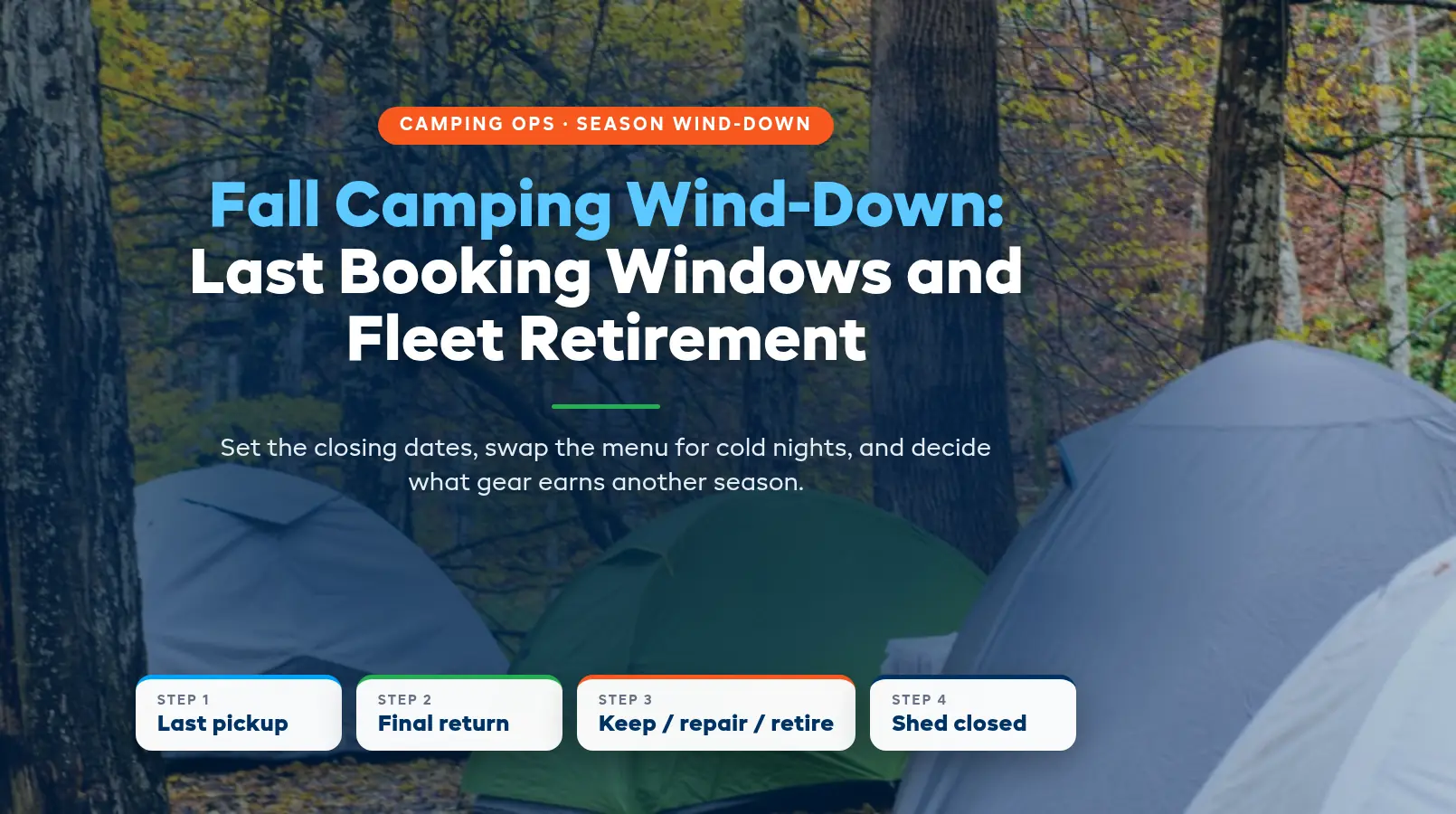
Fall Camping Wind-Down: Last Booking Windows and Fleet Retirement
The first frost warning lands, campground loops start closing, and someone still wants a four-person tent for the second weekend of November. How you handle the last six weeks of camping season decides whether you end it with clean gear, released deposits, and a clear buy list, or with a pile of damp tents and a calendar full of bookings you can't serve.
Most camping rental shops treat the end of the season as a single day: the day they stop answering the phone. It works better as a short project with a few fixed dates, a smaller menu, and a retirement decision made at the counter while the gear is in your hands. This guide walks through that project in order. If you're newer to the business, the complete guide to running a camping gear rental business covers the full year.
Work back from the day the shed closes
Start with the last day you want gear in the building and wet. Everything else hangs off that date.
Most shops need one to two weeks after the final return to clean, dry, repair, and store the fleet. Tents have to be pitched and dried fully before they're packed, and fall weather makes that slower. If you want the shed closed by mid-November, your last return date sits around the start of the month, and your last pickup for a multi-day trip lands a week or so before that.
Set these dates now, in this order:
- Storage-ready date. The day every item is clean, logged, and on the shelf.
- Final return date. The last day you accept gear back, with enough working days after it for cleaning and repairs.
- Last multi-day pickup. Your longest common trip length before the final return date. If most of your fall bookings are three nights, this is three or four days before the return cutoff.
- Last day to book online. Close new bookings a few days before the last pickup so you aren't pulling gear at 7 AM for a booking that came in at midnight.
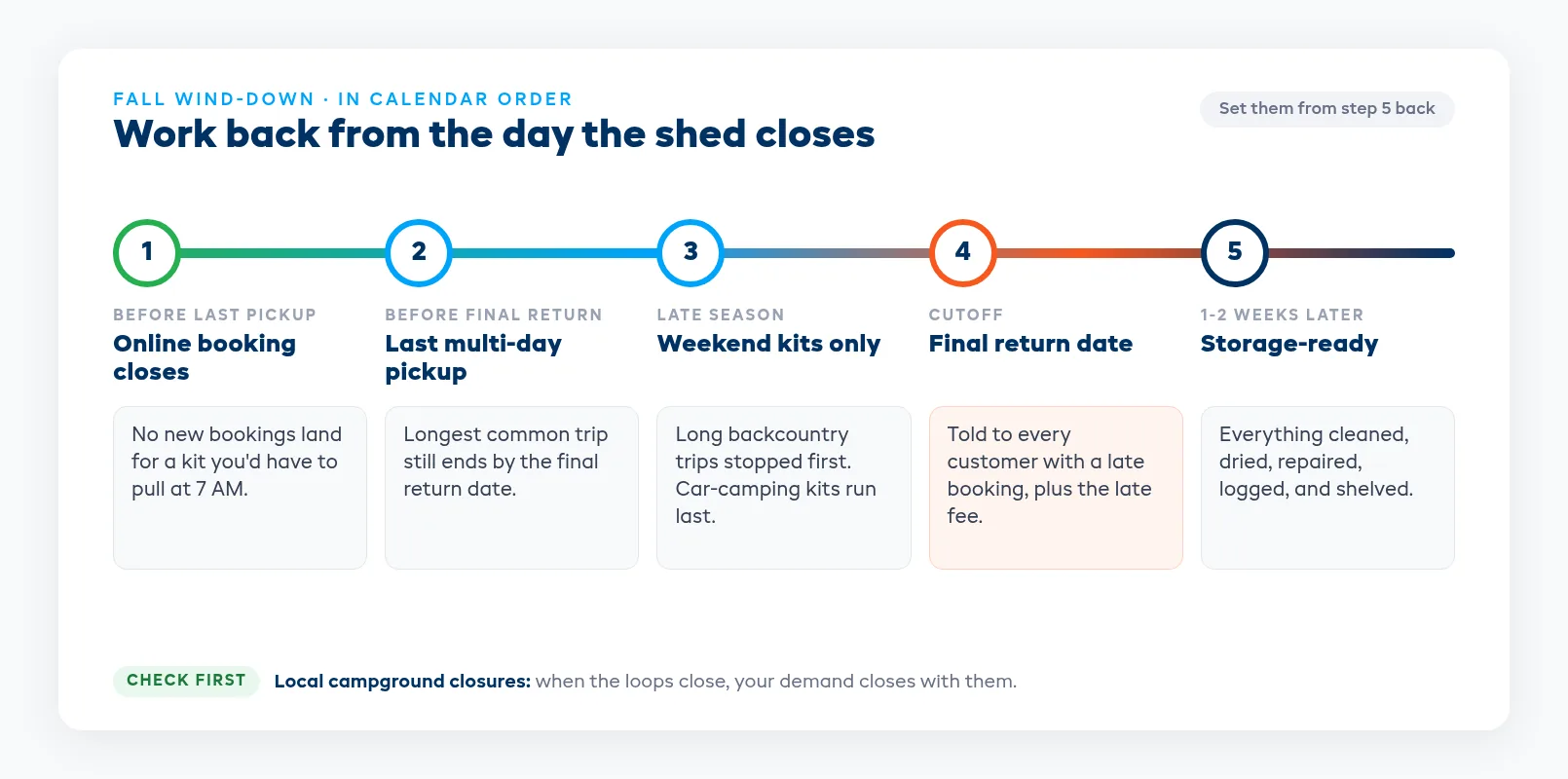
Check local closures before you lock the dates. Plenty of state park and national forest campgrounds close loops, shut off water, or move to first-come sites in October. If the places your customers camp are closing, your demand is closing too, and a booking you accept for a closed campground turns into a refund and a frustrated customer.
Close the calendar in stages
Shutting everything off on one date leaves money on the table in late September and creates chaos in November. Stage it instead.
Stop the long trips first. Backcountry and week-long rentals are the riskiest late in the season. Gear is out longer, weather turns faster, and a late return pushes straight into your storage week. Many shops stop new trips longer than four or five nights a few weeks before the final return date. The backcountry multi-day rental guide covers deposit sizing and screening for those trips, which matters most at the edges of the season.
Keep weekend car-camping kits running longer. These come back fast, stay closer to the trailhead, and are easier to inspect. They're usually the last thing you rent.
Tell existing customers what changes. Anyone with a booking near the end of the season should get a short note with the final return date and the late-return fee. A customer who knows the shop closes on the 3rd is far less likely to drop gear off on the 6th.
Put closed dates in the booking system, not on a sticky note. If your online booking shows open dates you won't honor, someone will book them.
Swap the menu for cold nights
Fall campers need different gear than July campers, and the gear you rent in October is the gear that gets the hardest use.
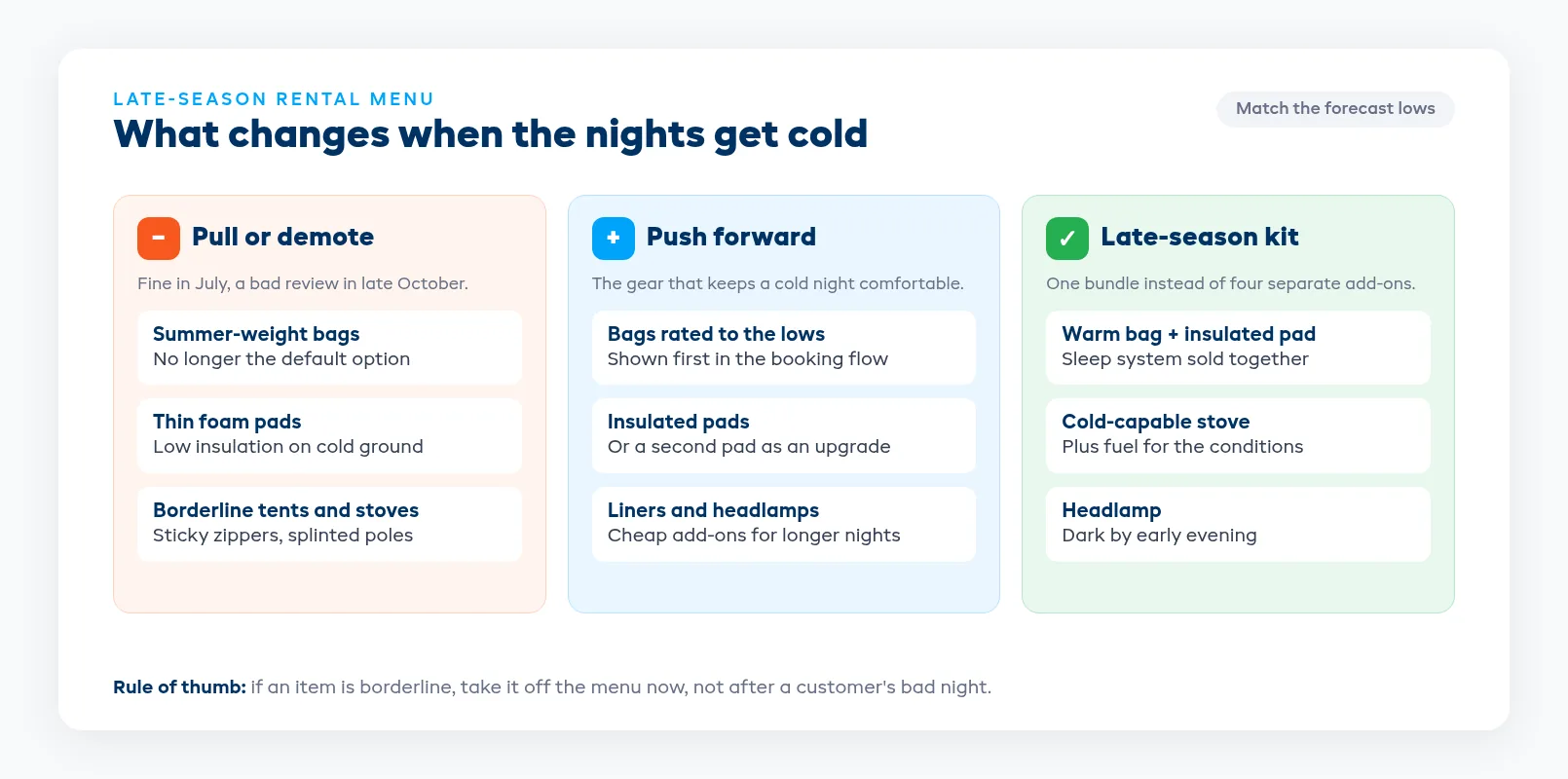
Pull summer-weight sleeping bags from the menu, or at least stop offering them as the default. A customer who gets cold at 3 AM blames the shop, and the review says so. Point people to bags rated for the overnight lows where they're going, and add a liner or a second pad as an easy upgrade.
Push insulated sleeping pads and warm layers. A cheap pad with a low insulation rating is fine in August and miserable in late October. If you only have a few warm pads, make them part of a cold-weather bundle so they don't sit unused while customers take the thin ones.
Bundle for the conditions. A "late-season kit" with a warmer bag, an insulated pad, a stove that handles cold, and a headlamp is easier to sell than four separate add-ons. The camping rental pricing guide covers how to price bundles so they move volume without giving away margin.
Retire the weak links before the cold exposes them. A tent with a sticky zipper or a pole that's been splinted once is a nuisance in summer. In wind and rain, it's a failed trip. If an item is borderline, take it off the menu now rather than after a bad night.
Your demand data helps here. If you track which items rent in which months, the seasonal hiking gear rental guide shows how to read those patterns and decide what's worth holding into the shoulder season.
Triage every return at the counter
The last month of returns is when you learn the most about your fleet. Don't waste it by throwing everything in a bin to sort later.
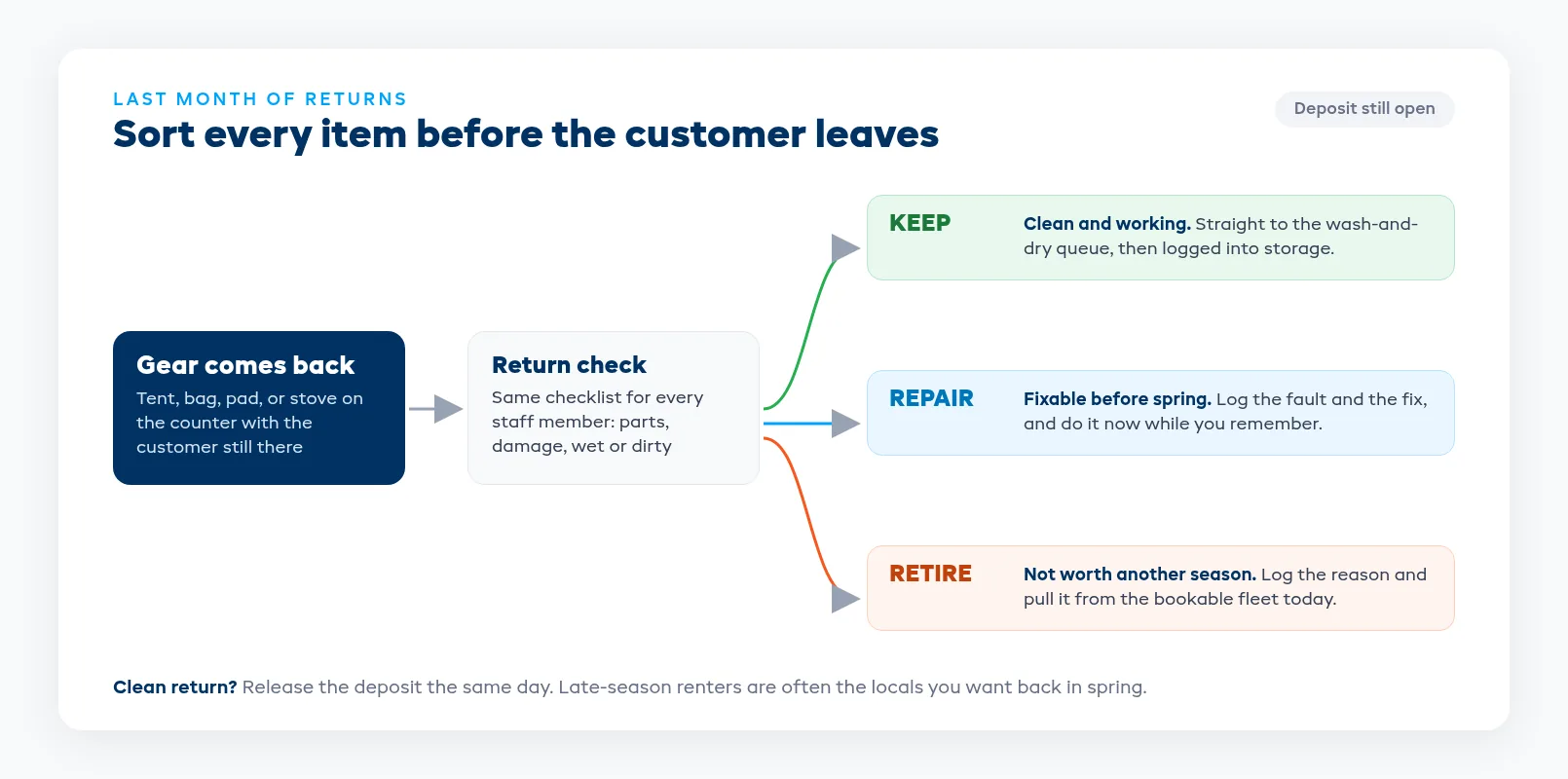
When gear comes back, sort each item into one of three piles before the customer leaves:
- Keep. Clean, working, and worth storing as it is. It goes to the cleaning queue.
- Repair. Fixable before spring: a zipper slider, a pole section, a seam that needs resealing. Log what's wrong and what the fix is, then repair it now while you remember the details.
- Retire. Delaminated fabric, a cracked stove valve, a bag that won't loft after washing. Log the reason and take it out of the bookable fleet the same day.
Doing this with the customer still at the counter has two benefits. Any damage gets flagged while the deposit is still open, and you avoid the spring surprise of finding a broken tent nobody remembers renting. A standard post-rental camping return check keeps every staff member using the same criteria.
Release deposits quickly on clean returns. Late-season customers are often locals you want back in spring, and a hold that sits on their card for a week sours that. For gear that comes back damaged or never comes back at all, the camping gear loss recovery framework explains how to charge fairly and document it.
Cleaning follows triage. Everything in the keep and repair piles needs a full wash and dry before storage, and fall gear is usually dirtier and wetter than summer gear. The camping gear hygiene guide has the cleaning standard for each category.
Retire gear with numbers, not gut feel
Retirement decisions made in a hurry tend to go two ways: you keep tired gear because replacing it feels expensive, or you dump decent gear because it looks rough. A simple scorecard fixes both.
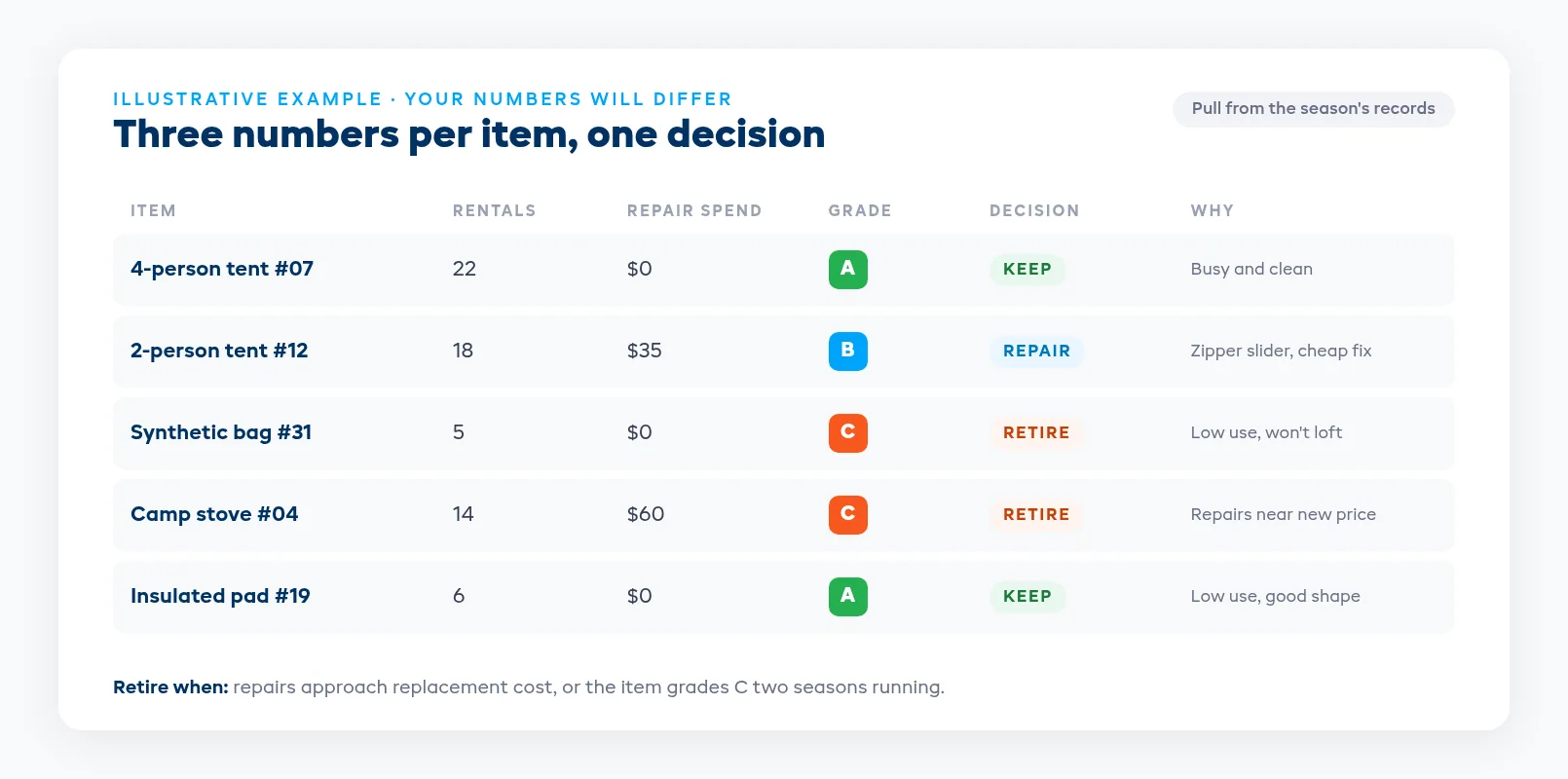
For each item, or at least each tent, bag, and stove, pull three numbers:
- Rentals this season. How many times it went out. Low-use items that are still in good shape can stay. Low-use items in bad shape are the first to go, because you won't miss them.
- Repair spend. What you paid in parts and labor to keep it running this season. When repairs start approaching what a replacement costs, retire it.
- Condition grade. A simple A/B/C from the counter triage. Two seasons in a row at C usually means it's done.
Put those next to each other and most decisions make themselves. The End-of-Season Camping Retirement Review checklist gives your team a standard inspection to grade against.
What you do with retired gear (resale, donation, recycling, and how to budget for replacements) is its own topic. The end-of-season gear retirement and refresh guide covers resale channels, donation records, and the replacement budget in detail.
One rule worth holding to: don't sell end-of-life gear back to customers. A leaky tent with your name on the receipt does more damage to your reputation than the $40 you got for it.
Set up spring before you lock the shed
The last week of the season is your best chance to make next April easier.
Write the buy list while the numbers are fresh. Retired items, items that sold out on busy weekends, and items customers asked for that you didn't have. Match replacements to demand, not to a one-for-one swap of what you retired.
Record what's in storage. Item, condition grade, location on the shelf, and any repairs still outstanding. A pre-season camping fleet audit in spring goes much faster when the fall log is accurate.
Keep your customer list warm. Everyone who rented this season is a likely spring customer. Tag them in your booking system and plan one message for when bookings open again. A pre-season camping reactivation agent can send that note on a schedule so it goes out the week you reopen, without anyone remembering to do it.
Set next season's dates now. If you already know roughly when you'll reopen, put the opening date in the booking system so early planners can reserve gear in March.
Let the booking system hold the dates
Every wind-down date above only works if the booking system enforces it. Staff forget. Sticky notes fall off monitors. Customers book at midnight.
In EquipDash, you set operating hours, seasonal pricing, and blackout dates per product, so long-trip kits can close earlier than weekend kits without a manual check on every booking. When you take an item out of service after a failed return check, it drops off the bookable fleet the same minute, which stops a retired tent from getting rented by accident. Condition notes and maintenance checklists stay attached to each item, so your retirement scorecard has a record to pull from instead of memory.
For the end-of-season messages, Dash AI can find every customer with a booking near your final return date and draft the reminder, so the note about the 3rd goes out before anyone shows up on the 6th. The camping rental glossary covers any terms above you want to share with new staff, and if you want to see what this setup costs for a shop your size, compare EquipDash plans.
FAQ
When should a camping rental shop stop taking bookings for the season?
Work backward from the day you want the fleet stored. Leave one to two weeks after the final return date for cleaning, drying, and repairs, set the last multi-day pickup so your longest common trip ends by that return date, and close online booking a few days before the last pickup. Check local campground closures too, because when the campgrounds close, demand drops with them.
Should we stop multi-day backcountry rentals earlier than weekend rentals?
Usually, yes. Long trips keep gear out longer and carry more weather risk late in the season, and a late return pushes straight into your storage week. Many shops stop new trips longer than four or five nights a few weeks before the final return date and keep weekend car-camping kits running until the end.
What gear should we change on the rental menu for fall camping?
Swap summer-weight sleeping bags for bags rated to the overnight lows your customers will see, push insulated sleeping pads, and offer a late-season bundle with a warmer bag, an insulated pad, a cold-capable stove, and a headlamp. Pull any borderline tents or stoves before cold, wet weather turns a small fault into a failed trip.
How do we decide which camping gear to retire at the end of the season?
Use three numbers per item: rentals this season, repair spend, and a condition grade from your return check. Retire items whose repair costs are approaching replacement cost, items graded poorly two seasons running, and low-use items in bad shape. Keep low-use items that are still in good condition.
What should we do with retired rental tents and sleeping bags?
Sell gear that's worn but sound, with defects disclosed, donate usable items to outdoor programs with a record of what you gave, and recycle or dispose of anything unsafe. Don't sell end-of-life gear to customers. Log every item that leaves the fleet so your inventory and insurance records stay accurate.
How do we get last season's customers to book again in spring?
Tag every customer who rented this season, put your reopening date in the booking system early, and send one clear message the week bookings open. An automated reactivation message on a schedule means it goes out on time even during the busy pre-season prep.
in one place