Early Black Friday Ops: Bundles, Hold Windows and No-Show Rules
Black Friday deals don't break rental shops on the day. They break them three weeks later, when a cheap bundle meets a full calendar, half-paid holds nobody chased and customers who booked at 40% off and never showed up.
Black Friday 2026 lands on November 27, and the deal itself is the easy part. The work that decides whether the weekend makes money happens now: what goes in the bundle, how much a customer pays to hold a date, how long an unpaid hold lasts, and what happens when someone on a deal booking doesn't arrive. If you're also selling gift cards this season, our Black Friday gift card guide covers that side. This post is about the bookings themselves.
Build bundles that protect the margin
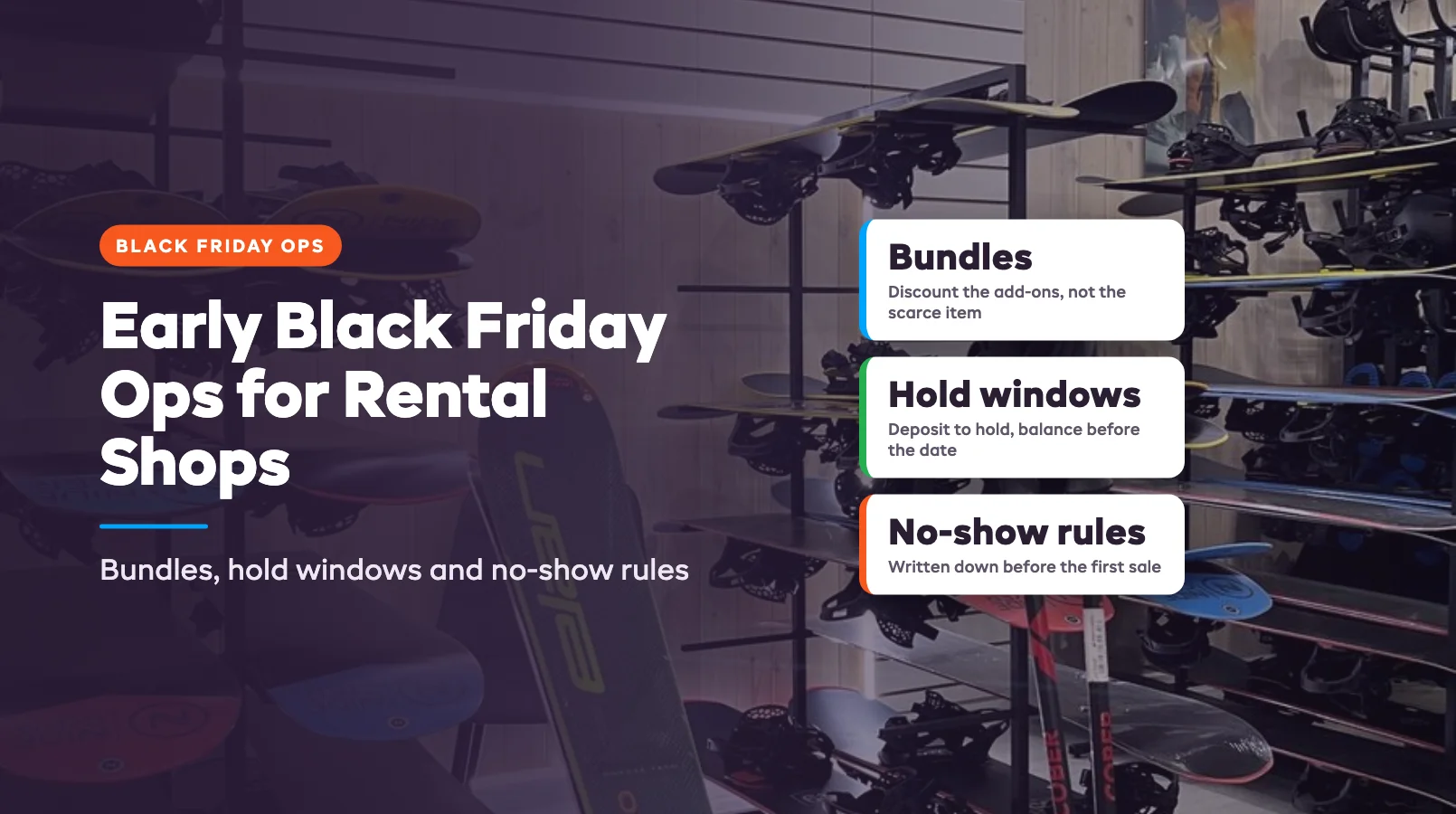
A Black Friday discount on a single item trains customers to wait for the next sale. A bundle gives them a better price on something they'd have struggled to price for themselves, and it moves the items you have too many of along with the ones everyone wants.
Start from what people already book together. Your booking history will show it: a board with boots and a helmet, two bikes with a child seat, a kayak with a dry bag, a camera body with two lenses, a projector with a screen and speakers. Those pairs are your bundles. Don't invent a pack nobody asked for just because it uses up slow stock.
Then do the math on the bundle as a whole, not on each line.
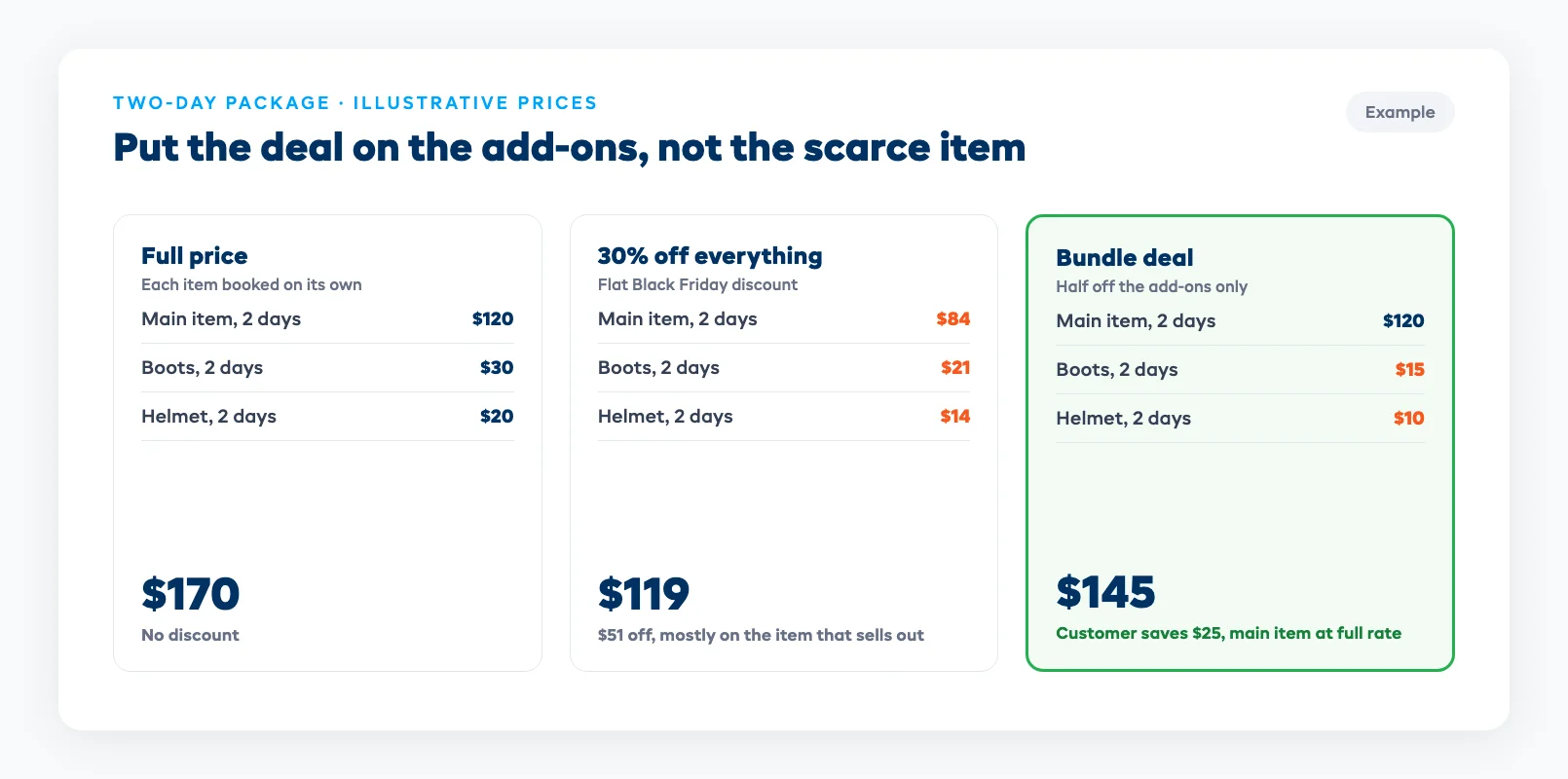
Here's a worked example with illustrative numbers. A two-day package of a main item at $60 per day, plus boots at $15 and a helmet at $10, comes to $170 at full price. Thirty percent off everything takes $51 off the booking. Discount only the boots and helmet by half, and the customer still saves $25 on a package that's easier to book, while the item you're short of goes out at full rate. On a weekend where your main items are already going to sell out, that difference is pure margin.
A few rules that keep bundles honest:
- Discount the item that's not scarce. Put the deal on the add-on, the extra day or the accessory, and keep your busiest item close to full price.
- Let the deal grow with the rental length. A bigger discount on a three-day package than a one-day one pushes customers toward the longer hire you'd rather sell.
- Take one security deposit for the whole bundle. Three separate holds on one card is confusing for the customer and slow at pickup.
- Set an end date. A Black Friday bundle that's still live in February is just your new price.
In EquipDash, bundles can mix rentals, activities and store add-ons. You choose whether the price adds up the items with deals on the parts you pick, or is one set price, and the deal on a rental can get bigger the longer they rent. One security hold covers the whole bundle (bundles are on the Growth plan and up).
Price the code, not just the discount
If your deal runs as a promo code, the rules on the code matter as much as the percentage. A code with no limits is a code that turns up on a deal forum and books out your quietest staff weekend at a loss.
Set the guardrails before you announce anything:
- Valid from and valid until. Open the code on the day you announce and close it when the campaign ends. Early access for your email list can be its own code with an earlier start date.
- A minimum booking amount. This stops the code from going on a single one-hour rental that costs you more to process than it earns.
- A maximum discount. On a percentage code, a cap keeps one large group booking from taking a discount you'd never offer in person.
- A usage limit. Cap the total number of uses so the deal stays a deal.
- The items it applies to. Leave out the items that will sell out anyway.
Decide one more thing up front: whether the code covers dates in peak weeks. A Black Friday code that can be used on Christmas week bookings gives away your highest-demand dates at your lowest price. Many operators limit Black Friday codes to January and February dates, when they actually need the bookings.
Set hold windows for deal bookings
A Black Friday booking is often made weeks or months ahead, at a low price, by someone who hasn't fully committed. If it costs nothing to hold, a lot of those bookings will quietly fall away, and they'll take your best dates with them.
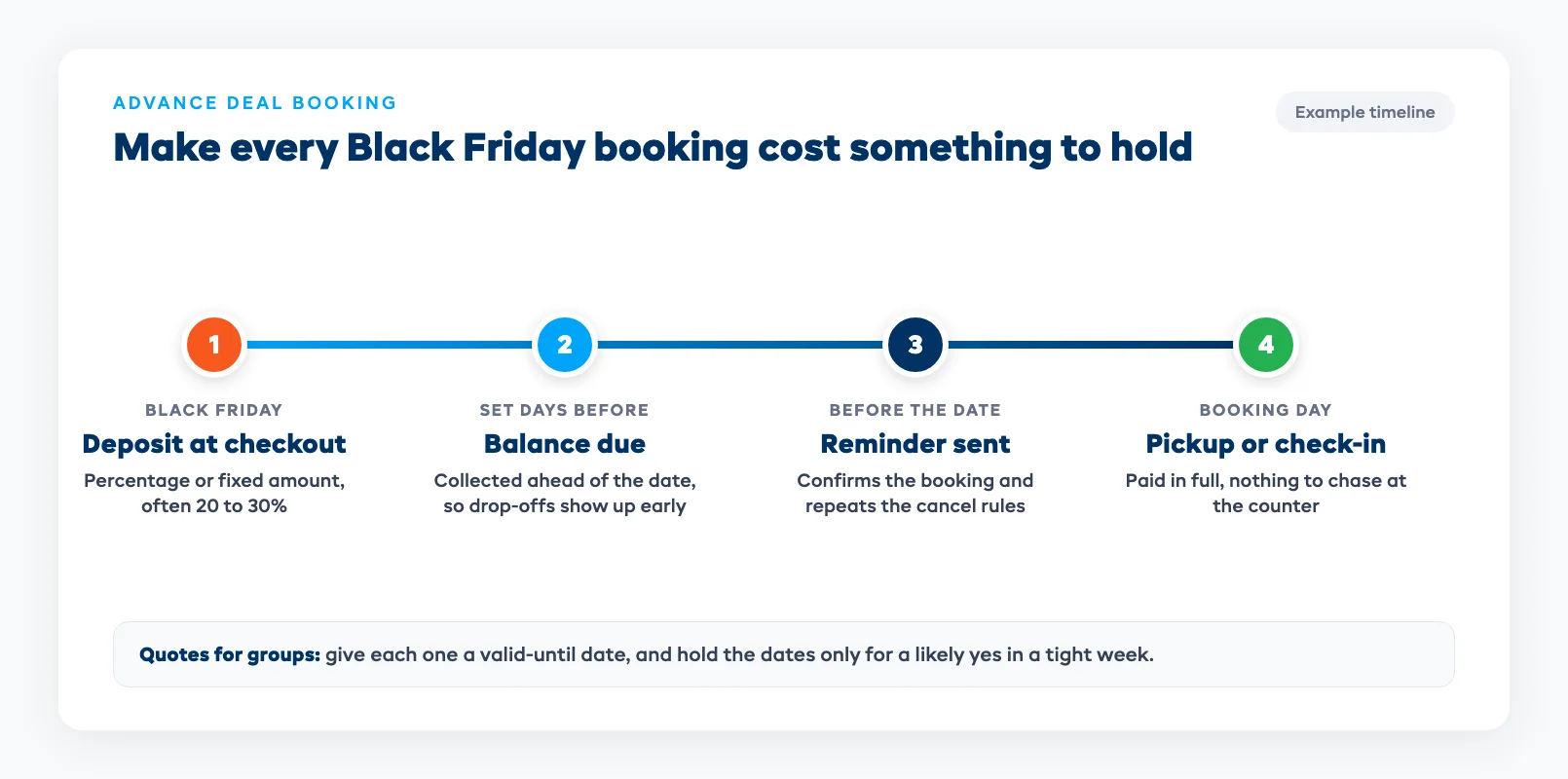
Decide three things for every deal booking:
What it costs to hold the date. Take a booking deposit at checkout, as a percentage of the total or a fixed amount. A deposit that's too small isn't worth a customer's second thought. Twenty to thirty percent is a common range for advance bookings, but set it against your own cancellation numbers. For how deposits and balances fit together, see our guide to rental deposits and partial payments.
When the balance is due. Collect the rest a set number of days before the booking, not at pickup. That way you find out who's dropped off while there's still time to resell the dates. Bookings made close to the start date should pay in full at checkout.
How long a quote holds stock. Group and corporate inquiries come in heavy around the holidays. If you send quotes, give each one a valid-until date and decide case by case whether it holds the items while the customer thinks. Hold the dates for a likely yes in a tight week. Leave them open for an early inquiry in a quiet month, so other customers can still book.
EquipDash handles each of these. Under checkout settings you choose full payment or a deposit only, as a percentage, a fixed amount or an amount per person, and how the balance is collected. Quotes (on the Pro plan) carry a valid-until date, a choice to hold the dates, agreements to sign and an optional reminder email before the quote runs out.
Write the no-show and cancellation rules before you sell
Deal customers tend to cancel and no-show more often than full-price ones, so write the rules down before the first booking comes in. Changing them after someone has paid starts an argument you'll lose.
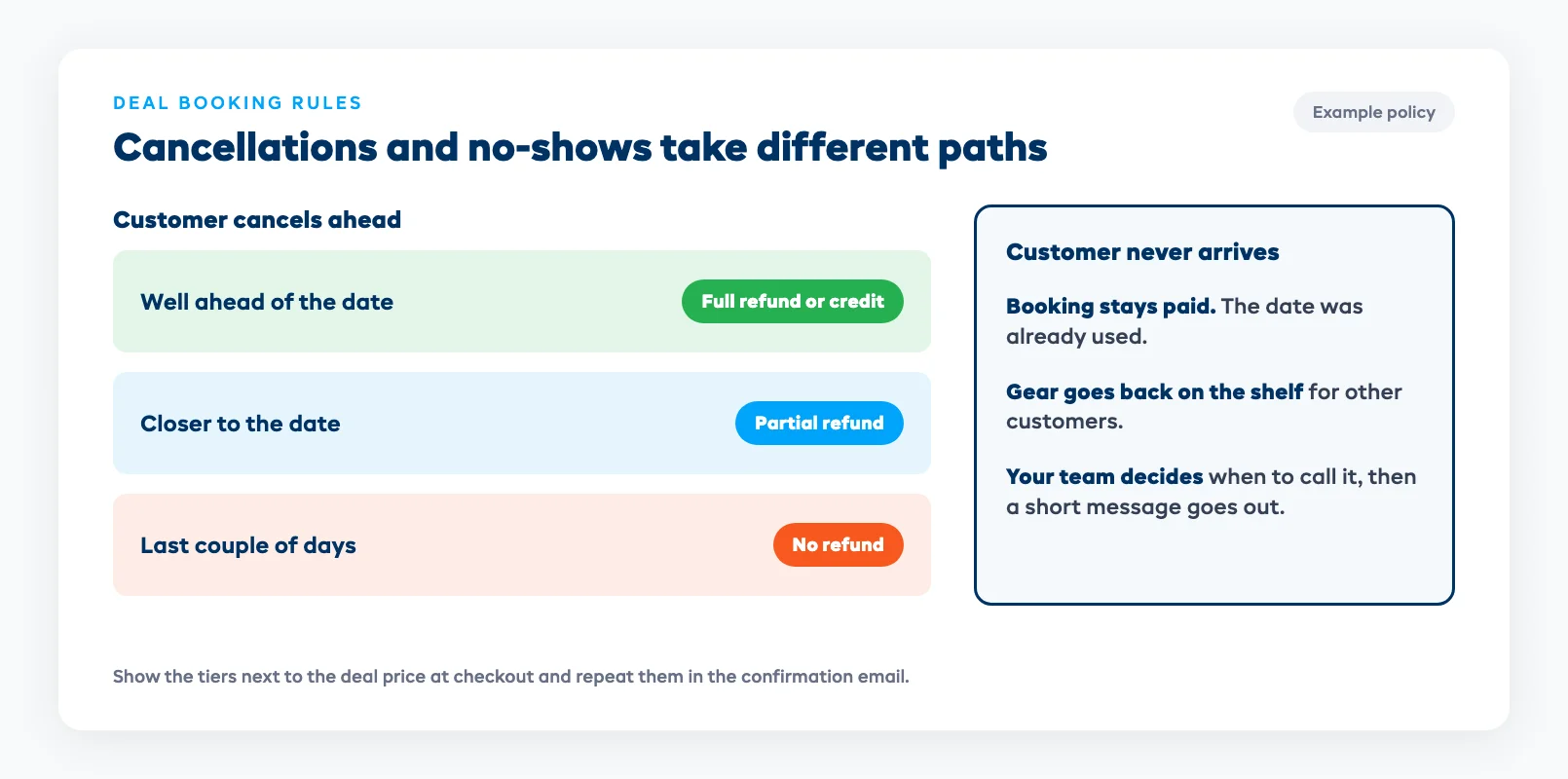
Cancellation tiers. Set a refund ladder by days before the booking, and show it next to the deal price at checkout. A common shape is a full refund or credit well ahead of the date, a partial refund closer in and no refund inside the last couple of days. Offer credit toward a future booking as the better option, since it keeps the money in the business.
Deal bookings and refunds. Say plainly whether a discounted booking follows the same tiers as a full-price one. Some operators make Black Friday bookings credit-only after the first week. Whatever you pick, put it in the checkout text, not just your terms page.
No-shows. Separate a no-show from a cancellation. A customer who calls the day before to cancel gets your cancellation policy. A customer who never turns up has already used the date, so the booking stays paid. Decide how long after the start time you wait before calling it, who on your team makes the call and what message goes to the customer. For a fuller playbook, see our guide to no-show and cancellation strategy.
In EquipDash, cancelling a booking shows the refund your cancellation policy allows before you confirm. Marking a no-show keeps the booking paid, puts its gear back on the shelf for other customers and can send a "We missed you" email you word yourself. EquipDash never marks a no-show by itself; someone on your team always presses the button.
A three-week setup timeline
If your deal goes live on Black Friday, the setup fits in the three weeks before it.
| When | What to do |
|---|---|
| 3 weeks out | Pull last year's holiday bookings, pick two or three bundles from items people already book together, and do the margin math |
| 2 weeks out | Build the bundles and promo codes with dates, minimums, caps and item limits. Set deposit and balance rules for advance bookings |
| 10 days out | Write cancellation tiers and the no-show rule into checkout text and confirmation emails. Brief staff on both |
| 1 week out | Test a deal booking end to end: book online, pay the deposit, apply the code, cancel it and check the refund |
| Launch week | Watch what's booking. Close a bundle early if it's eating a date you could sell at full price |
The test booking matters most. Book a bundle online with the code exactly as a customer would, then cancel it and look at the refund. It takes ten minutes, and it's the only way to see what the customer sees. If the weekend is likely to be busy on the floor as well, our Thanksgiving week capacity guide covers staffing and turnaround.
EquipDash runs bundles, promo codes, booking deposits, quotes and no-show handling in one system, with plans from $23/mo billed annually. Compare what's on each plan on our pricing page, or read the equipment rental software guide for what to look for in a booking system.
FAQ
When should rental businesses start preparing for Black Friday?
Start about three weeks before Black Friday. That gives you time to pick bundles from your booking history, build promo codes with limits, set deposit and balance rules and test a deal booking before it goes live on November 27.
Should I offer a percentage discount or a bundle for Black Friday?
A bundle usually protects margin better. Put the discount on add-ons or extra days and keep your scarcest item close to full price, so the customer still sees a clear saving while the items that would sell anyway go out at a fair rate.
How much deposit should I take on a Black Friday booking?
Take enough that the customer thinks twice before walking away, often 20 to 30 percent for advance bookings, with the balance due a set number of days before the date. Bookings made close to the start date should pay in full at checkout.
Can I limit a Black Friday promo code to certain dates?
Yes, and you should. Set valid from and valid until dates for the code itself, a minimum booking amount, a maximum discount and usage limits, and leave out peak weeks or items that will sell out anyway.
Should Black Friday bookings have a different cancellation policy?
They can, as long as you say so at checkout. Some operators make discounted bookings credit-only after a set point. Whatever you choose, show the refund tiers next to the deal price and repeat them in the confirmation email.
What is the difference between a no-show and a cancellation?
A cancellation is a customer telling you ahead of time they won't use the booking, and your refund tiers apply. A no-show is a customer who never arrives. The date has already been used, so the booking normally stays paid.
in one place