Checkfront vs Booqable: Which Is Better? (2026)
Checkfront vs Booqable: Which Is Better? (2026)
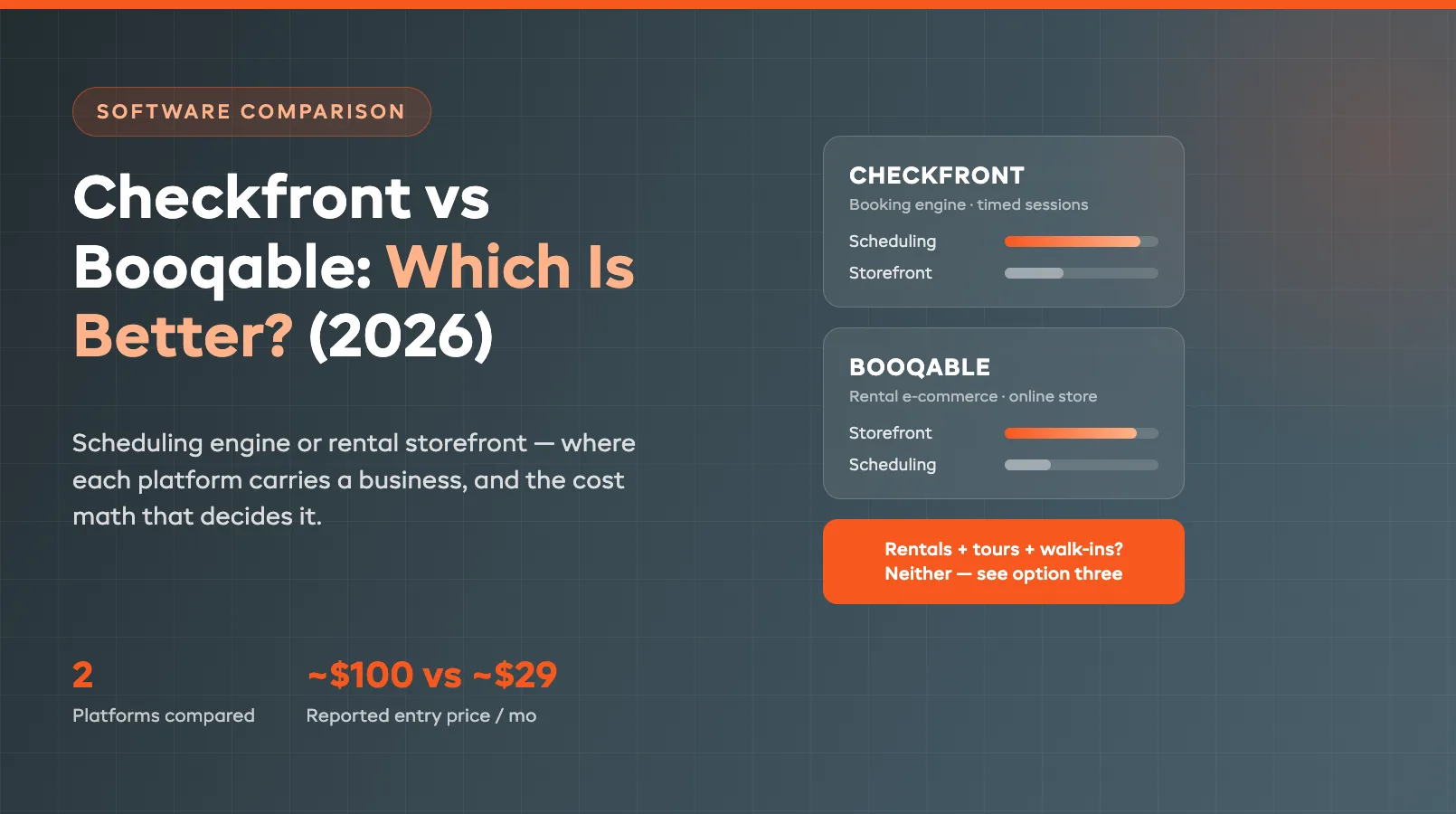
If you're evaluating Checkfront, you've probably noticed it promises a lot: tours, rentals, pricing rules, channel distribution, all under one roof. Then somewhere in your research Booqable shows up, looking sharper and simpler, and the question changes — is the broad tool actually better than the focused one? The honest answer depends on what your week looks like. A rafting outfitter running six departures a day has a different problem than a shop renting out e-bikes through its website. This guide takes Checkfront first, tests where its breadth is real and where it's thin, puts Booqable's numbers next to it, and finishes with what to do if neither covers your whole operation.
Sizing up Checkfront directly? See how it compares against an all-in-one platform in our EquipDash vs Checkfront comparison — and if you've already decided to leave, the Checkfront migration guide covers the switch step by step.
Quick Comparison Table
The short version first. Checkfront and Booqable both publish tiered plans; the figures below reflect what operators consistently report paying.
| Checkfront | Booqable | |
|---|---|---|
| Built around | Timed bookings & sessions | Rental e-commerce store |
| Best for | Tour & activity operators | Rental shops selling online |
| Scheduling | Strong — departures, capacity, resources | Weak — date ranges only |
| Online storefront | Basic booking pages & widget | Strong — full store builder |
| Rental bookings | Yes, slot-based | Yes, per-product stock |
| Pricing rules | Very flexible (hourly, seasonal, group) | Solid date-range pricing |
| OTA distribution | Viator, GetYourGuide via channel manager | None to speak of |
| Typical entry price | ~$100/mo reported | High-$20s/mo reported |
| Point of sale | Limited | Limited |
Checkfront covers more ground; Booqable covers its ground more deeply. That trade runs through everything below.
Where Checkfront Is Genuinely Strong
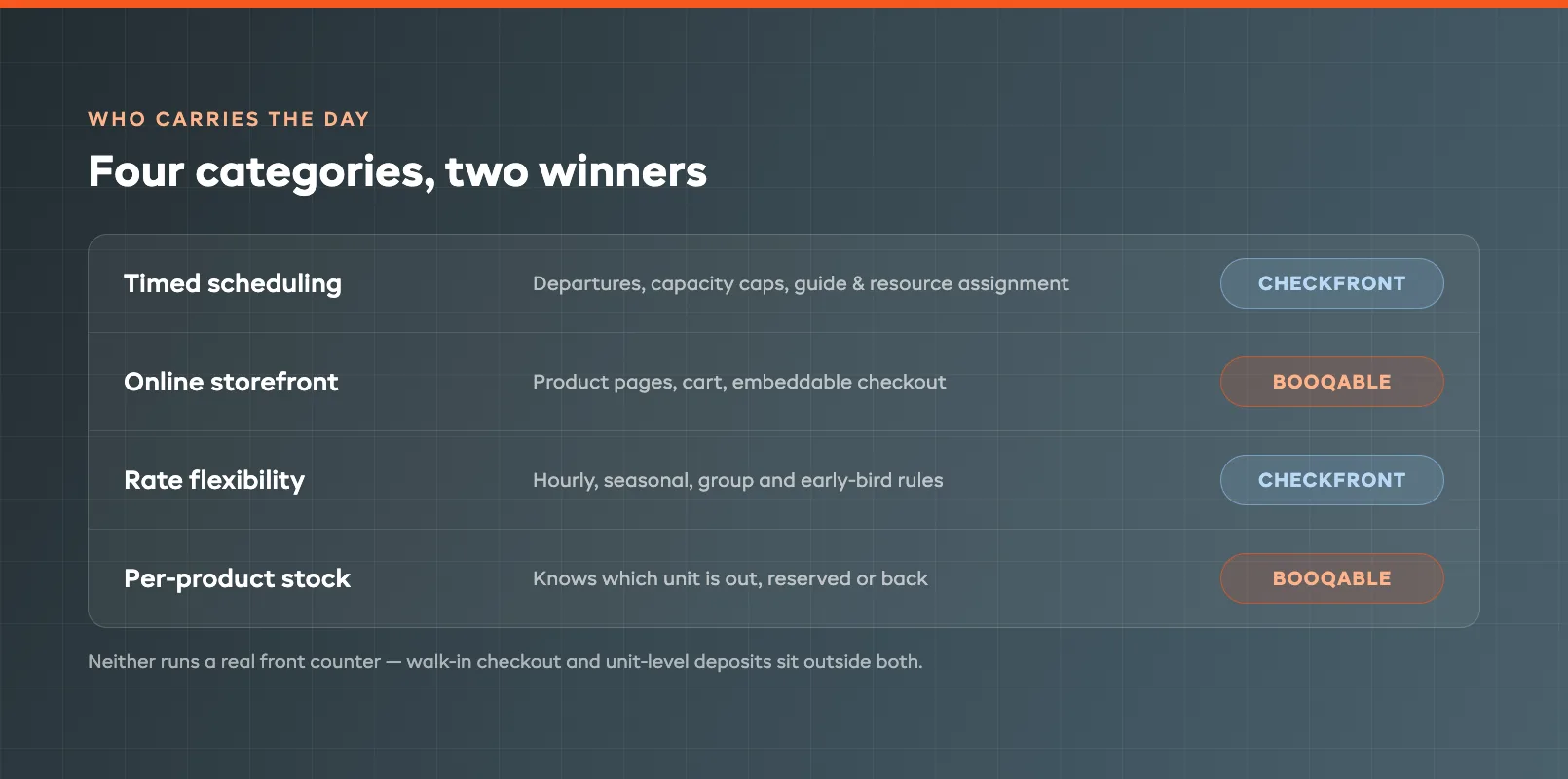
Timed sessions are first-class. Departures, per-session capacity, cutoff windows, assigning a guide or a boat to a slot — this is the machinery Checkfront was built on, and it shows. A zipline operator running a 9am, 11am and 2pm with different crew on each can model that cleanly. Booqable simply has no equivalent; it thinks in date ranges, not start times.
The pricing engine bends a long way. Hourly, daily, per-person, seasonal bands, group rates, early-bird windows — if your rate card has fifteen scenarios, Checkfront can usually express all fifteen. That flexibility is a real asset for operators with complicated seasons, even if configuring it takes patience.
Channel distribution exists. Checkfront's channel manager pushes availability to Viator, GetYourGuide and other marketplaces from one dashboard. For an activity business that leans on OTA traffic, that's meaningful. Booqable has nothing comparable, because online rental shops rarely sell through OTAs.
It's a known quantity. Fifteen-plus years in market, a mature API, a big knowledge base. You won't be anyone's guinea pig.
Where Booqable Beats It
The storefront is a different league. Booqable ships a genuine online rental store — product pages, photos, a cart, date-range pricing and an embeddable checkout that feels like modern e-commerce. Checkfront's booking pages and widget get the job done for "pick a session, pay," but customers don't browse them the way they browse a shop. If your gear is the product and your website is the salesroom, Booqable converts better.
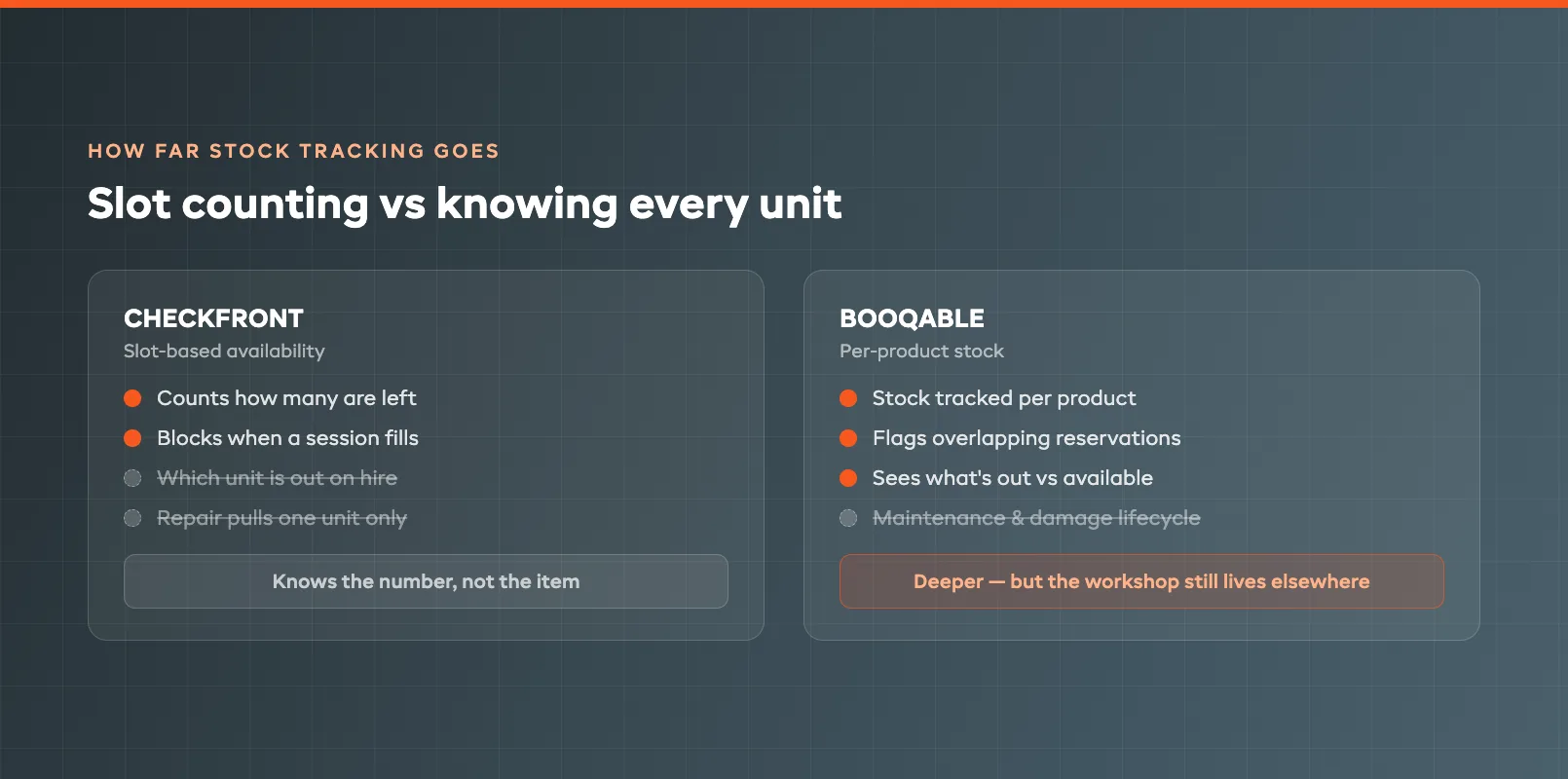
Stock is tracked per product. Booqable knows you have eight e-bikes, that five are reserved this weekend, and it flags the overlap when a sixth booking lands. Checkfront's rental handling is slot-based — it counts how many are left, not which one is where. For a shop whose margins live and die on utilization, per-product tracking matters daily.
Setup and day-to-day feel lighter. Operators consistently describe Checkfront's configuration as clunky and its interface as dated — weeks of setup that should take days, and more clicks than the task deserves. Booqable's narrower scope keeps it simpler to stand up and easier to train staff on.
Where both stop. Neither platform runs a real front counter. Walk-in checkout, a deposit held against a specific serial number, a damage note that pulls one unit out of the pool while its twin stays bookable — that operational layer isn't there in either tool. And neither offers meaningful automation: follow-ups, review requests and late-return chasing stay manual as you grow.
Pricing: What You'll Actually Pay
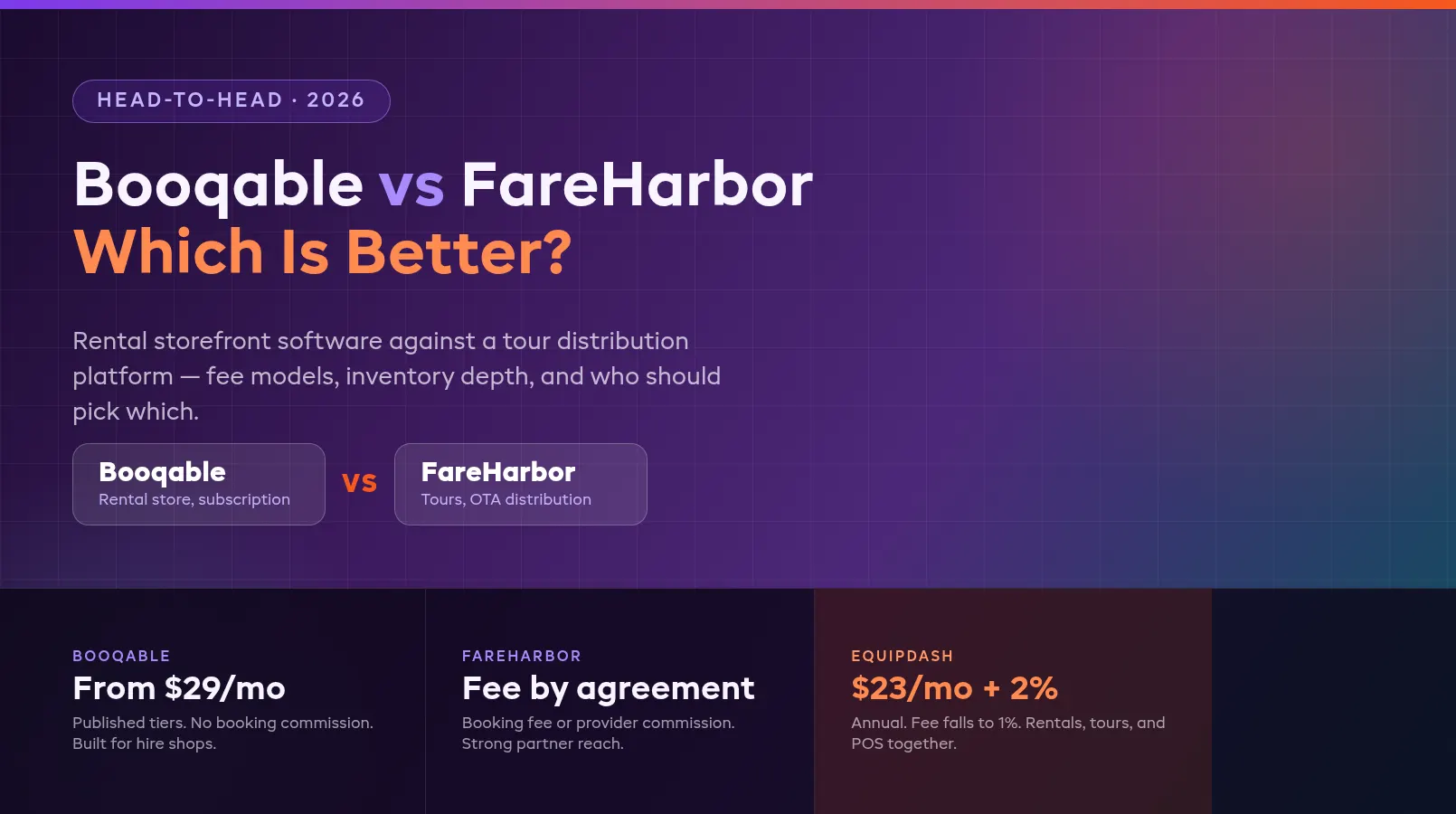
Checkfront is typically reported from around $100 a month at entry, climbing into the several-hundreds at higher tiers. Tiers are shaped by booking volume and staff seats, so a good season can push you up a level — cost tracks growth whether or not margin does. Payment processing fees sit on top.
Booqable is commonly reported from the high-$20s a month, rising into the low-hundreds as you add products, users and additional stores. The entry point is friendlier; the ceiling arrives when your catalog and team expand. Processing fees apply here too.
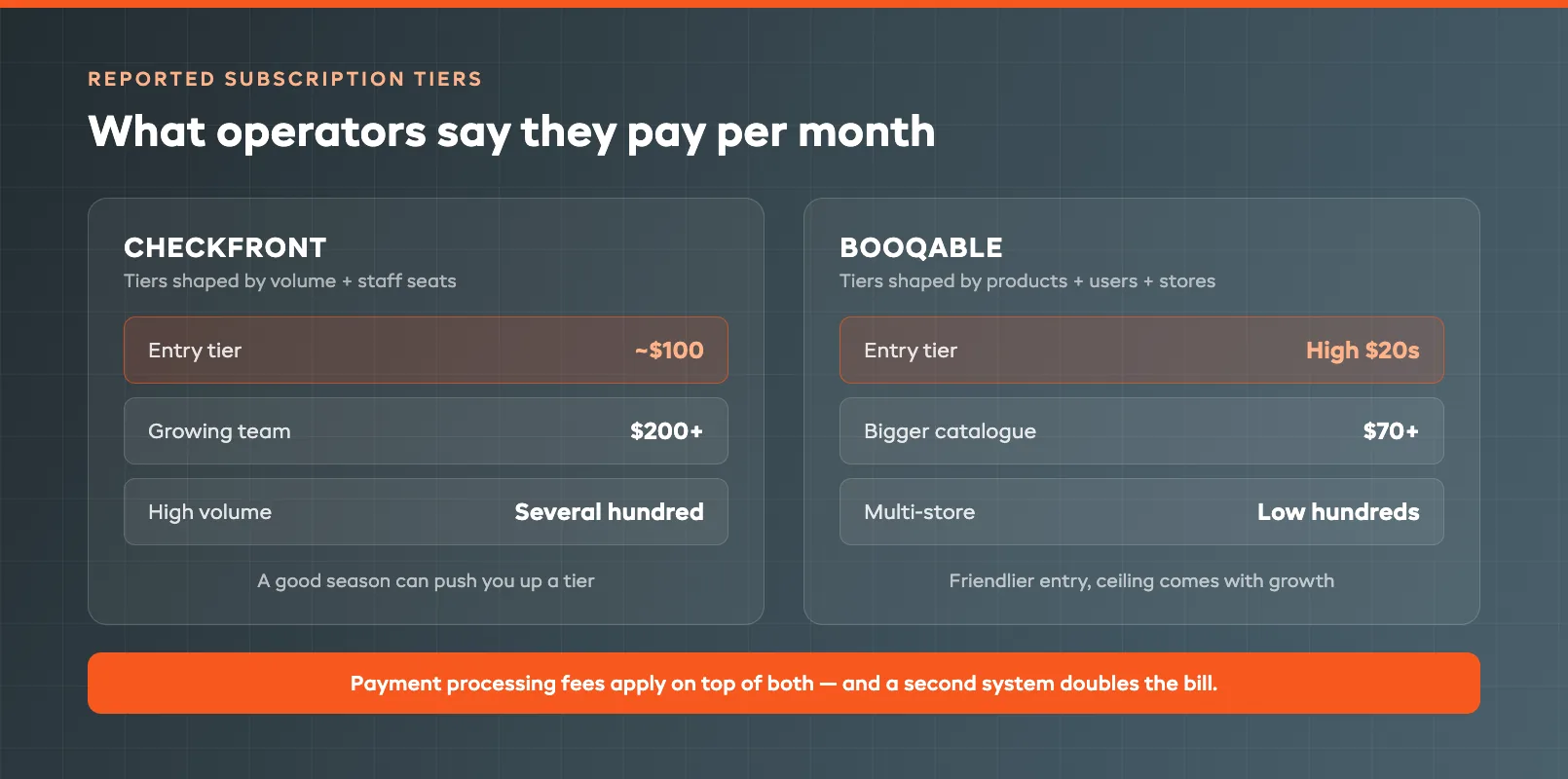
The comparison most operators miss isn't Checkfront versus Booqable — it's either one versus the second system you'll bolt on. A business doing guided trips and gear hire ends up paying for Checkfront plus a rental tracker, or Booqable plus a scheduling tool, with double data entry and a standing double-booking risk between them. Operators who hit that wall tend to start scanning Booqable alternatives that handle both sides natively.
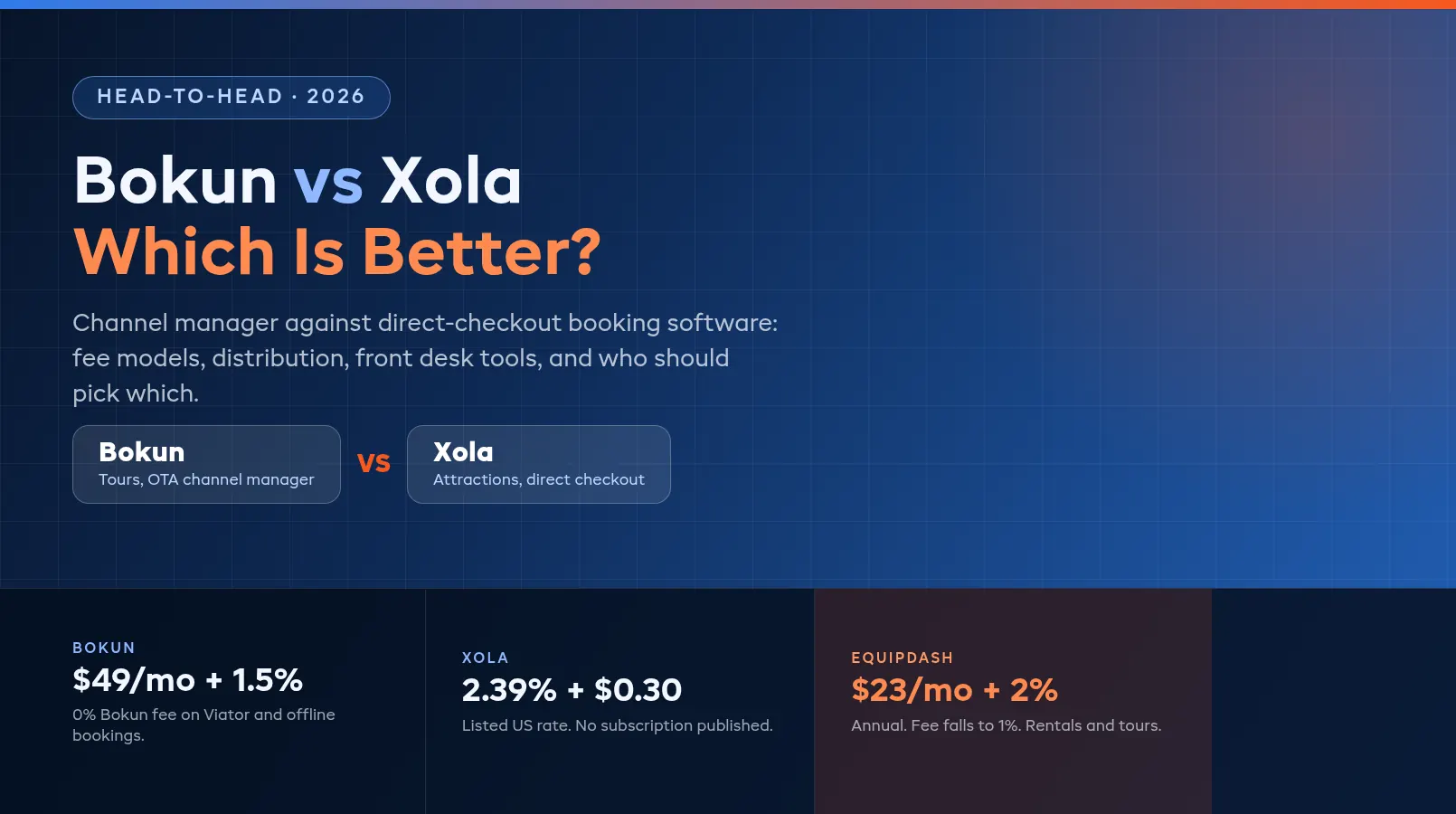
For reference, EquipDash charges flat annual plans with a small booking fee instead of volume-gated tiers: Starter at $23/month with a 2% booking fee, Growth at $55/month at 1.5%, and Pro at $119/month at 1%. On $100,000 of annual bookings that lands between roughly $2,160 and $2,428 a year all-in — one bill for rentals, experiences and the counter. Whatever you choose, run the total across every system you'd actually need, not the headline price of one.
So Which One Should You Pick?
Pick Checkfront if your revenue is mostly scheduled sessions — tours, classes, charters, timed admissions — and your rate card is complicated. Its scheduling depth, pricing rules and OTA connections are the strongest reasons it's still on shortlists after fifteen years. Go in with eyes open about the dated interface and a setup phase measured in weeks, not days.
Pick Booqable if your business is renting gear through your website and a storefront is the heart of it. Per-product stock, a real cart, and a cleaner day-to-day make it the better pure-rental tool, at a friendlier starting price.
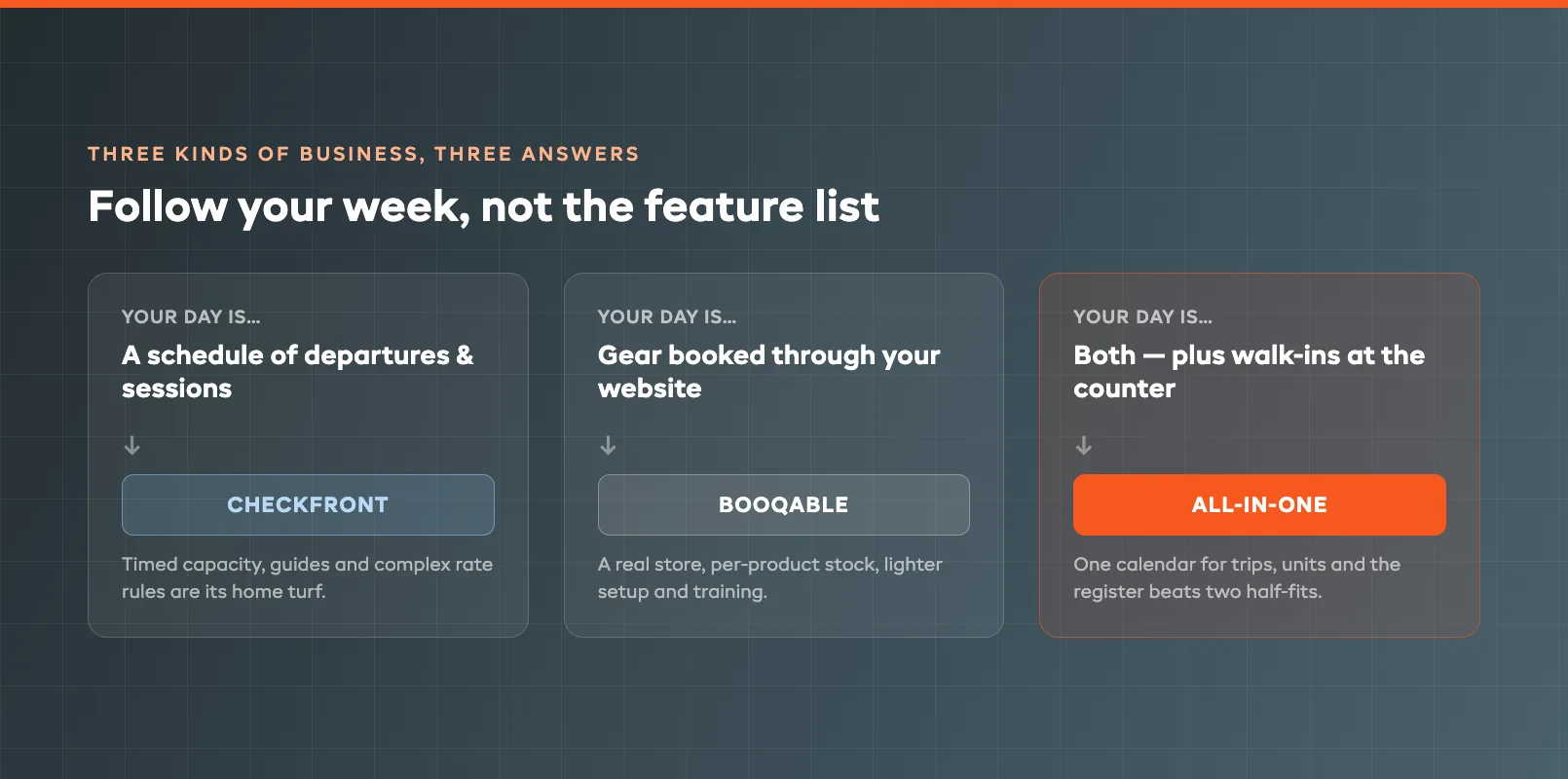
Pick neither if you straddle the line. The moment guided experiences and equipment hire both matter — or walk-in traffic is a real share of your day — each of these platforms covers half your business well and the other half grudgingly.
The Third Option: One System for Both Halves
If you landed on "pick neither," you're the operator EquipDash was built for. It treats timed experiences, per-unit rental inventory and in-person sales as first-class citizens of one system: the calendar that fills your 10am trip also knows which paddleboards are out on hire, which came back with a cracked fin, and the built-in point of sale rings up the walk-in who just wants a wetsuit for the afternoon. One booking flow, one customer record, one dashboard — and the Dash AI assistant picks up the follow-ups and late-return nudges that stay manual chores on both platforms above.
It won't out-schedule Checkfront for a pure tour operation or out-store Booqable for a pure online rental shop — a focused tool is hard to beat on its home turf. But for the mixed business both of them half-serve, one platform that does the whole job beats two subscriptions stitched together.
Still building the shortlist? Work through our best Checkfront alternatives for 2026 and best Booqable alternatives for 2026 — and if you're ready to move off Booqable instead, the Booqable migration guide maps that path too. For the widest view of the field, the equipment rental software comparison scores ten platforms side by side.
FAQ
What's the main difference between Checkfront and Booqable?
What each was built around. Checkfront is a booking engine designed for timed sessions — departures, capacity caps, guides and resources — that also takes rental bookings. Booqable is rental e-commerce: an online store with per-product stock tracking and no real concept of a timed session. Checkfront wins on scheduling; Booqable wins on the storefront.
Is Checkfront good for equipment rentals?
It can take rental bookings, and its flexible rate rules handle hourly, daily and seasonal pricing well. But its inventory is slot-based rather than unit-based — it knows how many are left, not which specific item is out, due back, or waiting on a repair. Pure rental shops usually find Booqable, or an all-in-one platform, a deeper fit.
Is Booqable good for tours and activities?
Not really. Booqable is built around date-range rentals sold through an online store. It has no native concept of departures, per-session capacity, or guide assignment, so running a day of timed tours on it means workarounds. Operators whose revenue is mostly scheduled sessions are better served by Checkfront.
How much does Checkfront cost compared to Booqable?
Both sell tiered monthly plans. Checkfront is typically reported from around $100 a month, rising into the several-hundreds as booking volume and staff seats push you up tiers. Booqable is commonly reported from the high-$20s a month, climbing into the low-hundreds with more products, users, and stores. Payment processing fees apply on top of both.
Can I switch from Checkfront to Booqable easily?
The data moves — both platforms export products, customers, and bookings to CSV, and you can run the two in parallel during cutover. The harder question is whether you should: you'd be trading scheduling depth for storefront depth. If you're leaving Checkfront because you need tours and rentals handled properly, an all-in-one platform is usually a better landing spot than swapping one half-fit for another.
Is there one platform that covers what Checkfront and Booqable each do half of?
Yes. EquipDash runs timed experiences, per-unit equipment rentals, and a walk-in point of sale in one system — one calendar, one customer record, one dashboard — with flat annual pricing from $23/mo and a booking fee that drops from 2% to 1% as you move up tiers.
in one place