Q4 Conference Season: Holding Fleet for Multi-Day Corporate Hire
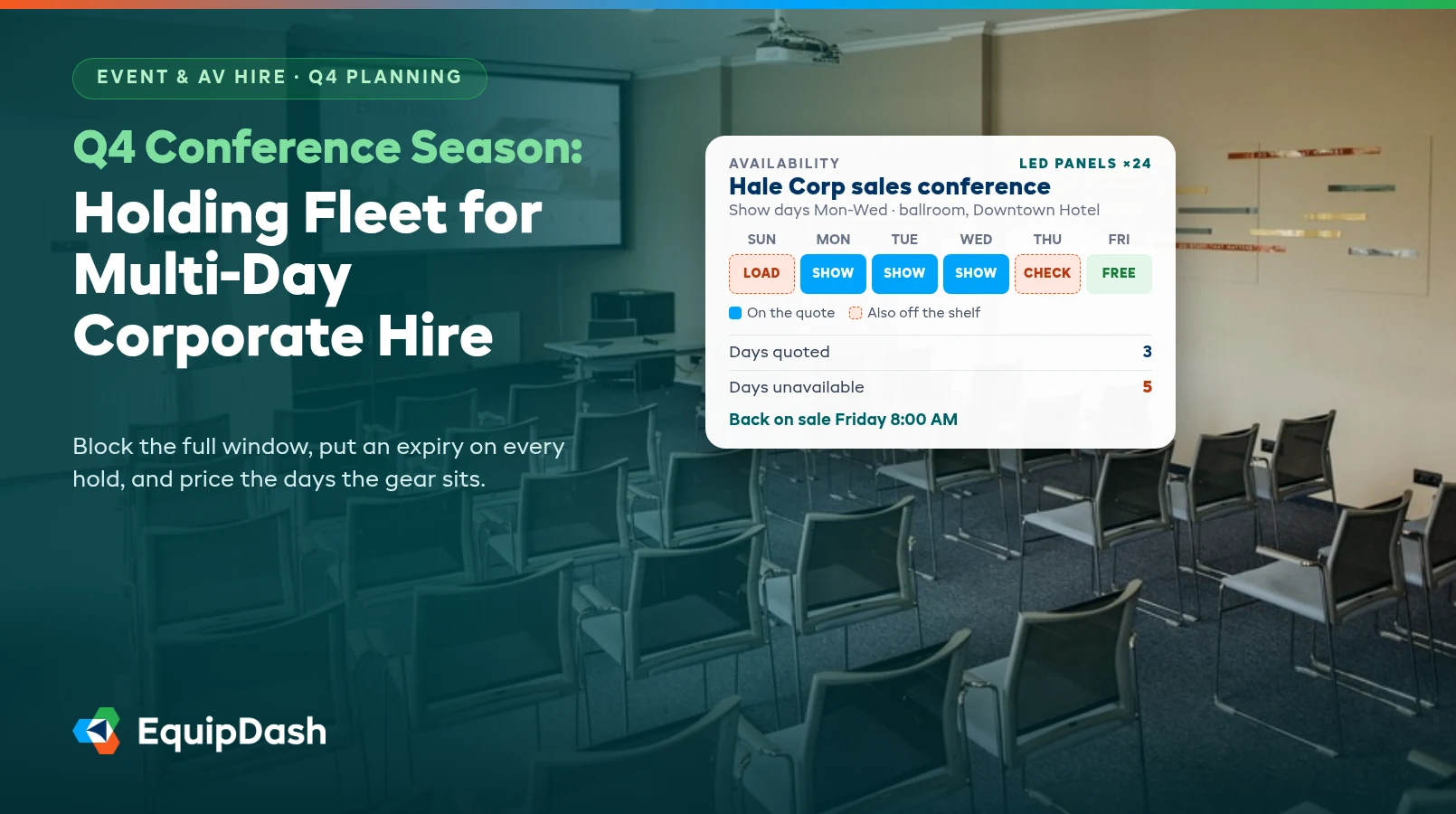
A three-day sales conference sounds like three days of hire. In practice the LED wall, the radio mics, the stage decks and 300 banquet chairs leave on Sunday for load-in, sit in a hotel ballroom until Wednesday night's strike, and aren't counted and back on the shelf until Friday morning. That's five days off the shelf for three days on the invoice, and from October to mid-December those jobs stack up.
Corporate work is good work. Budgets are approved in advance, invoices get paid, and a client who's happy this year often books the same week next year. The cost shows up in the rest of your calendar. Every chair sitting in a ballroom on Tuesday is a chair you can't send to Thursday's gala if the strike runs late. This guide covers how to see the real footprint of a multi-day hire, hold stock without letting holds go stale, price the days the gear isn't working, protect the lines that run out first, and get everything back in time for the weekend. If you're setting up your systems for event work, start with our event rental software guide.
The real footprint of a three-day conference
Corporate clients quote and think in show days. Your stock is gone for longer. Walk any conference job day by day:
- Load-in. Usually the day before doors open, sometimes two days for a big stage or flown truss. The van leaves the warehouse that morning.
- Show days. The days the planner thinks they're paying for.
- Strike. Often the night of the last session, sometimes after midnight because the venue has a breakfast booked in the same room at 7 AM.
- Return and check. Cases come back, get counted, tested, cleaned and put away. Mic batteries come out, chair covers and stage skirts go to the laundry, and anything damaged goes to the workshop.
Add those up and a three-day event holds stock for five days, six if load-in needs two. If your calendar only blocks the show dates, you'll sell the same LED panels to Friday's awards dinner and find out on Thursday afternoon.
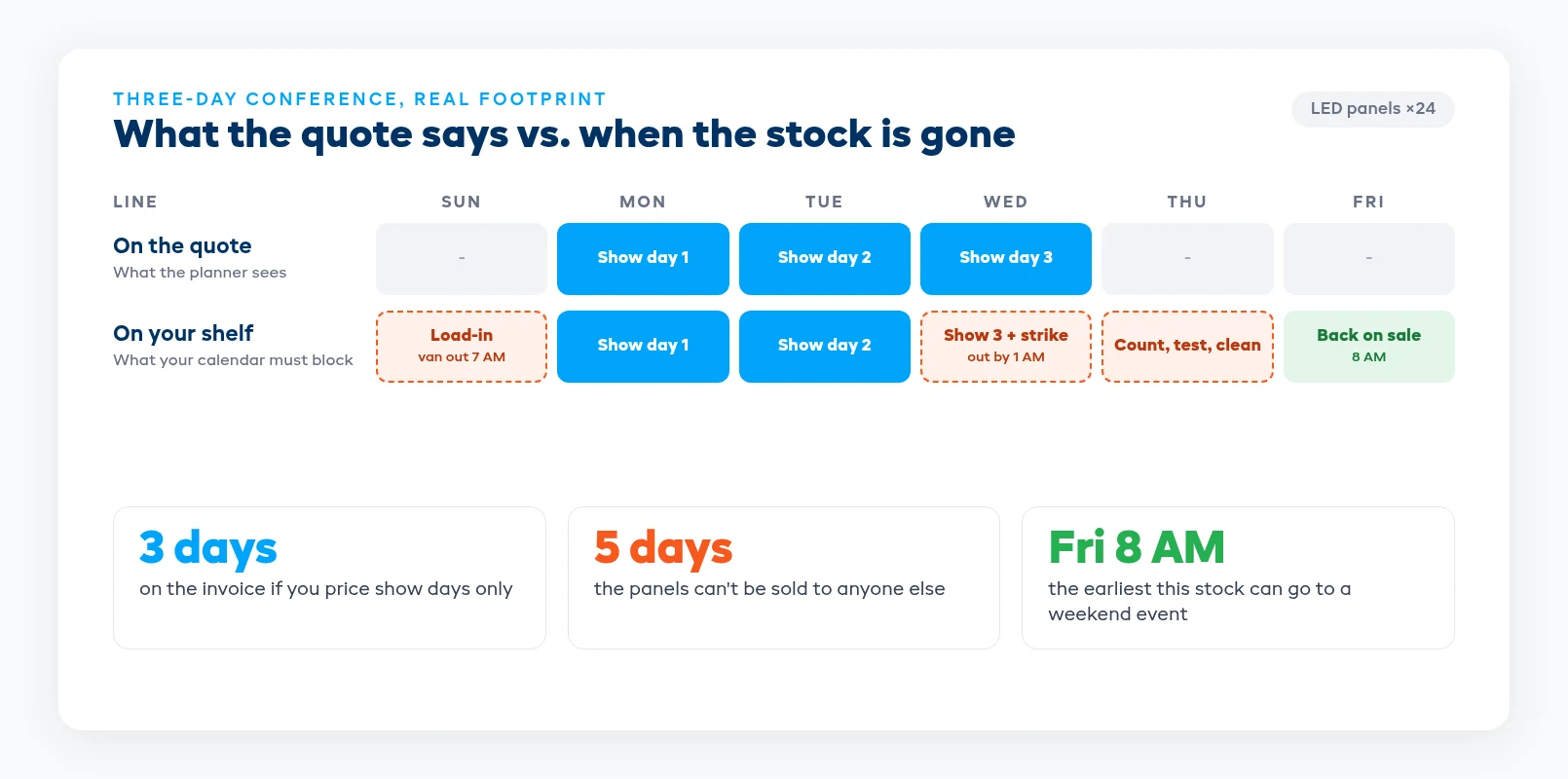
Block the whole window on the booking, from the hour the van loads to the hour the gear is ready to go out again. If your system can't show the load-in and check days as unavailable, put them on the booking as their own dated lines so nobody quotes into them.
Map the season before the inquiries land
Most Q4 corporate work isn't a surprise. Associations hold their annual meeting in the same week every year, sales teams run year-end kickoffs, and holiday party requests start arriving in October. An hour with last year's bookings now saves a lot of scrambling in November.
- Pull every corporate job from October to mid-December last year. Client, venue, dates, and what went out.
- Email your repeat clients for this year's dates. A client who confirms in October is a booking you can plan around. One who books in November takes whatever is left.
- Find your bottleneck lines. These are the items that ran out first last year. For most event and AV shops that's LED panels or screens, radio mics, staging decks, cocktail tables and the good chairs, rarely the folding ones.
- Mark the weeks where two big jobs overlapped. Those are the weeks you'll need sub-hire lined up or a limit on what you take.
Keep the bottleneck list where whoever writes quotes can see it. When an inquiry touches one of those lines in a busy week, someone should look at the whole week before saying yes.
Holds that expire instead of going stale
Corporate clients rarely confirm on the first call. The planner needs sign-off, the venue contract isn't back, the headcount is still moving. So they ask you to hold the date, and you do, because saying no feels like losing the job.
A hold nobody manages is how good stock sits idle through peak season. A September hold that nobody followed up can still be blocking 24 LED panels in November, after you've turned away two paying jobs for it. Three rules keep holds honest:
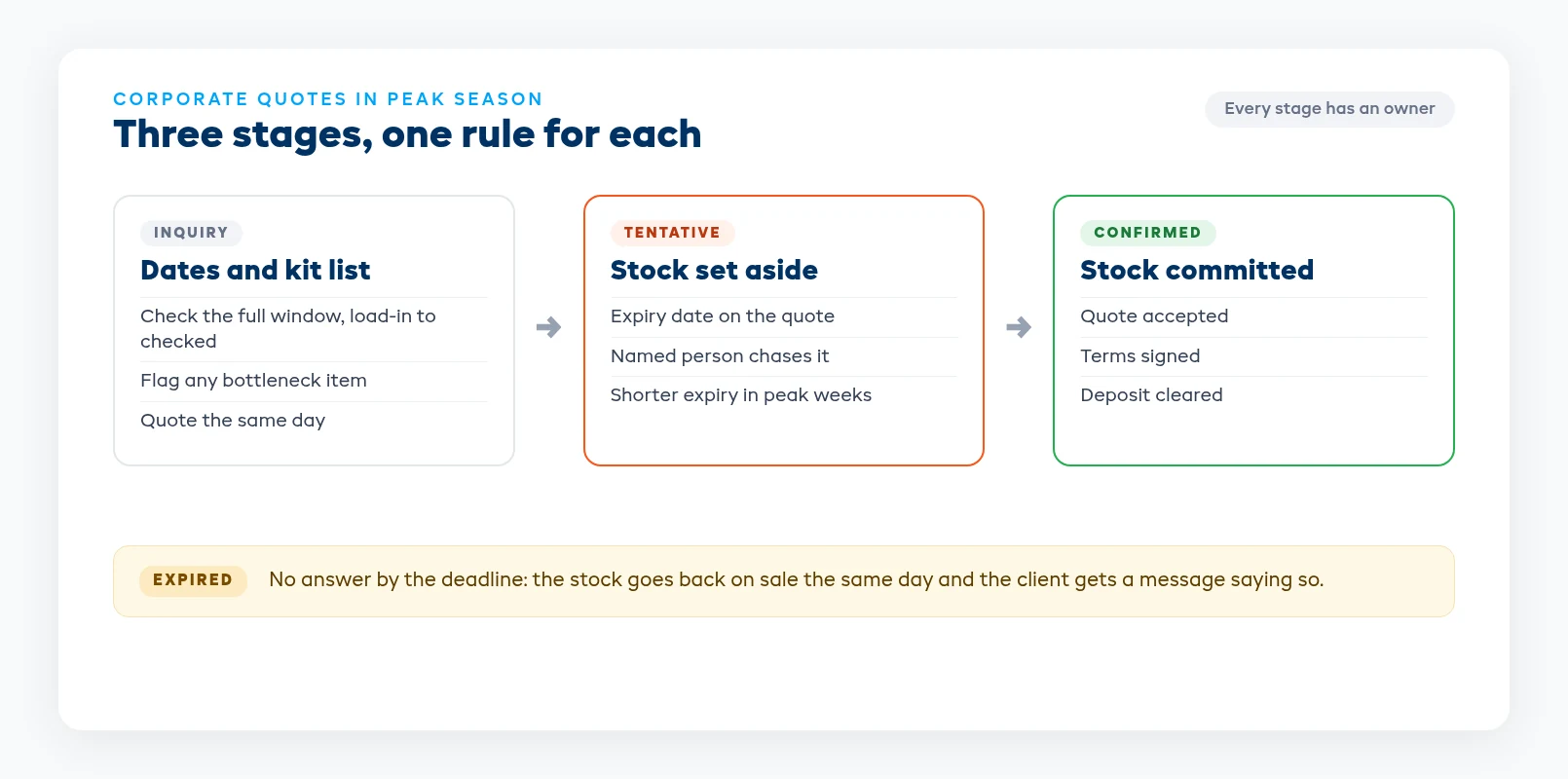
- Every hold has an expiry date. About a week is common for corporate work, shorter in the busiest weeks. When it lapses, the stock goes back on sale and you tell the client the same day.
- Every hold has an owner. One named person chases it before it expires. A call that says "we're holding it until Friday at 5 PM" is often what gets the planner to push their own approval through.
- A hold becomes a booking when the client pays. That means the quote is accepted, the terms are signed and the deposit has cleared. Until then it's a hold, whatever the planner says on the phone.
When a second inquiry arrives for stock that's already on hold, give the first client a short deadline to confirm. Most planners would rather be asked than find out later that the gear went elsewhere, and you get a firm answer either way.
In EquipDash, an accepted quote becomes the booking and commits the stock, with a fixed or percentage deposit taken on acceptance. A Quote Follow-Up bot can chase quotes that were sent but haven't been accepted, so a hold doesn't drift past its date unnoticed. See how that works on the party and event rental software page.
Pricing the days the gear isn't working
Most rate cards were written for weekend party hire: one day, maybe two. Run a five-day corporate job on daily rates and the total looks absurd to the planner. Price it on a one-day rate because "the event is one day" and you've given away four days of stock in your busiest season.
Price the whole window, in the way corporate buyers expect to see it:
- Use multi-day or weekly rates instead of multiplying the day rate. A common structure is a full rate for the first day, a lower rate for each extra day, and a weekly cap.
- Name the standby days. If the gear sits rigged in a ballroom between sessions, it's still on hire. Put those days on the quote so nobody argues about them at invoice time.
- Show load-in and strike labor as their own lines. A midnight strike costs more in crew hours than a Tuesday afternoon, and the planner should see why.
- Price delivery and collection separately when the venue gives you a narrow dock slot or a long push to the room.
A quote line that reads "LED panels x24, Sunday load-in to Wednesday strike, 4 days at the multi-day rate" looks fair to a planner. A quote that says two days and then adds charges afterward looks like padding, even when the total is the same. Our guide to event rental quoting and deposits covers getting that quote out the same day and holding the date with a deposit.
Protecting your bottleneck lines
Q4 rarely leaves you short on everything at once. What runs out is the four or five lines every conference wants, during the two or three weeks when every client wants them.
- Limit how much of a bottleneck line one job can take in peak weeks, unless they're paying for exclusive use. If one conference wants all 32 radio mics, the next inquiry for that week gets a no or a sub-hire quote.
- Check the whole window for clashes. A Thursday gala and a Monday-to-Wednesday conference don't overlap on paper. They do if the conference strikes Wednesday night and the gear isn't counted until Thursday noon.
- Line up sub-hire before you need it. Call the two or three houses you trust and agree terms in October. When you do sub-hire, put the borrowed gear on the same job and the same pull sheet, so it gets checked back in like your own.
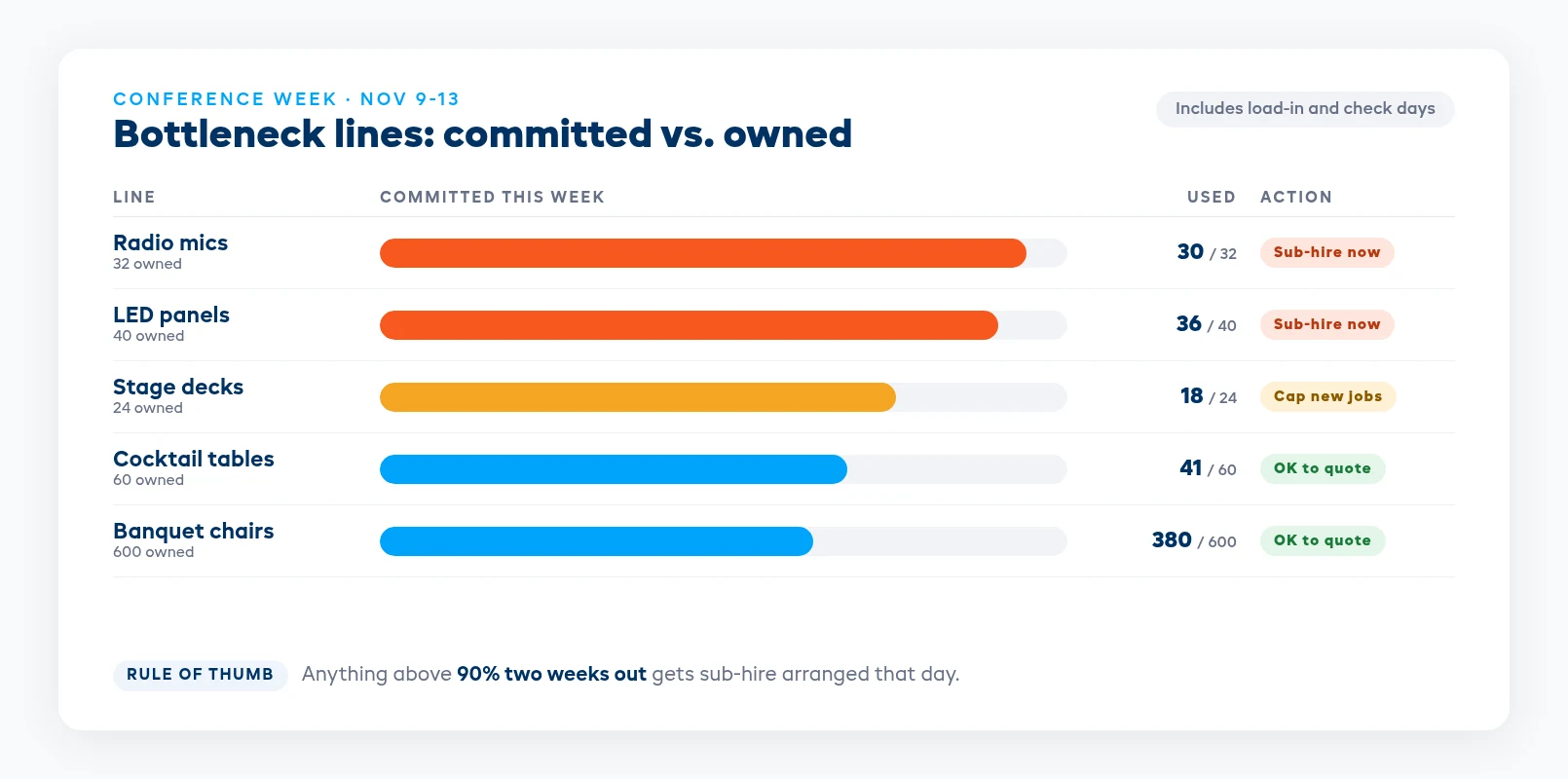
- Look two weeks ahead every Monday for any line above about 90% committed, while there's still time to sub-hire at a sensible price.
EquipDash can run an Overcommit Alert bot that warns when a date is close to selling out a line, so you can arrange sub-rental early. If you run more than one yard, multi-warehouse stock keeps separate availability per depot, with transfers between them.
Crew, strikes and gear left on site
Gear is half of a conference job. The other half is the people who rig it and strike it, and in Q4 they're usually scarcer than the gear.
Book crew against the same job as the equipment, with load-in, show call and strike as separate shifts. A technician working a Wednesday night strike at one hotel can't also do a 6 AM load-in across town on Thursday, and you want to spot that on Monday, not on Wednesday night. On the AV rental software side, EquipDash books technicians against the same job as the gear and flags anyone assigned to two jobs on the same day.
Venues set strike times, and they're not negotiable. Ask for the strike window before you quote, because "out by 6 AM" changes your labor cost and when the gear gets back to the warehouse.
If gear stays at the venue overnight between show days, write down who has access to the room, where the cases are stored, and who signs for them. Hotel staff reset rooms for breakfast sessions, and a road case of radio mics left by a service door is easy to lose.
Getting it back before the weekend
The gear isn't free until it's checked. A conference that strikes Wednesday night leaves you Thursday to get that stock ready for Friday and Saturday events.
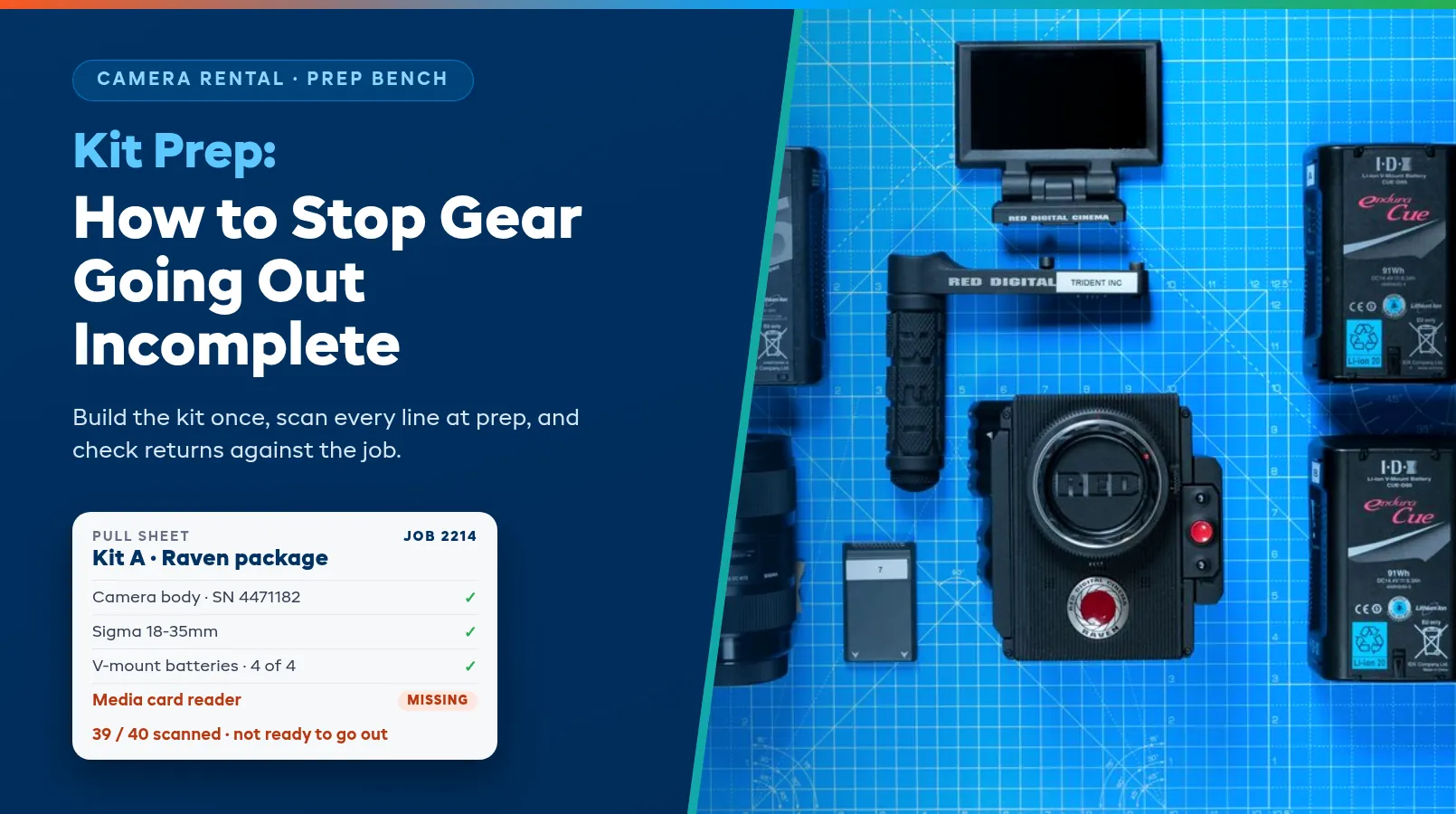
- Check returns against the job, not a generic kit list. The job knows exactly what went out, including the extra mics the planner added on day two.
- Count and test on Thursday morning, before anyone quotes weekend work from that stock.
- Send soft goods straight to cleaning and keep them blocked until they're back. Linens, chair covers and stage skirts used for three days don't go out again on Friday without a wash.
- Log damage and shortages against the corporate job on the day you find them, while the planner still remembers the room.
Our guide to event rental turnaround and cleaning goes further into blocking returned stock until it's ready to send again.
Where to start this week
Pull last year's October to December corporate jobs and write down your five bottleneck lines. Email your repeat corporate clients and ask for their dates. Go through every hold currently on the books, give each one an expiry date and an owner, and release anything already past due. Then quote the next multi-day inquiry on the full window, load-in to checked, with the standby days named, and see how the planner responds.
FAQ
How long does a multi-day corporate hire actually tie up stock?
Usually two days longer than the event itself, sometimes three. Add the load-in day before doors open, the strike on the last night, and a day to count, test and clean the gear before it can go out again. A three-day conference typically keeps stock off the shelf for five days.
How long should we hold stock for a corporate client who hasn't confirmed?
About a week is common, with shorter holds in your busiest weeks. Put the expiry date on the quote, give one person the job of chasing it, and release the stock the day the hold lapses. Treat the booking as confirmed only when the quote is accepted, the terms are signed and the deposit has cleared.
Should we charge for load-in and standby days?
Yes. Gear that's sitting in a venue can't be rented to anyone else, so those days belong on the quote. Use a multi-day or weekly rate so the total stays reasonable, name the standby days on the quote, and show load-in and strike labor as their own lines so the planner can see what each one covers.
How should we price multi-day AV and furniture hire?
Charge a full rate for the first day, a lower rate for each additional day, and cap it at a weekly rate, rather than multiplying the day rate. Quote crew labor, delivery and collection separately, and price overnight or early-morning strikes at the labor rates they actually cost you.
What do we do when two corporate clients want the same stock in the same week?
The first client to confirm with a signed quote and a deposit gets it. If the first client is only on hold, give them a short deadline to confirm before you answer the second. If both confirm, sub-hire the shortfall from a house you've already agreed terms with, and put the borrowed gear on the same job and pull sheet as your own.
When should event rental companies start planning for Q4 conference season?
Late summer or early fall. Review last year's October to December corporate jobs, email repeat clients for their dates, identify the lines that ran out first, and agree sub-hire terms with other rental houses before the busy weeks fill up. By November most of your peak-week stock should already be on confirmed bookings or firm holds.
in one place