Hunting Outfitter Wind-Down: Returns, Damage and Off-Season Storage
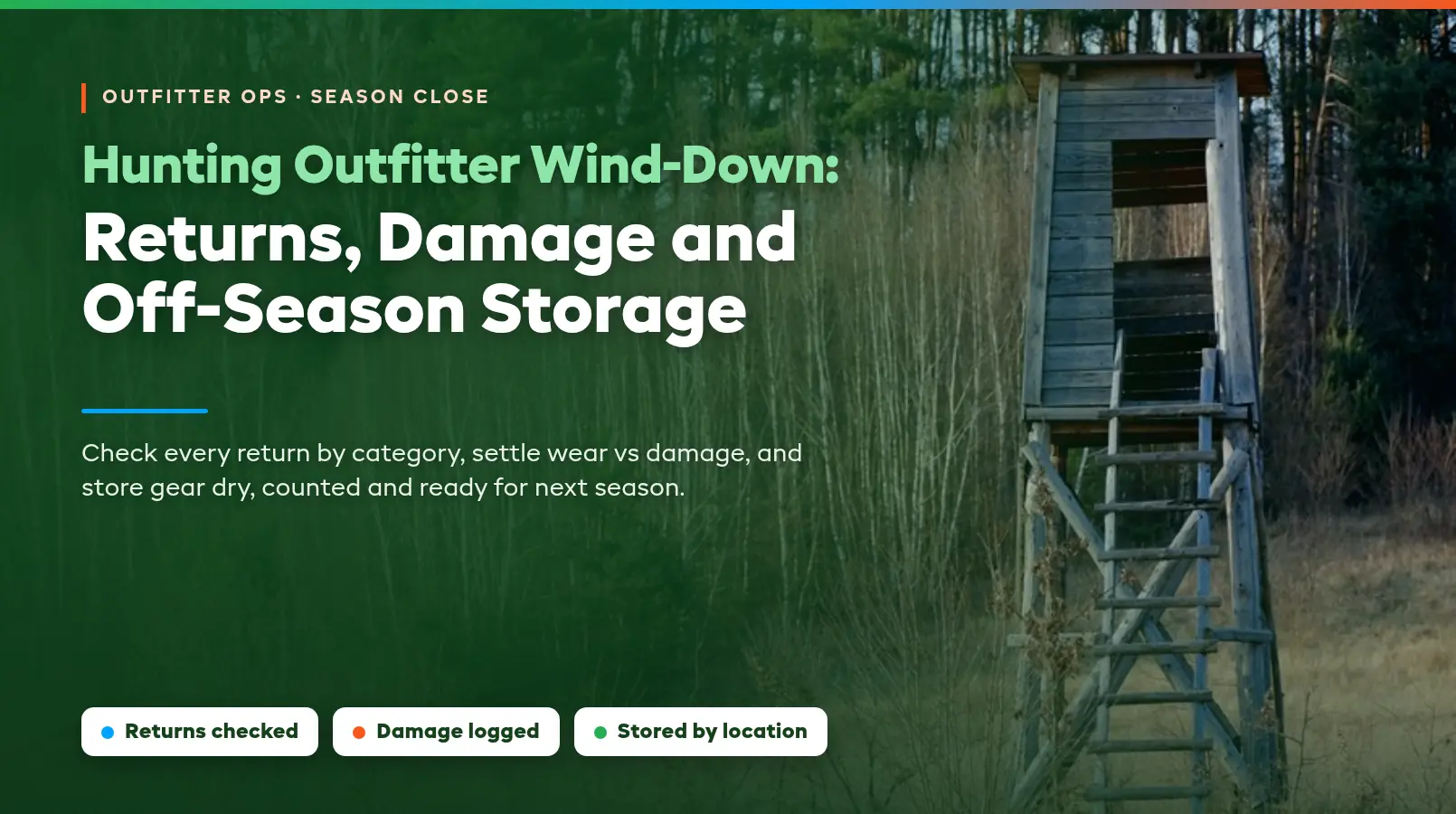
The last camp of the season breaks, and the truck comes back loaded with muddy decoys, a blind with a torn window, two rangefinders that may or may not be yours, and a cooler nobody wants to open. What you do with that pile in the next two weeks decides whether next season starts with gear you trust or a spring spent guessing.
Outfitters carry a strange mix of stock. Some of it goes out with clients on a rental or a package (optics, stands, blinds, decoys, packs, waders), some of it lives in camp (wall tents, cots, stoves, heaters, coolers), and some of it the guides use every day without anyone writing it down. The wind-down is when all three come back to the same shed at once. This guide covers setting your closing dates, checking returns by category, deciding what counts as damage, getting gear clean and dry, and storing it so it's ready when the next season opens. For a camping fleet, the fall camping wind-down guide covers the same close from the rental counter side.
Set your closing dates before the last camp breaks
Seasons are set by each state's wildlife agency and vary by species and unit, so your wind-down date isn't the same as the outfitter two counties over. Pick yours from your own calendar: the last hunt you have booked, plus the days you need to get everything back and sorted.
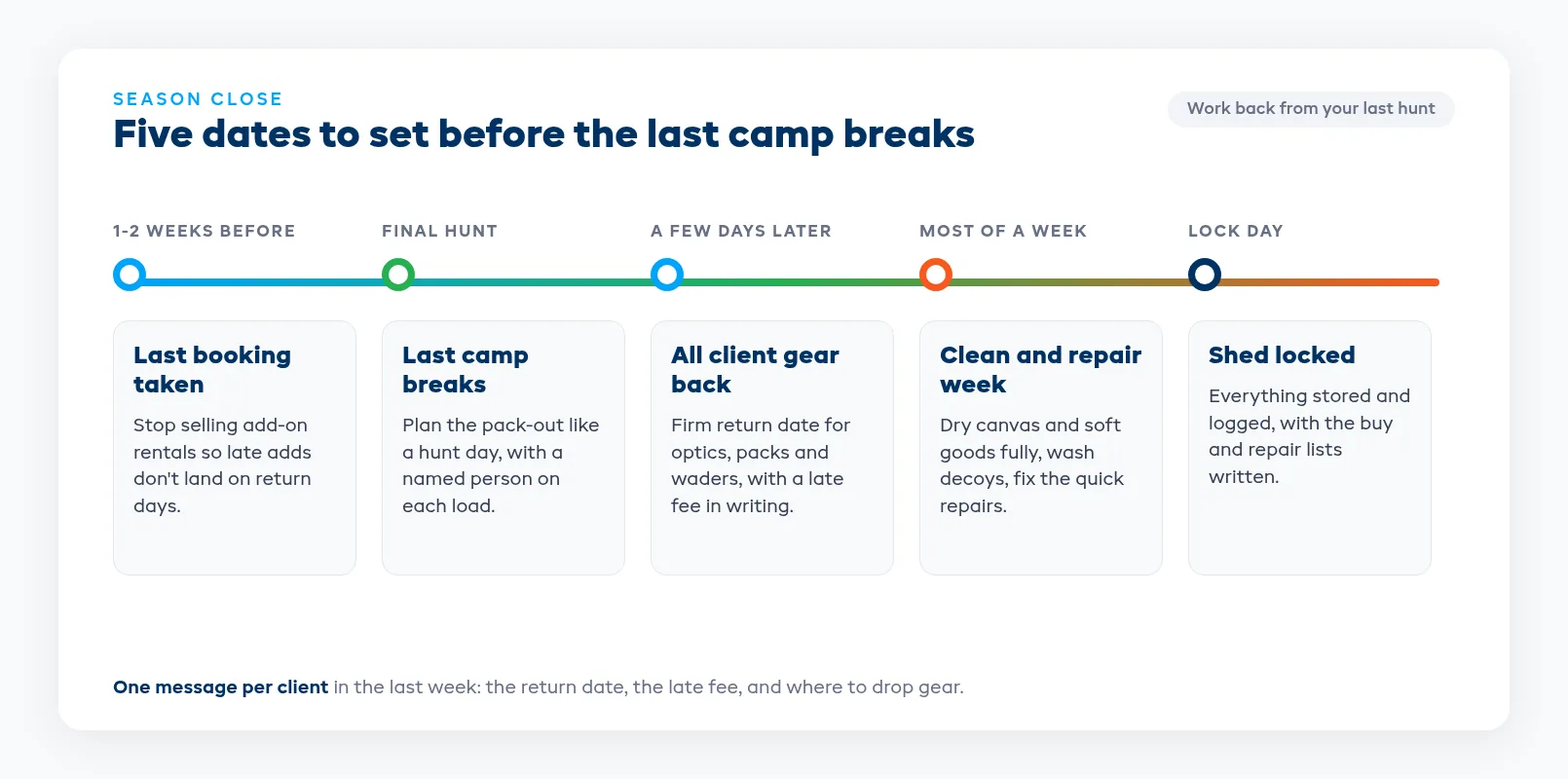
Put these on the calendar now, in this order:
- Last booking taken. Stop selling add-on rentals (extra optics, a second blind, a cart) a week or two before your final hunt, so late adds don't land on the busiest return days.
- Last camp breaks. The day the final group leaves. Plan the pack-out like a hunt day, with a named person on each load.
- All client gear back. Set a firm date for anything clients took home, such as rented optics, packs, or waders, and put a late fee on it in writing.
- Clean and repair week. Most of a week for a small operation, longer if you run several camps. Soft goods, canvas and decoys all need full dry time.
- Shed locked. The day everything is stored, logged, and the spring list is written.
Message every client with open gear once, with the return date and where to drop it. One clear note in the last week of the season saves a lot of chasing in December.
Check every return by category, not by truckload
The worst way to close a season is to unload everything into one corner and promise to sort it in January. By then nobody remembers which client had the rangefinder with the cracked eyepiece, and the deposit is long released.
Check client returns at the counter, with the client there if you can. Check camp gear as it comes off the truck. Either way, use one short checklist per category so every guide checks the same things.
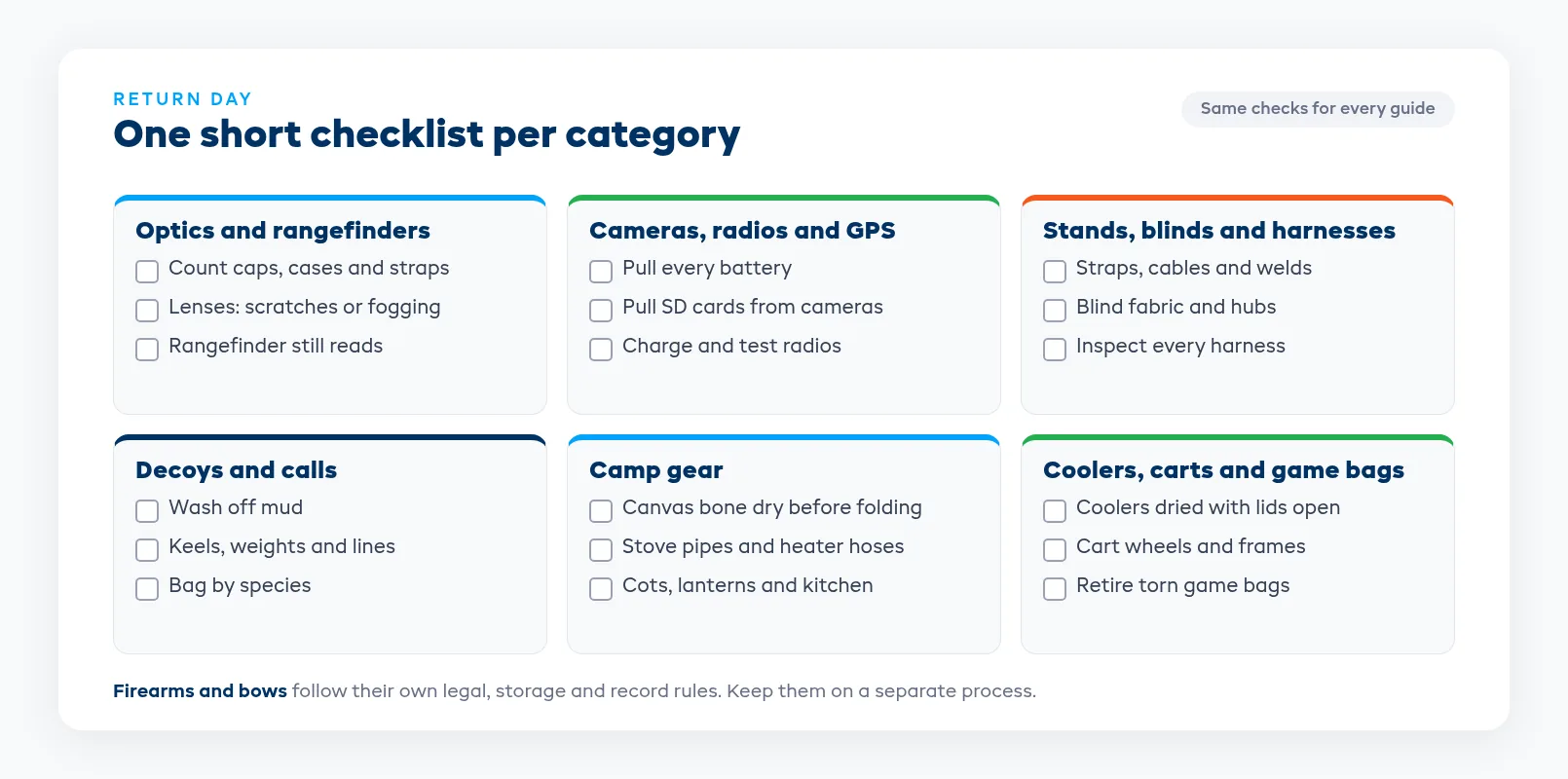
Optics and rangefinders. Count against what went out, including caps, cases and straps. Check lenses for scratches and fogging, and confirm the rangefinder still reads. These are your highest-value small items and the easiest to go missing.
Trail cameras, radios and GPS units. Pull every battery before storage, since a forgotten battery can leak and corrode the contacts. Pull SD cards from cameras, and charge and test radios before they go on the shelf.
Stands, blinds and harnesses. Inspect straps, cables and welds on stands, check blind fabric and hubs for tears, and inspect every safety harness. Retire any harness that has caught a fall, and follow the manufacturer's inspection and replacement guidance on the label.
Decoys and calls. Wash off mud, check keels, weights and lines, and set aside any decoy with shot damage or cracks. Bag by species so spring setup is fast.
Camp gear. Wall tents, cots, stoves, propane heaters and lanterns. Canvas has to be bone dry before it's folded. Check stove pipes and heater hoses, and note anything you'd hesitate to put in front of a client next year.
Coolers, game carts and game bags. Wash and dry coolers with the lids propped open. Check cart wheels and frames. Wash reusable game bags and retire any that are torn or stained past cleaning.
If you lend firearms or bows, they follow their own legal, storage and record-keeping rules. Treat them as a separate process and check the requirements with your state agency and your insurer.
Separate normal wear from client damage
Every outfitter has had the argument: a client returns a blind with a broken pole and says it was like that when they got it. That one gets settled before the season starts, by writing the rule down and photographing gear at checkout.
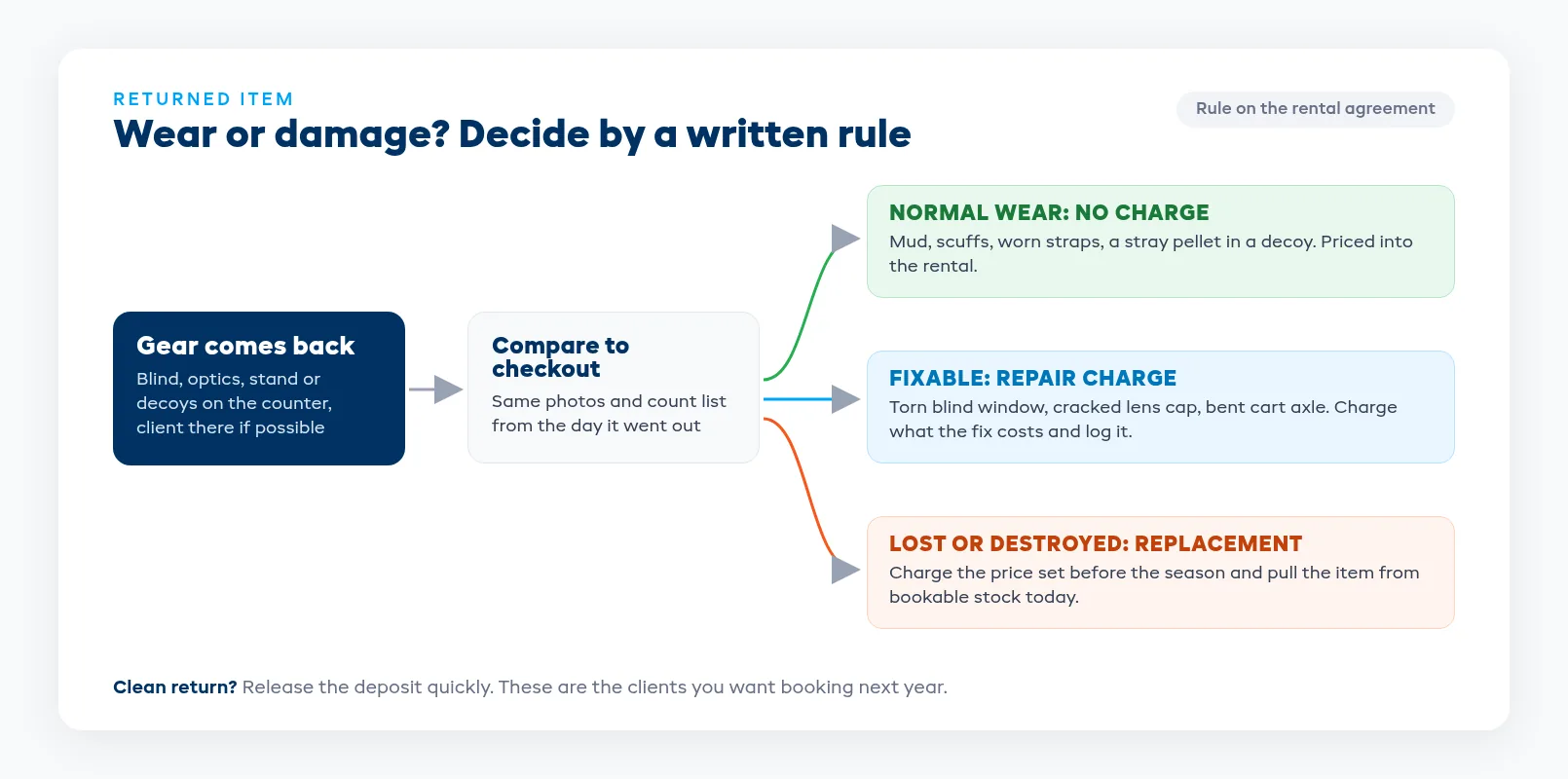
A simple rule most clients accept:
- Normal wear, no charge. Mud, scuffs, worn straps, a decoy that took a stray pellet in the spread. That's the cost of putting gear in the field, and it belongs in your rental price.
- Fixable damage, repair charge. A cracked lens cap, a torn blind window, a bent cart axle. Charge what the repair actually costs you, and log the fix against that item.
- Lost or destroyed, replacement charge. A rangefinder left at a truck stop, a stand dropped out of a tree. Charge replacement at the price you set before the season, and take the item out of your bookable stock the same day.
Put the policy on the booking or rental agreement, and show the replacement prices for high-value items before the client signs. A deposit or a card on file makes the conversation shorter. If the item comes back clean, release the deposit quickly. Many of these clients are the ones you want booking again next year.
The end-of-season gear retirement guide covers what to do with items you decide are done, from resale to replacement budgets.
Clean, dry and repair before anything goes on a shelf
Storage doesn't fix anything. Gear that goes away wet comes back moldy, and gear that goes away broken stays broken until the week you need it.
Dry everything first. Canvas tents, blinds, packs and waders need to be fully dry, inside and out. Hang waders upside down and check the boot feet. Pitch wall tents to dry if you have the room.
Wash soft goods with scent in mind. Many hunting clients care about scent, so wash rented layers, packs and game bags with a scent-free detergent and store them away from fuel, oil and the truck.
Fix the easy things now. Zippers, straps, stove gaskets and decoy lines are cheap and quick in October. The same fixes in August compete with scouting and bookings.
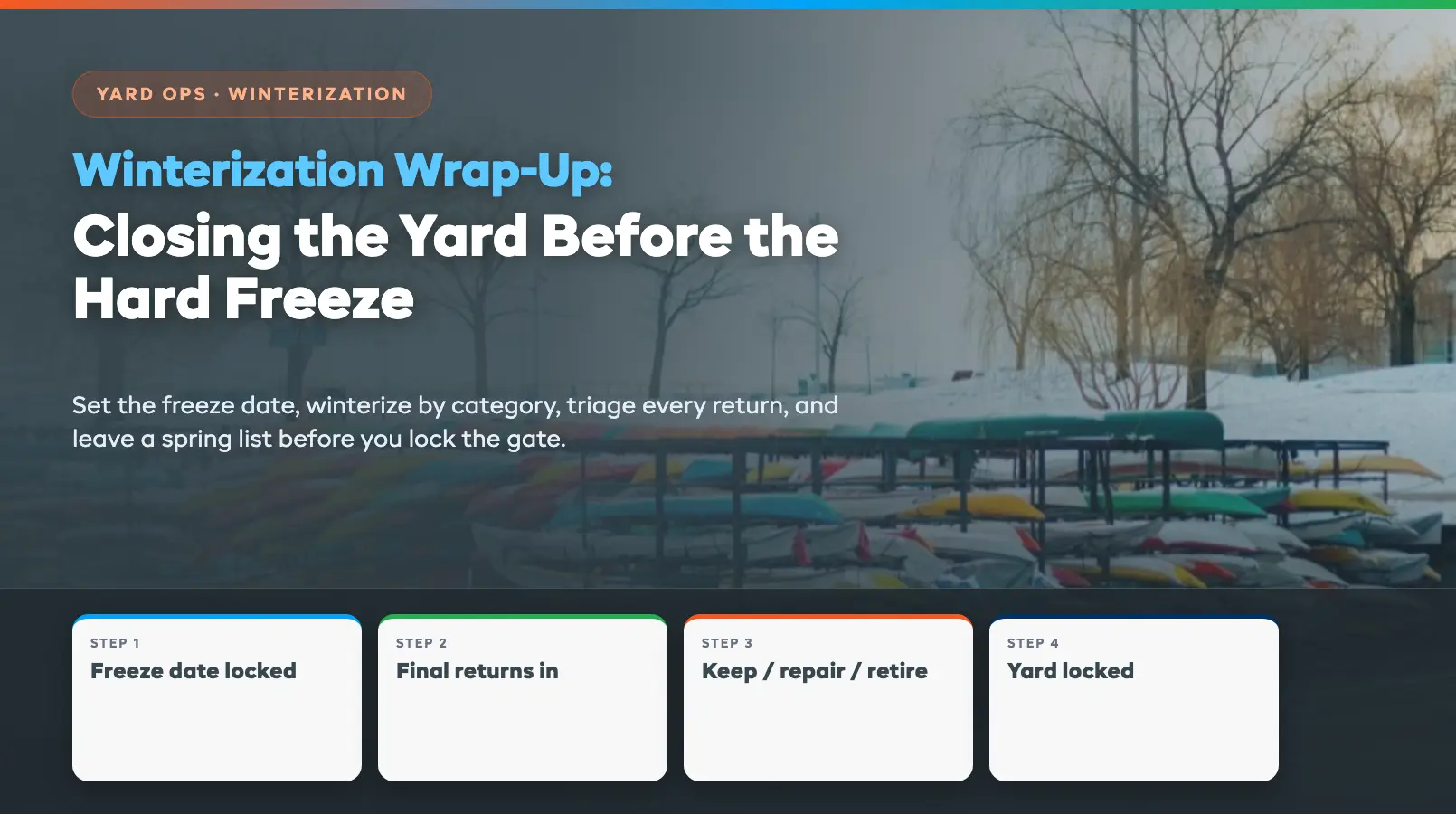
Log the hard things. Anything that needs parts or a specialist goes on a repair list with the item, the fault, and who owns the job. The winterization wrap-up guide has a keep, repair or retire routine you can use for the whole shed.
Store for months, not weeks
A shed that holds gear for a weekend is not the same as a shed that holds it for seven or eight months. Mice, damp and cold do most of the damage over winter.
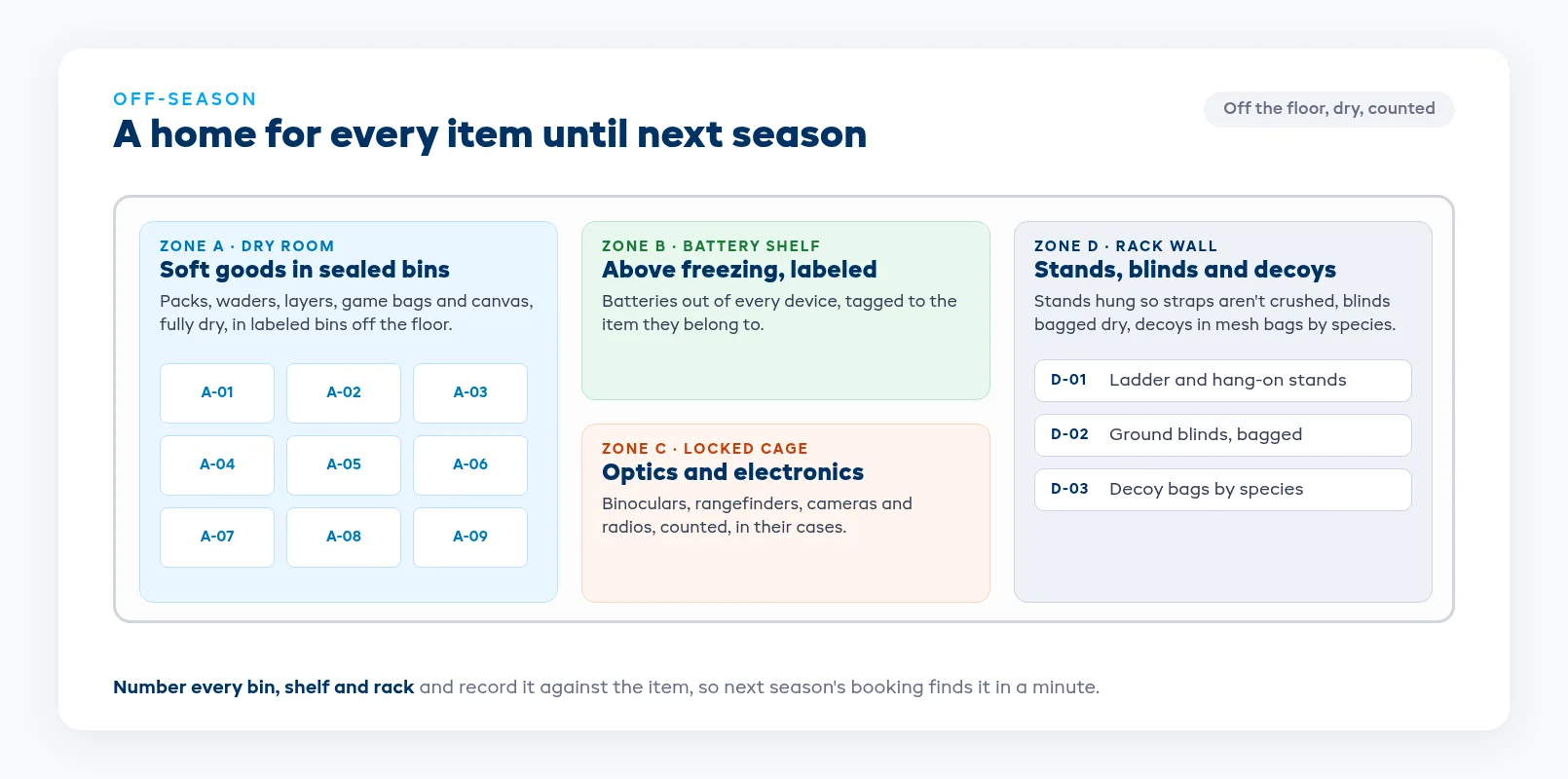
Sealed bins for soft goods. Mice love wall tents, packs and anything with foam. Use sealed plastic bins, label each with what's inside, and keep them off the floor.
A battery shelf above freezing. Store batteries out of the devices, labeled, indoors where they won't freeze. Charge on a schedule if they're rechargeable.
A locked cage or cabinet for optics and electronics. These are the items that walk off. Keep them locked, counted and with their cases.
Rack walls for stands and blinds. Hang stands so straps and cables aren't crushed, and store blinds folded dry in their bags.
Number the spaces. Give each bin, shelf and rack a location and record it against the item. When a client books a specific stand next season, you want to find it in a minute, not an afternoon.
For inventory habits that keep stored, rented and workshop gear separate all year, see the rental inventory management guide.
Close out the season on paper
Before you lock the shed, spend an hour on paper.
Write the buy list. Retired items, gear that ran short on your busiest weeks, and anything clients asked for that you didn't have.
Write the repair list. Each item, the fault, the part, and a date to have it done before scouting season.
Ask returning clients for next year. Clients who had a good hunt often want the same week again. Ask before they leave camp, put the dates on the calendar, and take a deposit if that's how you book.
Note what you'd change. Which camp ran out of heaters, which stand got the most use, which guide spent half a day hunting for a radio. Those notes are what the off-season strategies guide means by using the quiet months well.
Where EquipDash fits
EquipDash tracks each rental item with a live stock count that updates as bookings and returns are processed, so you can see what's available, what's rented out, and what needs servicing at each location. You can set seasonal pricing, blackout dates and operating hours per product, which helps when add-on rentals close before your last hunt.
On the operations side, you can track service history, schedule maintenance and see which gear is in the workshop, due for a check, or ready to rent. That's where the repair list from clean and repair week should live, so it's dated against each item rather than taped to the shed door.
Dash Bots can flag overdue maintenance items each morning, so a heater that's due for service before next season doesn't sit unnoticed until the first cold camp.
Waivers can go out by email or SMS before arrival, and the signed waiver attaches to the booking. Deposits and payment links are built in through Stripe, and every customer profile keeps booking history and notes, so next year's booking starts with what happened this year.
FAQ
When should a hunting outfitter start the season wind-down?
Start planning one to two weeks before your last booked hunt. Stop selling add-on rentals first, set a firm return date for client gear, and leave most of a week after the last camp breaks for cleaning, drying and repairs before you lock the shed.
How do outfitters tell normal wear from client damage?
Normal wear is the mud, scuffs and small wear you expect from gear in the field, and it belongs in your rental price. Damage is a broken or lost item beyond that. Photograph gear at checkout, put the rule and the replacement prices on the rental agreement, and check returns with the client present so there's no argument later.
Should we charge clients for decoys damaged by shot?
Usually not. A stray pellet in the spread is part of decoy hunting, so most outfitters treat it as normal wear and price it into the rental. Charge only when a decoy is lost or clearly destroyed, and state that rule on the booking so clients know before the hunt.
How should we store hunting gear over the off-season?
Store it clean, fully dry and off the floor. Put soft goods in sealed, labeled bins to keep mice out, keep batteries out of devices on a shelf above freezing, lock up optics and electronics, and hang stands and blinds on a rack wall. Record each item's location so you can find it next season.
What should we do with safety harnesses at the end of the season?
Inspect every harness before storage and retire any that has caught a fall or shows wear on straps, stitching or buckles. Follow the manufacturer's inspection and replacement guidance on the label, store harnesses clean and dry out of sunlight, and log each one so you know its history.
How do we keep track of which gear is out, damaged or in repair?
Give every item a record and update its status as it moves: out with a client, back and checked, in repair, retired, or in storage. A rental system with a live stock count and maintenance tracking does this better than a whiteboard, because the status changes as returns are processed and you can see what's due for service before next season.
in one place