Winterization Wrap-Up: Closing the Yard Before the Hard Freeze
Winterization Wrap-Up: Closing the Yard Before the Hard Freeze
The hard freeze date is on the forecast, the last weekend rentals are still rolling back in, and half the yard is neither ready for storage nor still bookable. How you close the next two weeks decides whether you reopen in spring with a fleet you trust, or spend April fixing problems you parked in October.
Most shops treat winterization as a boat job and a pile of leftover tasks. It works better as one short project with a freeze date, a final return, a short checklist per category, and a written spring list. This guide walks that project in order for mixed rental yards — boats, bikes, kayaks, camping soft goods, and the batteries and motors that keep them running. For the boat haul-out as a paid service line, see the boat winterization and storage guide. For camping kits specifically, the fall camping wind-down guide covers last booking windows and fleet retirement.
Work back from the hard freeze
Pick the first night you expect standing water, wet gear, or batteries to take real damage. Everything else hangs off that date.
Most yards need five to ten working days after the final return to drain, dry, cover, and log the fleet. Soft goods need full dry time. Engines need antifreeze and fogging. Batteries need a charging shelf, not a cold trailer. If the forecast shows a hard freeze around the first week of November, your final return sits a week or more earlier, and your last multi-day pickup sits before that.
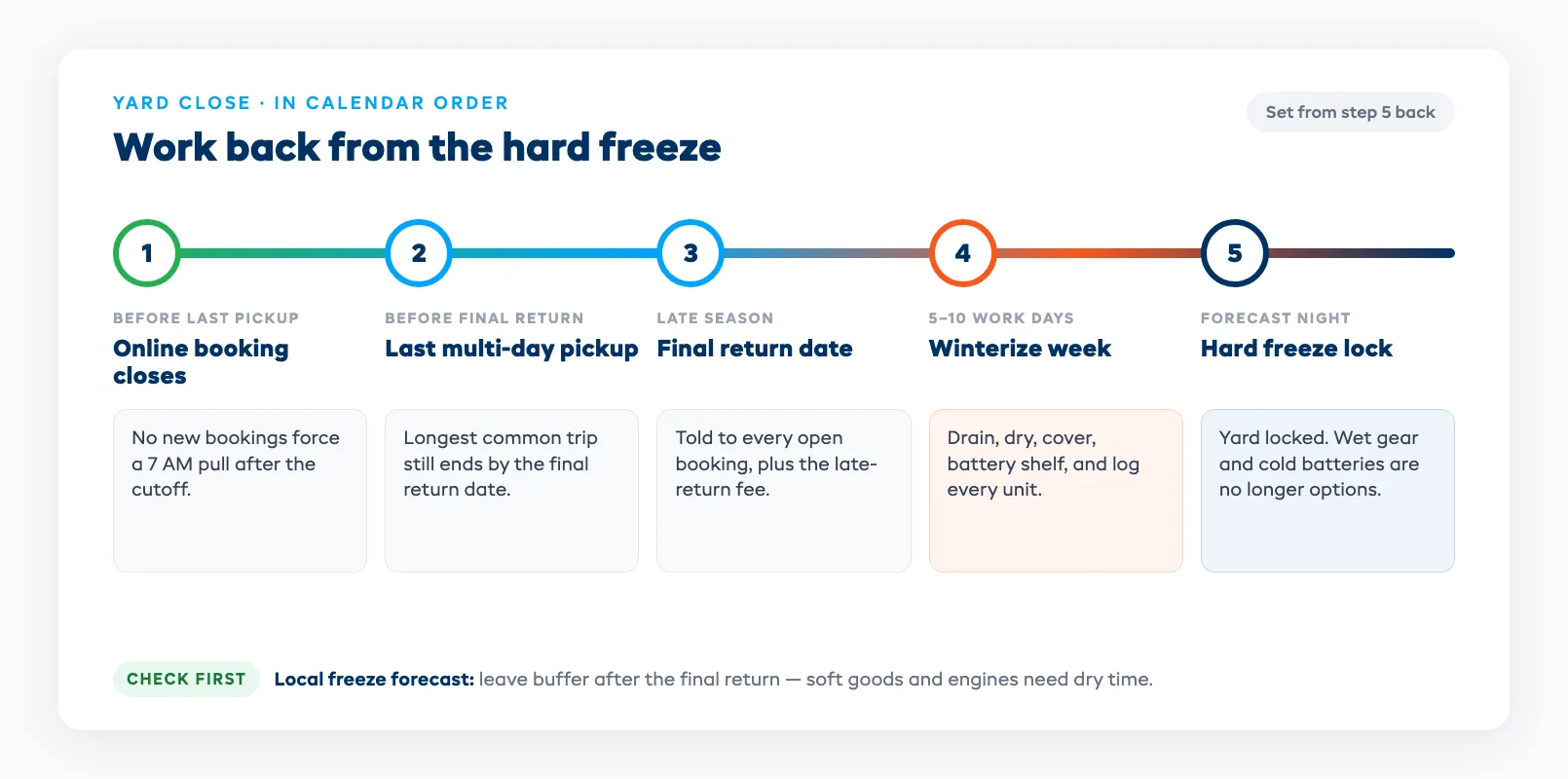
Set these dates now, in this order:
- Hard freeze lock date. The night after which wet gear, open water systems, and cold-soaked batteries are a risk you refuse.
- Storage-ready date. One to two days before the freeze, every unit is drained, dried, covered or shelved, and logged.
- Final return date. Last day you accept gear back, with enough working days after it for the winterize week.
- Last multi-day pickup. Longest common trip length before the final return.
- Last day to book online. Close new bookings a few days before the last pickup so midnight bookings do not force a 7 AM pull.
Put every date in the booking system, not on a whiteboard. If the calendar still shows open slots past the cutoff, someone will book them.
Close the calendar and tell people once
Shutting the yard is a customer message as much as a shop job.
Stop long trips first. Week-long boat or backcountry rentals late in the season push returns into your winterize week. Keep short weekend kits running longest; they come back fast and are easier to inspect.
Message every open booking. One short note with the final return date, the late-return fee, and where to drop gear. A customer who knows the yard locks on the 3rd is far less likely to drop a wet kayak off on the 6th.
Stop selling what you will not winterize in time. If a unit still needs a haul-out slot, a shrink-wrap bay, or a battery pull, take it off sale now. The water sports shoulder-season wind-down covers the same idea for paddle and surf fleets that lose demand before the freeze arrives.
Hold a small emergency kit only if you mean it. Some shops keep a few bikes or a utility boat available for locals through the freeze. If you do, name the units, staff the hours, and keep everything else closed. Half-open yards create the messiest winters.
Winterize by category, not by vibes
A mixed yard fails when everyone "helps with winterization" without a list. Give each category an owner and a short standard.
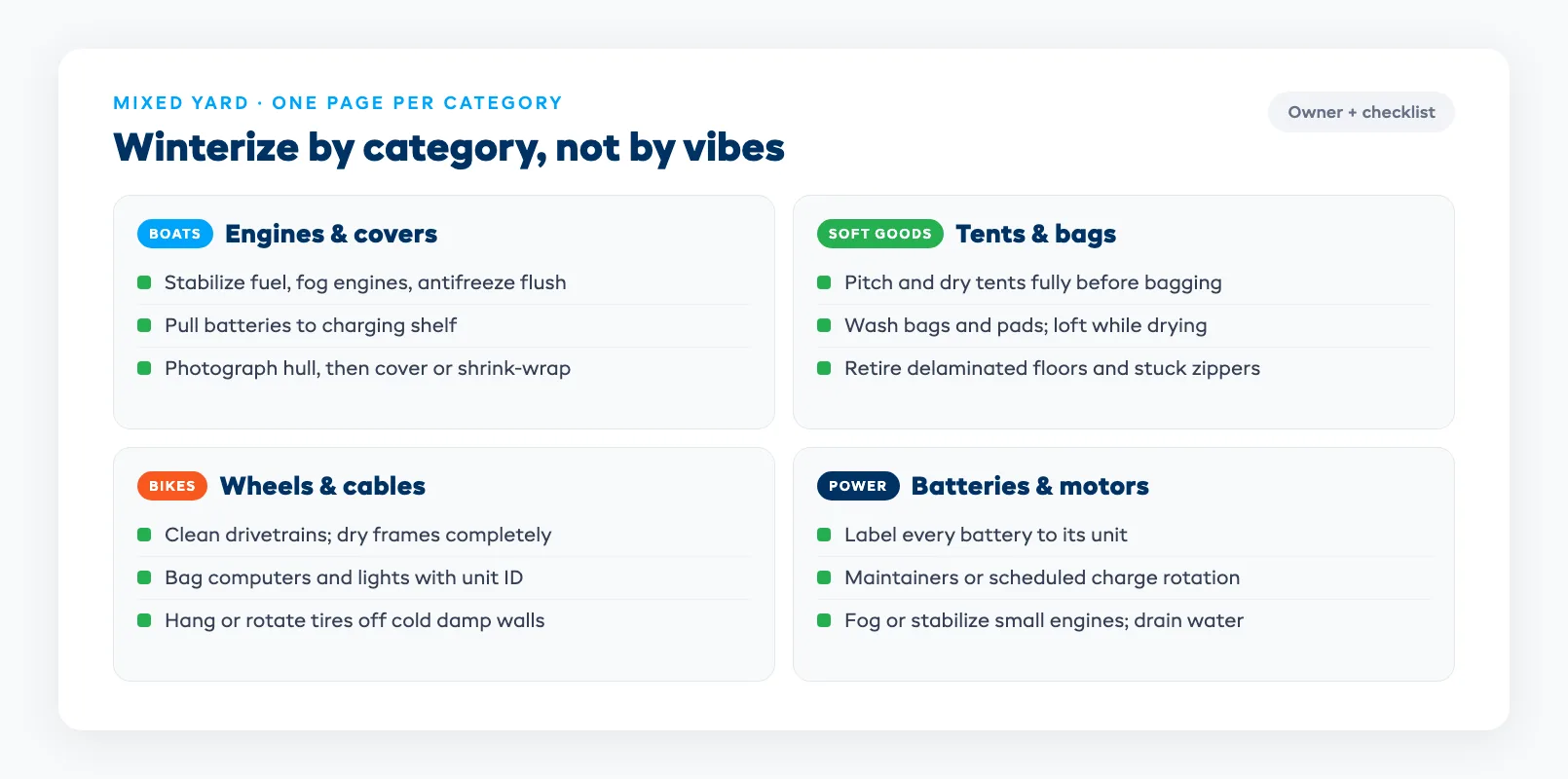
Boats and PWCs. Stabilize fuel, fog engines, change lower-unit oil where due, flush raw-water paths with antifreeze, pull or charge batteries on a shelf, drain livewells and heads, photograph the hull, and cover or shrink-wrap. Block boats so covers do not trap water against the deck. If you sell haul-out and storage as revenue, keep that work on its own schedule as covered in the boat winterization and storage guide.
Kayaks, SUPs, and canoes. Wash, dry fully, store hull-up or on racks so meltwater cannot pool, loosen bungees that stretch over winter, and bag soft accessories with the unit number on the bag. Foam and soft tops hate freeze-thaw if they went into storage wet.
Bikes and wheeled fleets. Clean drivetrains, dry frames, ease cable tension if you store cold, bag computers and lights separately, and park on a dry floor or hangers — not against a damp exterior wall. Flat spots on soft tires after months on the same patch are real; rotate or hang where you can.
Camping soft goods. Pitch and dry tents fully before bagging. Wash sleeping bags and pads, loft bags while they dry, and retire anything with delaminated floors or stuck zippers before it sits all winter. The end-of-season gear retirement guide has the resale and replacement rules once you decide an item is done.
Batteries, chargers, and small engines. Pull removable batteries to a labeled charging shelf above freezing. Fog or stabilize small motors. Drain or antifreeze anything that holds water. A dead battery discovered in April is an April problem you caused in October.
Write the checklist on one page per category and check items off as units move. Verbal standards drift once the second person joins the crew.
Triage every return before it hits the rack
The last two weeks of returns are when you learn the most about the fleet. Do not throw everything in a bay to sort in January.
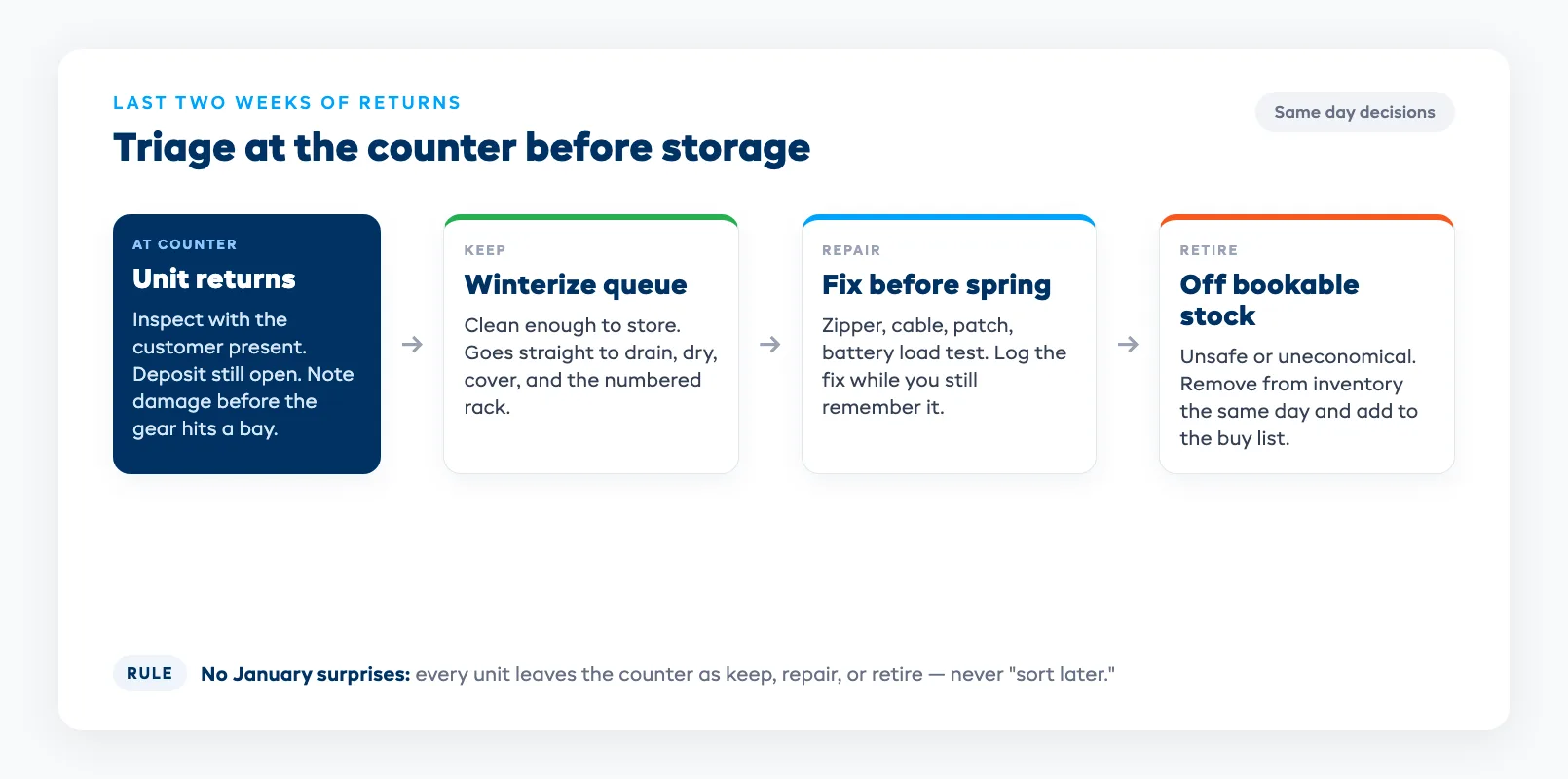
When gear comes back, sort it with the customer still at the counter:
- Keep. Clean enough to winterize as-is. Goes to the winterize queue.
- Repair. Fixable before spring: a zipper, a cable, a soft spot you can patch, a battery that still holds charge after a load test. Log the fix while you remember it.
- Retire. Unsafe hull damage, cracked engine parts, delaminated fabric, frames bent past true. Log the reason and remove the unit from bookable stock the same day.
Doing this at the counter keeps deposits honest and stops spring surprises. Release clean deposits quickly; late-season locals are the customers you want back when you reopen. For the inventory habits that keep blocked and workshop stock off the booking page year-round, see the rental inventory management guide.
Document storage so spring is not a scavenger hunt
A winterized yard that nobody can navigate in April is only half done.
Number the spaces. Boats, racks, and shelf bays get numbers that match the inventory record. If you store customer boats alongside the fleet, use the same map and a signed agreement.
Photograph covered units. One photo of the cover or rack position with the unit ID visible beats a March argument about scratches that "must have happened in storage."
Leave the spring list in the system, not in someone's head. Every repair deferred, every part to order, every unit that needs a recommission gets a dated note on that unit. The off-season rental business strategies guide covers how shops use the quiet months for maintenance, training, and revenue that is not peak-season rentals.
Do a walk-through on the lock day. Covers secure, no standing water, batteries on the shelf, doors locked, heat or dehumidifiers set if you use them. Two people walk it. One person always misses something.
Write the spring reopen list before you lock the gate
The last useful hour of the season is the hour you spend on next season.
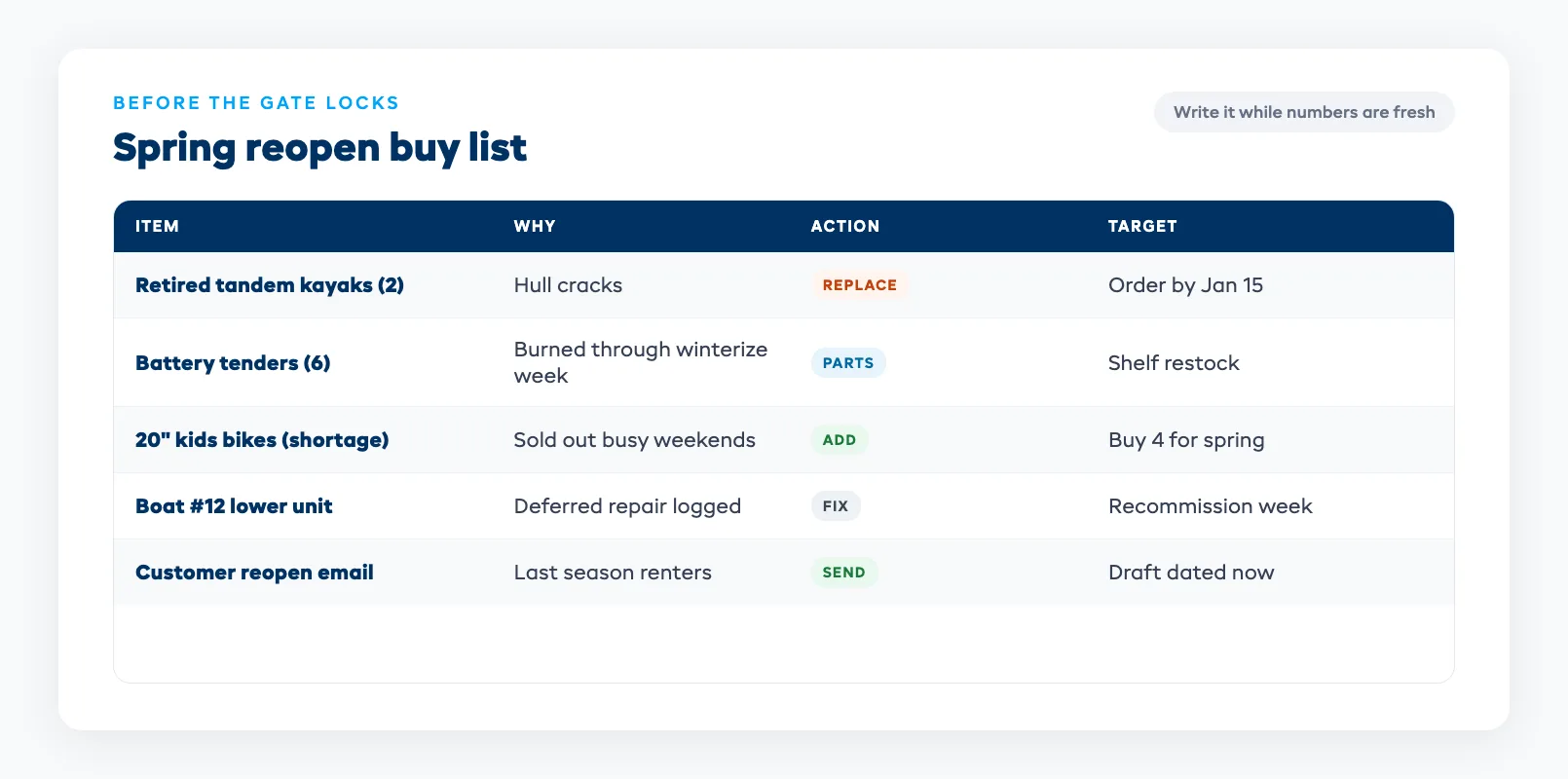
Buy list. Units you retired, sizes that sold out on busy weekends, and items customers asked for that you never stocked. Match replacements to demand, not one-for-one swaps of whatever died.
Parts list. Filters, cable sets, zipper pulls, shrink-wrap, antifreeze, battery tender leads — whatever you burned through in the winterize week.
Reopen tasks. Haul-out reverse order, recommission calendar, first bookable weekend, and the message you will send last season's customers. Put a draft date on that message now so it does not slip until the week you are already slammed.
Staffing note. Who owns the spring walk-through, who owns the first two reopen weekends, and who has the keys. Winter is when people forget those details.
When the gate locks, you should be able to answer three questions without opening a random spreadsheet: what is in the yard, what is broken, and what you will buy or fix before the first booking of spring.
Close clean so April is quieter
A hard freeze does not care that your calendar was still half open. Shops that close on purpose — dates in the system, category checklists, counter triage, numbered storage, and a spring list — spend April launching. Shops that close by accident spend April apologizing.
If you want one system that keeps units, statuses, and blocked stock aligned while you wind the season down, start a free EquipDash trial and run the last two weeks of returns against real availability instead of a whiteboard.
FAQ
When should a rental yard start winterization?
Work back from the first hard freeze night on your local forecast. Leave five to ten working days after the final return for drain, dry, cover, and battery work. Soft goods and engines need that buffer; starting the week of the freeze is how wet gear and dead batteries happen.
What is the difference between winterization and end-of-season retirement?
Winterization is preparing units you still want next season: drain, fog, cover, charge, and store. Retirement is removing units that are unsafe or uneconomical to keep. Do both in the same two weeks so you do not store junk and so your spring buy list is honest. The end-of-season gear retirement guide covers resale and replacement once an item is done.
Should we keep a few rentals available through the freeze?
Only if you name the units, staff the hours, and close everything else. A "sort of open" yard creates midnight bookings, wet returns after the freeze, and crew who never finish the winterize list. Most mixed yards are cleaner shutting hard and reopening on a published spring date.
How do we winterize batteries for rental fleets?
Pull removable batteries to a labeled shelf above freezing, put them on maintainers or a scheduled charge rotation, and log which unit each battery belongs to. Leaving batteries in cold trailers or on boats all winter is the fastest way to buy replacements in April.
Do customer-owned boats stored in our yard need different paperwork?
Yes. Photograph condition at intake, record hull and insurance details, sign a storage agreement with payment before the boat leaves the trailer, and map the space. Your yard policy covers your negligence; the owner's hull insurance covers their boat. Details and pricing patterns are in the boat winterization and storage guide.
What should be on the spring reopen list before we lock the gate?
Retired units to replace, parts you burned through during winterize week, deferred repairs dated on each unit, the first bookable weekend, and a draft customer message with a send date. If those five items live only in someone's head, they will slip until you are already busy.
in one place