How to Hire and Train Tour Guides
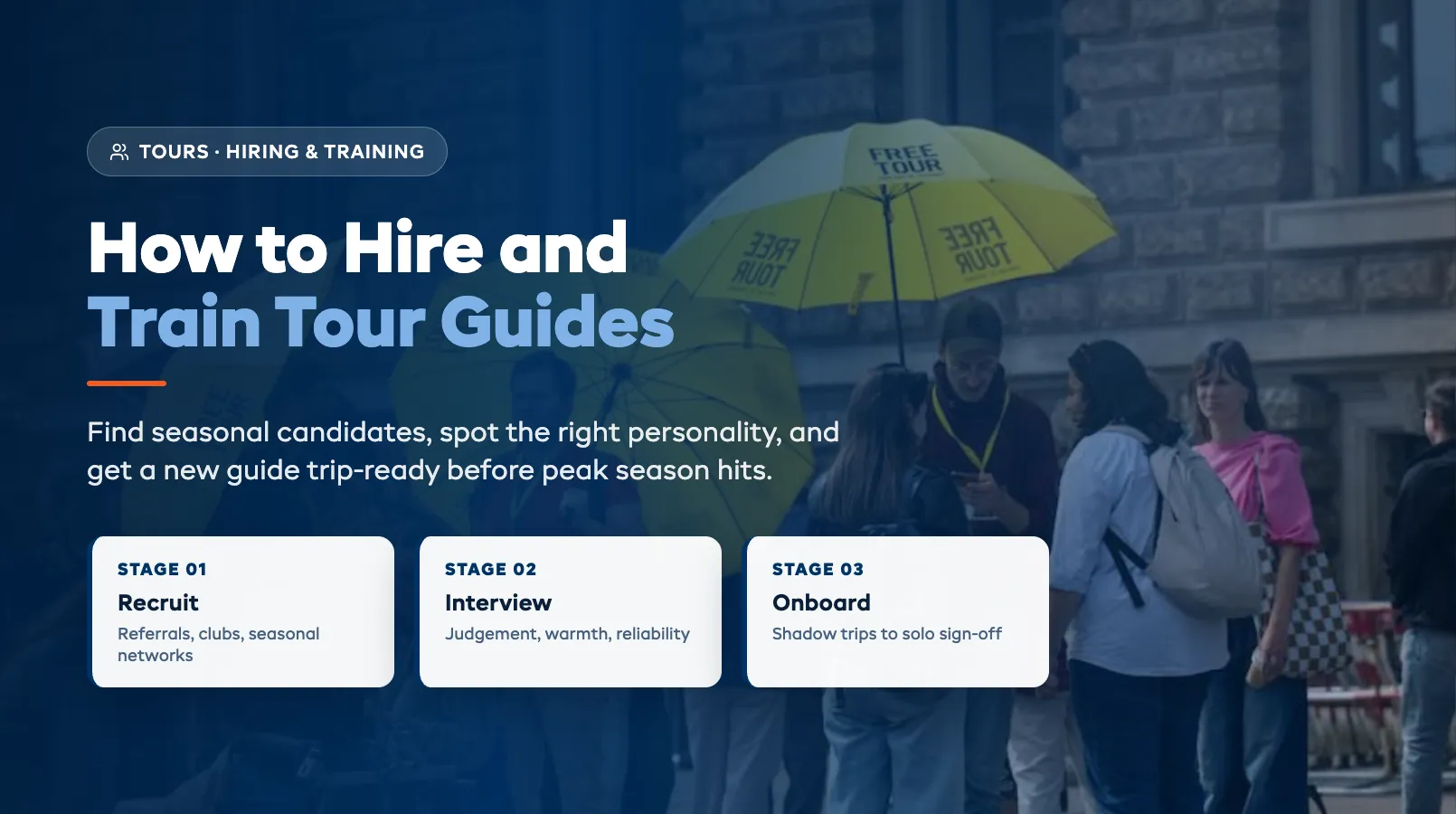
For a tour or activity business, the guide is the product. Customers don't remember the booking confirmation or the parking instructions — they remember the person who ran the trip. A great guide turns a one-off booking into a five-star review and a word-of-mouth referral. A weak one turns a sold-out season into a refund pile. So hiring is not an HR chore you squeeze in around the real work. It is the real work.
The problem is timing. Most tour businesses are seasonal, which means you have to find, vet, and train a crew in the narrow window before bookings ramp — and then do it again next year as half of them move on. This guide is the practical version: where to actually find candidates, the interview questions that separate a good talker from a good guide, which certifications matter for your activity, and an onboarding checklist that gets someone trip-ready fast.
Where to Find Tour Guide Candidates
The best guides rarely come from generic job boards. They come from the world your activity already lives in. Start with the obvious adjacent talent pools: local outdoor clubs, university outdoor-rec programs, climbing gyms, dive shops, paddling groups, and the seasonal-worker networks that follow good weather around the country. People already doing the activity for fun are halfway to being a guide.
Referrals from your existing crew are your single highest-quality channel. A guide who already knows the job knows exactly who else can do it, and they won't recommend someone who will embarrass them on a trip. Pay a referral bonus — a few hundred dollars on completion of a first full season is cheap compared to a bad hire or an empty schedule.
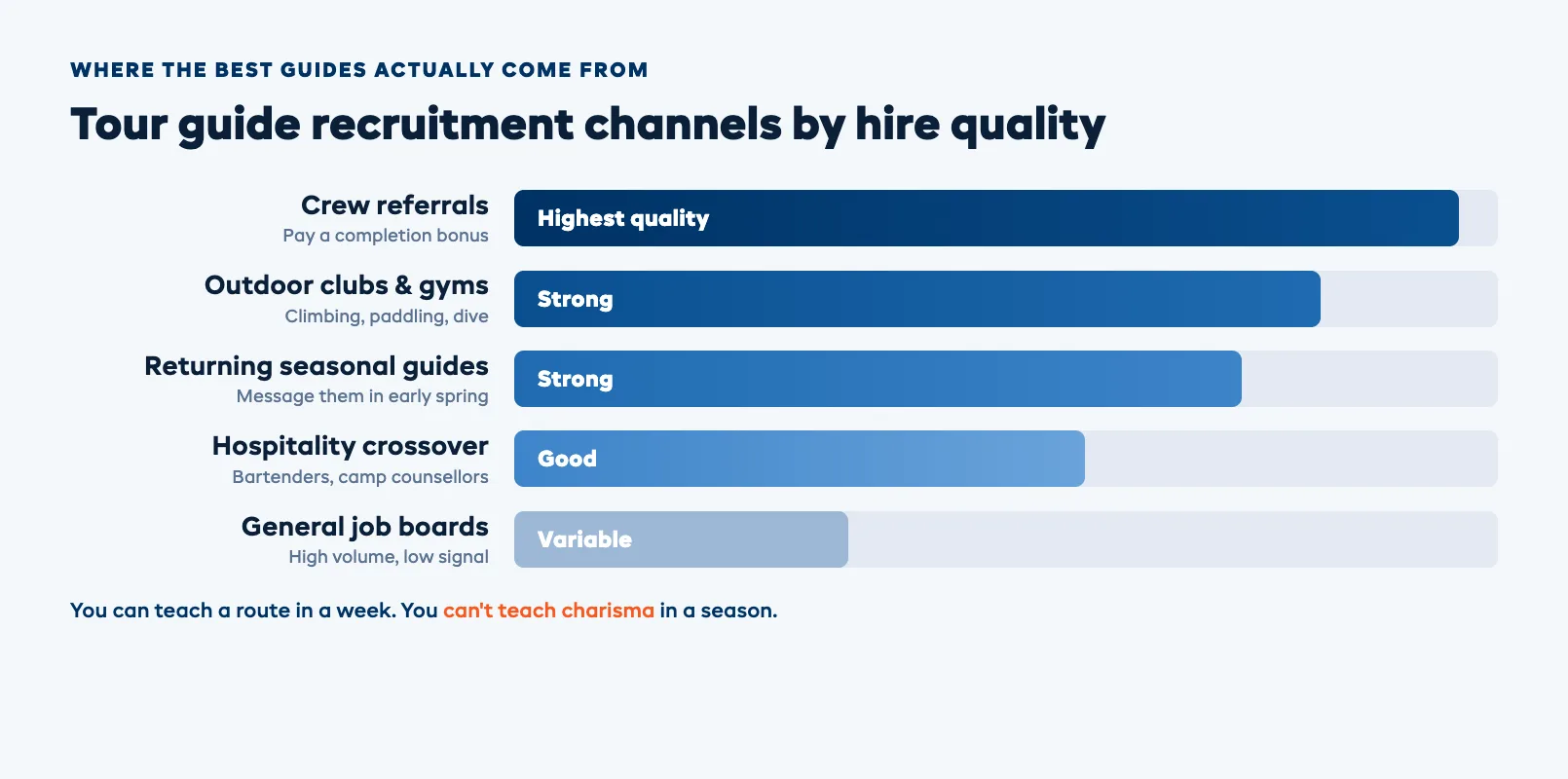
Don't overlook the hospitality crossover. Bartenders, baristas, camp counsellors, and ski-lift staff already have the hardest-to-teach skill: staying warm, calm, and entertaining with a group of strangers for hours. You can teach someone your route and your safety drill in a week. You cannot teach charisma in a season. And keep last year's roster warm year-round — a quick message in early spring to your returning guides locks in your most valuable hires before anyone else calls them.
Interview Questions That Actually Work
A guide interview should test for two things you can't train: judgment under pressure and genuine warmth with people. Skip the résumé recital and run scenarios instead. "A customer is clearly scared and wants to quit halfway through — walk me through what you do." "Two people in your group won't stop bickering. How do you handle it?" The answer tells you more in ninety seconds than a CV does in a page.
Watch how they tell stories, not just what they say. Your guides will spend all day narrating, defusing, and reassuring. If they're flat and mumbling across a coffee table, they'll be flat and mumbling in front of paying guests. Ask them to teach you something — anything, a card trick, a knot, how to skip a stone — and watch whether they can hold attention and read whether you're following.
Probe for the safety mindset directly. The best guides are the ones who treat the rules as non-negotiable without being joyless about it. Ask what they'd do if a customer refused to wear a life jacket or wanted to push past a weather call. You're listening for someone who holds the line calmly — because the day that judgment fails is the day you're explaining yourself to an insurer.
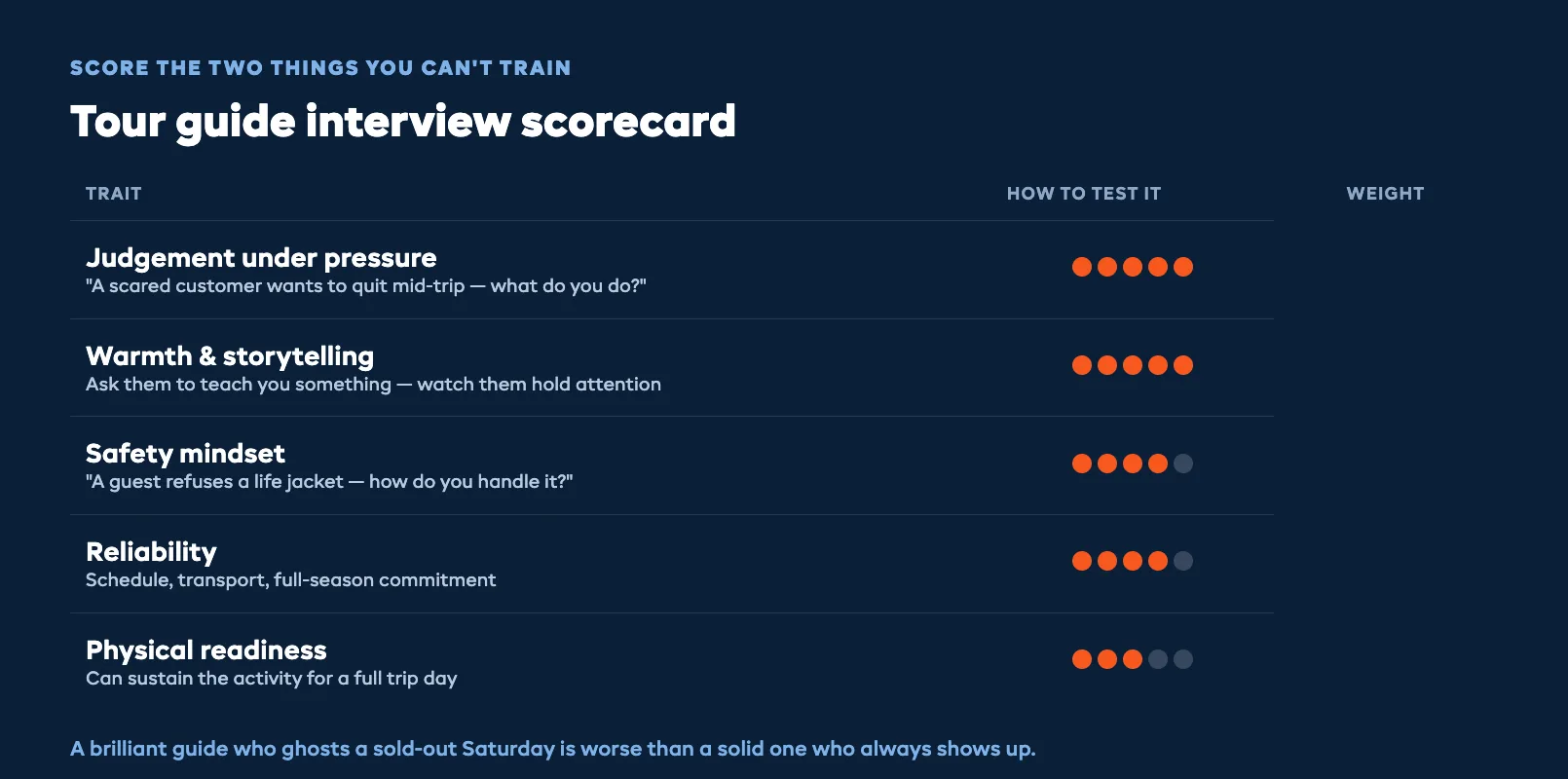
Finally, test for reliability the boring way: ask about their schedule, their transport, and their commitment for the whole season. A brilliant guide who ghosts you on a sold-out Saturday is worse than a solid average one who shows up every time. Reliability is a skill, and the interview is where you find out who has it.
Certifications by Activity Type
What you legally and practically require depends entirely on what you run, and getting this wrong is the fastest way to void your insurance. Map your activity to its real requirements before you write the job ad, because some certifications take weeks to earn and you can't backdate them when an inspector or a claims adjuster asks.
As a working baseline by activity type:
- Water sports (kayak, SUP, raft, dive): Lifeguard or water-rescue certification, CPR and first aid, and often an activity-specific instructor ticket (for example a dive certification from a recognized agency). River trips frequently require swiftwater rescue training.
- Hiking, climbing, and backcountry: Wilderness First Aid or Wilderness First Responder for anything that goes beyond easy reach of help, plus discipline-specific qualifications for climbing or via ferrata.
- Cycling and e-bike tours: Standard first aid and CPR, road-safety awareness, and basic mechanical competence so a flat tire doesn't end the trip.
- Sightseeing, food, and cultural tours: Lower formal-cert load, but many cities require a licensed-guide permit, and a current first-aid certificate is still good practice.
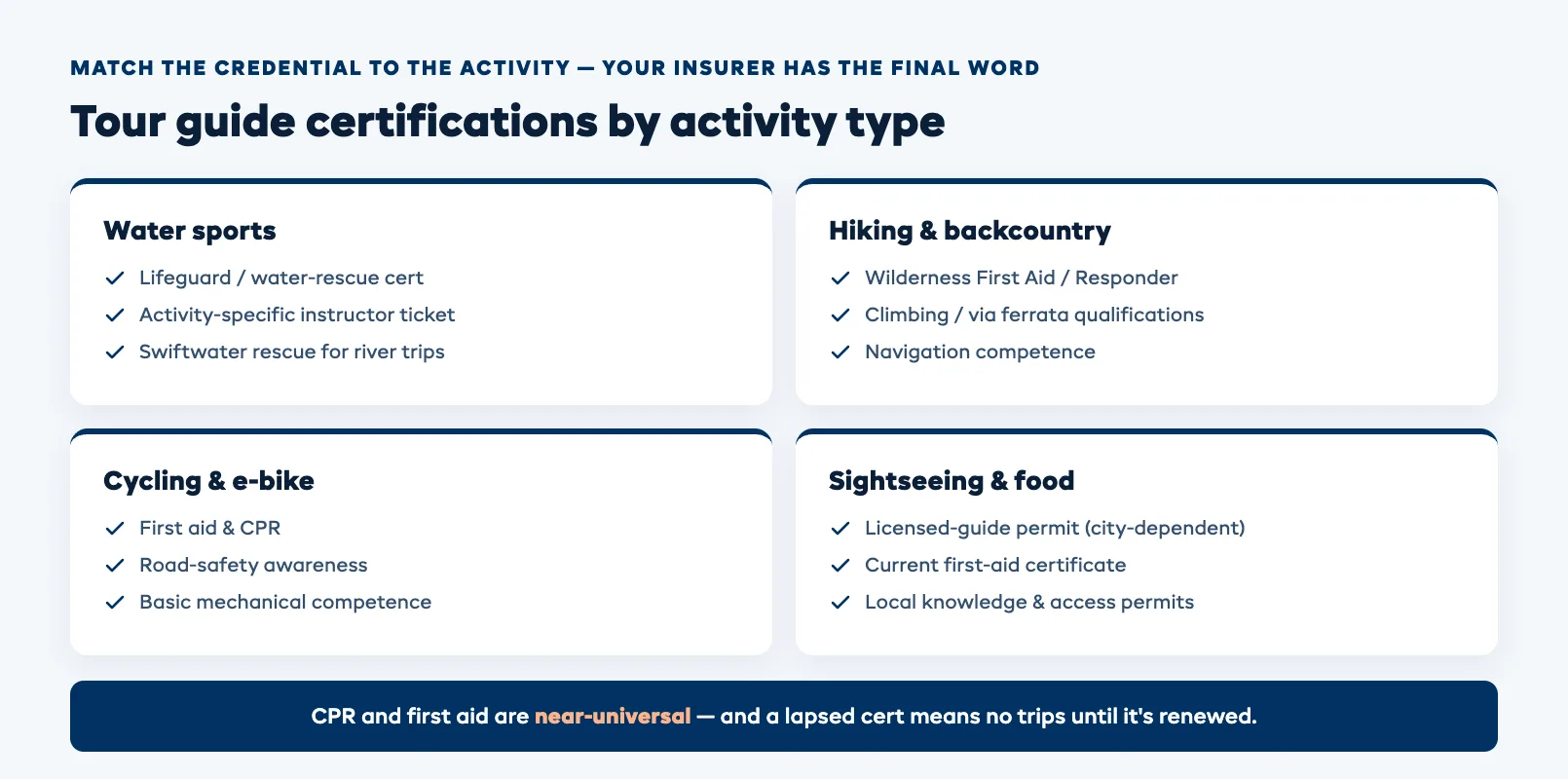
Whatever the activity, CPR and first aid are close to universal, and your insurer's policy — not the internet — is the final word on what you must hold. If you run mixed activities, the broader operations picture is covered in our guide to software for outdoor adventure companies. Build a simple matrix of who holds what and when it expires, and treat a lapsed certification the same as an expired license: that guide doesn't run trips until it's renewed.
A Simple Onboarding Checklist
Once you've hired, the clock is against you — peak season won't wait while you figure out training. Run every new guide through the same repeatable checklist so nothing gets skipped under pressure, and so a guide who joins in week one gets the same grounding as one who joins in week six.
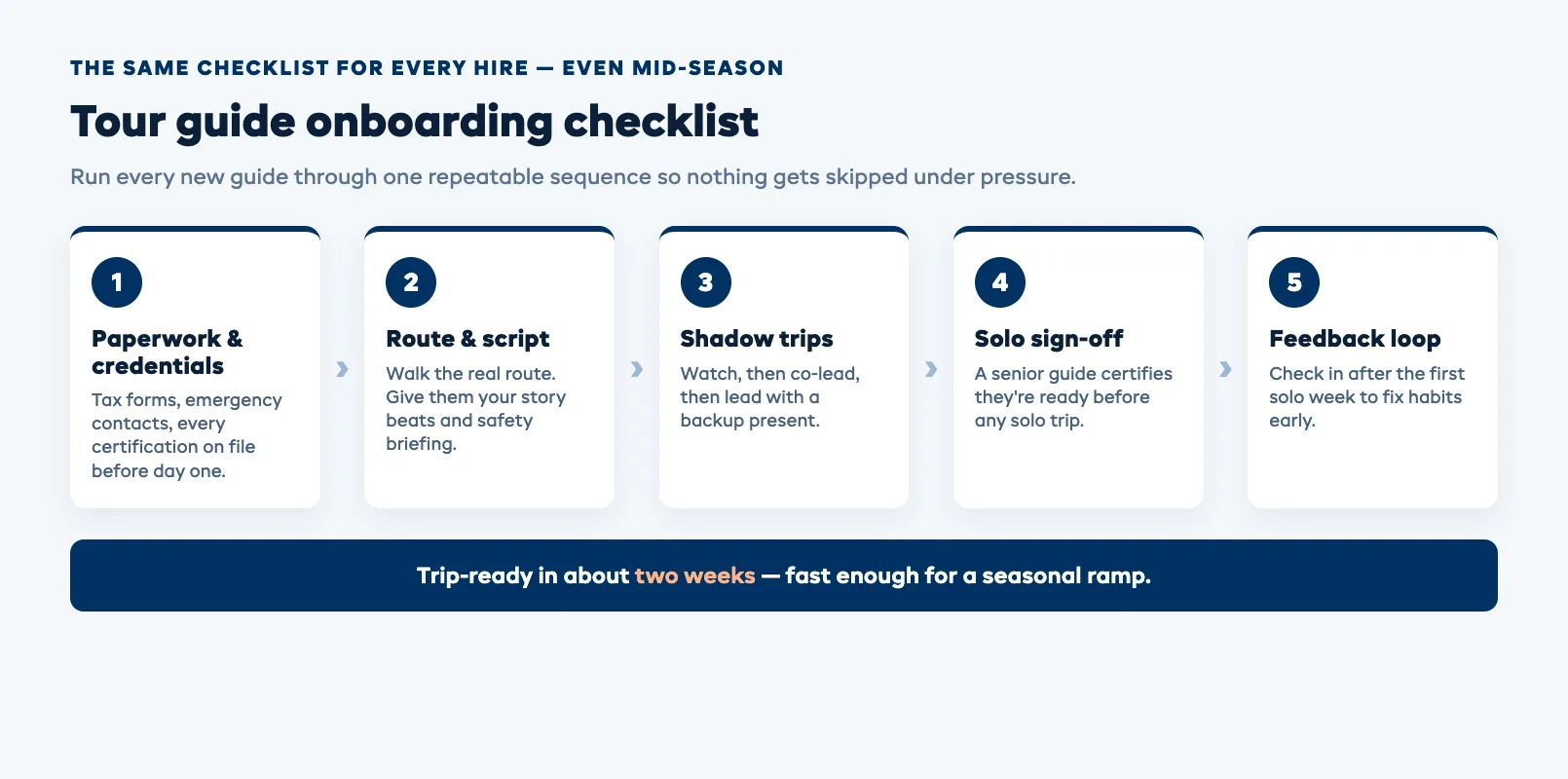
A practical onboarding sequence looks like this:
- Paperwork and credentials first. Collect tax forms, emergency contacts, and copies of every certification before day one. Confirm your waiver and liability flow is set up so the guide understands exactly how customers get signed in.
- Route and script. Walk the actual route with them. Give them your story beats and your safety briefing word-for-word, then let them make it their own.
- Shadow trips. New guide rides along on two or three real trips with an experienced guide. They watch, then they co-lead, then they lead with a backup present.
- Solo sign-off. A senior guide or owner certifies they're ready. No one runs a trip alone until someone has watched them run it well.
- Feedback loop. Check in after their first solo week. Early feedback fixes small habits before they harden.
A guide who clears that sequence is genuinely trip-ready in about two weeks — fast enough for a seasonal ramp, thorough enough that you're not crossing your fingers every time they clock on.
Using Software for Guide Scheduling
Hiring a great crew is wasted if you can't deploy them cleanly. Once you have more than two or three guides, the spreadsheet-and-group-chat approach starts dropping trips: double-booked guides, no-show gaps, and the Sunday-night scramble to figure out who's covering Monday's 9am. Your booking and scheduling system should assign guides to trips automatically based on availability and qualification, so the right certified person is always on the right trip.
Good tour operator software ties scheduling to the actual booking calendar — when a trip fills, the assigned guide sees it; when a guide marks themselves unavailable, the system stops booking them. That removes the manual reconciliation that eats your evenings and causes the mistakes. Keeping guide contact details, certifications, and trip history in one place also means a central record you can actually manage, instead of notes scattered across phones and notebooks.
The payoff compounds with scale. A two-guide operation can run on goodwill and texting. A ten-guide operation cannot — and the businesses that grow past that point are the ones that put their crew, their schedule, and their bookings on the same system early, before the chaos forces it. Hire well, train consistently, and give your guides the tools to show up in the right place at the right time. Do those three things and your guides will do what no marketing budget can: turn first-time customers into people who tell their friends.
FAQ
Where is the best place to find tour guides for seasonal work?
Your highest-quality channel is referrals from your existing crew — good guides know other good guides and won't recommend someone who'll embarrass them. Beyond that, recruit from the world your activity already lives in: outdoor clubs, university rec programs, climbing gyms, dive shops, and seasonal-worker networks. Hospitality staff (bartenders, camp counsellors, ski-lift workers) are strong crossover hires because they already have the people skills you can't teach. Keep last year's roster warm and message returning guides in early spring before competitors do.
What interview questions reveal whether someone will be a good guide?
Use scenarios, not résumé questions. Ask how they'd handle a scared customer who wants to quit mid-trip, or two guests who won't stop arguing. Ask them to teach you something simple and watch whether they can hold attention. Probe the safety mindset directly — what they'd do if a customer refused safety gear — to confirm they hold the line calmly. And test reliability the plain way: schedule, transport, and commitment for the full season.
What certifications do tour guides need?
It depends on the activity, and your insurer's policy is the final word. CPR and first aid are near-universal. Water sports typically need lifeguard or water-rescue certification plus an activity-specific instructor ticket; river trips often require swiftwater rescue. Backcountry and climbing usually require Wilderness First Aid or Wilderness First Responder plus discipline qualifications. Cycling tours need first aid and basic mechanical skills. Sightseeing and food tours carry a lighter load, though some cities require a licensed-guide permit. Track who holds what and when each expires.
How long does it take to train a new tour guide?
With a structured onboarding sequence, a new guide is genuinely trip-ready in about two weeks. The sequence is: collect paperwork and certifications, walk the route and learn the script, complete two or three shadow trips (watch, then co-lead, then lead with a backup), get a solo sign-off from a senior guide or owner, and run a feedback check-in after their first solo week. The key is using the same repeatable checklist for every hire so quality stays consistent even during a rushed seasonal ramp.
How do I schedule guides across multiple trips without double-booking?
Once you're past two or three guides, a spreadsheet and group chat start dropping trips. Use tour operator software that ties guide scheduling to your live booking calendar: it assigns qualified, available guides to trips automatically, hides guides who mark themselves unavailable, and updates assignments the moment a trip fills. Keeping certifications and trip history in the same system means you can always confirm the right certified person is on the right trip — without the Sunday-night scramble to work out who's covering Monday.
in one place