Jet Ski & PWC Rental Operations: Safety, Deposits, and Turnaround
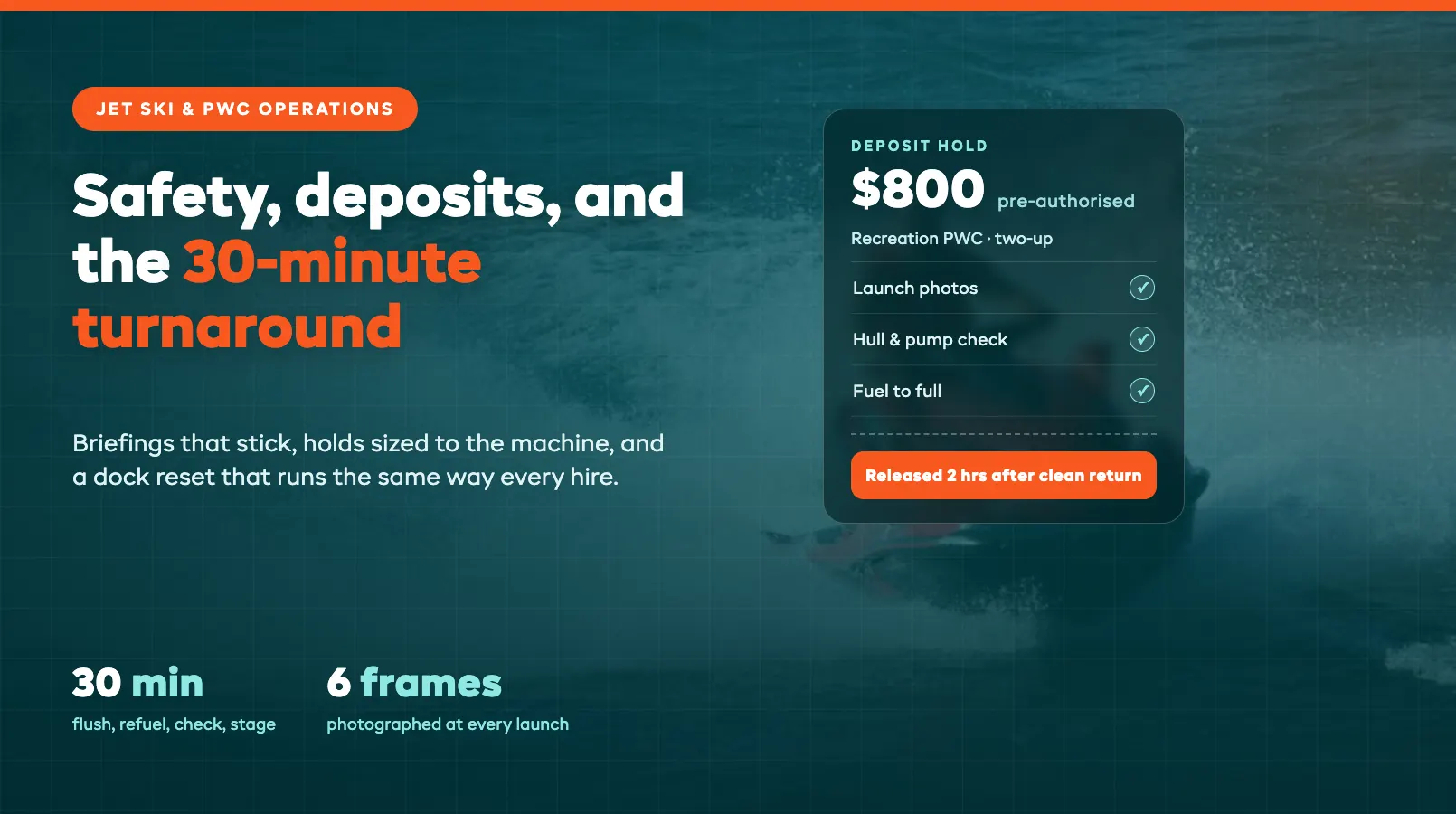
Jet Ski & PWC Rental Operations: Safety, Deposits, and Turnaround
A jet ski earns more per hour than almost anything else in a water sports rental business — and it can lose you more in one afternoon than a rack of paddleboards loses in a season. A grounded hull, a sucked-up tow rope, or a rider who never learned what the lanyard does will all find you eventually. The operators who make personal watercraft (PWC) fleets pay are not the ones with the newest machines. They're the ones with a briefing that sticks, a deposit that matches the machine, and a turnaround routine that runs the same way every single time.
This guide covers the three disciplines that separate profitable PWC operations from expensive ones: safety briefings that actually change rider behavior, deposit tiers sized by machine class, and the 30-minute reset that keeps your fleet on the water instead of on the trailer.
Know your machine classes before you set a single policy
Every policy downstream — pricing, deposits, minimum age, briefing depth — depends on what class of machine the rider is sitting on.
Rec-lite machines (Sea-Doo Spark, Yamaha EX) are light, cheap to buy, and forgiving. They top out around 50 mph, sip fuel, and shrug off beginner mistakes. Most rental fleets should be built on them.
Recreation-class machines (GTI, VX) add stability, storage, and passenger capacity. They suit two-up hires and longer sessions, and they cost noticeably more to repair.
Performance models (RXP, GP series) have no business in a walk-up rental line. If you carry them at all, reserve them for licensed, experienced riders on guided sessions — and price the risk in.
The mistake new operators make is running one deposit, one briefing, and one price across all three. That either scares budget customers off your Sparks or under-protects your flagship machines. Segment the fleet first; everything else follows.
Safety briefings: ten minutes that protect the whole operation
Insurance defends you after something goes wrong. The briefing is what stops it going wrong. Keep it under ten minutes, keep it physical, and make the rider do — not just watch.
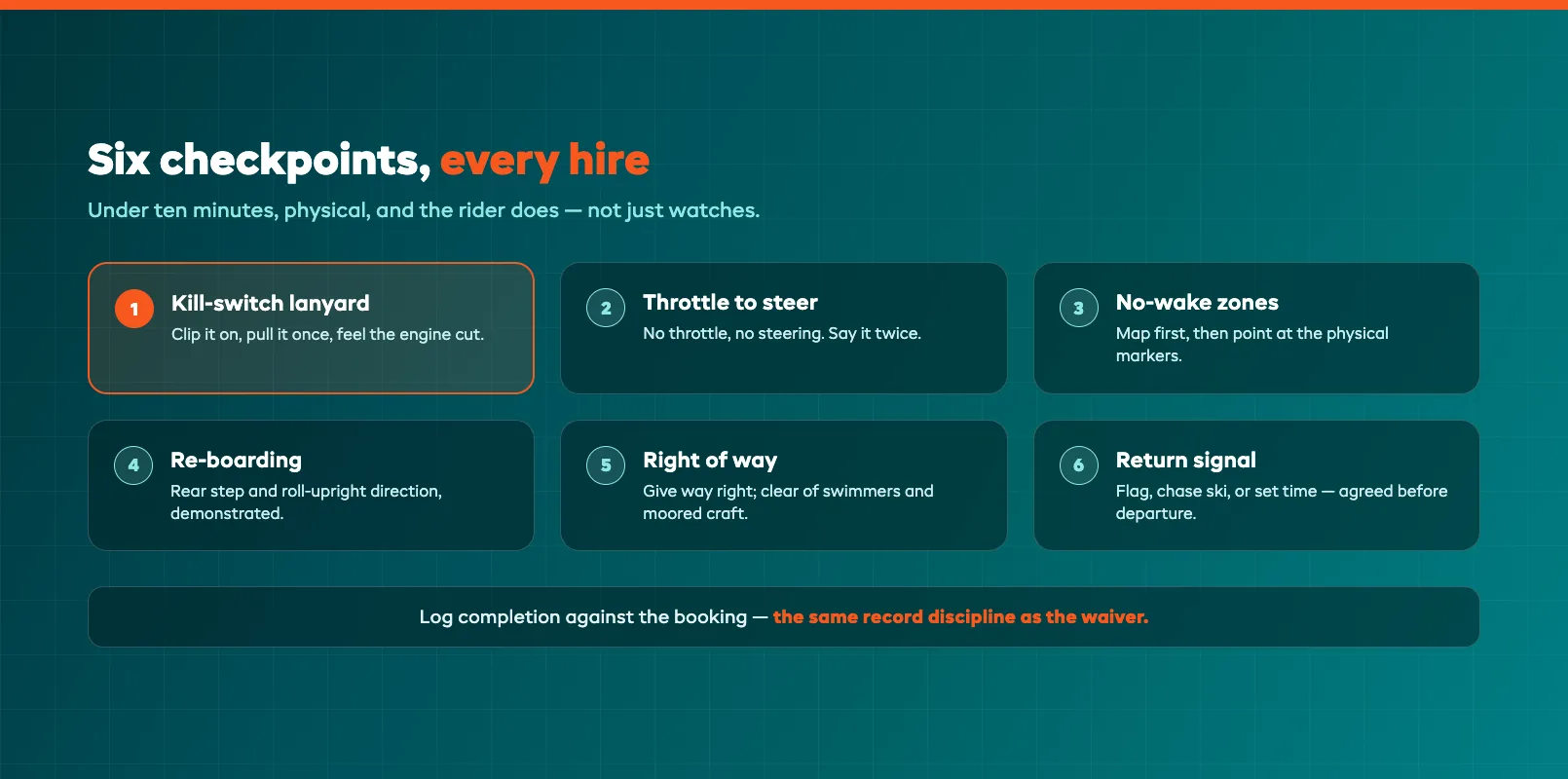
Six checkpoints, every rider, every hire:
- Kill-switch lanyard. Clip it to the wrist or PFD, and have the rider pull it once to feel the engine cut. This is the single highest-value minute of the briefing.
- Throttle to steer. A PWC without throttle has no steering. Riders who chop the throttle in a panic glide straight into what they're avoiding. Say it twice.
- Boundaries and no-wake zones. Show the riding area on a map, then point to the physical markers. "Stay between the yellow buoys" beats coordinates.
- Re-boarding. Demonstrate the rear boarding step and the roll-upright direction printed on the hull sticker. Riders who can't re-board become rescues.
- Right of way. Give way to the right, keep clear of swimmers and moored craft, no wake-jumping other riders.
- Return signal. Agree on how you'll call them in — a flag, a chase ski, or a set return time — before they leave the dock.
Log briefing completion against the booking, the same way you log the waiver. The same digital-signature discipline covered in our water sports safety playbook applies here — and so does PFD fit: every rider wears one, sized at the dock, no exceptions. A PFD inspection checklist keeps the loaner rack itself defensible.
License checks belong at booking, not at the dock. Where your jurisdiction requires a boater card or minimum age, collect it as a booking field so the failure happens at their kitchen table, not in front of a queue.
Deposits: size the hold to the machine, not to habit
A flat $200 deposit across the fleet is the most common PWC pricing mistake. It's more than you need on a Spark and nowhere near a cracked hull on a performance machine.
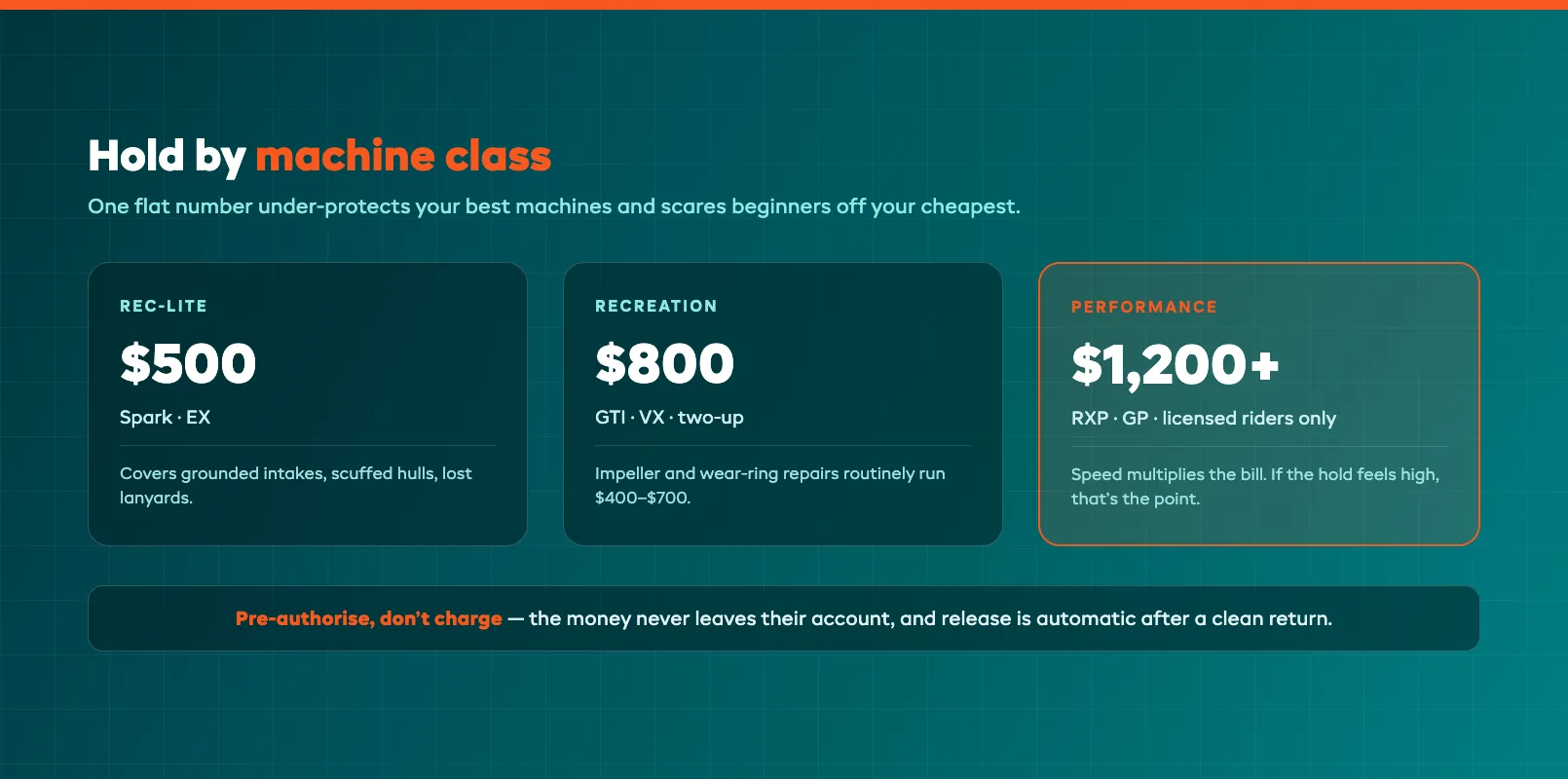
Working numbers most operators land near:
- Rec-lite: $500. Covers the common stuff — grounded pump intake, scuffed hull, lost lanyard — without pricing beginners out.
- Recreation: $800. Impeller and wear-ring damage from sucked-up debris routinely lands in the $400–$700 range; the hold should clear it.
- Performance: $1,200+. Higher speeds multiply both the damage bill and the temptation. If the hold feels uncomfortable to the customer, that's information.
Run deposits as a card pre-authorization, not a charge. The money never leaves the rider's account, there's nothing to refund, and release is automatic within your stated window — say, two hours after a clean return. State the tier, the hold mechanics, and the release window on the booking page so nobody meets the number for the first time at the dock. The same evidence-first approach in our damage assessment template turns any deduction from an argument into a paperwork exercise.
The photo loop: evidence at launch, comparison at return
Deposits without evidence are just arguments with a dollar figure attached. The photo loop closes that gap in four steps.
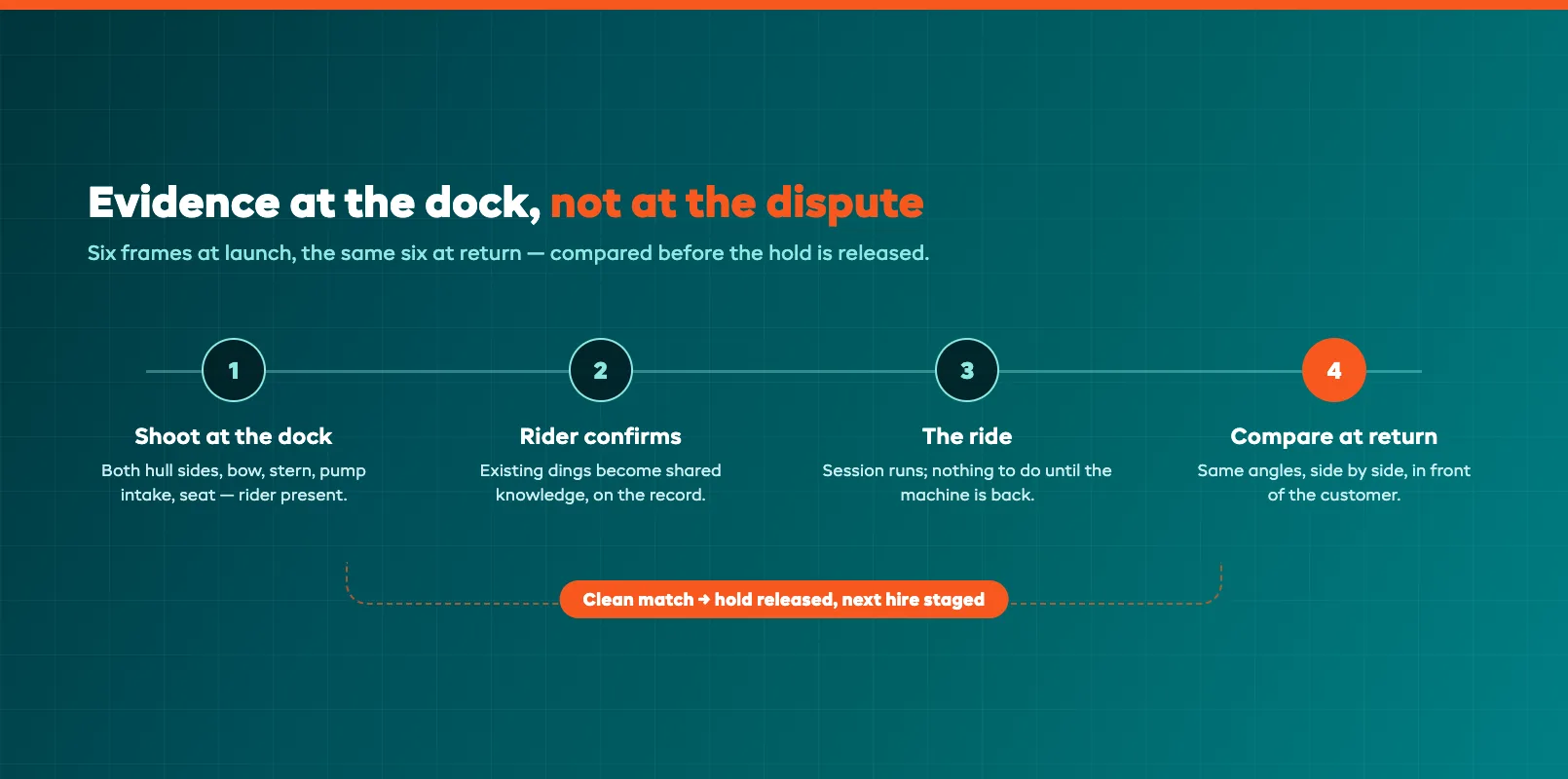
At the dock: shoot both hull sides, the bow, the stern, the pump intake, and the seat — with the rider standing there. Six frames, forty-five seconds. Rider confirms: they've seen what you've seen; existing dings are now shared knowledge. The ride happens. At return: shoot the same six angles and compare on the spot, before the rider leaves and before the hold is released.
Because the comparison happens in front of the customer, most damage conversations end at the dock. Store the photos against the booking record — a folder of unlabelled phone pictures is not evidence, it's homework.
The 30-minute reset between hires
Turnaround is where PWC fleets quietly die. Skip the flush for a week in salt water and you're rebuilding a cooling system; skip the hull check and the next rider inherits — and gets blamed for — the last rider's damage.
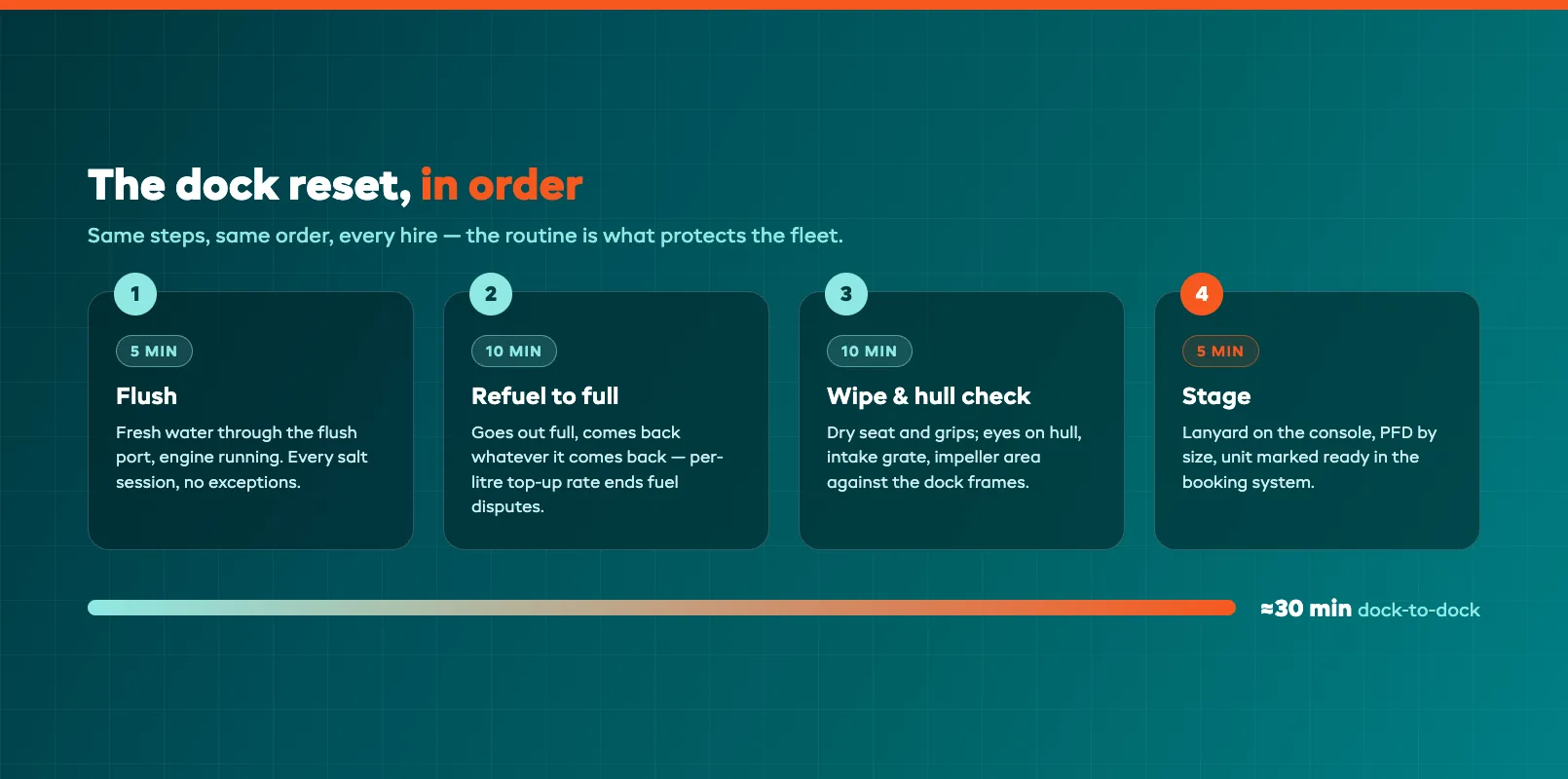
The reset, in order:
- Flush — 5 minutes. Engine running, fresh water through the flush port, every salt water session without exception. Fresh water operators can flush end-of-day, but per-hire is the safer habit.
- Refuel — 10 minutes. Top to full every turnaround. A consistent "goes out full, comes back whatever it comes back" policy with a per-liter refuel rate ends fuel disputes permanently.
- Wipe-down and hull check — 10 minutes. Dry seat and grips, then eyes on hull, intake grate, and impeller area against the launch photos. This is also your maintenance early-warning system: a new vibration note or a slow-to-start engine gets flagged now, not mid-hire. A post-rental watercraft return checklist keeps the pass consistent across staff.
- Stage — 5 minutes. Lanyard on the console, PFD by size, unit marked ready in the booking system.
Thirty minutes, every time. Build the buffer into your slot structure — 90-minute hires on a two-hour cycle — instead of promising back-to-back departures your dock crew can't honour. If a machine fails the check, block it in the system immediately so it can't be booked while it's on the bench.
Weather calls and the shoulder-season maths
Wind matters more to PWCs than rain does. A 15-knot onshore blow turns a beginner session into a swim-rescue drill, and chop that a pontoon ignores will hammer an inexperienced rider. Set numeric go/no-go thresholds — wind speed, gust spread, chop height — per machine class, and make the call early. The reschedule-first framework in our weather operations guide applies directly: a moved booking is revenue delayed; a refund is revenue gone.
Seasonally, PWCs concentrate revenue harder than paddle craft. Where SUP and kayak hires stretch across a long shoulder — with the pricing structure to match — jet ski demand spikes hard in peak weeks. Price those weeks accordingly, and use the shoulder for the maintenance backlog the peak wouldn't allow.
Putting it together
Run the fleet in classes, not as one blob. Brief every rider with the six checkpoints and make them pull the lanyard. Hold $500/$800/$1,200 by class as a pre-authorization with a stated release window. Photograph at launch with the rider present, compare at return before releasing the hold. Reset every machine in 30 minutes — flush, refuel, check, stage — and block anything that fails. Call weather early by the numbers, and reschedule before you refund.
None of this requires software, but all of it gets easier with one system holding the booking, the waiver, the license field, the deposit hold, and the photo record against a single booking. That's the operating model behind everything on our water sports hub — and if any of the jargon here is new, the water sports rental glossary covers it.
FAQ
How much should a jet ski rental deposit be?
Most operators hold $500 on rec-lite machines, $800 on recreation-class machines, and $1,200 or more on performance models. Use a card pre-authorization rather than a charge, and release it within a set window after a clean return.
Do jet ski renters need a boating license?
It depends on the jurisdiction. Many US states require a boater education card for operators under a certain age, and several countries require a license or a supervised briefing. Check your local marine authority and verify credentials at booking, not at the dock.
How long should a jet ski turnaround take?
A practiced flush, refuel, wipe-down, hull check, and photo pass takes about 30 minutes. Build that buffer into your booking slots so back-to-back hires never force you to skip steps.
Should I flush a jet ski after every rental?
After every salt water session, yes — salt left in the cooling system corrodes it quickly. In fresh water, many operators flush at the end of each day instead, but a per-hire flush is the safer habit if your slots allow it.
What should a jet ski safety briefing cover?
Kill-switch lanyard use, throttle-to-steer behavior, no-wake zones and boundaries, re-boarding from the water, right-of-way rules, what to do after falling off, and the return signal. Keep it under ten minutes and have the rider demonstrate the lanyard clip before leaving the dock.
How do I prevent damage disputes on jet ski rentals?
Photograph every machine at launch with the rider present, shoot the same angles at return, and compare before touching the deposit. Evidence gathered in front of the customer settles most disputes before they start.
in one place