Rain on Saturday: Weather Policies That Protect Your Weekend
Rain on Saturday: Weather Policies That Protect Your Weekend
The forecast flips on Thursday night. By Friday morning the phone is ringing, the inbox has six versions of "is it still on?", and whoever answers is making up the policy on the spot. A written weather policy turns that weekend into a set of decisions you already made.
Most operators have something about weather on their website. Far fewer have a policy their staff can apply the same way at 7 AM on a Saturday, that customers agreed to at checkout, and that the booking system actually enforces. This guide walks through the pieces: who makes the call, what the customer gets back, when you decide, what happens to deposits, how you tell people, and how you keep staff and gear in shape when the weekend washes out.
Separate "unsafe" from "not fun"
Every weather policy starts with one distinction. Either you cancel because conditions are unsafe or you cannot run the booking, or the customer wants to cancel because the weather is unpleasant. Those are different situations and they deserve different outcomes.
When you call it, the customer did nothing wrong. They should get something good back, and they should get it without arguing. When they call it on a day you would have run, your normal cancellation terms apply, maybe with a softer option for weather so you keep the goodwill.
Write down what "unsafe" means for each product, in terms your staff can check. Lightning within a set distance. Sustained wind or gusts above a number you choose for paddle craft or bikes. Trail or water conditions your local authority posts. Rain on its own is rarely unsafe for a bike rental or a walking tour, but it might be for a climbing session or a boat on open water. If staff can read the rule off a forecast or a gauge, they will apply it the same way. If the rule is "use your judgment," the answer will change with whoever is on shift.
Then name who makes the call: one person, with a named backup, rather than the whole team. Customers can live with a decision they do not like. They lose patience fast when two staff members tell them different things.
Rain check, reschedule credit, or refund
When you cancel, you have three ways to make the customer whole. Each one suits a different kind of business, and you can offer more than one.
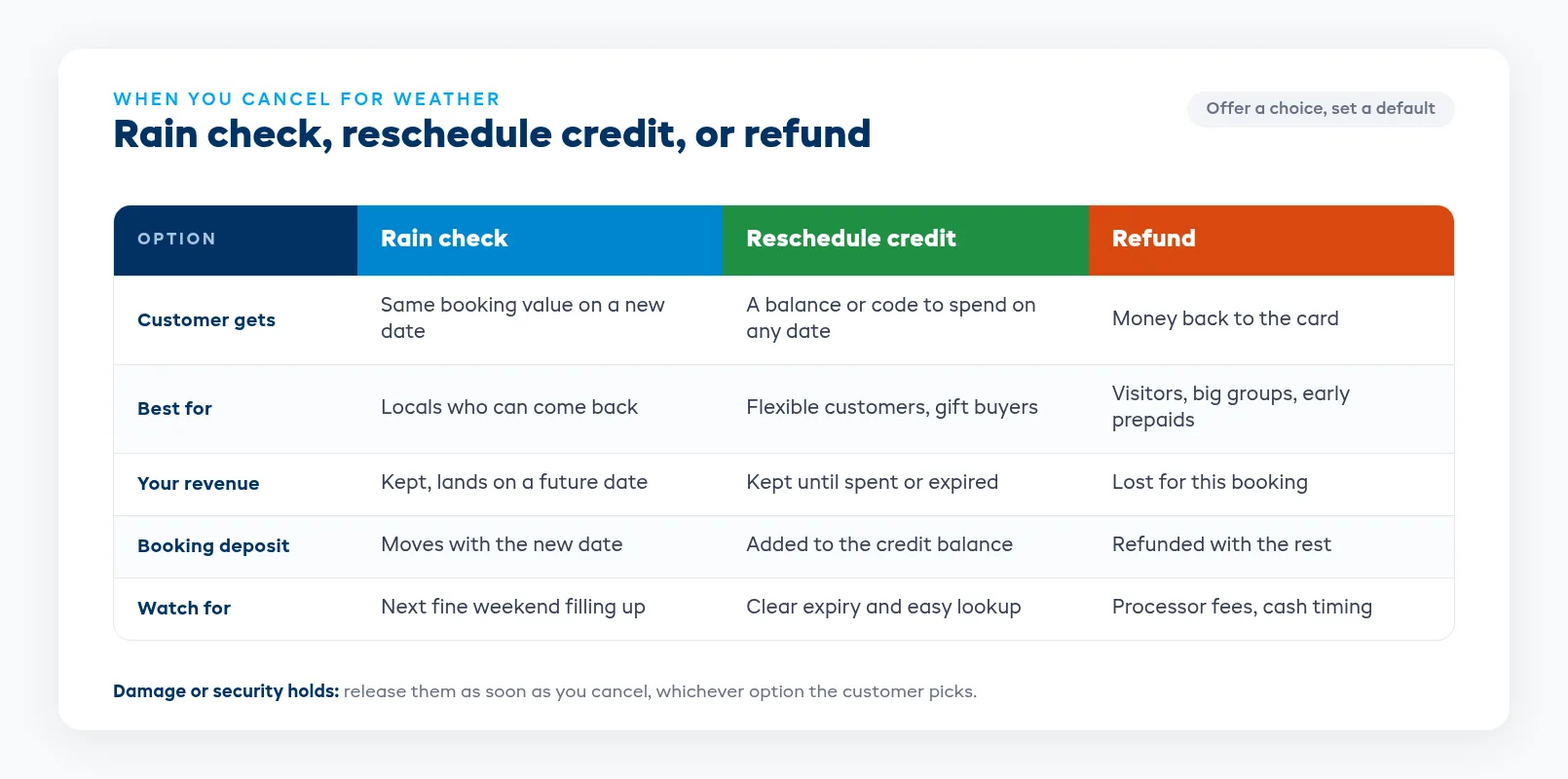
Rain check. The customer keeps the same booking value and picks a new date, usually within a set window. It keeps the revenue in your business and works well for local customers who can come back. It works badly for visitors who leave town on Sunday, so do not make it the only option for them.
Reschedule credit. The booking turns into a credit on the customer's account or a voucher code, good for a set period. It is more flexible than a rain check because they can spend it on a different product or date. Treat it like a gift card: give it a clear expiry, a balance the customer can look up, and a code your counter can redeem in seconds. The gift card and voucher guide covers how to set expiry rules that hold up.
Refund. The money goes back to the card. It costs you the sale, and it is the right call for out-of-town customers, large groups, and anyone who prepaid a long way out. A clean refund also protects you from disputes later. A customer who could not get their money back is a customer who calls their bank.
A common setup: when you cancel, offer the customer a choice between a reschedule credit and a full refund, and default to the credit if they do not answer by a set time. When they cancel for weather on a day you would have run, offer a rain check or a partial credit inside your normal window and your standard terms after it.
Pick a cutoff time and publish it
The worst weather policies have no clock. Customers call Friday night, Saturday at dawn, and Saturday at 9:55 for a 10:00 slot, and every call is a fresh negotiation.
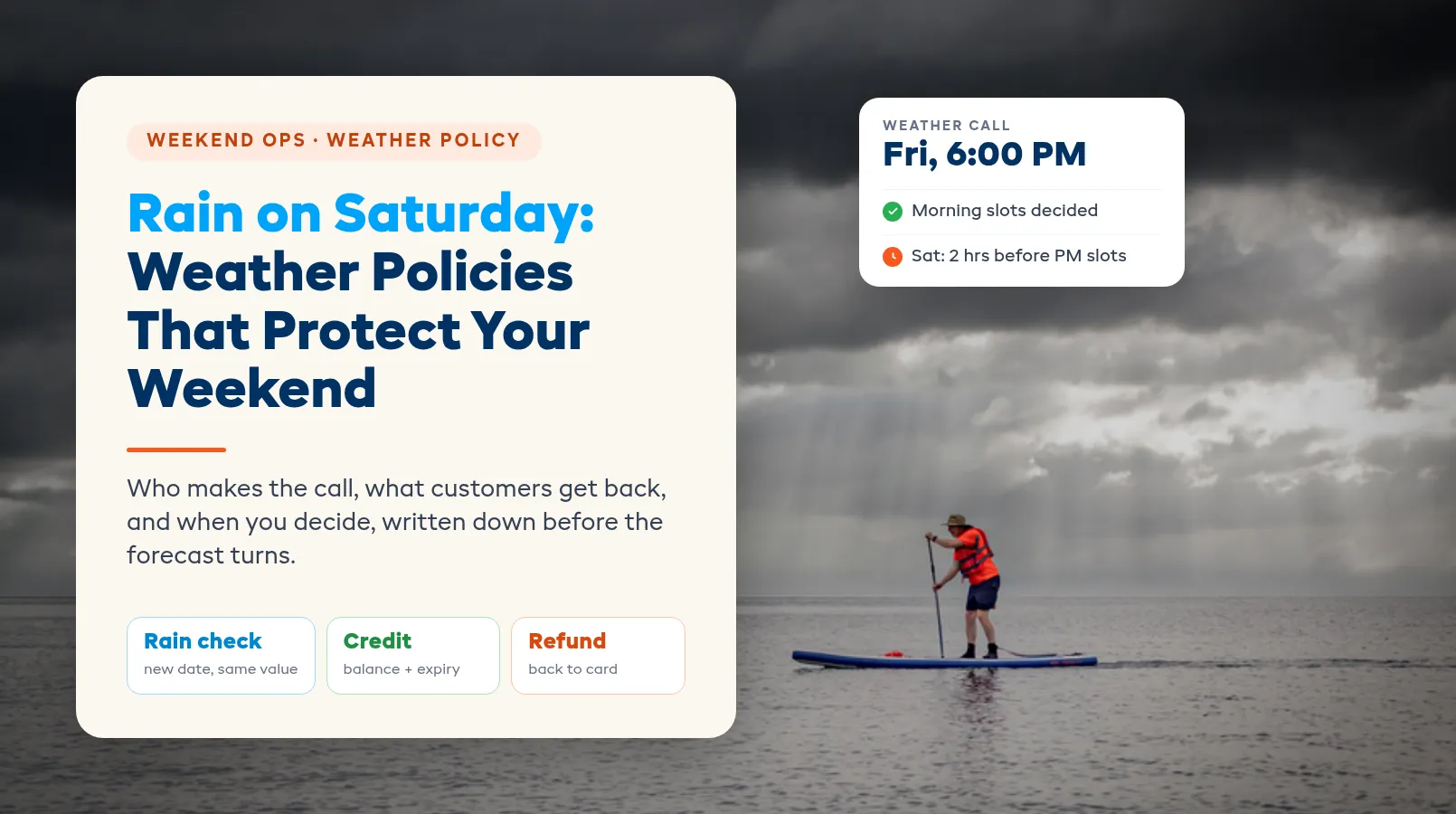
Set two times. The first is when you make the call. For a Saturday, that might be 6 PM Friday for morning slots, with a same-day check two hours before afternoon slots if the forecast is unsettled. The second is the customer's cutoff for choosing weather options. After that time, your normal no-show terms apply.
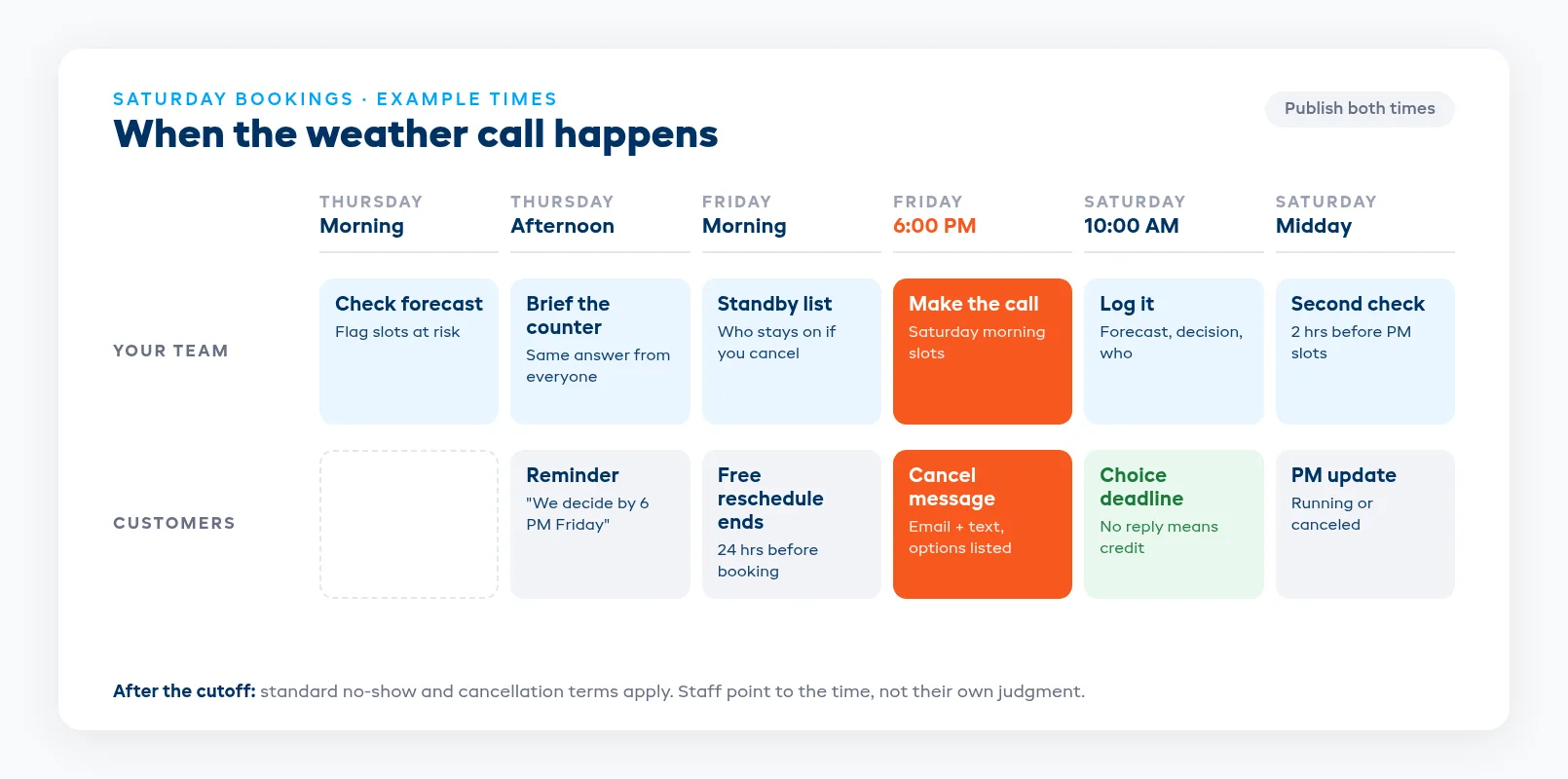
Publish both times on the booking page, in the confirmation, and in the reminder. When a customer calls at 7 AM Saturday, staff can say "we made the call at 6 last night, and here is what that means for your booking" instead of improvising.
Keep a short log of each call: the date, the forecast you looked at, what you decided, and who decided it. It takes two minutes and it is the record you want if a customer disputes the charge or your insurer asks why you ran on a marginal day. The rental business insurance guide has more on the kind of records underwriters like to see.
Decide what happens to deposits
Deposits cause more weather arguments than the booking price does, because customers often do not know what they paid or why.
Spell out what happens to each kind of deposit:
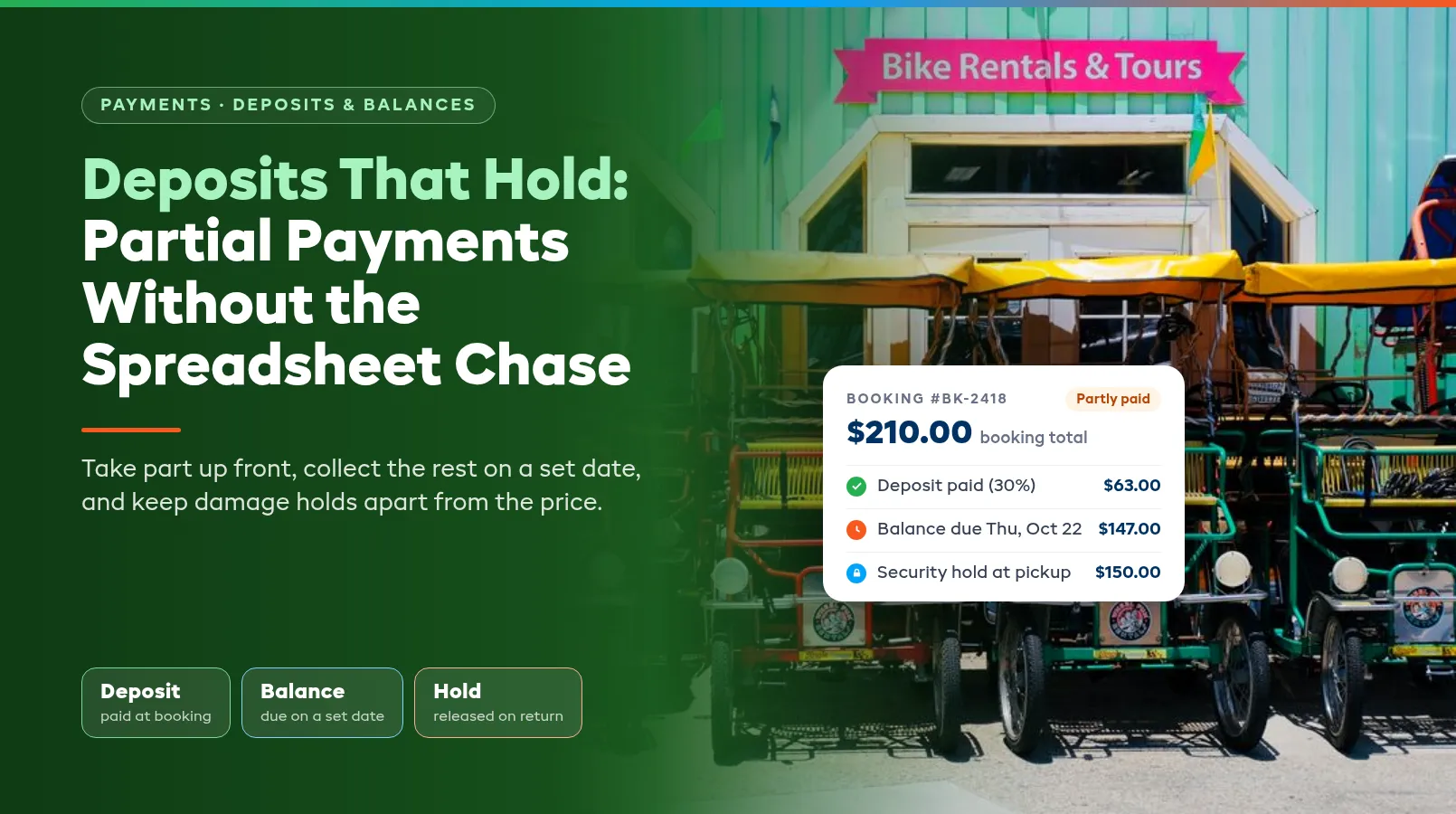
- Booking deposit (part payment). When you cancel, it follows the main choice: credit or refund. When the customer cancels inside your window, it is the amount at risk, so the policy should say plainly whether weather changes that.
- Security or damage hold. If you only authorized it and never captured it, release it as soon as you cancel. Customers notice a hold that stays on their card for days after a washed-out booking.
- Non-refundable deposits for large or custom bookings. If you keep these when you cancel for weather, say so at booking, in the same sentence as the amount, and have the customer accept it.
Whatever you choose, make the wording match what actually happens to the card. Many disputes start with a customer who thought "deposit" meant nothing would leave their account. The chargebacks and payment disputes guide goes through how to word deposits so they do not turn into disputes.
Tell customers before they ask
You will get far fewer calls if customers hear from you first. Build the messages once and send them on a schedule.
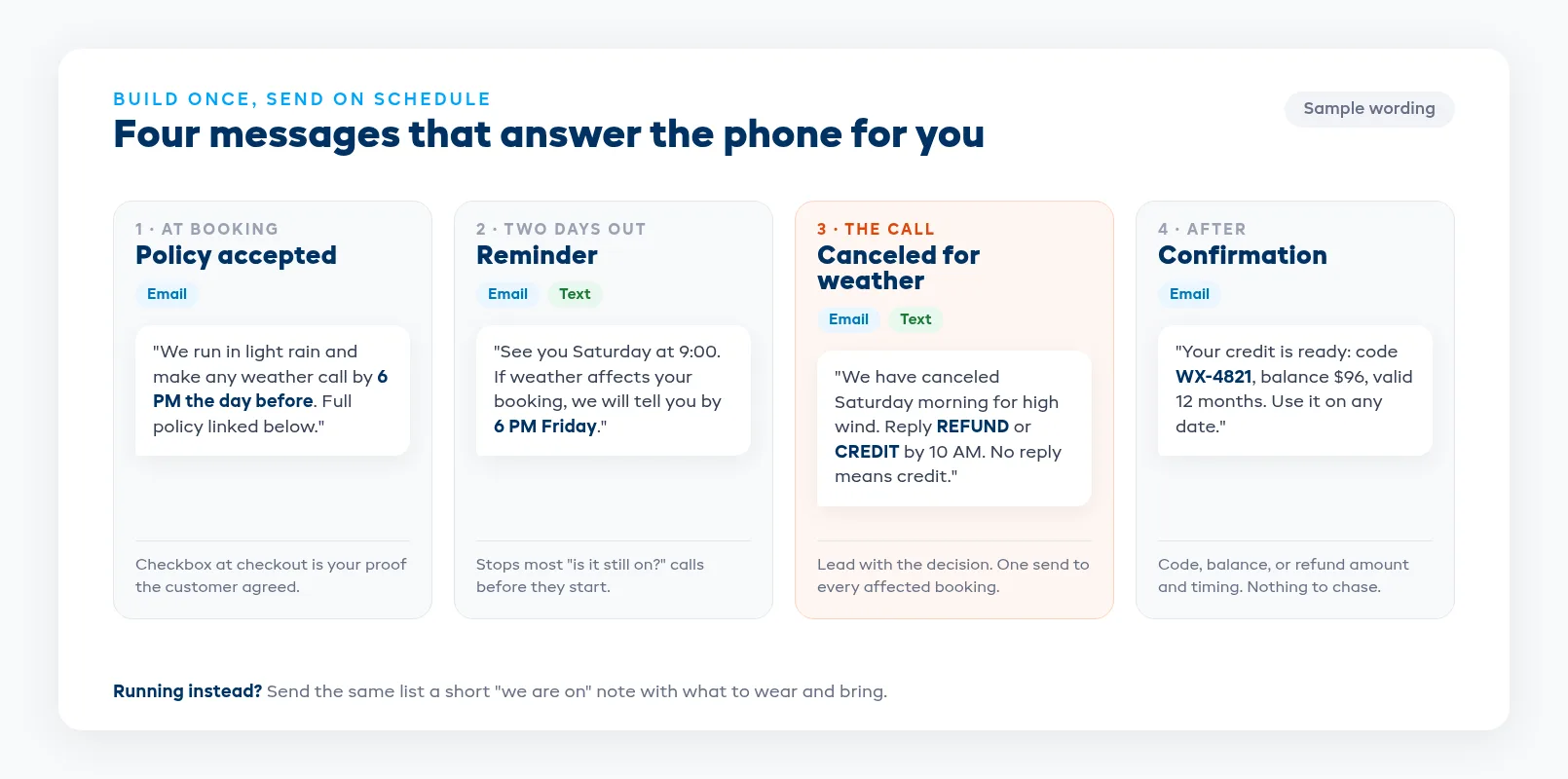
- At booking. A one-line summary of the weather policy and a link to the full text, with a checkbox the customer ticks. That checkbox is your proof they agreed.
- Two days out. The normal reminder, plus a short note: "If weather affects your booking, we will let you know by 6 PM the day before." This stops most of the "is it still on?" calls before they start.
- The call. If you cancel, one message to every affected customer, sent by email and text at the same time, with their options and the deadline to choose. If you are running, say so, with what to wear or bring.
- After. A confirmation of what they chose: the credit code and balance, the new date, or the refund amount and how long it takes to show.
Write the cancellation message before the season starts, while nobody is stressed. Keep it short, lead with the decision, and put the options in a list. Customers read it on a phone in the car.
Staff and fleet on a wet weekend
A rained-out Saturday costs you the revenue, and it also moves work into the days around it.
Staff. Decide your call-off rules ahead of time. If you cancel morning slots, who still comes in, and who is paid for a short shift? Many shops keep one or two people on standby for the counter, the phones, and the rebooking rush, and send the rest home with notice. Put the rule in your rostering setup so it is not a Friday-night group text.
Fleet. Wet gear needs time. Kayaks, wetsuits, tents, and bikes that went out in the rain need drying, cleaning, or a chain check before the next booking. If Saturday afternoon runs in the rain, block a turnaround window before Sunday morning or you will hand a customer damp gear.
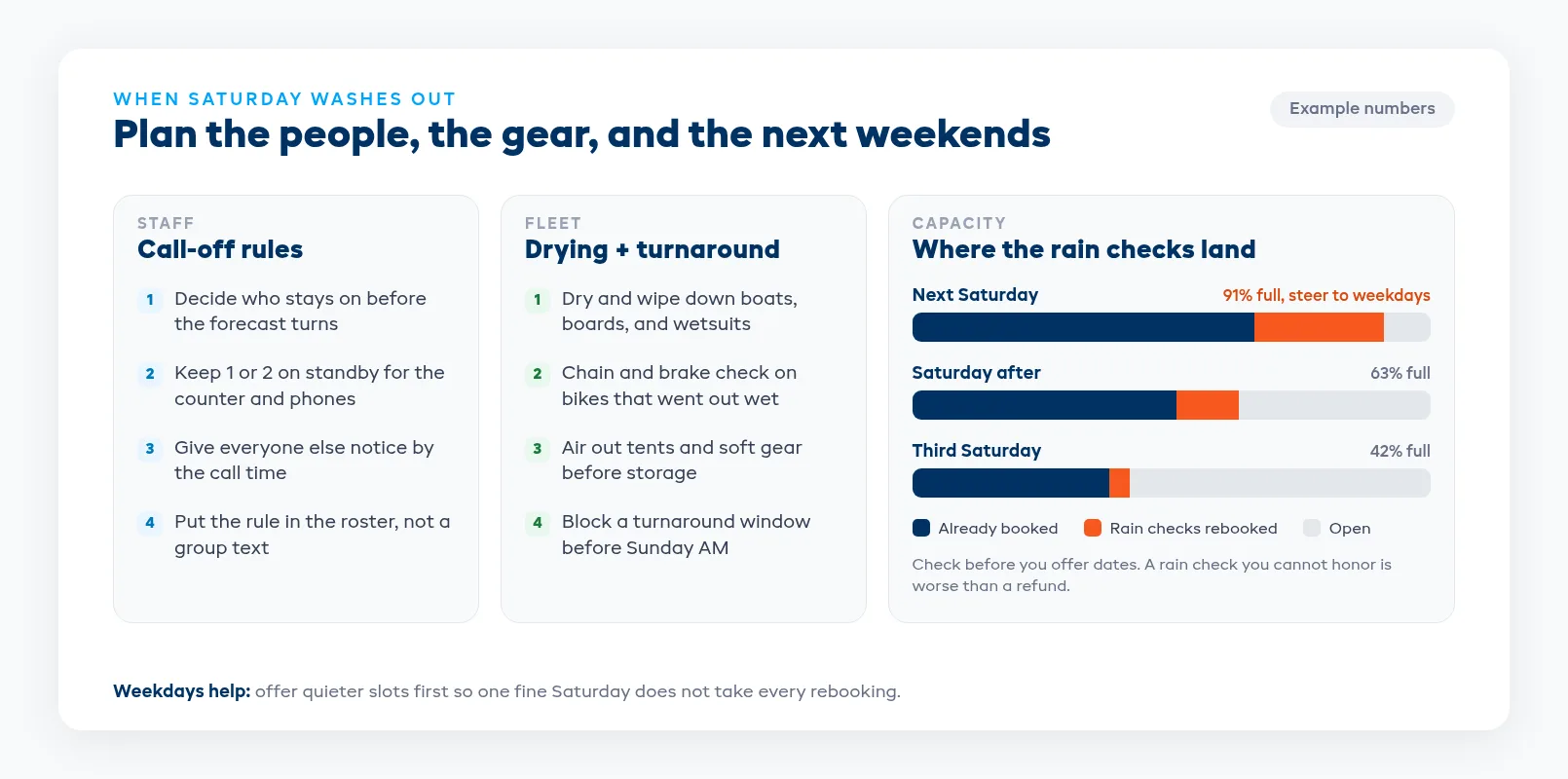
Next weekend's capacity. Every rain check and credit you issue lands on a future date, usually the next fine weekend. Check the next two or three weekends before you offer dates, and steer customers toward weekdays or quieter slots if the next Saturday is already close to full. A rain check you cannot honor is worse than a refund.
Let the booking system enforce it
A policy that lives in a PDF depends on staff remembering it. A policy that lives in your booking system gets applied the same way every time.
In EquipDash, you set refund and cancellation rules per product or booking type: refund percentages by notice period, cancellation fees, and non-refundable deposit amounts. When a booking is canceled, the system checks the policy, works out the refund, processes it, puts the inventory back on the calendar, and sends the confirmation. For weather calls, staff can override the standard policy to give a full refund or convert the booking to credit, and every override is logged with who did it and when. Credits can be issued as gift cards and vouchers with a balance and expiry the customer can see.
The messages can run the same way. Confirmation and reminder templates carry the policy summary and the call time, and workflow automation handles the reminder schedule so nobody has to remember on a Thursday. Dash AI can help draft the cancellation message and find every booking on the affected slots, so the send goes out in minutes instead of an hour on the phone.
If you are still running weather calls from a spreadsheet and a group chat, the automation guide for rental businesses is a good place to start.
A weather policy you can adapt
Edit this short policy for your own products and times:
Weather policy. We run in light rain. We cancel for lightning, high wind, or conditions our staff judge unsafe, and we make that call by 6 PM the day before (or two hours before afternoon slots). If we cancel, you choose a full refund or a credit good for 12 months. If we do not hear from you by 10 AM the next day, we issue the credit. If you want to cancel for weather on a day we are running, you can move to another date at no charge up to 24 hours before your booking. After that, our standard cancellation terms apply. Security holds are released as soon as we cancel.
Swap in your own thresholds, times, and credit period, put it on every product page, and add the acceptance checkbox at checkout. Then train every person who answers the phone on the same three questions: did we cancel or did they, what time is it relative to the cutoff, and what did they choose.
If your current setup cannot hold a policy per product or issue a credit without a manual workaround, compare EquipDash plans and see what setting it up once would save you on the next wet Saturday.
FAQ
Should a rental business refund customers when it rains?
It depends on who cancels. If you cancel because conditions are unsafe or you cannot run the booking, give the customer a full refund or a credit, their choice. If the customer cancels for rain on a day you would have run, your normal cancellation terms apply, though many shops offer a free reschedule up to a set cutoff to keep the goodwill.
What is the difference between a rain check and a reschedule credit?
A rain check moves the same booking to a new date, usually within a set window. A reschedule credit turns the booking value into a balance or voucher code the customer can spend on any product or date before it expires. Credits are more flexible, which suits visitors who may not come back for the same thing.
When should we make the weather call for a Saturday booking?
Pick a fixed time and publish it. Many operators make the call by 6 PM Friday for morning slots and do a second check two hours before afternoon slots if the forecast is unsettled. The point is that customers and staff know exactly when the decision happens.
What should happen to a damage deposit when we cancel for weather?
Release it right away. If you only authorized the hold, void the authorization as soon as you cancel. If you captured it, refund it with the rest of the booking. A deposit that stays on a card after a canceled booking is a common cause of angry calls and disputes.
How do we stop a wet weekend from overbooking the next one?
Check capacity for the next two or three weekends before offering new dates, and steer customers toward weekdays or quieter slots when the next Saturday is close to full. Give credits a sensible expiry so they spread out over the season instead of landing on one date.
Do customers need to agree to the weather policy?
They should. Show a one-line summary at checkout with a link to the full policy and a checkbox the customer ticks. That record is what you point to if a customer later says they never agreed, and it is what a card issuer looks for in a dispute.
in one place