Ski Pre-Book Push: Closing Season Rentals Before Thanksgiving
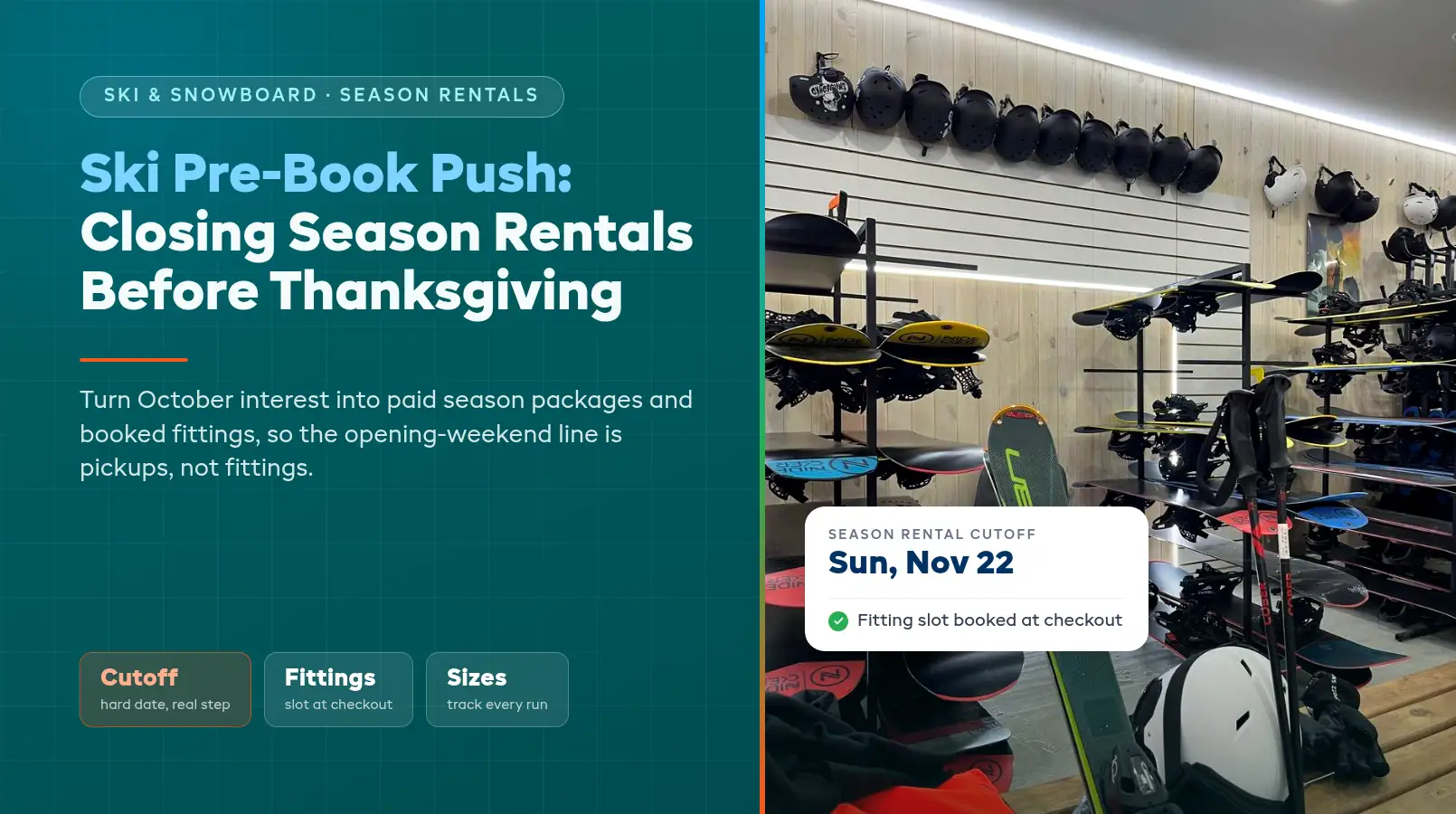
Ski Pre-Book Push: Closing Season Rentals Before Thanksgiving
Thanksgiving weekend is when the line forms. Families drive up Wednesday night, the kids have grown a boot size since last March, and every one of them wants to be fitted, signed, paid, and out the door before first chair. Each family that walks in without a booking is a full fitting at the worst possible hour. Each family that pre-booked in October is a bag on a shelf with their name on it.
You already did the September groundwork. If you followed the pre-season ski shop prep playbook, your fleet is audited, early-bird season packages are live, and last winter's customers have heard from you once. This post covers the next stretch: the roughly seven weeks between early October and Thanksgiving, when the job changes from "open the pre-sell" to "close it." The goal is simple. Move as many season rentals as you can out of opening weekend and into appointments you control.
Why Thanksgiving is the real deadline
For a lot of US mountains, Thanksgiving is the first weekend that feels like winter. Lifts may have spun earlier, but this is when families with school off and a four-day weekend show up all at once. That makes it the natural line in the sand for season rentals. Anyone who books before it gets fitted on a quiet weekday. Anyone who books after it competes with the walk-in crowd.
It also matters for your cash and your fleet. Every season package that closes before Thanksgiving is revenue in the bank before peak payroll, and it tells you exactly which sizes are spoken for while you still have time to reorder or shift stock between locations. A package sold Saturday morning at the counter tells you nothing until it is already gone.
So treat Thanksgiving week as the close, not the start. In 2026, Thanksgiving falls on November 26. Work back from there.
Set a hard cutoff and a real price step
A pre-book push without a deadline is just a discount. Pick one cutoff date and publish it everywhere: the booking page, the package description, every email, and the sign at the counter. The Sunday before Thanksgiving (November 22 this year) works well for many shops. It leaves Monday through Wednesday to prep bags and confirm fittings.
Then make the step real. The early-bird price your ski rental pricing strategy set in September should hold until the cutoff, and the in-season price should apply the day after. No quiet extensions for the customer who calls on the 24th. The first year you extend, you teach your whole list that the deadline is fake, and next fall they wait.
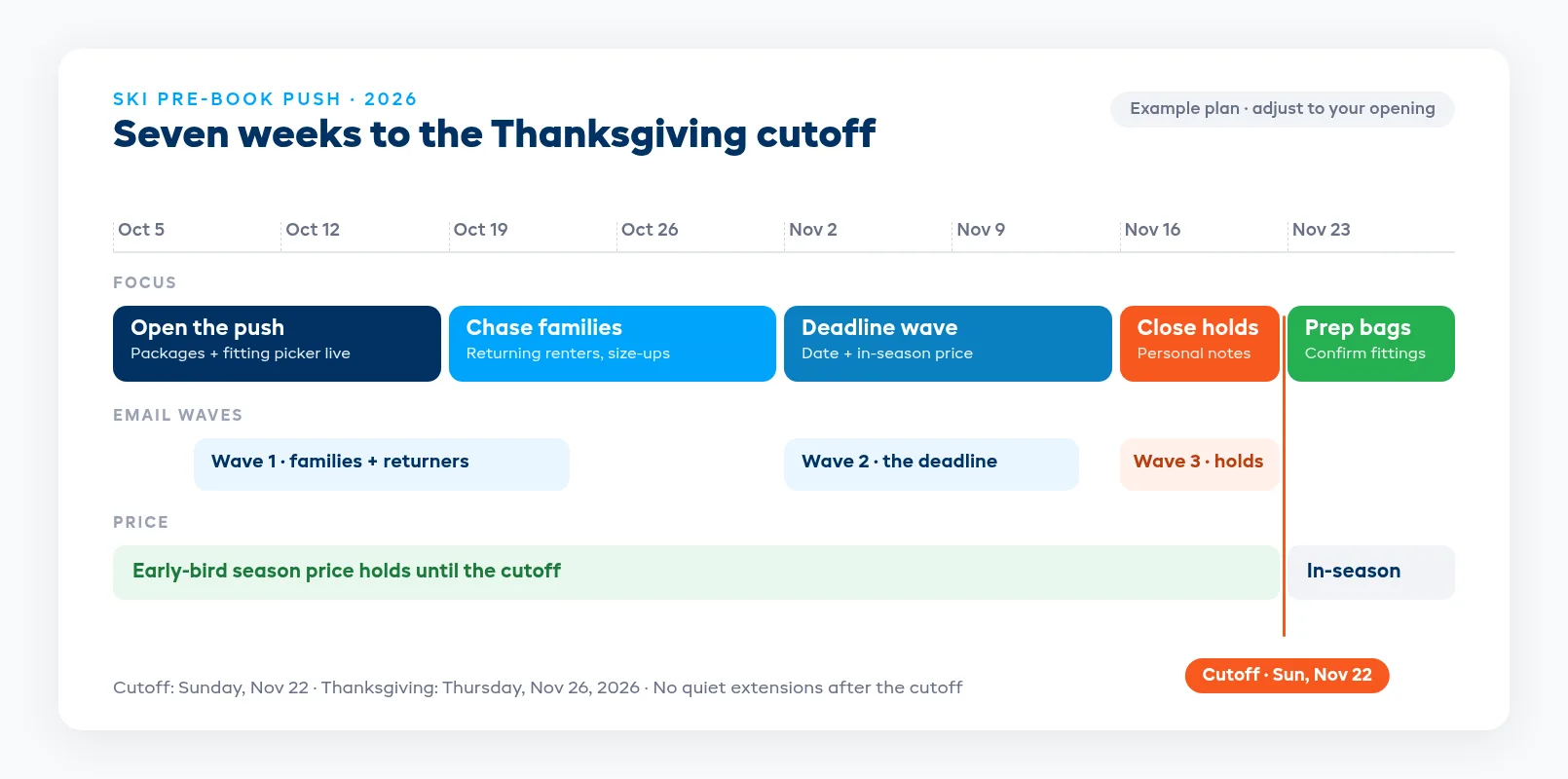
Put the countdown on the wall in the back office. Each week has one job: open the push in early October, chase families and returning renters through late October, send the deadline wave in mid-November, and spend the last few days before the cutoff closing holds that never turned into payments.
Sell fitting slots, not just packages
The package is only half the win. The other half is the appointment. If a family pre-books a season rental but still shows up on Friday of Thanksgiving weekend to get fitted, you have the cash but not the time back.
Capture a fitting slot at checkout, every time. Offer weekday and weeknight windows across early and mid-November, and let customers pick. Size the slots to how long a real fitting takes in your shop, including the kid who cries and the parent who forgot the old boots. If your boot fitting process runs long, give each slot more room instead of squeezing more slots into the day.
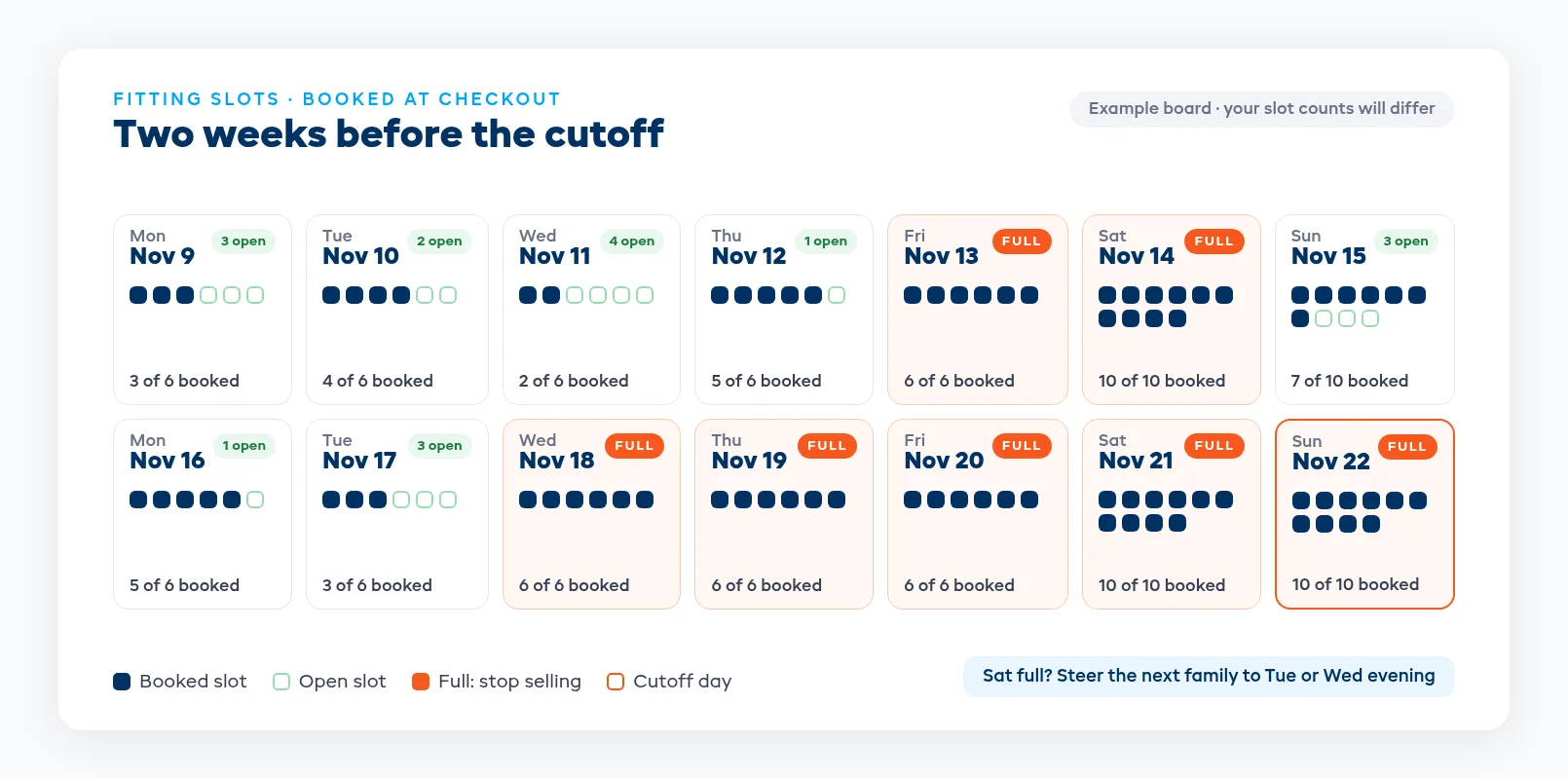
Keep the capacity honest. A board that shows booked versus open slots per day lets you see when a Saturday is full and steer the next customer to a Tuesday evening. When the last week before Thanksgiving fills up, stop selling slots in it. An overbooked fitting night is just the Thanksgiving line, moved earlier.
Run a three-wave close campaign
Your fall reactivation emails opened the door. The close campaign walks people through it. Keep it to three waves, each with one clear ask.
Wave 1, early to mid-October: families and returning renters. Pull everyone who rented a season package last winter, plus every family booking from the last two seasons. Lead with their child's likely size-up and a link straight to the package with the fitting picker. A pre-season customer reactivation agent can segment that list from your booking history and draft the copy, so the wave goes out on schedule instead of when someone finds a free afternoon.
Wave 2, early November: the deadline. Same list, minus anyone who already booked. State the cutoff date and the in-season price that starts the day after. Nothing clever. People respond to a date and a number.
Wave 3, the final week before the cutoff: open holds. This one is not a broadcast. It goes only to customers who started a booking, put down a hold, or asked for a quote and never paid. Send a short personal note with their exact package, the slot they picked, and the date the hold expires.
Leave people out once they book. Nothing annoys a parent faster than a "last chance" email for a package they paid for two weeks ago.
Track size runs as you sell
Season rentals sell out by size, not by total count. You can have plenty of junior skis on the rack and still be out of the boot size that half your eight-year-olds need. If you only watch total packages sold, you find out at the fitting, with a family standing in front of you.
Track bookings against your size run for the categories that go first, usually junior boots and short skis. For each size, watch booked, open, and waitlisted. When a size hits zero, decide right away: reorder, pull stock from a second location, offer the nearest size with a free swap later in the season, or move new requests to a waitlist. Every one of those is better than discovering the gap on fitting day.
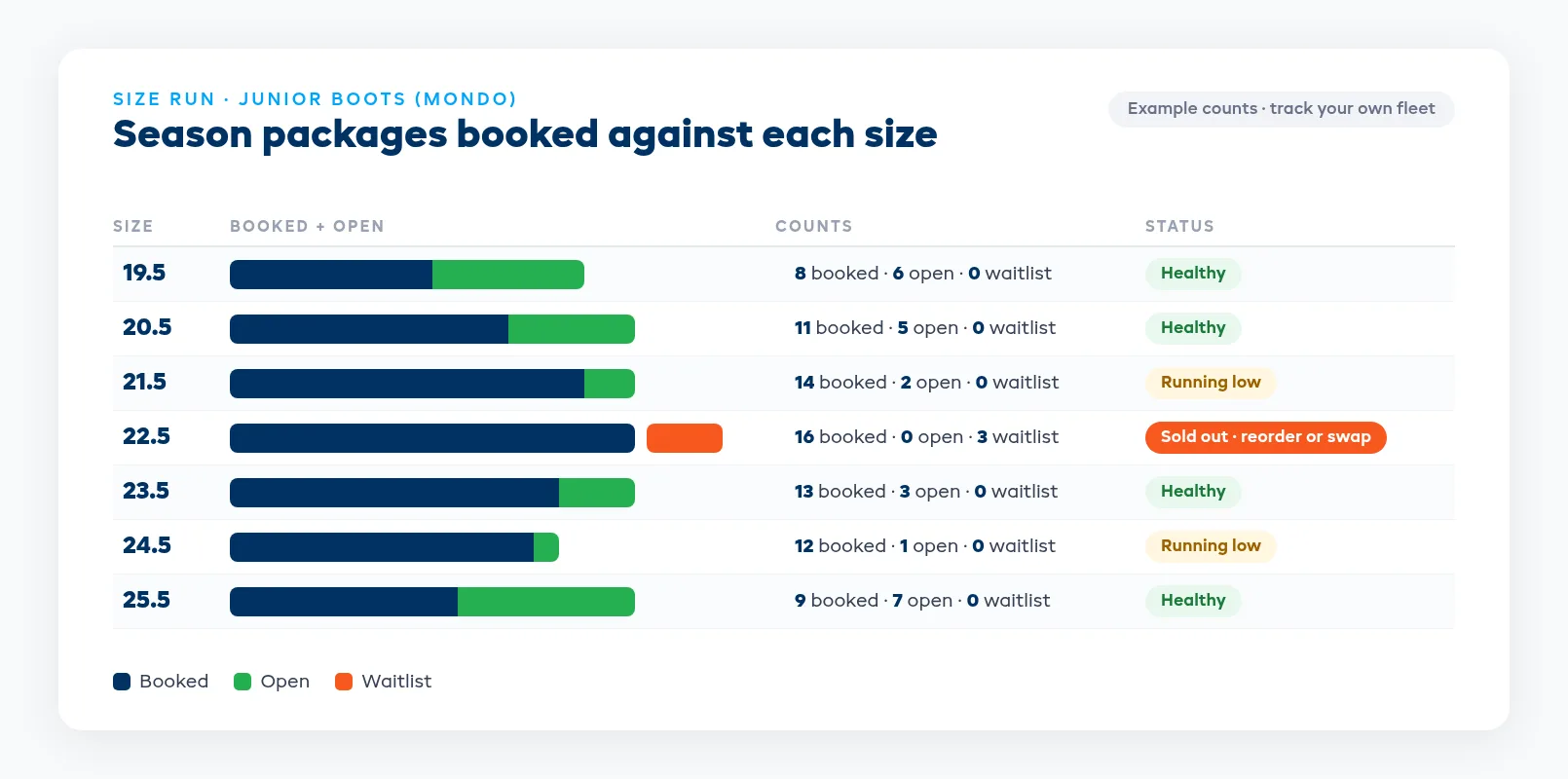
The size picture also feeds the campaign. If junior 22.5 is nearly gone, tell the families in that range in Wave 2. Scarcity you can show is more persuasive than any discount.
Holds, deposits, and fitting no-shows
Pre-booking only protects your fleet if a booking means something. Unpaid holds quietly block sizes you could sell to someone else. Decide your rules before the push starts.
Take a deposit or full payment at booking, not at pickup. Give unpaid holds a short, written expiry and actually release them when it passes. Confirm every fitting by email or text a day or two before the slot, with an easy way to reschedule. Customers who reschedule are fine. Customers who vanish are the problem.
For the ones who miss their fitting, have a plan ready instead of improvising. The ski rental no-show recovery playbook covers how to follow up, rebook, and decide when a no-show forfeits the hold. The short version: one reminder, one rebook offer, then release the gear back to the size run so it is not sitting in a bag on opening weekend.
Thanksgiving weekend: run a two-lane counter
Even with a strong push, plenty of people will still walk in. The point is to keep them from slowing down the customers who did everything right.
Split the counter into two lanes. The pre-booked lane is for pickups: bags already sized and labeled, paperwork signed online, and a staffer whose only job is to hand over gear, check the fit, and send people out. The walk-in lane handles everyone else: full fittings, new paperwork, payment. Put your most experienced fitters in the walk-in lane, because that is where the hard calls happen.
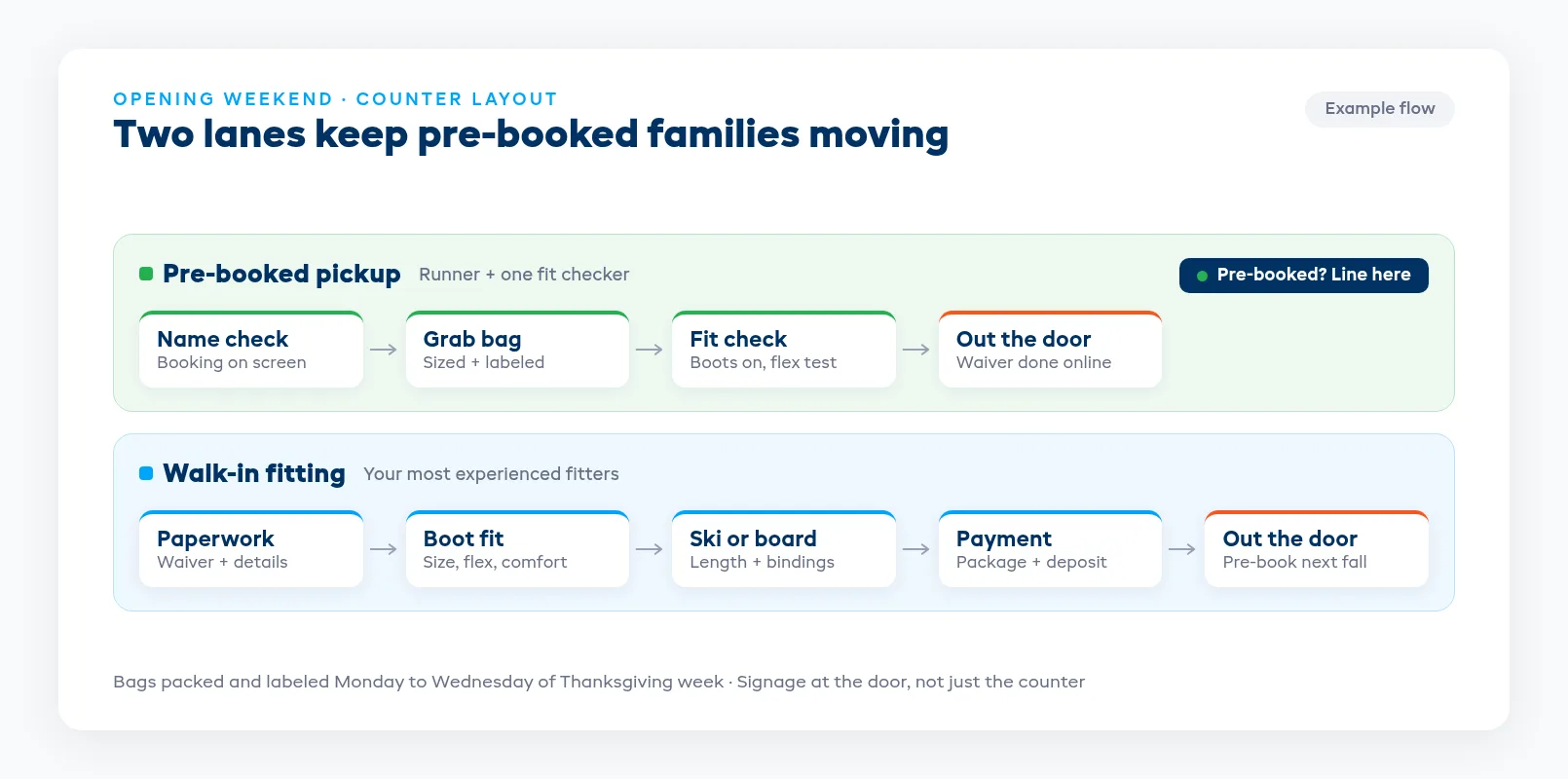
Signage does a lot of the work. A clear "Pre-booked? Line here" sign rewards the families who booked early and shows the walk-ins exactly what they could have done. Staff the weekend with that split in mind (the seasonal ski rental hiring guide covers building the roster), and run the morning off your opening-day checklist so nothing rides on memory.
After the cutoff
Late requests will keep coming, and that is fine. Sell them at the in-season price with whatever fitting slots are left, and be clear that the early price is gone. Keep a short list of who booked late and why. That list, plus your no-show count and the sizes that sold out first, is the best input you will have when you plan next fall's push.
Then look at the season so far as a whole. The pre-book push is one chapter of running a ski rental business, and the shops that do it well treat it as a repeatable system, not a scramble. If your current tools make any of this hard, from fitting slots at checkout to size-run tracking to unpaid holds that never expire, the ski and snowboard rental software hub shows what a setup built for a winter shop looks like. New staff can get up to speed with the ski rental glossary before their first live shift.
FAQ
When should a ski shop close season rental pre-bookings?
Pick one hard cutoff before your first big weekend. For many US mountains that weekend is Thanksgiving, so a cutoff on the Sunday before (November 22 in 2026) leaves a few days to prep bags and confirm fittings. Publish the date everywhere and switch to in-season pricing the day after.
Should every season rental booking include a fitting appointment?
Yes. The package moves the revenue earlier, but the fitting slot is what moves the work earlier. Capture a weekday or weeknight slot at checkout, size each slot to how long a real fitting takes in your shop, and stop selling slots in a day once it is full.
How many emails should a pre-book close campaign send?
Three waves is plenty. Early to mid-October goes to families and returning renters with a size-up angle. Early November states the cutoff and the in-season price. The final week goes only to people with open holds or unpaid quotes. Remove anyone who books from the later waves.
What should we do when a boot size sells out during the pre-book push?
Decide the same day. Reorder if suppliers still have it, move stock from another location, offer the nearest size with a free swap later in the season, or put new requests on a waitlist. Track booked, open, and waitlisted counts per size so you see it coming instead of finding out at the fitting.
How do we handle Thanksgiving weekend walk-ins without slowing pre-booked customers?
Run two lanes. Pre-booked customers pick up sized, labeled bags with paperwork already signed. Walk-ins go to a separate fitting lane staffed by your most experienced fitters. Clear signage keeps the lanes separate and shows walk-ins the benefit of booking early next year.
in one place