Guide Ratios and Group Scheduling for Snowmobile Tours
Guide Ratios and Group Scheduling for Snowmobile Tours
Every snowmobile tour operator eventually has the same morning: fourteen riders standing in the staging area, three guides on the roster, one of them stuck behind a snowplough, and a storm due after lunch. What happens next is decided by two numbers you set long before the season started — how many riders each guide can safely manage, and how your departures are spaced through the day. Those numbers are the difference between a smooth morning and a refund queue.
This guide covers how working operators set guide-to-rider ratios by terrain, run lead and sweep on the trail, cap and split big bookings, stagger departures, and build a weekly roster that survives a no-show. It is one part of the bigger picture in the complete guide to running a snowmobile business.
Ratios decide your safety case and your margin
The guide ratio is the most consequential number in the business because it pulls in both directions at once. Too many riders per guide and you cannot see, coach, or reach the rider who needs you — and if anything goes wrong, the first question from the investigator and the insurer is how many machines that one guide was managing. Too few riders per guide and your labor cost per seat climbs until a $189 tour makes you nothing.
So set the ratio deliberately, write it down, and build everything else — group caps, pricing, roster — on top of it. The number is not one-size-fits-all. It moves with terrain, with rider experience, and with conditions on the day. What it should never move with is how many people are standing in the car park asking to ride.
Set ratios by terrain and rider experience
Groomed trail, off-trail, and backcountry are three different businesses wearing the same brand. On a wide groomed trail with adult riders who have ridden before, one guide can manage 6-8 sleds comfortably. Take the same group off-trail into ungroomed powder and the workload doubles — stuck machines, buried skis, riders tipping on side-hills — so the ratio tightens to one per 4-6. In genuine backcountry or avalanche terrain, one guide per 4 sleds with a second guide at the back is the working standard, and many regions and insurers mandate something close to it.
Rider experience shifts the number the same way. First-timers and families with doubles (two-up sleds) need tighter supervision than a returning group of confident riders — a nervous rider on a 600cc machine needs more of the guide's attention than the terrain does. Build a simple grid of terrain against experience, put a ratio in each cell, and make it the rule your booking calendar enforces.
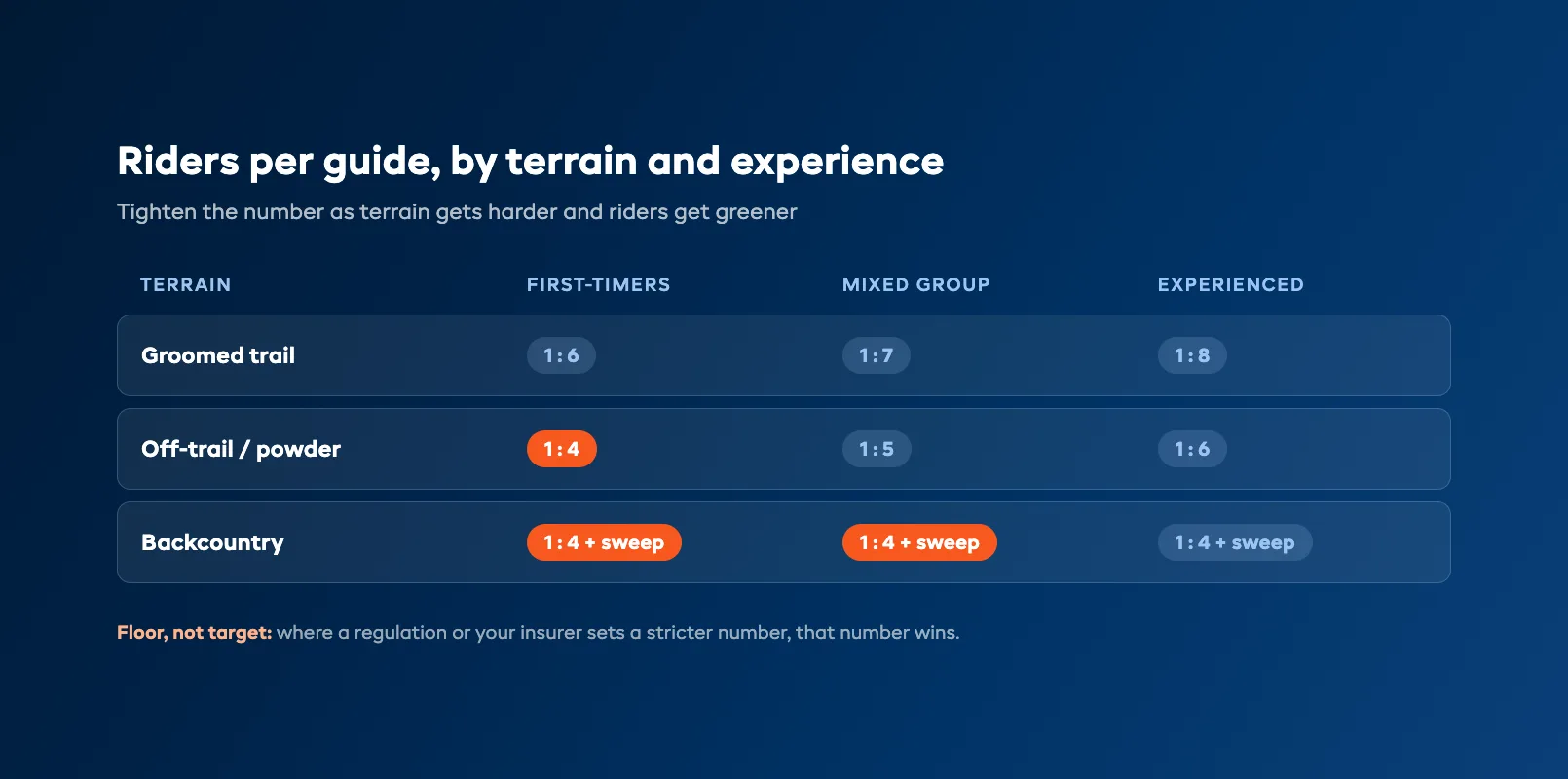
One caution: check your local rules before you settle the grid. Some jurisdictions cap group sizes on public trail systems, and some insurers write maximum ratios into the policy. Wherever a regulation or policy sets a number, treat it as the floor you must beat, not the target to ride at.
Lead and sweep: how a group actually rides
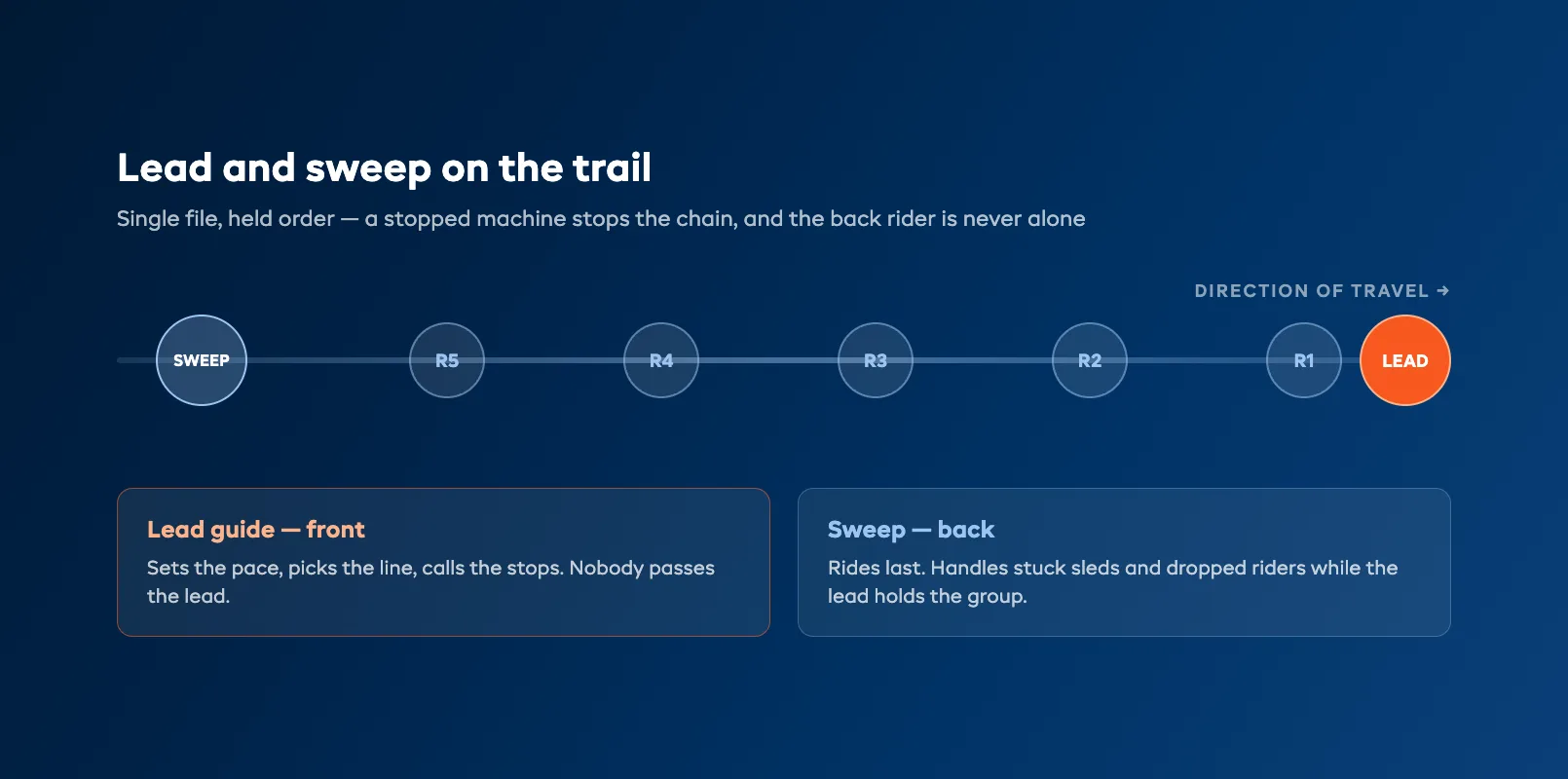
On the trail, structure beats headcount. A well-run group has a lead guide at the front — setting the pace, choosing the line, calling stops — and, for any group beyond about five sleds, a sweep at the back. The sweep's job is simple and absolute: nobody rides behind them. If a machine gets stuck, throws a belt, or a rider drops back, the sweep is already there while the lead holds the rest of the group at the next natural stopping point.
Brief the roles into the group before departure, not on the fly. Riders hold their position in line, keep the sled behind them in their mirrors, and stop if they lose sight of it — that one habit means a stopped machine automatically stops the chain, and the sweep arrives within a minute. Agree hand signals in the safety briefing and give the lead and sweep radios; in cold, wind, and helmet coverage, shouting is not a communication plan.
Cap groups at booking, split them at sale
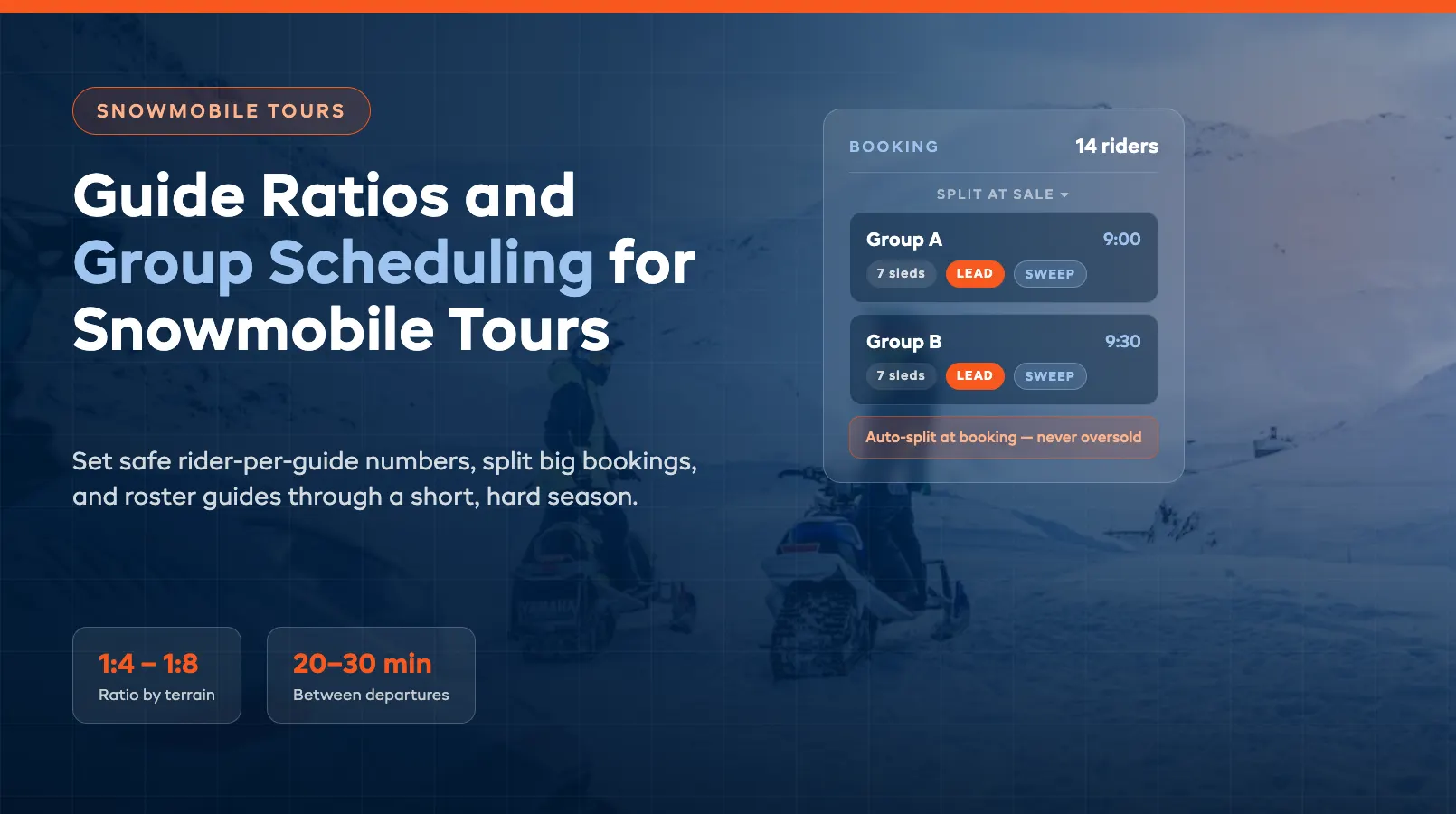
Whatever ratio grid you set, the booking system has to enforce it — otherwise the cap only exists until a big group offers to pay. Set a hard maximum of riders per departure, and when a booking comes in above the cap, split it into two groups at the moment of sale: a booking of 14 becomes Group A and Group B of 7, each with its own guide, departing 20-30 minutes apart and sharing a lunch stop so it still feels like one trip.
The worst version of this decision is the one made at the staging area, with the whole party watching, by whichever staff member is holding the clipboard. The best version is invisible: the booking software simply never sells seat nine on an eight-seat departure, and large groups see two linked start times at checkout. Capacity rules, guide assignment, and gear sizing all hang off that one enforcement point.
Stagger departures to sweat the same fleet twice
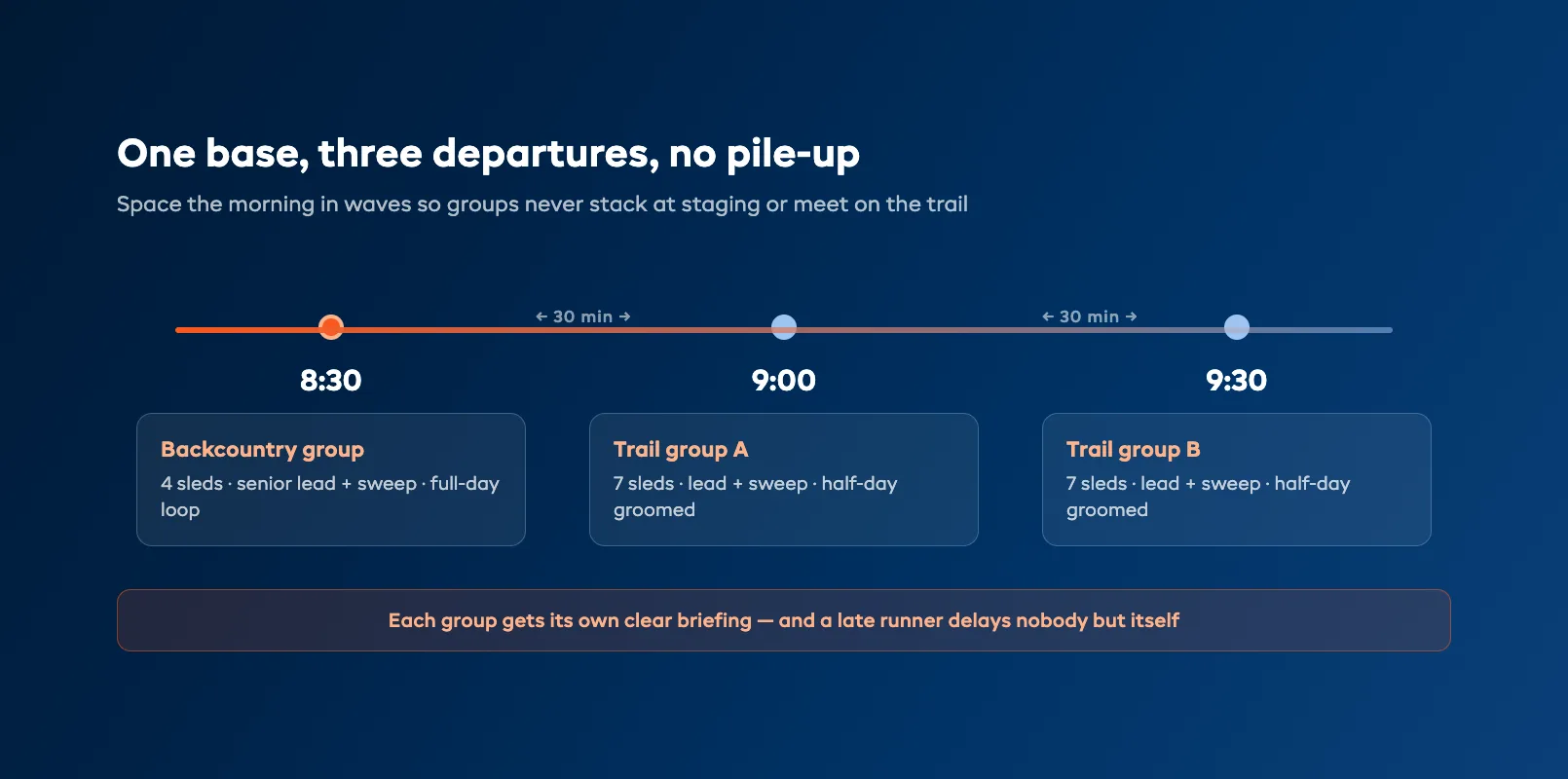
Group scheduling is also a revenue tool. If all your tours leave at 9:00, your staging area jams, your guides queue for the same warm-up loop, and your fleet earns once before lunch. Stagger departures in waves — 8:30, 9:00, 9:30 — and the same base area handles three groups smoothly. Space morning and afternoon blocks far enough apart for the between-tour reset: refuel, damage scan, and the checks covered in the fleet maintenance routine.
Twenty to thirty minutes between waves is the practical spacing. It keeps groups from meeting head-on at viewpoints, gives each departure its own clear safety briefing, and means a late-running group delays nobody but itself. It also spreads guide start times, which matters when the same guide leads the 8:30 and then takes the 1:30 after a real break.
Build the weekly roster against bookings, not hope
A snowmobile season is maybe sixteen weeks, and your guides are seasonal workers with lives, second jobs, and sore backs. Roster a week ahead, against confirmed bookings rather than optimistic forecasts, and match assignments to qualifications: the backcountry departure goes to the guide with current avalanche training and practiced beacon, probe, and shovel skills; the family trail tour suits the guide who is patient with first-timers and doubles.
Watch fatigue the way you watch fuel. Leading tours in the cold is physical work — cap consecutive full guiding days at five or six, rotate the long backcountry days among your senior guides, and put your strongest bench on the days bookings say will be biggest, not the days that are traditionally busy. Publish the roster where every guide sees it and pair each rostered day with the trail assignment, so nobody discovers at 7:45 that they are leading off-trail today.
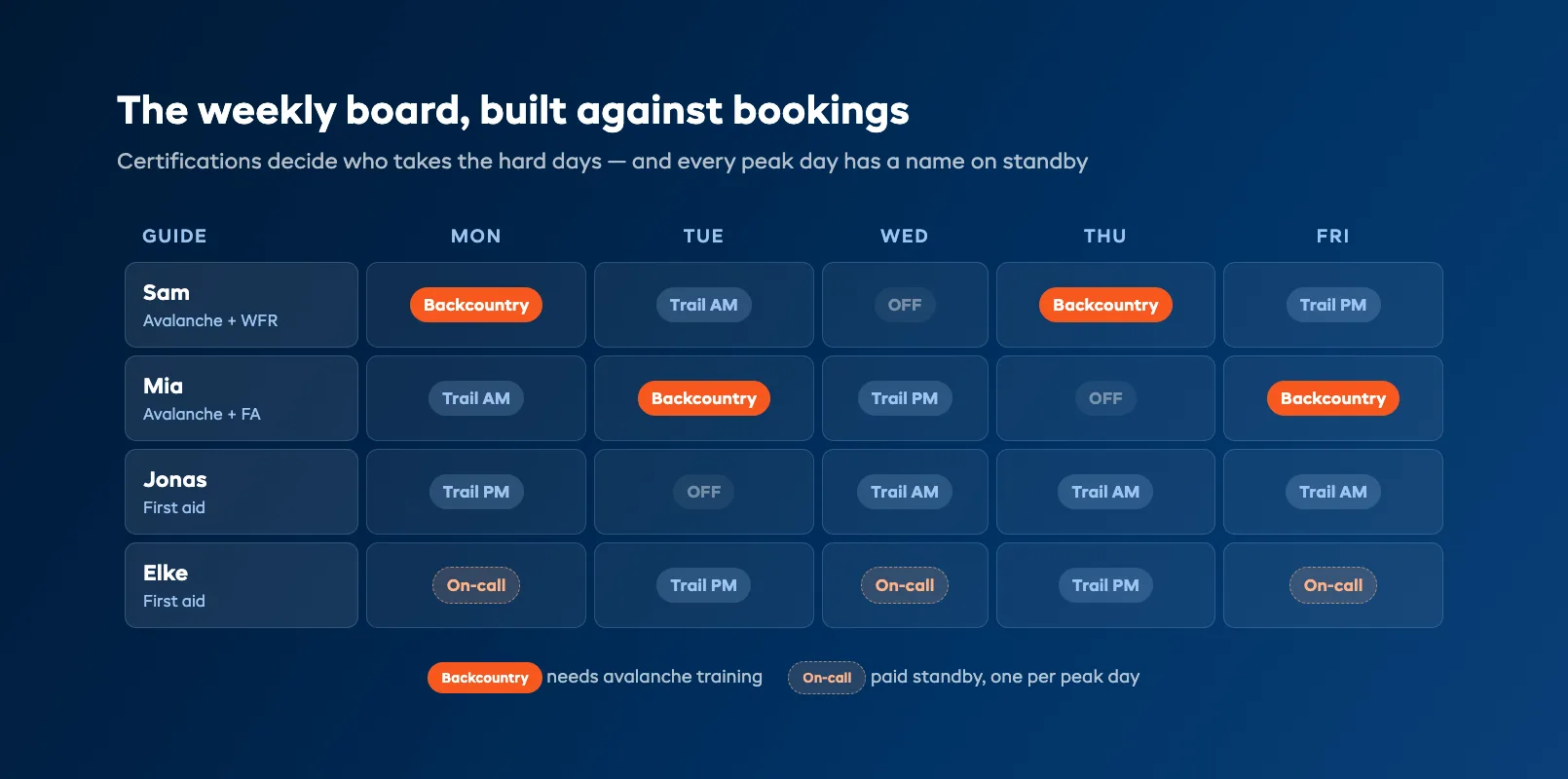
Then plan for absence, because it is coming. Keep at least one on-call guide for every peak day and pay something for the standby — a $50 retainer is cheap against canceling a full departure of eight paid seats. When a guide calls in sick during holiday week, the plan is a name and a phone number, not a scramble.
When conditions change the plan
Ratios and rosters are set in the office; conditions are set by the mountain. Build the day so the call is easy to make: if the avalanche forecast rises or visibility drops, the backcountry departure becomes an extra groomed-trail group at the tighter of the two ratios, and the guides re-shuffle accordingly. If wind chill goes past your published threshold, shorten the loop rather than push the schedule — a 90-minute tour that everyone finishes warm beats a three-hour tour with a cold-injury report.
The operators who handle this well decide thresholds in the pre-season and write them down. The guide on the day is then applying a policy, not defending a judgment call — which is exactly where you want them when a group that drove three hours is asking why the route changed.
Putting it together
Guide ratios and group scheduling are one system: the ratio grid sets what is safe, the booking cap enforces it at sale, lead and sweep make it work on the trail, staggered waves make it pay, and the weekly roster keeps the right guide on the right departure. Set the numbers deliberately, let the software hold the line, and the fourteen-rider morning becomes routine instead of a crisis.
For the wider operation around it, see the snowmobile business hub, and if any of the terms here are new, the snowmobile glossary covers the vocabulary of the trade.
FAQ
What is a good guide-to-rider ratio for snowmobile tours?
It depends on terrain. On groomed trails with adult riders, most operators run one guide per 6-8 sleds. Off-trail riding tightens that to one per 4-6. In genuine backcountry or avalanche terrain, one guide per 4 sleds with a second guide sweeping is the working standard. Local regulations and your insurer may set stricter limits — treat those as the floor, not the target.
How many snowmobiles should be in one tour group?
Eight to ten sleds is a practical ceiling for a single group even on easy terrain. Beyond that, the group strings out, radio and hand-signal communication breaks down, and stops take so long the tour runs late. Bigger bookings ride better split into two smaller groups with their own guides and staggered start times.
Do snowmobile tours need two guides?
Any group of more than about five sleds rides better with two — a lead who sets the pace and picks the line, and a sweep who rides last so no rider is ever behind the final set of eyes. In backcountry terrain, a sweep is not optional: if a machine gets stuck or a rider goes down, the sweep handles it while the lead holds the rest of the group.
What certifications should snowmobile guides have?
At minimum, current first aid — ideally a wilderness-rated course. For any off-trail or mountain riding, avalanche skills training with practiced beacon, probe, and shovel work is essential, and many regions or insurers require it. Add strong mechanical familiarity with your fleet, since a guide who can swap a belt on the trail saves a towed sled and a ruined tour.
How do you schedule snowmobile guides in peak season?
Roster a week ahead against confirmed bookings, not guesses. Assign guides to terrain that matches their certifications, cap consecutive full guiding days so nobody rides tired, and publish the roster where every guide can see it. Keep one on-call guide for each peak day — holiday weeks will use them.
What happens when a booking is bigger than your group cap?
Split it, do not stretch it. A booking of 14 rides as two groups of 7, each with its own guide, departing 20-30 minutes apart. The groups can share a lunch stop so the party still feels like one trip. Set the cap inside your booking system so large bookings are split at the moment of sale rather than argued about at the staging area.
in one place