Surf Lesson Pricing: Group vs Private, Packages, Seasonal Rates
Pricing a surf lesson feels like it should be simple: pick a number, put it on the website, take the booking. Then the season starts. A rival down the beach undercuts you, a family wants a deal on four lessons, a rainy shoulder week leaves your instructors standing on empty sand, and a no-show on a full Saturday morning wipes out the profit from the whole session. Good pricing is what turns those moments from guesswork into a plan.
This guide walks through how to price surf lessons so the numbers actually work: building a rate from your real costs, setting group and private prices that reflect two different products, bundling packages that fill your quiet mornings, and adjusting for the seasons without discounting on a whim. If you are still setting up the wider operation, start with the full playbook on how to run a surf school and board rental business.
Start with your cost floor, not the competition
The most common pricing mistake is starting with what the school next door charges. Their costs are not your costs, and matching their price tells you nothing about whether you make money. Start instead with a floor: the price below which a lesson loses you money, no matter what.
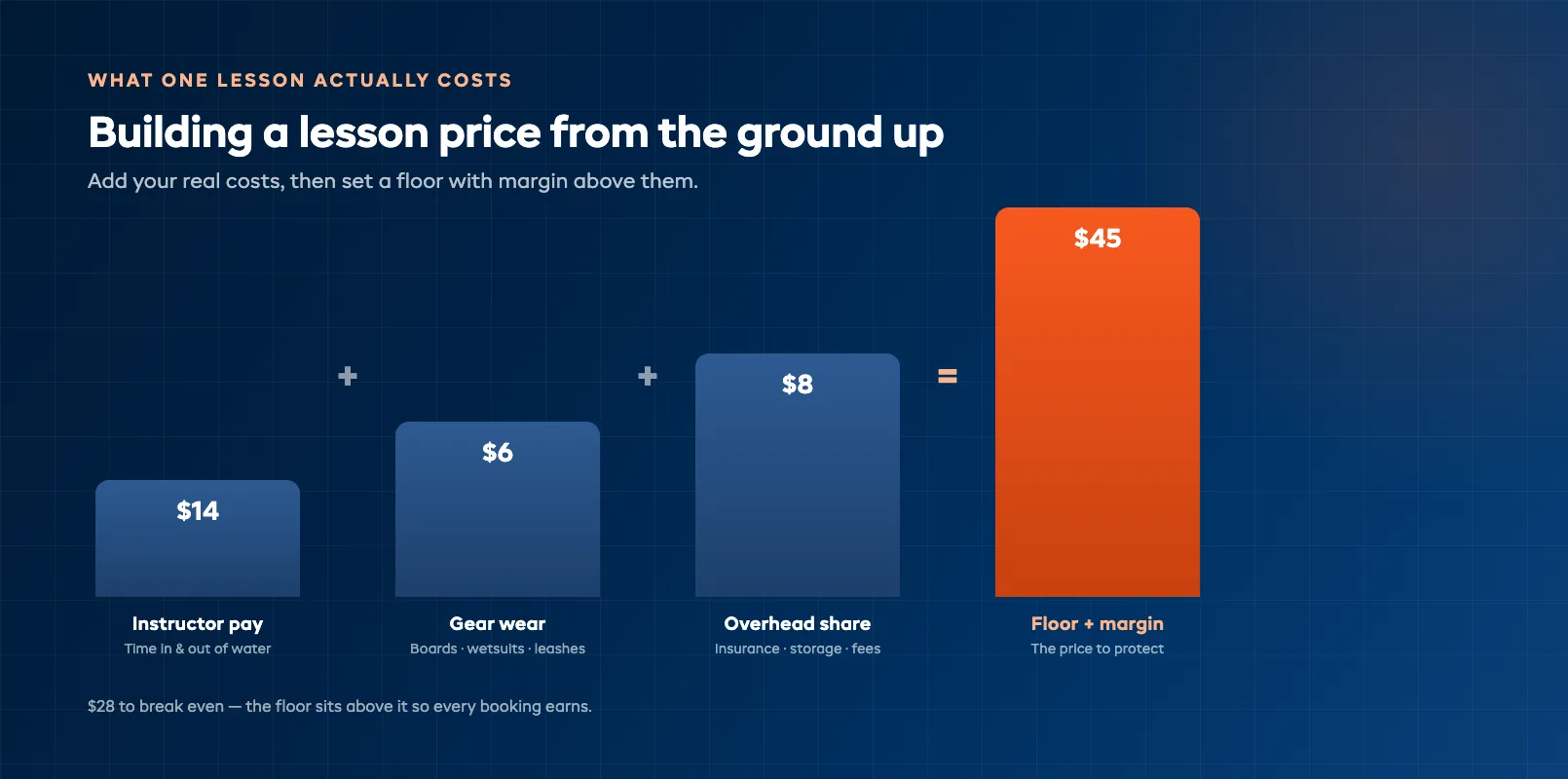
For a single lesson slot, add up three things. First, the instructor pay for the session, including the time before and after the water. Second, the wear on the gear: boards, wetsuits, and leashes do not last forever, so give each lesson a small share of the cost of replacing them. Third, a slice of your fixed overheads: insurance, the storage unit, booking fees, marketing, and everything else that runs whether or not a lesson happens that day.
Add those up and you have the cost of putting one session in the water. Your floor price sits above that with enough margin to make the business worth running. Every rate you set after this (group, private, package, off-peak) has to clear the floor. Once you know your floor, you can look at local competitors for a sanity check, but you never price below your own number just to win a booking.
Group vs private: two different products
Group and private lessons are not the same thing at two price points. They are two separate products, and pricing them as if the private is just a pricier group booking leaves money on the table.
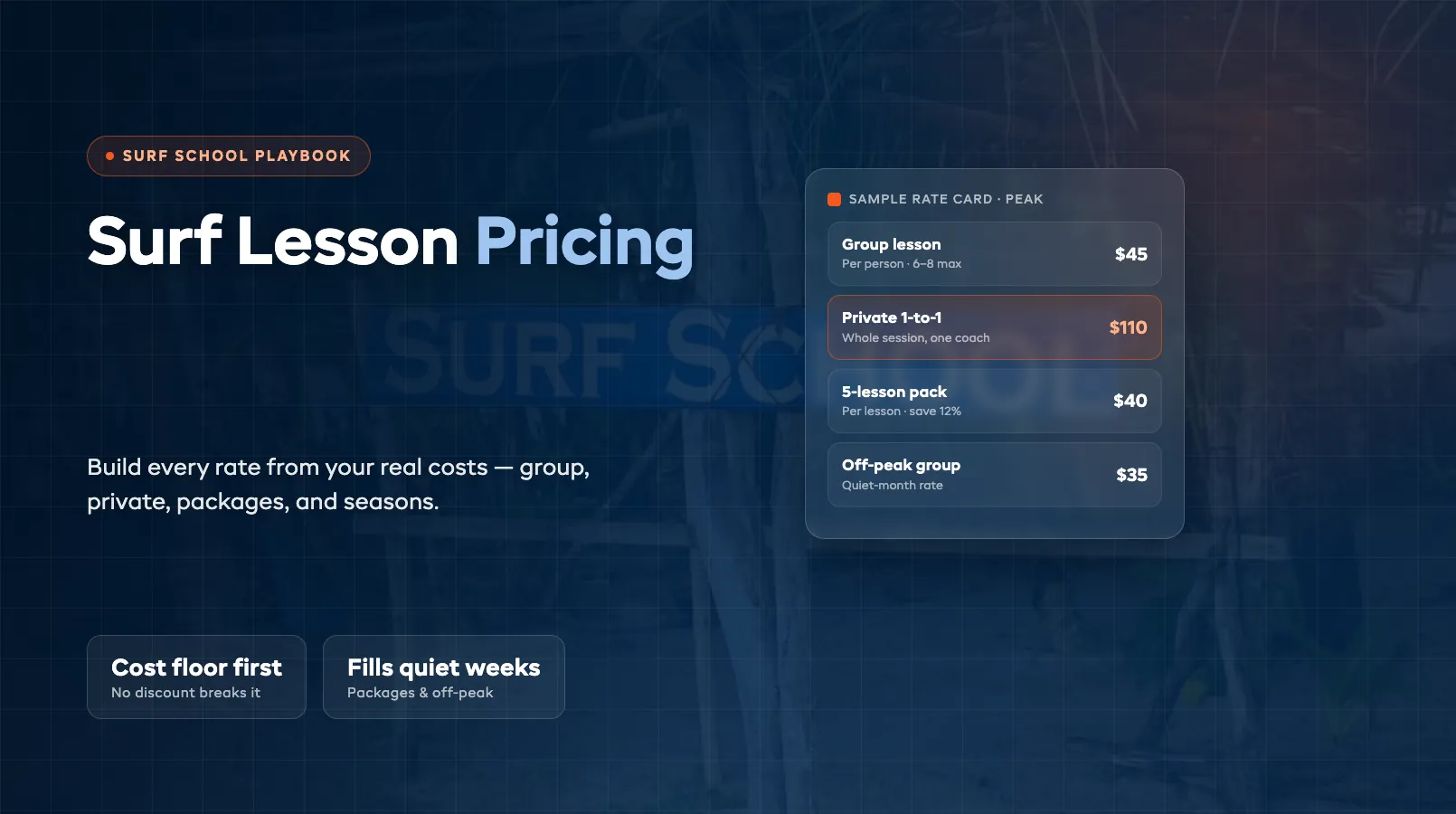
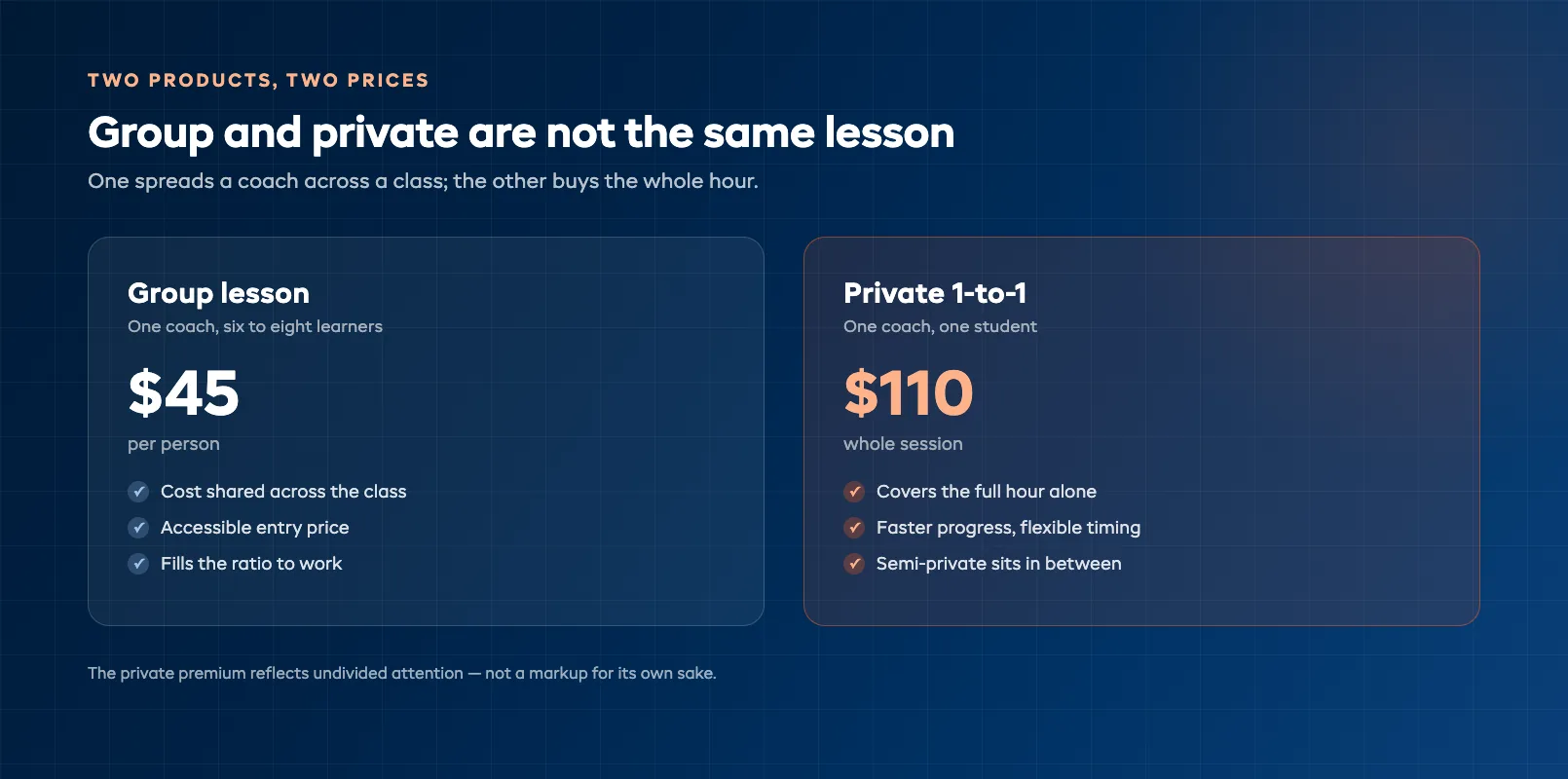
A group lesson spreads one instructor across several learners — commonly six to eight beginners in gentle surf. Because the cost of the session is shared, you price per person at a rate that feels accessible while the full group still comfortably clears your floor. The maths only works when the session fills, so your group price should assume a realistic average group size, not a full boat every time.
A private lesson puts that same instructor with one student for the whole hour. Now a single booking has to cover the entire session cost on its own, which is why a private is typically two to three times the per-person group rate. You are not marking it up for the sake of it: the price reflects undivided attention, faster progress, and the flexibility to run at the time and tide that suits the guest. Semi-private rates for two or three friends sit neatly in between and are an easy upsell for a group that wants more attention than a full class.
Packages that fill your quiet mornings
Nobody learns to surf in one lesson, so packages are the most natural upsell you have. A learner who books a single lesson is a maybe; a learner who buys a five-lesson package is committed, pre-paid, and coming back, often on the weekday mornings you most need to fill.
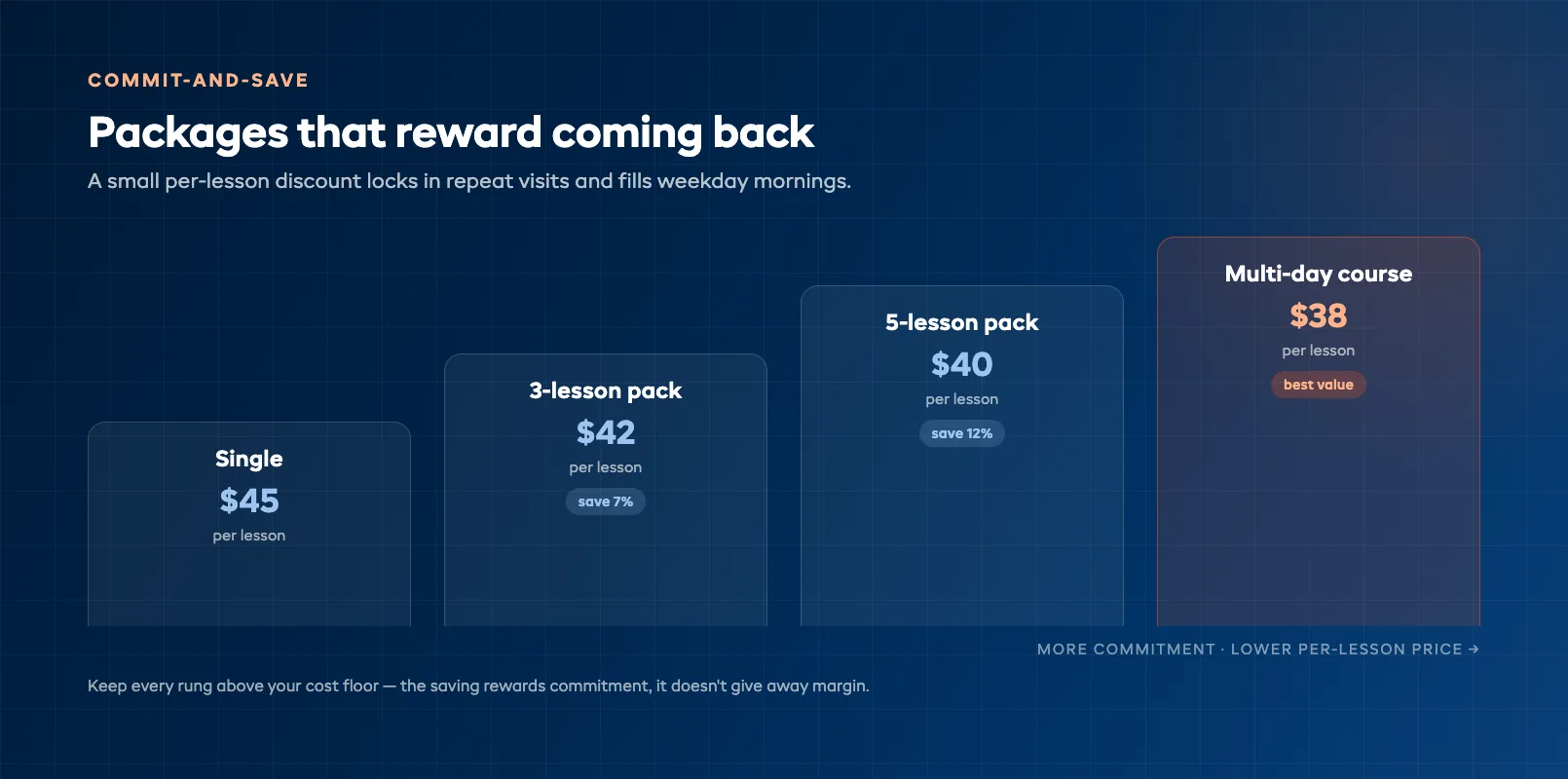
Keep the structure simple. A three-lesson package and a five-lesson package, each at a modest per-lesson discount off the single rate, is enough choice without overwhelming anyone. Multi-day beginner courses (say a lesson a day across a long weekend) work the same way and pair well with your surf camp packages if you run them. The discount should be small: enough to reward commitment, not so deep that you are giving away margin on lessons the guest would have booked anyway. The test is the same as always, even after the package discount, every lesson in the bundle must still clear your cost floor.
The quiet benefit of packages is scheduling. Pre-paid learners book their remaining lessons in advance, which fills your calendar days ahead and tells you where the gaps are. That predictability is worth as much as the extra revenue.
Seasonal rates without the guesswork
Surf schools live and die by the season. A price that is right in the July peak is leaving money on the table, and the same price in a gray October week leaves your instructors idle. The fix is to set your rates by season in advance rather than discounting in a panic on the day.
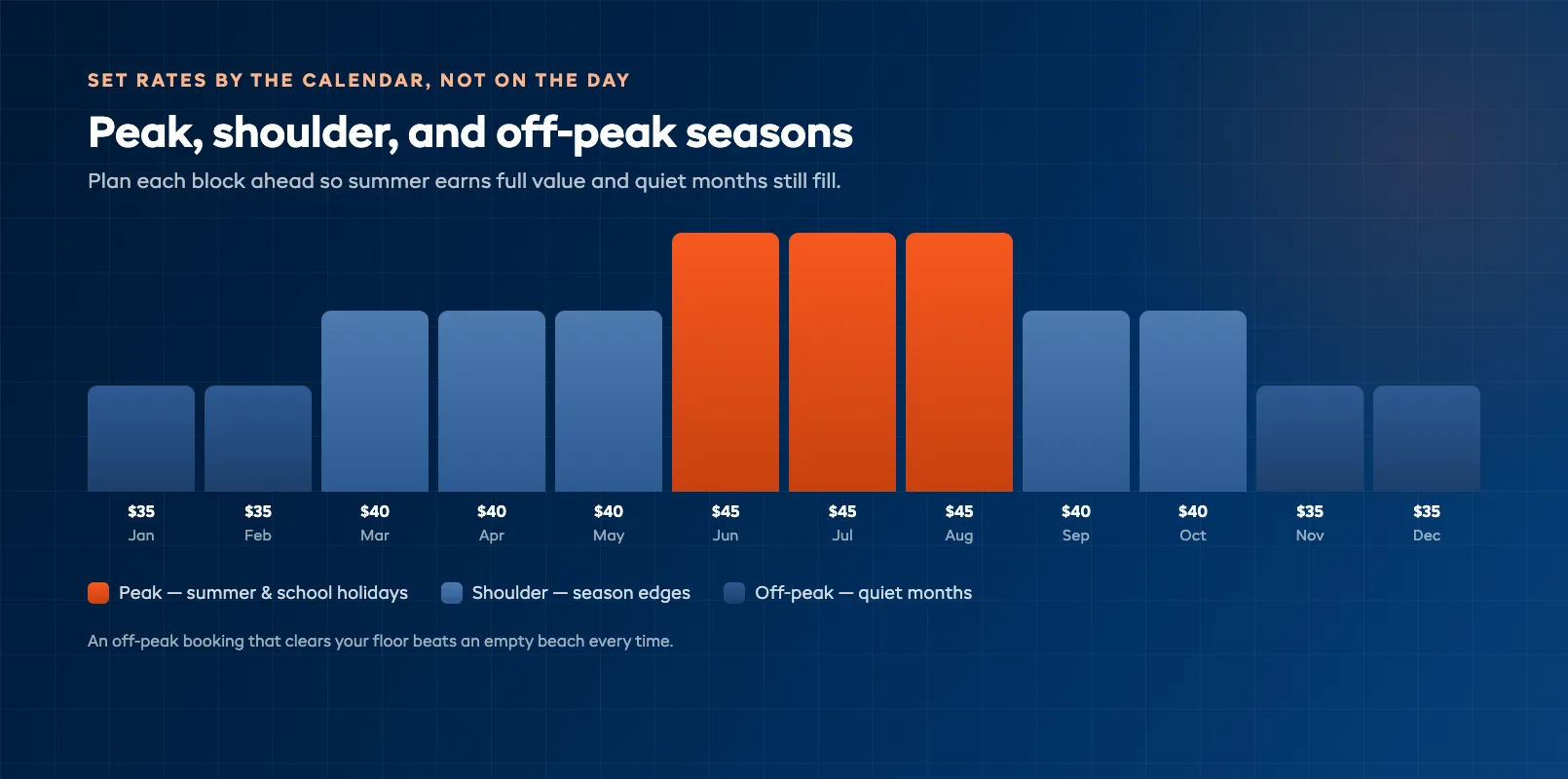
Split the calendar into blocks: a peak rate for the busy summer weeks and school holidays, a shoulder rate at the edges of the season, and an off-peak rate for the quiet months. Peak pricing captures full value when demand is high and you could fill every slot twice over. Off-peak pricing keeps the water busy and your team working when a full-price lesson would simply not sell — an off-peak booking that clears your floor is far better than an empty beach.
Because the blocks are planned ahead, a guest booking in spring for a summer lesson sees a consistent, honest price, and you are never caught improvising a discount. Weather still throws the odd curveball, which is why a clear reschedule-first policy (backed by a weather-alert agent that warns guests early) matters as much as the seasonal rate itself. The two together keep both your calendar and your margin steady.
Add-ons and hire that lift every booking
Once a guest is booked, the cheapest revenue you will ever earn is the add-on. They are already committed, already on the beach — a well-placed extra lifts the average spend without you finding a single new customer.
The most natural add-ons for a surf school are board and wetsuit hire so beginners can practice after the lesson, session photos or video, and the next lesson booked on the spot before they leave. Hire is especially worth building in: it turns your fleet's idle hours into income and gives learners a reason to keep surfing between lessons. If rentals are a real part of your operation, price them as a proper line rather than an afterthought — the detail is in the guide to surfboard and wetsuit rental management. Offer add-ons at the point of booking, not just at the counter, and a good share of guests will take them.
Put your prices into the booking system
A pricing plan only works if the system enforces it. If group, private, package, and seasonal rates live in your head or on a whiteboard, they get discounted away under pressure and no-shows quietly bleed your margin. The answer is to bake every rate into the software that takes the booking.
Take a deposit or full payment at the moment a lesson is booked, and publish a clear reschedule policy, so a guest who cannot make it moves to another slot instead of vanishing with your Saturday-morning slot. Set your seasonal blocks once and let the system apply the right rate automatically. Sell add-ons and packages in the same checkout the lesson is booked through. A platform like EquipDash handles the lesson booking, deposits, packages, and gear hire in one place, and plugs into the day-to-day covered in the guide to surf lesson booking software, so the price a guest pays is always the price you actually set. For the terms behind the rates, the surf glossary is a useful reference, and a pre-lesson surfboard inspection checklist keeps the gear you are charging for in good order.
Putting it together
Surf lesson pricing is not about finding one magic number. It is about building every rate up from your real costs, treating group and private as two products, using packages and seasons to fill capacity, and letting your booking system hold the line so the price you worked out is the price you get. Do that and the season stops feeling like guesswork — busy weeks earn their full value, quiet weeks still put people in the water, and a no-show becomes a reschedule instead of a loss.
FAQ
How much should I charge for a surf lesson?
There is no single right number (it depends on your costs, your location, and what nearby schools charge) but the method is the same everywhere. Add up the instructor pay, the wear on boards and wetsuits, and a share of your fixed overheads for one lesson slot, then set a floor price no discount is allowed to break. A group session is usually priced per person to fill the ratio, while a private commands a premium for one-to-one time. Check local competitors so you are not wildly above or below the going rate, but never price below your own floor to match someone else.
Why are private surf lessons so much more expensive than group lessons?
Because you are selling a completely different product. A group lesson spreads one instructor's time across six or eight learners, so the per-person cost stays low. A private puts that same instructor with a single student, so one booking has to cover the whole hour of coaching, the gear, and the overhead on its own. The higher price reflects faster progress, flexible timing, and undivided attention, not a markup for its own sake.
Should I offer discounts on surf lesson packages?
A modest discount on a three or five-lesson package is worth it because it locks in repeat visits and smooths your bookings across the week. The key is to keep the per-lesson price above your cost floor even after the discount, so the bundle still makes money on every session. Deep discounts that only shift bookings you would have taken anyway just give away margin, so keep the saving small enough to reward commitment without training people to wait for a deal.
How should surf lesson prices change with the season?
Most schools run a peak rate through the busy summer weeks, a shoulder rate at the edges of the season, and a lower off-peak rate to keep the water busy in quiet months. Set these rates in advance for each block of the calendar rather than discounting on the day, so guests booking ahead see a consistent price and you still capture full value when demand is high. The aim is to fill capacity year-round without giving away peak-season slots at off-peak prices.
What add-ons can I sell alongside a surf lesson?
The most natural add-ons are board and wetsuit hire for practice after the lesson, photo or video of the session, and progression to the next lesson booked on the spot. These sit on top of a booking that is already happening, so they lift the average spend per guest without needing a new customer. Priced sensibly, a hire add-on also turns your fleet's idle hours into revenue and gives beginners a reason to keep surfing between lessons.
How do I stop no-shows eating into my lesson pricing?
Take a deposit or full payment when the lesson is booked and publish a clear reschedule-first policy, so a guest who cannot make it moves to another slot rather than vanishing. A no-show on a full group session is pure lost margin — the instructor and gear were committed whether the student turned up or not. Booking software that collects payment upfront and sends automatic reminders turns most no-shows into reschedules and keeps your carefully worked-out prices intact.
in one place