Haunted Attractions and Seasonal Pop-Ups: Ticketing October Events
Haunted Attractions and Seasonal Pop-Ups: Ticketing October Events
October is not a soft ramp. It is a six-to-eight-week sprint where a temporary maze, a pumpkin patch, or a haunted barn can out-earn three quiet months — or burn the season on night-one chaos.
The operators who make October pay run ticketing like a permanent attraction compressed into a short calendar. Timed entry. Capacity waves that match staffing. SKUs that sell out cleanly. Marketing that starts before the first fog machine fires.
This playbook is for haunted attractions and seasonal pop-ups that need ticketed attraction operations ready before peak demand hits. V8 only — capacity, staffing, pricing, and guest flow for the short run.
Why October Breaks Spreadsheet Ticketing
A haunted walk open Thursday through Sunday for five weeks is not a museum with a year-round pass desk. You stand up a temporary gate, hire seasonal hosts, and sell nights that cannot stretch when demand spikes.
What fails first on spreadsheet ticketing:
- Hard caps ignored — walk-ups push past fire code while online still shows "available"
- Wave blind spots — 7pm sold out, 7:20 empty, 7:40 crushed
- Staff out of sync — ticket booth covered, scare zones short three actors
- SKU soup — VIP, general, group, rain check, and "influencer comp" living in four places
- Refund fog — weather, early close, and medical exits with no shared policy
Seasonal pop-ups inherit the same physics as year-round parks — just faster. If your permanent peers already use attraction capacity management, steal that model. Do not invent a parallel system for October.
Timed Entry That Matches the Scare Cycle
Timed entry is not a fancy upsell. It is how you keep the maze from becoming a parking lot with fog.
Design waves around the experience length, not the hour clock alone:
- Measure dwell — average minutes from gate to exit on a quiet night and a sold-out night
- Set wave size — guests per wave ≤ physical capacity ÷ (dwell ÷ wave interval)
- Leave recovery gaps — 5–10 minutes between peak waves for restock, reset, and medical holds
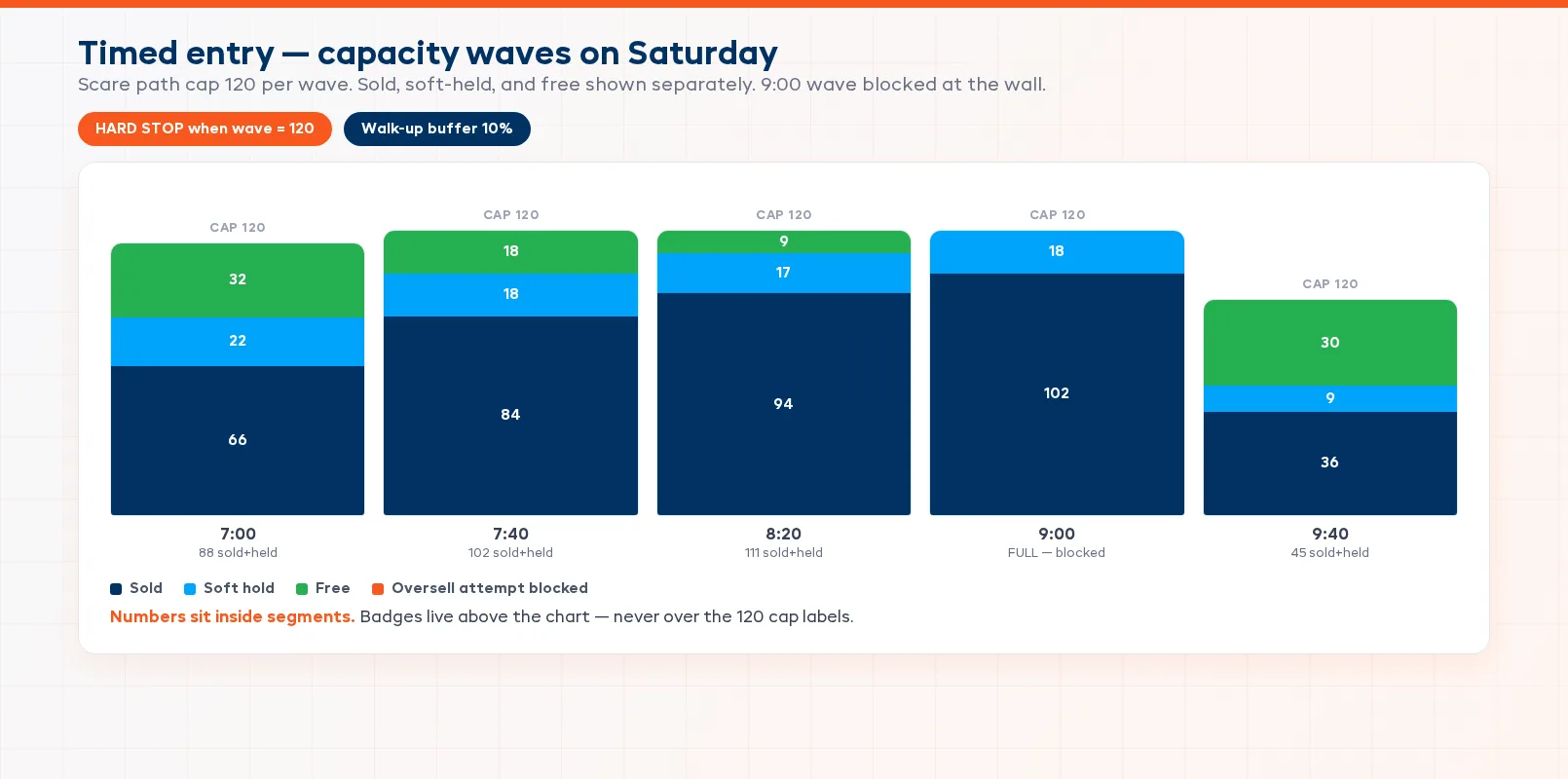
- Hold a walk-up buffer — 8–12% of each wave reserved for door sales if your market needs them
- Publish sell-outs early — nothing kills reviews like a QR that scans into a 90-minute standstill
Haunt operators often under-price early waves and overcrowd late ones. Flip that. Early entry can carry a premium when guests want shorter lines. Late "last call" waves can discount to fill leftover capacity without collapsing the 9pm crush.
Dynamic rates help when nights diverge. A rainy Tuesday and a dry Saturday are different products. The same tools that power dynamic ticket pricing for attractions apply to a five-week pop-up — fewer price bands, faster decisions.
Capacity Waves Without Overcrowding the Midway
Capacity is more than the maze. It is parking, photo ops, merch, food, and the queue that forms when the scare zone backs up.
Build a simple capacity stack for each operating night:
| Layer | Cap driver | Failure mode if ignored |
|---|---|---|
| Parking / shuttle | Spaces × turnover | Guests miss waves; anger starts at the lot |
| Gate / wristband | Scanners × staff | Bottleneck before the show |
| Scare path | Fire code + actor density | Safety and reviews collapse |
| Photo / merch | Stations × cycle time | Revenue left on the table |
| Exit / pickup | Doors × staff | Crowd compresses at close |
Hard stops beat soft warnings. When a wave is full, online and the booth both refuse the sell. Click-past alerts do not survive a Friday night. Pair that discipline with the overflow habits in attraction capacity management: next-wave offers, rain-check SKUs, and clear "sold out" messaging before guests drive over.
For school or corporate buyouts on early evenings, isolate those groups into dedicated waves so they do not collide with retail guests. The same separation logic that works for group bookings and school visits keeps a haunted barn from becoming two events fighting one corridor.
Staffing a Pop-Up Like a Five-Week Season
Seasonal labor is the hidden capacity constraint. You can sell 400 tickets per hour and still fail if three scare actors call out and the ticket booth is a single tablet with a dead battery.
Staffing rules that survive October:
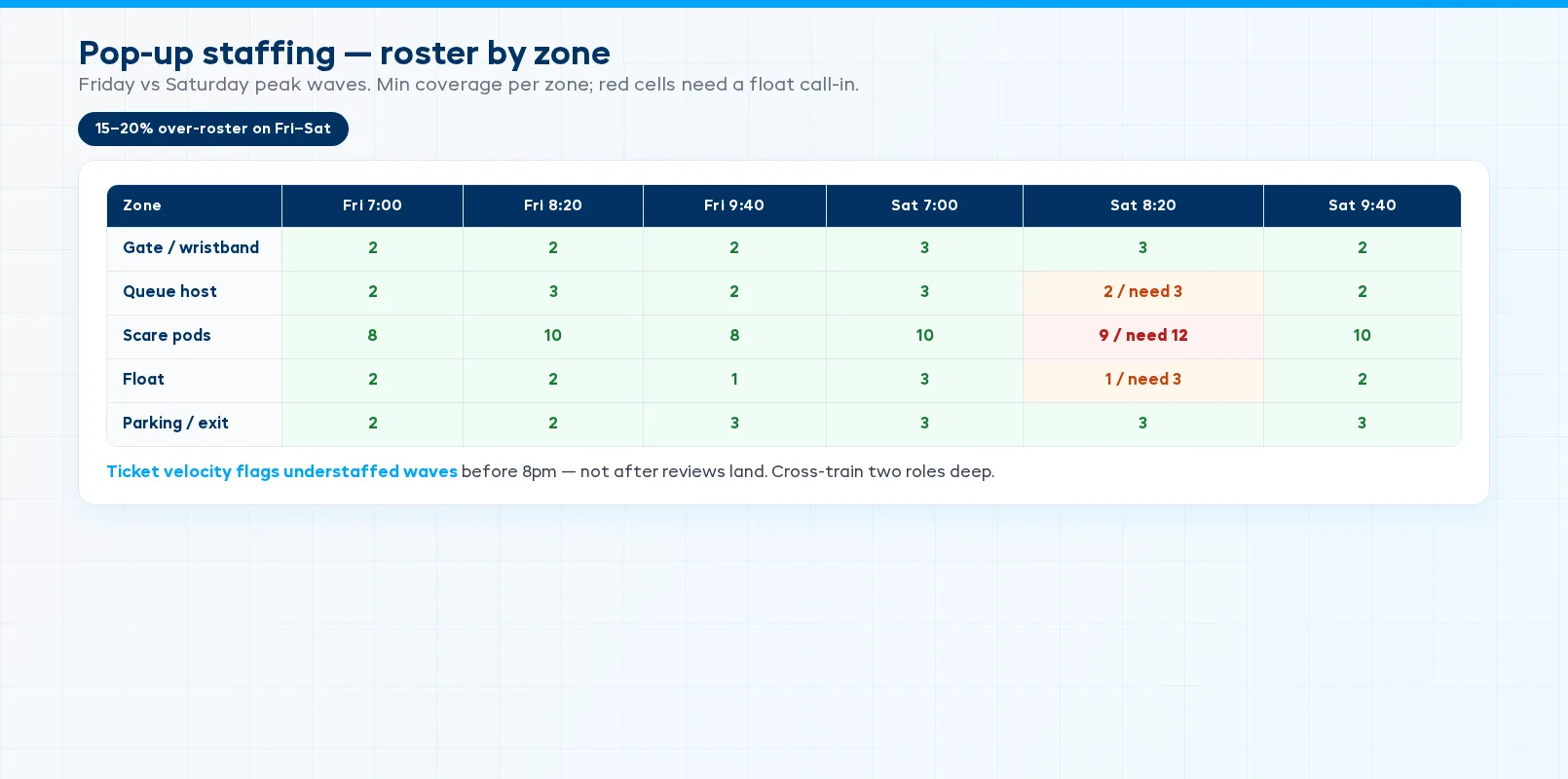
- Roster by zone, not by "body count" — gate, queue host, scare pods, float, med, parking
- Min and max per wave — if a wave sells past a threshold, auto-flag an extra float
- Call-out buffer — 15–20% over-roster on Fridays and Saturdays
- Cross-train two roles deep — booth hosts who can float; floats who can work queue
- Close-out crew — someone owns lost-and-found, cash drop, and incident log every night
Training time is short. Use checklists, not novels. Walk every hire through guest flow, medical exits, and how timed entry actually works at your gate. The curriculum bones in attraction staff training still apply when the "season" is five weeks — just compress day-one into a single paid rehearsal night before public open.
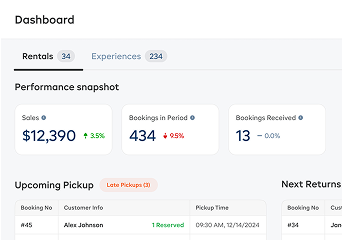
One Dash assist is enough here: auto-flag understaffed waves when ticket velocity spikes so a human GM can call in the float before the 8pm crush, not after reviews hit.
Short-Run Marketing That Starts Before Fog Night
Haunted and seasonal pop-ups lose weeks when marketing starts when the set is finished. Demand for October weekends builds in late August and September. Publish ahead of the crush.
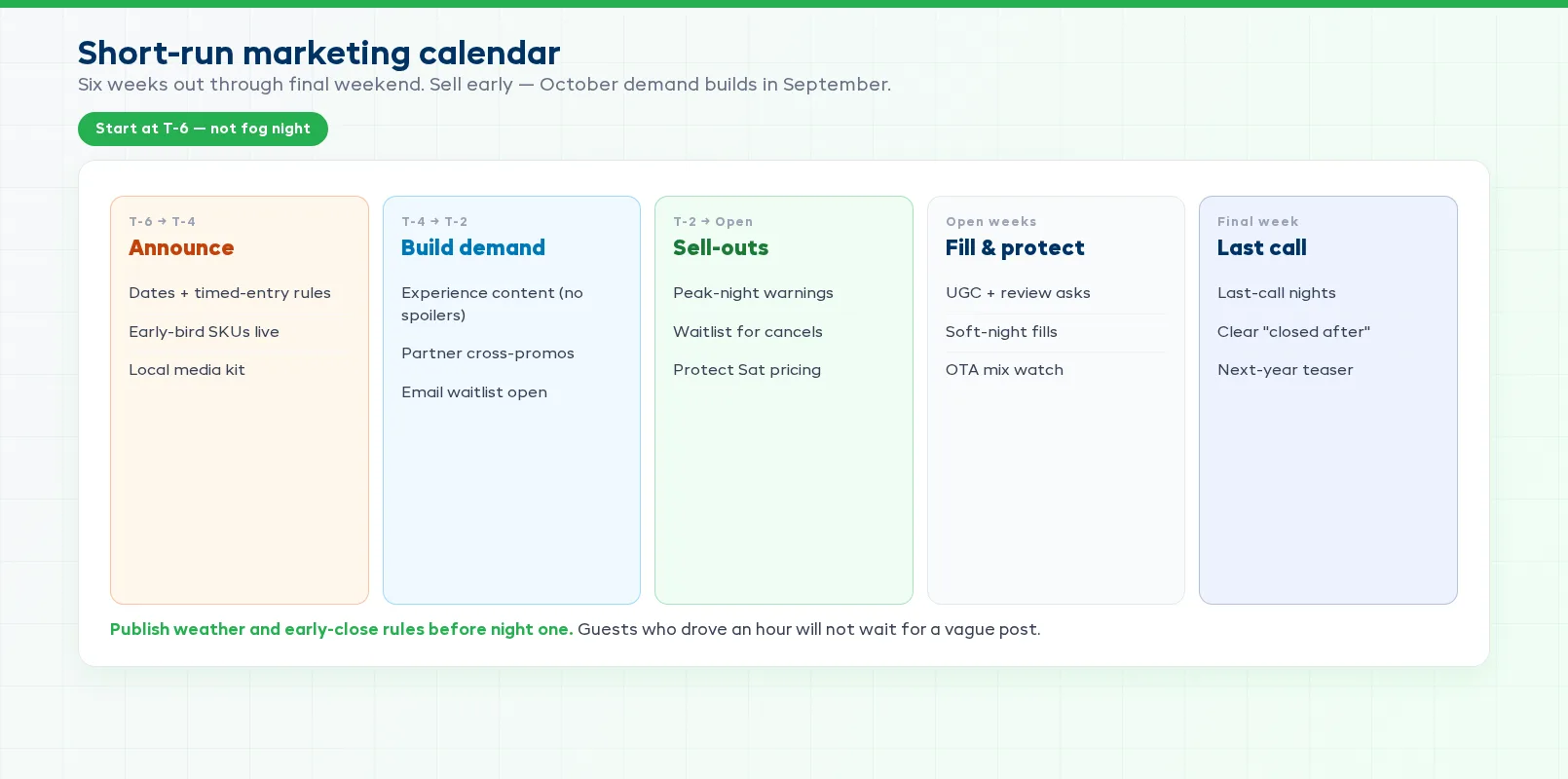
A practical six-week marketing spine:
- T-6 to T-4 weeks — announce dates, timed-entry rules, and early-bird SKUs
- T-4 to T-2 — content that shows the experience without spoiling every scare; local media kits
- T-2 to open — sell-out warnings on peak nights; waitlist for canceled waves
- Open week — UGC rights, review asks within 24 hours, retarget lookalikes for remaining inventory
- Mid-run — dynamic fills for soft nights; protect Saturday pricing
- Final week — last-call nights, season-pass cross-sell if you run year-round, and clear "closed after" messaging
Keep channels honest. OTAs can fill soft nights, but commission math and guest expectations still matter. If you push volume through Viator or GetYourGuide, follow the mix discipline in attraction OTA distribution so direct timed entry stays the primary source of truth.
Weather and early closes need a published rule before night one. Guests who drove an hour for a canceled 9pm wave will not wait for a vague Facebook post. Borrow the clarity of a weather refund policy for outdoor attractions even if your haunt is mostly indoors — parking lots, queues, and outdoor mazes still fail in storms.
Ticket SKUs That Survive a Short Season
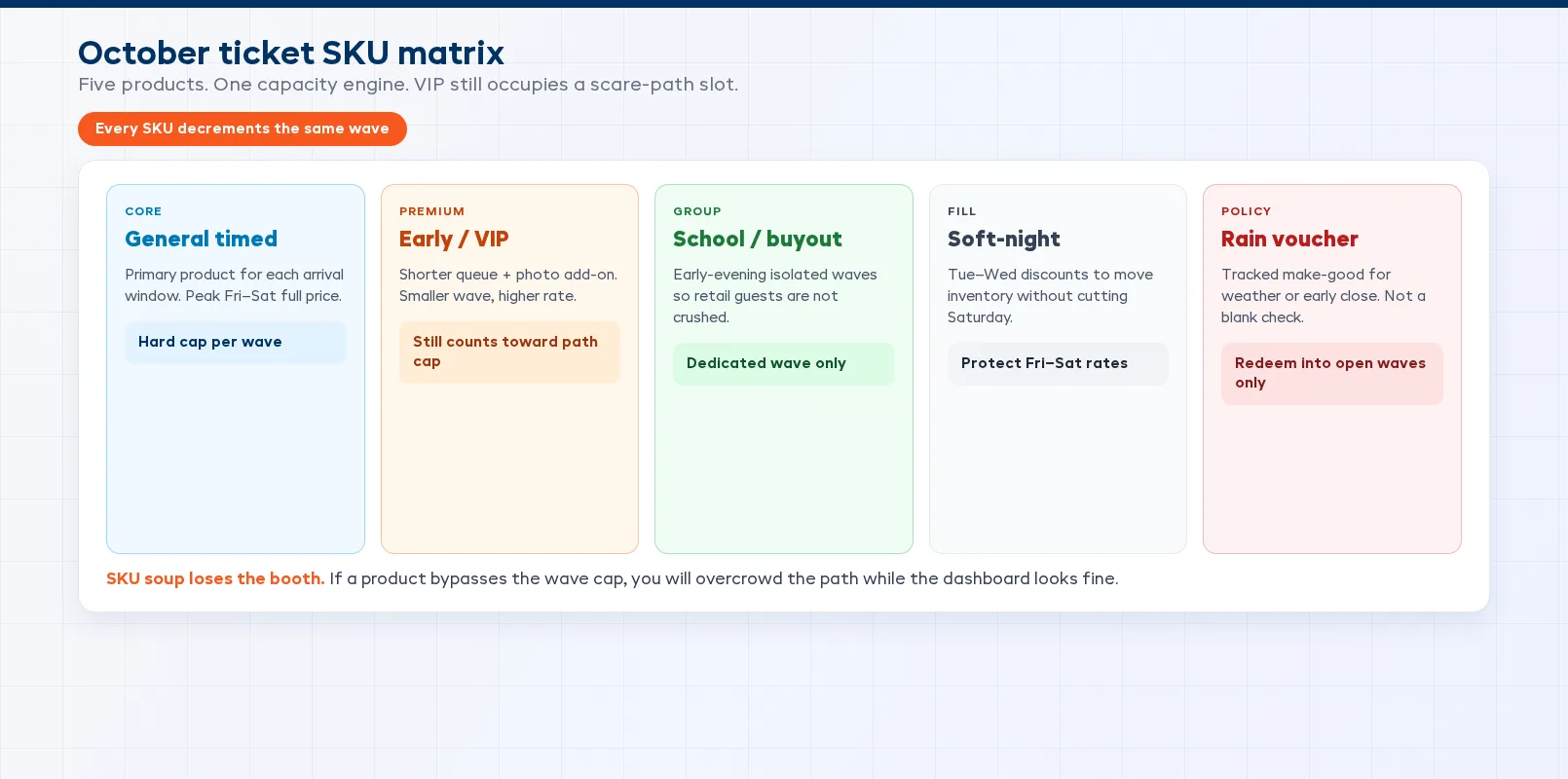
Too many SKUs confuse the booth. Too few leave money on the table. Aim for a tight matrix:
| SKU | Use | Cap note |
|---|---|---|
| General timed entry | Core product | Per-wave hard cap |
| Early entry / VIP | Shorter queue, photo add-on | Smaller wave, higher price |
| Group / school early | Buyouts before retail | Isolated waves |
| Soft-night fill | Tue–Wed discounts | Protect Fri–Sat rates |
| Rain / early-close voucher | Policy fulfillment | Non-transfer chaos if untracked |
Every SKU must map to the same capacity engine. A VIP that skips the queue still occupies a scare-path slot. If it does not decrement the wave, you will overcrowd the path while the general line looks "managed."
Deposits and no-show rules matter more when every night is scarce. Require payment at booking for peak Friday and Saturday waves. Soft holds that expire in 15–30 minutes beat unpaid "reservations" that block inventory until the fog starts.
Season-pass holders from a year-round sister site can get a perk night — but only if those redemptions sit inside the wave cap. Passing programs that ignore capacity are how member nights become the worst reviews of the year. If you run annual products, keep renewal logic aligned with season pass programs.
Safety, Compliance, and Nightly Close
A pop-up haunt still inherits real liability. Fire exits, occupancy certificates, actor safety briefings, and incident logs are not optional because the set comes down in November.
Operational non-negotiables:
- Posted occupancy and timed-entry caps that match the certificate
- Documented LOTO and electrical checks on temporary builds
- Medical exit paths that guests can reach without crossing active scare zones
- Nightly incident report — even when "nothing happened"
- Cash and scanner chain of custody at close
Use attraction safety compliance as the checklist backbone. Insurers and local inspectors care that you ran the program, not that the maze was temporary.
Closing the Short Season Clean
When the last wave exits, close the books the same week:
- Wave utilization by night and by SKU
- No-show and late-arrival rates
- Staffing cost per ticket
- Refund and rain-check liability remaining
- Review themes within 72 hours of each weekend
Those numbers decide next year's build budget and whether Friday needs a sixth wave. Operators who treat October as a blur restart from zero every September.
Stand Up Ticketing Before the Midway Fills
Haunted attractions and seasonal pop-ups do not get a soft launch. Timed entry, capacity waves, zone-based staffing, and a short SKU list have to be live before marketing turns on the fog.
Build the wave math. Hard-stop oversells. Roster by zone. Sell early. Publish the weather and close rules. Then run the five weeks like a real attraction — because for your guests, it is.
FAQ
What is timed entry for a haunted attraction?
Timed entry sells tickets for a specific arrival window — for example, 7:00–7:20pm — so guests enter in waves instead of one endless queue. Wave size should match path capacity and average dwell time, with hard stops when a wave is full. It protects safety, reviews, and scare quality on peak October nights.
How many ticket types should a seasonal pop-up sell?
Keep a tight matrix: general timed entry, one premium or early-entry SKU, a group or school product if you take buyouts, a soft-night fill rate, and a tracked rain or early-close voucher. Every SKU must decrement the same wave capacity. Extra products that bypass the cap create overcrowding while the dashboard looks fine.
When should marketing start for an October haunt?
Start six to four weeks before open with dates, timed-entry rules, and early-bird inventory. Peak weekend demand builds in September. Waiting until the set is finished leaves you selling into a compressed window while competitors already own the calendar.
How do I staff a five-week pop-up without burning out the cast?
Roster by zone — gate, queue, scare pods, float, medical, parking — with min and max coverage per wave. Over-roster Fridays and Saturdays by 15–20%, cross-train two roles deep, and run one paid rehearsal before public nights. Ticket velocity should flag understaffed waves early enough to call in floats.
Should walk-ups still be allowed with timed entry?
Yes, if your market expects door sales — but hold a small buffer per wave (often 8–12%) and stop selling when the buffer is gone. Unlimited walk-ups defeat timed entry. Publish sell-outs online and at the booth so guests are not turned away after a long drive.
How should weather and early closes work for outdoor queues or mazes?
Publish the rule before night one: what triggers a delay, a wave shift, a voucher, or a refund. Apply it the same way at the gate and in email. Vague social posts after guests arrive destroy trust. Track vouchers as real inventory so they cannot be redeemed into already-full waves.
in one place